DonateSupporterVisit Heritage
  • Tūrangawaewae
    Places
  • Tira Māori
    Māori Heritage
  • Poutairangahia
    Archaeology
  • Rauemi
    Resources
  • Mō Tātou
    About Us
  • New Zealand Heritage List
  • Nominate and submit
  • Explore the List
  • National Historic Landmarks
  • Plaques
  • Rainbow List Project
  • Lost heritage
  • Visit Heritage
  • Our properties
  • Turnbull House Project
  • Collections
  • Shop
  • Tohu Whenua
  • Tira Māori
  • Conserving Māori heritage
  • Marae built heritage
  • Māori heritage on the List
  • Hinemihi—Te Hokinga Mai
  • What is archaeology?
  • Is there a site on my property?
  • What are my legal requirements?
  • Affecting an archaeological site
  • Declaring an archaeological site
  • Archaeology FAQs
  • Archaeology Digital Library
  • Archaeology guidelines and templates
  • Resources
  • Funding
  • Publications
  • Sustainable management guides
  • Disaster recovery
  • Podcasts & digital resources
  • Education Hub
  • Conservation plans
  • About
  • Board
  • Māori Heritage Council
  • Senior Staff
  • Offices
  • Contact us
  • Careers
  • Covenants
  • Fast-track
  • Corporate documents
  • Currently consulting on
  • Our submissions
  • News
Quick links
Rārangi Kōrero | The List
Explore the List
National Historic Landmarks
Ngā Manawhenua o Aotearoa me ōna Kōrero Tūturu
Quick links
Tapuwae
A Vision for Places of Māori Heritage
Funding for Māori Heritage
Resources
Quick links
Archaeological Authority Portal
Applying for an archaeological authority
Archaeology FAQs
Browse the most frequently asked questions about archaeological authorities and the archaeological process.
Quick links
Quick links
Contact us
Offices
DonateSupporterVisit Heritage
  • Tūrangawaewae
    Places
  • Tira Māori
    Māori Heritage
  • Poutairangahia
    Archaeology
  • Rauemi
    Resources
  • Mō Tātou
    About Us
  • New Zealand Heritage List
  • Nominate and submit
  • Explore the List
  • National Historic Landmarks
  • Plaques
  • Rainbow List Project
  • Lost heritage
  • Visit Heritage
  • Our properties
  • Turnbull House Project
  • Collections
  • Shop
  • Tohu Whenua
  • Tira Māori
  • Conserving Māori heritage
  • Marae built heritage
  • Māori heritage on the List
  • Hinemihi—Te Hokinga Mai
  • What is archaeology?
  • Is there a site on my property?
  • What are my legal requirements?
  • Affecting an archaeological site
  • Declaring an archaeological site
  • Archaeology FAQs
  • Archaeology Digital Library
  • Archaeology guidelines and templates
  • Resources
  • Funding
  • Publications
  • Sustainable management guides
  • Disaster recovery
  • Podcasts & digital resources
  • Education Hub
  • Conservation plans
  • About
  • Board
  • Māori Heritage Council
  • Senior Staff
  • Offices
  • Contact us
  • Careers
  • Covenants
  • Fast-track
  • Corporate documents
  • Currently consulting on
  • Our submissions
  • News
Quick links
Rārangi Kōrero | The List
Explore the List
National Historic Landmarks
Ngā Manawhenua o Aotearoa me ōna Kōrero Tūturu
Quick links
Tapuwae
A Vision for Places of Māori Heritage
Funding for Māori Heritage
Resources
Quick links
Archaeological Authority Portal
Applying for an archaeological authority
Archaeology FAQs
Browse the most frequently asked questions about archaeological authorities and the archaeological process.
Quick links
Quick links
Contact us
Offices
  • Places
  • Nominate and submit
  • National Historic Landmarks
  • Places
  • Nominate and submit
  • National Historic Landmarks
  • Tira Māori
  • Conserving Māori heritage
  • Marae built heritage
  • Tira Māori
  • Conserving Māori heritage
  • Marae built heritage
  • Archaeological authorities
  • Archaeology Digital Library
  • Archaeological authorities
  • Archaeology Digital Library
  • All resources
  • Publications
  • Funding
  • All resources
  • Publications
  • Funding
  • FAQs
  • FAQs
Follow us on:
Places
  • Places
  • Nominate and submit
  • National Historic Landmarks
Tira Māori
  • Tira Māori
  • Conserving Māori heritage
  • Marae built heritage
Archaeology
  • Archaeological authorities
  • Archaeology Digital Library
Resources
  • All resources
  • Publications
  • Funding
FAQs
  • FAQs
Follow us on
HomePrivacyTerms and conditionsAbout this site
© Heritage New Zealand Pouhere Taonga 2026.
 
Okato Primary School (Former)

2333 South Road, OKATO

Private

Historic Place Category 2

List No. 935

Quick links:
List GalleryLocationDetails
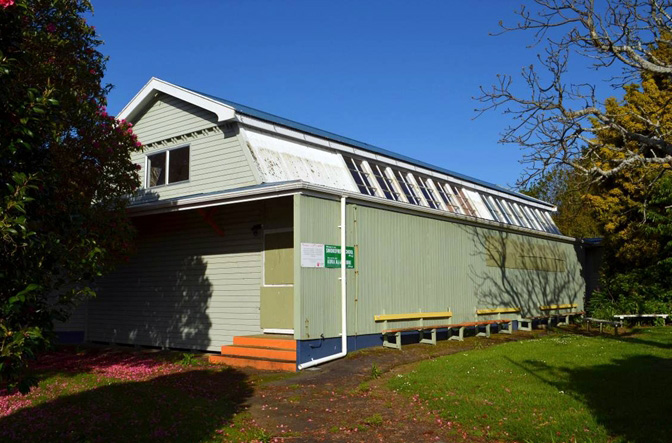
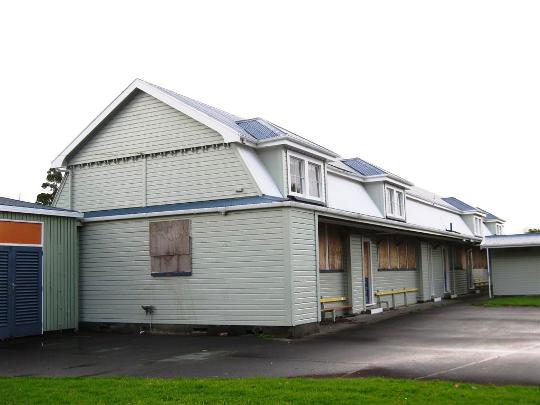
The two classroom blocks that make up Okato Primary School (Former) were built in 1929. They are intact representative examples of the ‘revolutionary’ classroom design known as ‘fresh-air’ or the ‘Taranaki Type’. The design was unique to the region and dominated all new school buildings throughout the 1930s. Designed by Taranaki Education Board architect Charles Howard (C.H.) Moore, the classroom blocks have significant technological, architectural, social and historic heritage values as important physical reminders of Moore’s contribution to the practice and theory of school building design in New Zealand. The school, like many in rural areas, was a focus of public esteem and the subject of jubilee celebrations. In 2015, the community will celebrate 150 years of schooling in Okato.

The first Okato school building was opened in 1875, and this original classroom in its modified form is still present in the school grounds. By the 1920s, the school had grown considerably, and two new blocks of classrooms were needed. Moore had been appointed overseer to the Taranaki Education Board in 1909, and architect from 1920 to his retirement in 1943. The autonomy of Education Boards and their architects in New Zealand meant that the design of different ‘types’ of school buildings could be produced in response to the economic and environmental conditions of the different districts.

The 1920s was a decade of notable innovation in school building design. The Taranaki Type classroom evolved in response to the national Open Air Schools movement that had become prominent in the early part of the twentieth century, when the issues of health and wellbeing, especially the wellbeing of children, came to the fore. The Canterbury and Taranaki Education Boards and their architects responded with original designs that focused on maximising light and ventilation. The Fendalton open air classroom was opened in Christchurch in 1924 and the first fresh-air classroom (now demolished) was erected in New Plymouth in 1927 at Central School.

Moore developed the Taranaki Type in response to the Fendalton Type. The Taranaki Education Board decided that climatic conditions (both temperate and moist) in the region did not lend itself to an open-air type so Moore studied these problems and improved on the design.

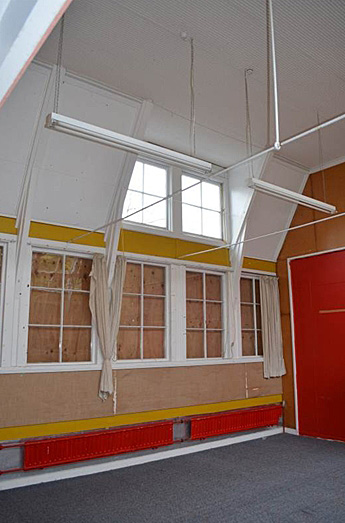
The two blocks of fresh-air classrooms at Okato feature the distinctive mansard roofline pitched at 60 degrees on the south and north sides; and dormer windows to the north and clerestory windows to the south which allow light to flood the classroom spaces within. The design also includes drop sash windows on both sides of the classroom. Depending on the weather conditions, they could be raised or lowered to facilitate a current of fresh air. The classrooms are built of timber, a cost-effective material that allows for ease of alterations and additions.

Over the years, there have been minor changes to the buildings; however, they remain in good condition. Okato School closed in 2004 and was relocated to another site to become Coastal Taranaki School. The classrooms remain on their original site, awaiting a new use.
Okato Primary School (Former) | Alison Dangerfield | 01/08/2008 | Heritage New Zealand Pouhere Taonga
Okato Primary School (Former). Classroom block | N Naus | 01/11/2011 | Heritage New Zealand Pouhere Taonga
Okato Primary School (Former). Interior of classroom showing sash and dormer windows | A Dangerfield | 01/04/2014 | Heritage New Zealand Pouhere Taonga
Okato Primary School (Former) | Alison Dangerfield | 01/08/2008 | Heritage New Zealand Pouhere Taonga
Okato Primary School (Former). Classroom block | N Naus | 01/11/2011 | Heritage New Zealand Pouhere Taonga
Okato Primary School (Former). Interior of classroom showing sash and dormer windows | A Dangerfield | 01/04/2014 | Heritage New Zealand Pouhere Taonga

List Entry Information

Overview

Status
Listed

List Entry Status
Historic Place Category 2

Access
Private/No Public Access

List Number
935

Date Entered
1st September 1983

Date of Effect
1st September 1983

City/District Council
New Plymouth District

Region
Taranaki Region

Extent of List Entry

Extent is part of the land described as Sec 3 SO 453138 (RT 595721) & Pt Sec 2 Okato Town Belt (RT 334494), Taranaki Land District, and the fresh-air classroom buildings known as Okato Primary School (Former) thereon. Extent does not include the other buildings on the school site.

Legal description

Sec 3 SO 453138 (RT 595721) & Pt Sec 2 Okato Town Belt (RT 334494), Taranaki Land District

Detailed List Entry

Construction Professional

Name

Moore, C. H.

Type

Architect

Biography

No biography is currently available for this construction professional

Construction Details

Start Year

1929

Type

Original Construction

Start Year

2014

Type

Damaged

Description

Ongoing regular vandalism

Start Year

2021

Finish Year

2022

Type

Maintenance/repairs

Description

Extensive exterior maintenance due to vandalism including new acrylic glazing.Historic gree glazed nterior doors moved in some places to exterior [recommended to move back inside asap].

Period

2021-2022

Reference

Completion Date

26th May 2014

Report Written By

Natasha Naus

Information Sources

Insull, 1978

Insull, H.A.H. (ed.), The Taranaki Education Board Beginnings, Struggles, Progress: A Retrospective of the Administration of Education in Taranaki 1841-1971, 1978.

Skinner, 1935

Skinner, W.H., History and Reminiscences of the Okato District. Written by W.H. Skinner, W.K. Howitt and Residents of the District, and republished from the “Taranaki Herald,” on the occasion of the Septuagenary Celebrations and Re-Union, 1865-1935, 1935

Report Written By

This place was identified as significant under previous legislation with different information requirements. It remains significant under the current legislation. There is opportunity under our legislation and policies to add to this information. Further information about this place may be available from the Central Regional Office of Heritage New Zealand Pouhere Taonga. A fully referenced upgrade report is available on request from the Central Regional Office of Heritage New Zealand. Please note that entry on the New Zealand Heritage List/Rarangi Korero identifies only the heritage values of the property concerned, and should not be construed as advice on the state of the property, or as a comment of its soundness or safety, including in regard to earthquake risk, safety in the event of fire, or insanitary conditions.

Further Information

Current Usages

Uses: Vacant

Specific Usage: Vacant

Former Usages

General Usage:: Education

Specific Usage: School

Themes

Web Links

Overview

Status

Listed

List Entry Status

Historic Place Category 2

Access

Private/No Public Access

List Number

935

Date Entered

1st September 1983

Date of Effect

1st September 1983

City/District Council

New Plymouth District

Region

Taranaki Region

Extent of List Entry

Extent is part of the land described as Sec 3 SO 453138 (RT 595721) & Pt Sec 2 Okato Town Belt (RT 334494), Taranaki Land District, and the fresh-air classroom buildings known as Okato Primary School (Former) thereon. Extent does not include the other buildings on the school site.

Legal description

Sec 3 SO 453138 (RT 595721) & Pt Sec 2 Okato Town Belt (RT 334494), Taranaki Land District

Status

Listed

List Entry Status

Historic Place Category 2

Access

Private/No Public Access

List Number

935

Date Entered

1st September 1983

Date of Effect

1st September 1983

City/District Council

New Plymouth District

Region

Taranaki Region

Extent of List Entry

Extent is part of the land described as Sec 3 SO 453138 (RT 595721) & Pt Sec 2 Okato Town Belt (RT 334494), Taranaki Land District, and the fresh-air classroom buildings known as Okato Primary School (Former) thereon. Extent does not include the other buildings on the school site.

Legal description

Sec 3 SO 453138 (RT 595721) & Pt Sec 2 Okato Town Belt (RT 334494), Taranaki Land District

Construction Information

Construction Professional

Name

Moore, C. H.

Type

Architect

Biography

No biography is currently available for this construction professional

Construction Details

Start Year

1929

Type

Original Construction

Start Year

2014

Type

Damaged

Description

Ongoing regular vandalism

Start Year

2021

Finish Year

2022

Type

Maintenance/repairs

Description

Extensive exterior maintenance due to vandalism including new acrylic glazing.Historic gree glazed nterior doors moved in some places to exterior [recommended to move back inside asap].

Period

2021-2022

Construction Professional

Name

Moore, C. H.

Type

Architect

Biography

No biography is currently available for this construction professional

Construction Details

Start Year

1929

Type

Original Construction

Start Year

2014

Type

Damaged

Description

Ongoing regular vandalism

Start Year

2021

Finish Year

2022

Type

Maintenance/repairs

Description

Extensive exterior maintenance due to vandalism including new acrylic glazing.Historic gree glazed nterior doors moved in some places to exterior [recommended to move back inside asap].

Period

2021-2022

Reference

Historical and Associated Iwi / Hapū / Whānau

Completion Date

26th May 2014

Report Written By

Natasha Naus

Information Sources

Insull, 1978

Insull, H.A.H. (ed.), The Taranaki Education Board Beginnings, Struggles, Progress: A Retrospective of the Administration of Education in Taranaki 1841-1971, 1978.

Skinner, 1935

Skinner, W.H., History and Reminiscences of the Okato District. Written by W.H. Skinner, W.K. Howitt and Residents of the District, and republished from the “Taranaki Herald,” on the occasion of the Septuagenary Celebrations and Re-Union, 1865-1935, 1935

Other Information

This place was identified as significant under previous legislation with different information requirements. It remains significant under the current legislation. There is opportunity under our legislation and policies to add to this information. Further information about this place may be available from the Central Regional Office of Heritage New Zealand Pouhere Taonga. A fully referenced upgrade report is available on request from the Central Regional Office of Heritage New Zealand. Please note that entry on the New Zealand Heritage List/Rarangi Korero identifies only the heritage values of the property concerned, and should not be construed as advice on the state of the property, or as a comment of its soundness or safety, including in regard to earthquake risk, safety in the event of fire, or insanitary conditions.

Historical and Associated Iwi / Hapū / Whānau

Completion Date

26th May 2014

Report Written By

Natasha Naus

Information Sources

Insull, 1978

Insull, H.A.H. (ed.), The Taranaki Education Board Beginnings, Struggles, Progress: A Retrospective of the Administration of Education in Taranaki 1841-1971, 1978.

Skinner, 1935

Skinner, W.H., History and Reminiscences of the Okato District. Written by W.H. Skinner, W.K. Howitt and Residents of the District, and republished from the “Taranaki Herald,” on the occasion of the Septuagenary Celebrations and Re-Union, 1865-1935, 1935

Other Information

This place was identified as significant under previous legislation with different information requirements. It remains significant under the current legislation. There is opportunity under our legislation and policies to add to this information. Further information about this place may be available from the Central Regional Office of Heritage New Zealand Pouhere Taonga. A fully referenced upgrade report is available on request from the Central Regional Office of Heritage New Zealand. Please note that entry on the New Zealand Heritage List/Rarangi Korero identifies only the heritage values of the property concerned, and should not be construed as advice on the state of the property, or as a comment of its soundness or safety, including in regard to earthquake risk, safety in the event of fire, or insanitary conditions.

Further Information

Current Usages

Uses: Vacant

Specific Usage: Vacant

Former Usages

General Usage: Education

Specific Usage: School

Current Usages

Uses: Vacant

Specific Usage: Vacant

Former Usages

General Usage: Education

Specific Usage: School

Location

Loading
Sign up to hear more

Get the latest heritage news, features and events delivered
straight to your inbox.

Subscribe