Over the years McLean bought up other properties and at its peak, during his son's tenure, Maraekakaho covered 50,777 acres.
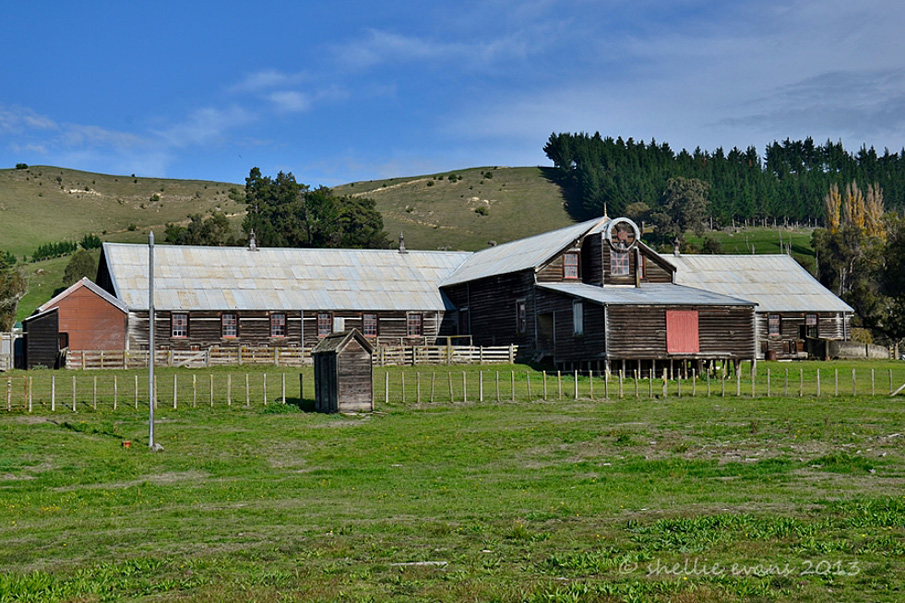
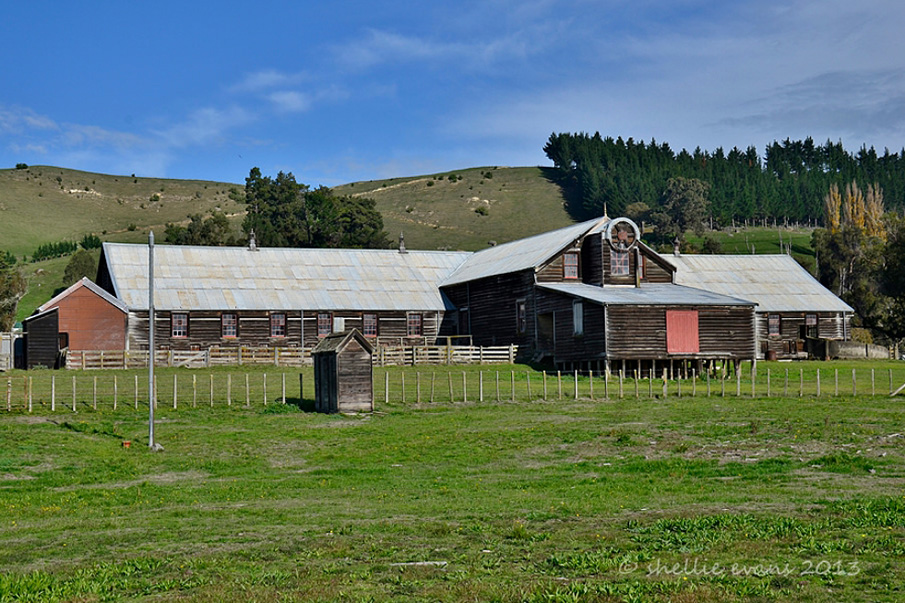
In 1877, on McLean's death, the property was inherited by his son Robert Donald Douglas MacLean (note the difference in spelling) who in 1927 was knighted as Sir Douglas MacLean. He took an active part in running Maraekakaho and also had a brief career as a Member of Parliament for Napier, 1896-99. He was responsible for building the woolshed and its size - capable of holding 5000 sheep under cover - is indicative of the then carrying capacity of the station - 63,000 sheep.
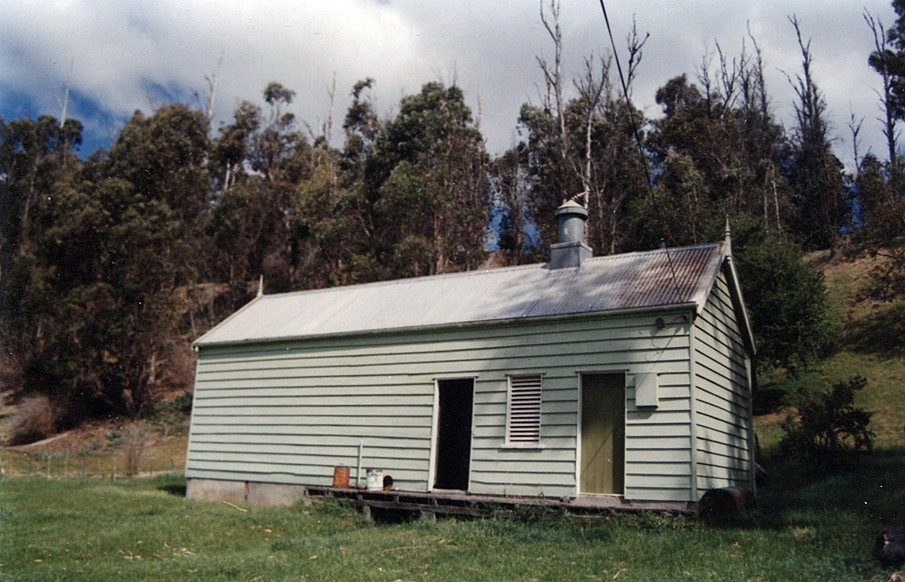
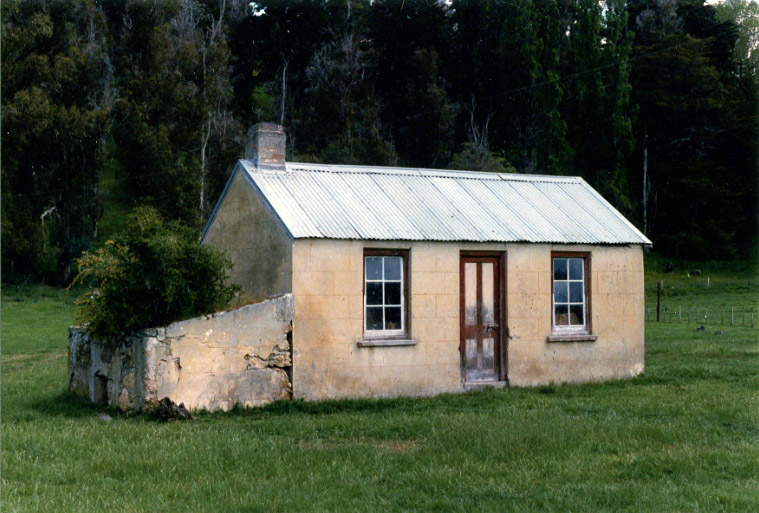
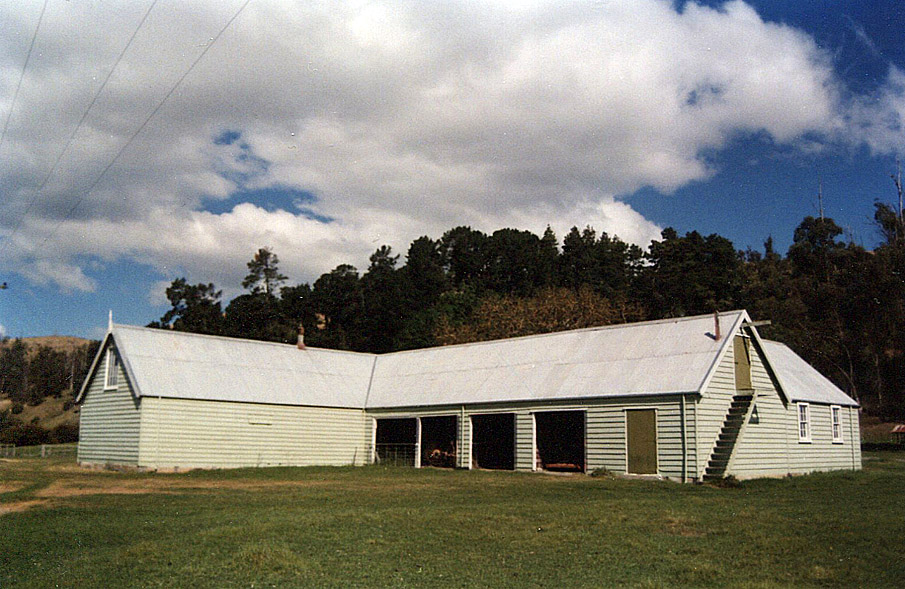
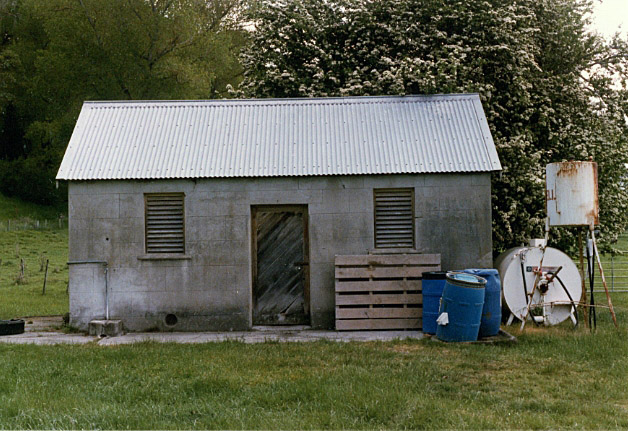
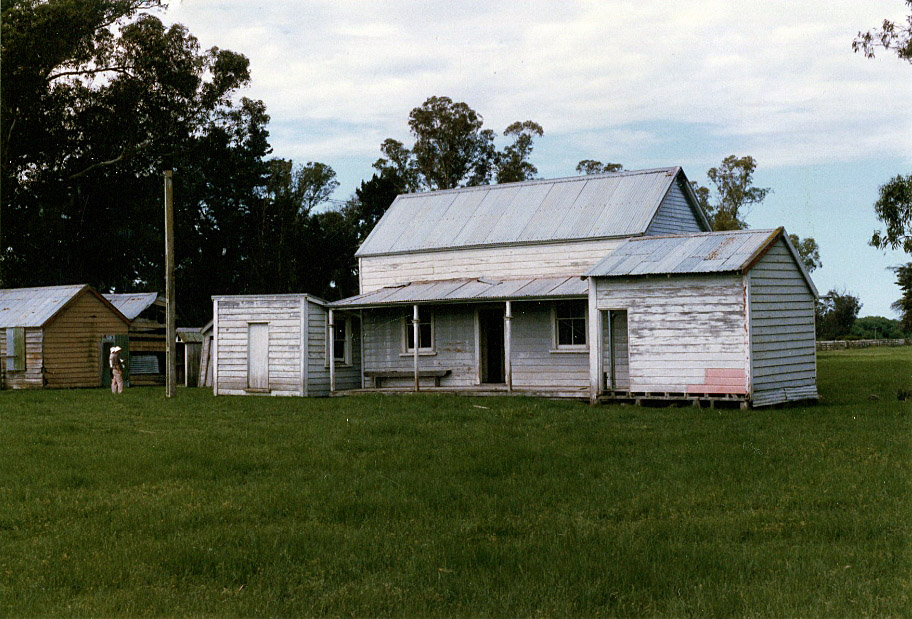
At its peak the station employed a permanent staff of 80 and the farm buildings included a school, smithy, accommodation house, store and post office and a hall in which church services and dances were held.
The gradual cutting-up of the station began in the 1890s when the Seddon government introduced a heavy land tax. Sir Douglas MacLean died in 1929 and the station was subdivided and sold by auction in 1930. The central block of 1100 acres was bought by J. Wenley and today is owned by his two sons.
On the 50,777 acres of the old Maraekakaho Station there are now over 60 farms. The old store, school and hall are still used by the local community. Of the twenty-eight stands in the Maraekakaho woolshed, five are used today.
List Entry Information
Status
Listed
List Entry Status
Historic Place Category 1
Access
Private/No Public Access
List Number
1026
Date Entered
28th June 1990
Date of Effect
28th June 1990
City/District Council
Hastings District
Region
Hawke's Bay Region
Legal description
Lot 1 DP 15458 (RT HBV2/68), Hawkes Bay Land District
Status
Listed
List Entry Status
Historic Place Category 1
Access
Private/No Public Access
List Number
1026
Date Entered
28th June 1990
Date of Effect
28th June 1990
City/District Council
Hastings District
Region
Hawke's Bay Region
Legal description
Lot 1 DP 15458 (RT HBV2/68), Hawkes Bay Land District
Why is this place significant?
Historic Significance
Historical Significance or Value Maraekakaho Station Woolshed was a major building on the now subdivided Maraekakaho Station, once the largest station in this area of Hawkes Bay. Sir Donald McLean, original owner of the estate and his son Douglas, were prominent national figures. The remaining property has been in the Wenley family for sixty years.
Physical Significance
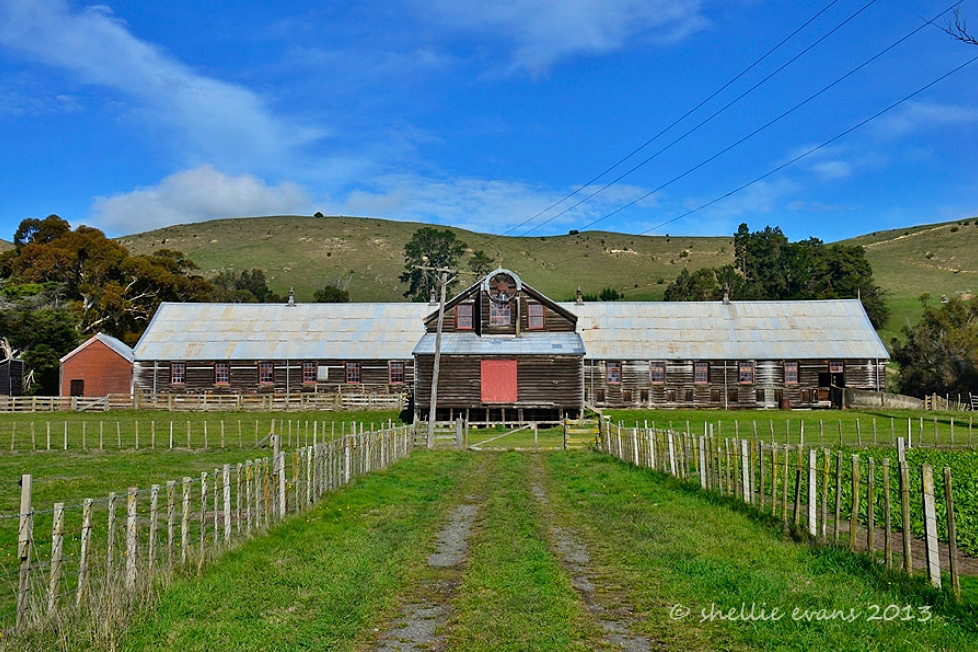
ARCHITECTURAL QUALITY: Maraekakaho Station woolshed is one of the larger woolsheds built in New Zealand having a floor space of some 15,000 square feet and an original capacity for holding 5000 sheep under cover. A detached night pen has been demolished and the shed now holds only 800 sheep. The building has had no major modifications and its scale gives a good idea of the size of woolshed required on a large run in the nineteenth century before the subdivision of the big estates. TOWNSCAPE/LANDMARK VALUE: This large building, sited on State Highway 50, is a prominent feature of the landscape.
Why is this place significant?
Historic Significance
Historical Significance or Value Maraekakaho Station Woolshed was a major building on the now subdivided Maraekakaho Station, once the largest station in this area of Hawkes Bay. Sir Donald McLean, original owner of the estate and his son Douglas, were prominent national figures. The remaining property has been in the Wenley family for sixty years.
Physical Significance
ARCHITECTURAL QUALITY: Maraekakaho Station woolshed is one of the larger woolsheds built in New Zealand having a floor space of some 15,000 square feet and an original capacity for holding 5000 sheep under cover. A detached night pen has been demolished and the shed now holds only 800 sheep. The building has had no major modifications and its scale gives a good idea of the size of woolshed required on a large run in the nineteenth century before the subdivision of the big estates. TOWNSCAPE/LANDMARK VALUE: This large building, sited on State Highway 50, is a prominent feature of the landscape.
Construction Details
Start Year
1895
Type
Addition
Description
Addition of the expert's room, where the grinding of combs and cutters took place, to the east end of the building.
Start Year
1895
Type
Modification
Description
At a later date part of this addition was moved to a neighbouring paddock to be used as a barn and only a small, gabled section remains.
Start Year
1930
startYearCirca
Type
Modification
Description
Race tip swim dip built to the west of the woolshed. Later changed to a long swim race dip. The sub-ground level portion of the dip has since been buried for safety reasons.
Start Year
1883
Type
Original Construction
Construction Materials
Timber piles, timber frame clad with weatherboards. Timber includes totara, rimu, kauri. Corrugated iron roof.
Notable Features
The largely original character of the woolshed. The very large wheel in the north gable.
Construction Details
Start Year
1895
Type
Addition
Description
Addition of the expert's room, where the grinding of combs and cutters took place, to the east end of the building.
Start Year
1895
Type
Modification
Description
At a later date part of this addition was moved to a neighbouring paddock to be used as a barn and only a small, gabled section remains.
Start Year
1930
startYearCirca
Type
Modification
Description
Race tip swim dip built to the west of the woolshed. Later changed to a long swim race dip. The sub-ground level portion of the dip has since been buried for safety reasons.
Start Year
1883
Type
Original Construction
Construction Materials
Timber piles, timber frame clad with weatherboards. Timber includes totara, rimu, kauri. Corrugated iron roof.
Notable Features
The largely original character of the woolshed. The very large wheel in the north gable.
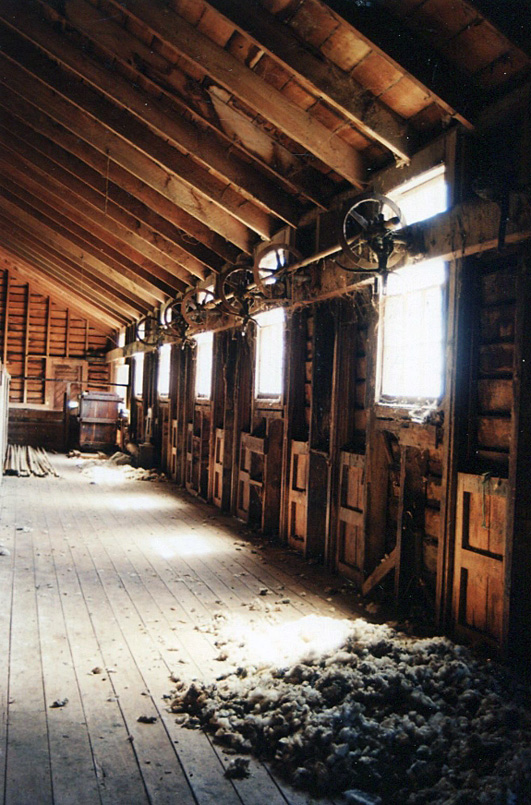
ARCHITECTURAL DESCRIPTION: This large T-shaped woolshed has one section orientated east-west and a smaller gable section on the north. The pitched roof of the main section has four ventilating lanterns which are intricately detailed for a purely functional structure. This part of the building incorporates drafting races, night pens, catching pens, and shearing stands. It has regular fenestration of double-hung sash windows. Below these on the north facade are the shearing boards - originally there were two shearing boards with twenty-eight stands in all, traditionally one stand for Maori and one for Pakeha shearers. Only five stands are used today. This was one of the first woolsheds in New Zealand to be fitted with shearing machinery. Equipment installed in 1895 is still in place in the west wing. A woolroom occupies the section extending to the north. A windlass with a pulley wheel in the north gable was used to move bales of wool to and from the loft. Loft space is extensive, running the length of the building and was used to store wool as well as grains. Such a large space being no longer required, the loft is empty. MODIFICATIONS: Minor modifications include: 1895 - Addition of the expert's room, where the grinding of combs and cutters took place, to the east end of the building. At a later date part of this addition was moved to a neighbouring paddock to be used as a barn and only a small, gabled section remains. Early addition, date unknown - Lean-to section added to the north of the woolroom. c.1930 - Race tip swim dip built to the west of the woolshed. Later changed to a long swim race dip. The sub-ground level portion of the dip has since been buried for safety reasons. Dates unknown - Partitions erected in the north section of the loft. Some repiling.
ARCHITECTURAL DESCRIPTION: This large T-shaped woolshed has one section orientated east-west and a smaller gable section on the north. The pitched roof of the main section has four ventilating lanterns which are intricately detailed for a purely functional structure. This part of the building incorporates drafting races, night pens, catching pens, and shearing stands. It has regular fenestration of double-hung sash windows. Below these on the north facade are the shearing boards - originally there were two shearing boards with twenty-eight stands in all, traditionally one stand for Maori and one for Pakeha shearers. Only five stands are used today. This was one of the first woolsheds in New Zealand to be fitted with shearing machinery. Equipment installed in 1895 is still in place in the west wing. A woolroom occupies the section extending to the north. A windlass with a pulley wheel in the north gable was used to move bales of wool to and from the loft. Loft space is extensive, running the length of the building and was used to store wool as well as grains. Such a large space being no longer required, the loft is empty. MODIFICATIONS: Minor modifications include: 1895 - Addition of the expert's room, where the grinding of combs and cutters took place, to the east end of the building. At a later date part of this addition was moved to a neighbouring paddock to be used as a barn and only a small, gabled section remains. Early addition, date unknown - Lean-to section added to the north of the woolroom. c.1930 - Race tip swim dip built to the west of the woolshed. Later changed to a long swim race dip. The sub-ground level portion of the dip has since been buried for safety reasons. Dates unknown - Partitions erected in the north section of the loft. Some repiling.
Historical and Associated Iwi / Hapū / Whānau
Information Sources
Daily Telegraph
Daily Telegraph
Dominion
Dominion, 16 Jul 1915, p. 9.
Hawkes Bay Herald Tribune
Hawkes Bay Herald Tribune
Land Information New Zealand (LINZ)
Land Information New Zealand
MacGregor, 1970
Miriam MacGregor, Early Stations of Hawke's Bay, A.H. & A.W. Reed, Wellington, 1970
Scholefield, 1940
G. H. Scholefield, A Dictionary of New Zealand Biography, Department of Internal Affairs, Wellington, 1940
Thornton, 1986
Geoffrey Thornton, The New Zealand Heritage of Farm Buildings, Auckland, 1986
Castle, 1980
John Castle & Sydney Grant, Hawkes Bay Heritage, Collins, Auckland, 1980
Ashburton Guardian
Ashburton Guardian 9 Jul 1915, p.7
Other Information
This historic place was registered under the Historic Places Act 1980. This report includes the text from the original Building Classification Committee report considered by the NZHPT Board at the time of registration. Please note that entry on the New Zealand Heritage List/Rarangi Korero identifies only the heritage values of the property concerned, and should not be construed as advice on the state of the property, or as a comment of its soundness or safety, including in regard to earthquake risk, safety in the event of fire, or insanitary conditions.
Historical and Associated Iwi / Hapū / Whānau
Information Sources
Daily Telegraph
Daily Telegraph
Dominion
Dominion, 16 Jul 1915, p. 9.
Hawkes Bay Herald Tribune
Hawkes Bay Herald Tribune
Land Information New Zealand (LINZ)
Land Information New Zealand
MacGregor, 1970
Miriam MacGregor, Early Stations of Hawke's Bay, A.H. & A.W. Reed, Wellington, 1970
Scholefield, 1940
G. H. Scholefield, A Dictionary of New Zealand Biography, Department of Internal Affairs, Wellington, 1940
Thornton, 1986
Geoffrey Thornton, The New Zealand Heritage of Farm Buildings, Auckland, 1986
Castle, 1980
John Castle & Sydney Grant, Hawkes Bay Heritage, Collins, Auckland, 1980
Ashburton Guardian
Ashburton Guardian 9 Jul 1915, p.7
Other Information
This historic place was registered under the Historic Places Act 1980. This report includes the text from the original Building Classification Committee report considered by the NZHPT Board at the time of registration. Please note that entry on the New Zealand Heritage List/Rarangi Korero identifies only the heritage values of the property concerned, and should not be construed as advice on the state of the property, or as a comment of its soundness or safety, including in regard to earthquake risk, safety in the event of fire, or insanitary conditions.
Current Usages
Uses: Agriculture
Specific Usage: Woolshed/Shearing Shed
Current Usages
Uses: Agriculture
Specific Usage: Woolshed/Shearing Shed