

List Entry Information
Status
Listed
List Entry Status
Historic Place Category 1
Access
Private/No Public Access
List Number
1059
Date Entered
24th March 1988
Date of Effect
24th March 1988
City/District Council
Central Hawke's Bay District
Region
Hawke's Bay Region
Extent of List Entry
Extent of registration includes part of the land described as Lot 3 DP 393968 (RT 538409), Hawkes Bay Land District, and the building known as Aramoana Station Homestead thereon.
Legal description
Lot 3 DP 393968 (RT 538409), Hawkes Bay Land District
Status
Listed
List Entry Status
Historic Place Category 1
Access
Private/No Public Access
List Number
1059
Date Entered
24th March 1988
Date of Effect
24th March 1988
City/District Council
Central Hawke's Bay District
Region
Hawke's Bay Region
Extent of List Entry
Extent of registration includes part of the land described as Lot 3 DP 393968 (RT 538409), Hawkes Bay Land District, and the building known as Aramoana Station Homestead thereon.
Legal description
Lot 3 DP 393968 (RT 538409), Hawkes Bay Land District
Why is this place significant?
Historic Significance
Historical Significance or Value Aramoana is part of the Blackhead run which came into the possession of the McHardy family in 1873. It was bought in partnership by Alexander McHardy and J H Coleman. Alexander McHardy and his two sons, Leslie and Percival, were involved in local Hawkes Bay affairs. Alexander was the first Chairman of the Taumumu Road Board in 1877 and remained a member for many years. He was also a member of the Patangata County Council and the Waipawa Hospital Board and the Hawkes Bay A & P Association. For many years he was a well known judge of Shorthorns. Leslie his elder son, carried on in his father's footsteps in the same local bodies. Percival, who lived in the Manawatu for thirty years, was a foundation member of the Manawatu A & P Association. The McHardys were one of the land owning families who flourished in Hawkes Bay before the turn of the century. Alexander was a good farmer and although uneducated himself, he sent his two sons to Nelson College and his daughters to Miss Greenwood's school in Wellington. The land owned by the McHardy family was not greatly sought after like that owned by the large runholders around Waipawa and Waipukurau. Much of it was steep, papa country, difficult to farm and with poor access. This is one reason why the family was able to hold onto its land for some years after other runholders has sold to the Government. Socially, Aramoana, like other sheep stations in Hawkes Bay, was a source of employment. While it was still part of Blackhead in Alexander's time, many men found employment there. In addition to shepherds and stockmen, McHardy employed gangs of men for bush felling, draining swamps and building dams. Some places on the station were named after these gangs, for example, Kerrytown. Isolation precluded Aramoana from being a social centre. When P A McHardy returned from the Manawatu, however, he brought with him a tradition for hospitality. Aramoana saw many weekend parties and a golf course was laid out. Later his sons and grandsons bred ponies and polo was played there in the weekends. Aramoana is of particular historical interest for two reasons. It was originally part of Pourere, Hawkes Bay's earliest sheep station. Secondly, it was one of a chain of sheep stations situated in the East Coast of the North Island. These stations had particular problems to cope with, uncertain climate, poor soil but particularly, isolation. The owners depended on the sea for their supplies and transport and as a means of transporting their wool. Richardson's Shipping Line of Napier counted Aramoana among its customers. The people on stations like Aramoana had to gear their shearing operations to the shipping out of wool by sea. Even the timber for the homesteads had to be floated ashore. These conditions called for skills and innovations quite unknown to their inland counterparts.
Physical Significance
ARCHITECTURAL SIGNIFICANCE: Aramoana was not one of the larger homesteads built in Hawkes Bay in the late nineteenth century. It is on the other hand, well built and well maintained. It is well sited on a hill to dominate the countryside and have a good view over the sea. The anonymous builders did a good job. The carvings on the gable ends, over some windows and over the front porch and the work of a skilled wood carver. D B Frame, the architect, designed many houses in and around Napier but it is doubtful whether many survived the Napier earthquake. Aramoana must have been one of his most significant works. TOWNSCAPE/LANDMARK SIGNIFICANCE: Aramoana, as stated above, is well sited on a hill to dominate the surrounding countryside and have a good view over the sea.
Why is this place significant?
Historic Significance
Historical Significance or Value Aramoana is part of the Blackhead run which came into the possession of the McHardy family in 1873. It was bought in partnership by Alexander McHardy and J H Coleman. Alexander McHardy and his two sons, Leslie and Percival, were involved in local Hawkes Bay affairs. Alexander was the first Chairman of the Taumumu Road Board in 1877 and remained a member for many years. He was also a member of the Patangata County Council and the Waipawa Hospital Board and the Hawkes Bay A & P Association. For many years he was a well known judge of Shorthorns. Leslie his elder son, carried on in his father's footsteps in the same local bodies. Percival, who lived in the Manawatu for thirty years, was a foundation member of the Manawatu A & P Association. The McHardys were one of the land owning families who flourished in Hawkes Bay before the turn of the century. Alexander was a good farmer and although uneducated himself, he sent his two sons to Nelson College and his daughters to Miss Greenwood's school in Wellington. The land owned by the McHardy family was not greatly sought after like that owned by the large runholders around Waipawa and Waipukurau. Much of it was steep, papa country, difficult to farm and with poor access. This is one reason why the family was able to hold onto its land for some years after other runholders has sold to the Government. Socially, Aramoana, like other sheep stations in Hawkes Bay, was a source of employment. While it was still part of Blackhead in Alexander's time, many men found employment there. In addition to shepherds and stockmen, McHardy employed gangs of men for bush felling, draining swamps and building dams. Some places on the station were named after these gangs, for example, Kerrytown. Isolation precluded Aramoana from being a social centre. When P A McHardy returned from the Manawatu, however, he brought with him a tradition for hospitality. Aramoana saw many weekend parties and a golf course was laid out. Later his sons and grandsons bred ponies and polo was played there in the weekends. Aramoana is of particular historical interest for two reasons. It was originally part of Pourere, Hawkes Bay's earliest sheep station. Secondly, it was one of a chain of sheep stations situated in the East Coast of the North Island. These stations had particular problems to cope with, uncertain climate, poor soil but particularly, isolation. The owners depended on the sea for their supplies and transport and as a means of transporting their wool. Richardson's Shipping Line of Napier counted Aramoana among its customers. The people on stations like Aramoana had to gear their shearing operations to the shipping out of wool by sea. Even the timber for the homesteads had to be floated ashore. These conditions called for skills and innovations quite unknown to their inland counterparts.
Physical Significance
ARCHITECTURAL SIGNIFICANCE: Aramoana was not one of the larger homesteads built in Hawkes Bay in the late nineteenth century. It is on the other hand, well built and well maintained. It is well sited on a hill to dominate the countryside and have a good view over the sea. The anonymous builders did a good job. The carvings on the gable ends, over some windows and over the front porch and the work of a skilled wood carver. D B Frame, the architect, designed many houses in and around Napier but it is doubtful whether many survived the Napier earthquake. Aramoana must have been one of his most significant works. TOWNSCAPE/LANDMARK SIGNIFICANCE: Aramoana, as stated above, is well sited on a hill to dominate the surrounding countryside and have a good view over the sea.
Construction Professional
Name
Frame, David Bruce
Type
Architect
Biography
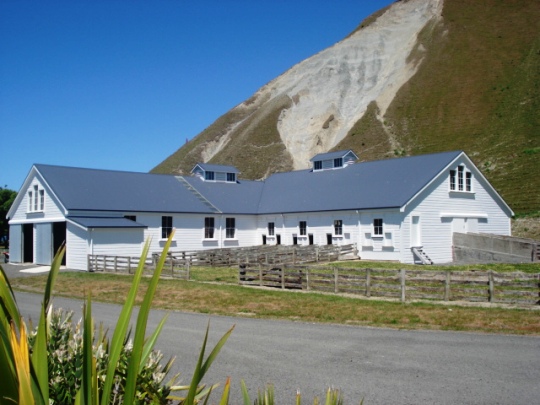
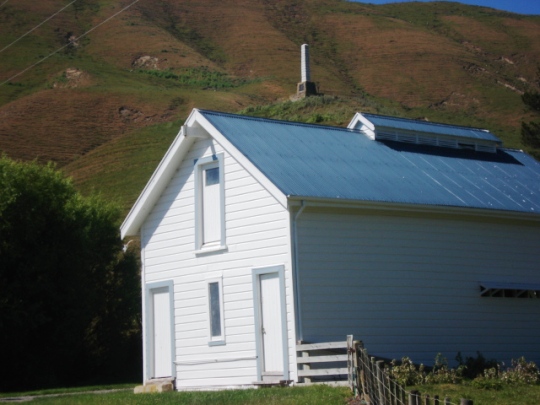
D B Frame, the architect who designed the homestead and stables at Aramoana, practised architecture in Napier for about 30 years. He was referred to as an architect in the Hawked Bay Almanac in 1885. In 1894, he was engaged by A Mc Hardy to design Aramoana for his second son Percival. Over the years he designed a variety of buildings but mainly houses and some banks. In the early years he combined with a more successful architect, W P Finch, in several projects. David Bruce Frame was an architect and civil engineer who spent most of his life in Napier. He designed a variety of buildings, sometimes in partnership with other notable architects, such as the Abbott’s Building (1932) with J.A. Louis Hay. Other buildings known to have been designed by Frame include the Aramoana Station Homestead (1894, Category 1 historic place), the Ancient Order of Foresters building (1919, currently Napier’s Quest Hotel) and the former McCulloch Butler & Spence Building (1929). He also designed another significant Napier monument, the 1897 Flood Heroism Memorial (List No. 1115) located on Marine Parade and unveiled in September 1900. Frame died in 1938 at the age of 75. Source: Proposal Report for Cenotaph, Napier (List No. 1113)
Construction Details
Start Year
1894
Type
Original Construction
Construction Materials
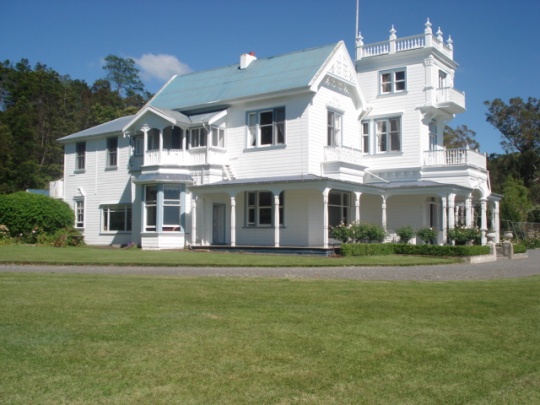
The house was built of heart Kauri with an iron roof. The interior walls are wooden and decorated with an embossed sheet plaster called 'lynctruster'
Notable Features
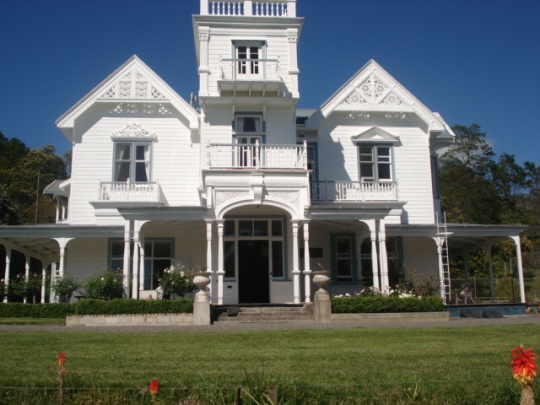
The tower of Aramoana, reminiscent of the battlement of some Scottish castle, gives it an imposing air. The carvings on the gable ends, over some windows and over the front porch are the work of a skilled wood carver.
Construction Professional
Name
Frame, David Bruce
Type
Architect
Biography
D B Frame, the architect who designed the homestead and stables at Aramoana, practised architecture in Napier for about 30 years. He was referred to as an architect in the Hawked Bay Almanac in 1885. In 1894, he was engaged by A Mc Hardy to design Aramoana for his second son Percival. Over the years he designed a variety of buildings but mainly houses and some banks. In the early years he combined with a more successful architect, W P Finch, in several projects. David Bruce Frame was an architect and civil engineer who spent most of his life in Napier. He designed a variety of buildings, sometimes in partnership with other notable architects, such as the Abbott’s Building (1932) with J.A. Louis Hay. Other buildings known to have been designed by Frame include the Aramoana Station Homestead (1894, Category 1 historic place), the Ancient Order of Foresters building (1919, currently Napier’s Quest Hotel) and the former McCulloch Butler & Spence Building (1929). He also designed another significant Napier monument, the 1897 Flood Heroism Memorial (List No. 1115) located on Marine Parade and unveiled in September 1900. Frame died in 1938 at the age of 75. Source: Proposal Report for Cenotaph, Napier (List No. 1113)
Construction Details
Start Year
1894
Type
Original Construction
Construction Materials
The house was built of heart Kauri with an iron roof. The interior walls are wooden and decorated with an embossed sheet plaster called 'lynctruster'
Notable Features
The tower of Aramoana, reminiscent of the battlement of some Scottish castle, gives it an imposing air. The carvings on the gable ends, over some windows and over the front porch are the work of a skilled wood carver.
ARCHITECTURAL DESCRIPTION ( Style): The homestead is two-storeyed with a tower. A wooden verandah runs across the front of the house and part way along two sides. On each side of the tower are decorated gable ends. Above the bedroom window on the left-hand side of the tower is a similar piece of carving which is not repeated over the bedroom window on the right-hand side. This carving indicates the presence of a skilled carver among the gang of workmen. There is carving above the front porch and the date '1894' is carved over what was once the door to the servants' quarters. Aramoana therefore appears as a showcase for carpenter skills and originality. Overall, the style of the house may be described as late Victorian vernacular Gothic with an infusion of Scottish baronial style in the tower. MODIFICATIONS: Photographic records held by the family show that after completion an extra balcony was added to the left-hand side of the house above the dining room window. In addition, an extra room was added to the servants' quarters on the first floor; a photo taken in the early twentieth century shows two bedroom windows only, compared with the three in 1979 photos. There were several imposing chimneys but these collapsed in the Napier earthquake in 1931. However, this was the only damage the house sustained. Inside, several rooms on the ground floor have been altered by the present family. The old school room has been converted to a modern bedroom suite with the office incorporated as a dressing room. The morning room at the front of the house has also been modernised and its ceilings lowered. The present owner uses this room as an office. To modernise the kitchen, walls were knocked out of two storerooms and a large window overlooking the sea added. The first floor remains in its original condition.
ARCHITECTURAL DESCRIPTION ( Style): The homestead is two-storeyed with a tower. A wooden verandah runs across the front of the house and part way along two sides. On each side of the tower are decorated gable ends. Above the bedroom window on the left-hand side of the tower is a similar piece of carving which is not repeated over the bedroom window on the right-hand side. This carving indicates the presence of a skilled carver among the gang of workmen. There is carving above the front porch and the date '1894' is carved over what was once the door to the servants' quarters. Aramoana therefore appears as a showcase for carpenter skills and originality. Overall, the style of the house may be described as late Victorian vernacular Gothic with an infusion of Scottish baronial style in the tower. MODIFICATIONS: Photographic records held by the family show that after completion an extra balcony was added to the left-hand side of the house above the dining room window. In addition, an extra room was added to the servants' quarters on the first floor; a photo taken in the early twentieth century shows two bedroom windows only, compared with the three in 1979 photos. There were several imposing chimneys but these collapsed in the Napier earthquake in 1931. However, this was the only damage the house sustained. Inside, several rooms on the ground floor have been altered by the present family. The old school room has been converted to a modern bedroom suite with the office incorporated as a dressing room. The morning room at the front of the house has also been modernised and its ceilings lowered. The present owner uses this room as an office. To modernise the kitchen, walls were knocked out of two storerooms and a large window overlooking the sea added. The first floor remains in its original condition.
Historical and Associated Iwi / Hapū / Whānau
Other Information
This historic place was registered under the Historic Places Act 1980. This report includes the text from the original Building Classification Committee report considered by the NZHPT Board at the time of registration. Please note that entry on the New Zealand Heritage List/Rarangi Korero identifies only the heritage values of the property concerned, and should not be construed as advice on the state of the property, or as a comment of its soundness or safety, including in regard to earthquake risk, safety in the event of fire, or insanitary conditions.
Historical and Associated Iwi / Hapū / Whānau
Other Information
This historic place was registered under the Historic Places Act 1980. This report includes the text from the original Building Classification Committee report considered by the NZHPT Board at the time of registration. Please note that entry on the New Zealand Heritage List/Rarangi Korero identifies only the heritage values of the property concerned, and should not be construed as advice on the state of the property, or as a comment of its soundness or safety, including in regard to earthquake risk, safety in the event of fire, or insanitary conditions.
Current Usages
Uses: Accommodation
Specific Usage: House
Current Usages
Uses: Accommodation
Specific Usage: House
Location
Related listings
Sign up to hear more
Get the latest heritage news, features and events delivered
straight to your inbox.
