

This memorial is historically significant as the major venue for war commemoration in Hastings since its construction in 1923. War memorials are significant symbolic and commemorative places for New Zealanders, whose national identity has, to some extent, been shaped by overseas wars.
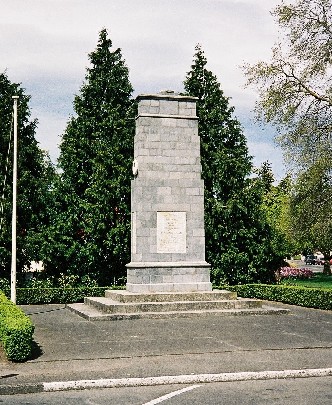
As well as the very high commemorative value of the memorial, it has aesthetic value for its simple, solid form, well proportioned in the Classical tradition, and for the beauty of the Coromandel granite from which it is built. It is a dignified structure, eminently suited to its purpose, and it is complemented by the park setting that forms its backdrop. It is in authentic form, and in very good condition.
List Entry Information
Status
Listed
List Entry Status
Historic Place Category 2
Access
Able to Visit
List Number
1083
Date Entered
14th April 2005
Date of Effect
14th April 2005
City/District Council
Hastings District
Region
Hawke's Bay Region
Extent of List Entry
Registration includes part of the land in Certificate of Title HB85/49, Hawkes Bay Registry, (as shown in Map A on the Registration Report) and the whole of the Memorial, including forecourt and flagpole thereon.
Legal description
Lot 211 Deeds Plan 67 (RT HB85/49), Hawkes Bay Land District
Location Description
Located adjacent to the Palmerston North - Gisborne Railway Line and Lyndon Road East. (Please note that the Russell Street Extension is not legal road and is located adjacent to Russell Street South.)
Status
Listed
List Entry Status
Historic Place Category 2
Access
Able to Visit
List Number
1083
Date Entered
14th April 2005
Date of Effect
14th April 2005
City/District Council
Hastings District
Region
Hawke's Bay Region
Extent of List Entry
Registration includes part of the land in Certificate of Title HB85/49, Hawkes Bay Registry, (as shown in Map A on the Registration Report) and the whole of the Memorial, including forecourt and flagpole thereon.
Legal description
Lot 211 Deeds Plan 67 (RT HB85/49), Hawkes Bay Land District
Location Description
Located adjacent to the Palmerston North - Gisborne Railway Line and Lyndon Road East. (Please note that the Russell Street Extension is not legal road and is located adjacent to Russell Street South.)
Why is this place significant?
Cultural Significance
Cultural The construction and use of memorials as places of commemoration is a matter of deep cultural significance to New Zealanders. The need to have tangible places to express grief and gratitude to fallen soldiers is an integral part of New Zealand's culture and the Cenotaph reflects the people of Hastings' desire to acknowledge their collective loss. Based on English architect Edward Luytens influential design for the Cenotaph at Whitehall, England, the Hastings Cenotaph symbolises the cultural links between, and shared sense of loss felt in England and New Zealand after the First World War. Spiritual Some spiritual value can be accorded this memorial, and others like it, for its role as a focus for memorialising New Zealand's dead soldiers.
Historic Significance
Historical Significance or Value Historical This memorial has been used for commemorative purposes since 1923, in particular ANZAC Day services.
Physical Significance
Aesthetic The Hastings Cenotaph has aesthetic value for its simple and sombre design, and for the natural beauty of the stone in which it is built. It is complemented by its park-like setting, providing an oasis in the city centre. Architectural The design of this monument is dignified and appropriate to the purpose. It is almost style-less, but follows Classical principles in its tapering form and the profiles of plinth and capping. The choice of material is perfect, a local stone that has an air of permanence and solidity. Technological The memorial has technological value for the masonry construction, and for the use of a natural indigenous material.
Why is this place Category 1 / Category 2?
Detail Of Assessed Criteria
(a) The extent to which the place reflects important or representative aspects of New Zealand history This memorial illustrates an important representative part of New Zealand life - the need to express, through the construction and use of memorials, appropriate grief and appreciation for the sacrifice of soldiers who served or died in the First World War. This memorial has performed this function, as others have throughout New Zealand, since 1923. (b) The association of the place with events, persons, or ideas of importance in New Zealand history The Cenotaph is the focal point of Hastings' ANZAC Day services, an annual event of huge significance for this country. The Cenotaph has also been linked, by its location, to Hawke's Bay's most distinguished military son, Sir Andrew Russell, in his then capacity as president of the RSA. (e) The community association with, or public esteem for, the place This memorial has considerable community association, as a place built by the community to commemorate war dead and those who served. (f) The potential of the place for public education War memorials such as this one illustrate an important aspect of New Zealand history, that is the role played by the country in fighting in wars overseas; they consequently have an important role to play in the education of New Zealanders by, for example, children attending ANZAC Day services. (g) The technical accomplishment or value, or design of the place The Cenotaph has technical value for its masonry construction and for the use of Coromandel granite. It has high aesthetic value for its simple and sombre form, for the natural beauty of the stone in which it is built, and for its park-like setting. (h) The symbolic or commemorative value of the place War memorials are, by their very conception and design, intended to be both symbolic and commemorative. They are places where the sacrifice of others can be commemorated in a meaningful way. The Hastings Cenotaph, with its design based on Luyten's Cenotaph in Whitehall making reference back to English origins, underlies both these values. (k) The extent to which the place forms part of a wider historical and cultural complex or historical and cultural landscape The Cenotaph forms part of a significant immediate landscape, including the civic square, gardens and other memorial buildings, such as the War Memorial Library.
Why is this place significant?
Cultural Significance
Cultural The construction and use of memorials as places of commemoration is a matter of deep cultural significance to New Zealanders. The need to have tangible places to express grief and gratitude to fallen soldiers is an integral part of New Zealand's culture and the Cenotaph reflects the people of Hastings' desire to acknowledge their collective loss. Based on English architect Edward Luytens influential design for the Cenotaph at Whitehall, England, the Hastings Cenotaph symbolises the cultural links between, and shared sense of loss felt in England and New Zealand after the First World War. Spiritual Some spiritual value can be accorded this memorial, and others like it, for its role as a focus for memorialising New Zealand's dead soldiers.
Historic Significance
Historical Significance or Value Historical This memorial has been used for commemorative purposes since 1923, in particular ANZAC Day services.
Physical Significance
Aesthetic The Hastings Cenotaph has aesthetic value for its simple and sombre design, and for the natural beauty of the stone in which it is built. It is complemented by its park-like setting, providing an oasis in the city centre. Architectural The design of this monument is dignified and appropriate to the purpose. It is almost style-less, but follows Classical principles in its tapering form and the profiles of plinth and capping. The choice of material is perfect, a local stone that has an air of permanence and solidity. Technological The memorial has technological value for the masonry construction, and for the use of a natural indigenous material.
Why is this place Category 1 / Category 2?
Detail Of Assessed Criteria
(a) The extent to which the place reflects important or representative aspects of New Zealand history This memorial illustrates an important representative part of New Zealand life - the need to express, through the construction and use of memorials, appropriate grief and appreciation for the sacrifice of soldiers who served or died in the First World War. This memorial has performed this function, as others have throughout New Zealand, since 1923. (b) The association of the place with events, persons, or ideas of importance in New Zealand history The Cenotaph is the focal point of Hastings' ANZAC Day services, an annual event of huge significance for this country. The Cenotaph has also been linked, by its location, to Hawke's Bay's most distinguished military son, Sir Andrew Russell, in his then capacity as president of the RSA. (e) The community association with, or public esteem for, the place This memorial has considerable community association, as a place built by the community to commemorate war dead and those who served. (f) The potential of the place for public education War memorials such as this one illustrate an important aspect of New Zealand history, that is the role played by the country in fighting in wars overseas; they consequently have an important role to play in the education of New Zealanders by, for example, children attending ANZAC Day services. (g) The technical accomplishment or value, or design of the place The Cenotaph has technical value for its masonry construction and for the use of Coromandel granite. It has high aesthetic value for its simple and sombre form, for the natural beauty of the stone in which it is built, and for its park-like setting. (h) The symbolic or commemorative value of the place War memorials are, by their very conception and design, intended to be both symbolic and commemorative. They are places where the sacrifice of others can be commemorated in a meaningful way. The Hastings Cenotaph, with its design based on Luyten's Cenotaph in Whitehall making reference back to English origins, underlies both these values. (k) The extent to which the place forms part of a wider historical and cultural complex or historical and cultural landscape The Cenotaph forms part of a significant immediate landscape, including the civic square, gardens and other memorial buildings, such as the War Memorial Library.
Construction Details
Start Year
1923
Type
Original Construction
Construction Materials
The Cenotaph is built from Coromandel granite; it is likely to have a reinforced concrete core.
Construction Details
Start Year
1923
Type
Original Construction
Construction Materials
The Cenotaph is built from Coromandel granite; it is likely to have a reinforced concrete core.
The Cenotaph in Civic Square, Hastings, is a solemn tribute to, and a commemoration of, the contribution of the 162 men of the city who served and died in the First World War. In common with other cities and towns around New Zealand, the city of Hastings sent men to fight in the South African War, and World War I and II, and later wars, such as the Korean and Vietnam wars. During World War I, approximately 100,000 New Zealanders fought. Of those who served, almost 18,000 died, leaving virtually no New Zealand family untouched by loss. The sense of loss and grief manifested itself in the building of hundreds of memorials in towns and cities all over New Zealand. As noted by historians Chris MacLean and Jock Phillips, the memorials served as surrogate tombs for families of the New Zealanders buried in overseas graves and commemorated the achievements of all those who lost their lives. The Cenotaph, which means 'empty tomb' was the product of an agreement by its citizens to combine resources to erect a suitably imposing monument. The site chosen for Hastings' memorial was part of land that had been purchased by the Hastings Borough Council with the intention of forming a civic square. The site faced the extension of what then known as Station Street. This street was later renamed 'Russell Street' in honour of Sir Andrew Russell (1868-1960), the national president of the RSA between 1921-24 and 1927-35. Russell was a Hawke's Bay sheep farmer and British-trained military officer who, after serving time at Gallipoli, became the commander of New Zealand forces on the western front. He was widely regarded as an inspirational military leader during battles when many New Zealanders died in action. Hastings' memorial was part-funded by the Hawke's Bay Fallen Soldiers' Memorial Committee, which also raised money for a memorial in Havelock North. The Hastings memorial was intended to imitate the influential Cenotaph at Whitehall, London, designed by Edward Luytens and completed in 1920. Unfortunately the funding was insufficient and, although the design remained the same, the memorial was reduced in width. Constructed from Coromandel granite at 'the monumental works' at Napier, the memorial was opened on Armistice Day, 11 November 1923, by the wife of Mayor William Hart, in the absence of Sir Andrew Russell. Its full title was Hawke's Bay Fallen Soldiers Memorial. The Cenotaph has been the focus of war commemoration and memorial events in Hastings since its construction and serves as the war memorial for all overseas wars involving soldiers from the district.
The Cenotaph in Civic Square, Hastings, is a solemn tribute to, and a commemoration of, the contribution of the 162 men of the city who served and died in the First World War. In common with other cities and towns around New Zealand, the city of Hastings sent men to fight in the South African War, and World War I and II, and later wars, such as the Korean and Vietnam wars. During World War I, approximately 100,000 New Zealanders fought. Of those who served, almost 18,000 died, leaving virtually no New Zealand family untouched by loss. The sense of loss and grief manifested itself in the building of hundreds of memorials in towns and cities all over New Zealand. As noted by historians Chris MacLean and Jock Phillips, the memorials served as surrogate tombs for families of the New Zealanders buried in overseas graves and commemorated the achievements of all those who lost their lives. The Cenotaph, which means 'empty tomb' was the product of an agreement by its citizens to combine resources to erect a suitably imposing monument. The site chosen for Hastings' memorial was part of land that had been purchased by the Hastings Borough Council with the intention of forming a civic square. The site faced the extension of what then known as Station Street. This street was later renamed 'Russell Street' in honour of Sir Andrew Russell (1868-1960), the national president of the RSA between 1921-24 and 1927-35. Russell was a Hawke's Bay sheep farmer and British-trained military officer who, after serving time at Gallipoli, became the commander of New Zealand forces on the western front. He was widely regarded as an inspirational military leader during battles when many New Zealanders died in action. Hastings' memorial was part-funded by the Hawke's Bay Fallen Soldiers' Memorial Committee, which also raised money for a memorial in Havelock North. The Hastings memorial was intended to imitate the influential Cenotaph at Whitehall, London, designed by Edward Luytens and completed in 1920. Unfortunately the funding was insufficient and, although the design remained the same, the memorial was reduced in width. Constructed from Coromandel granite at 'the monumental works' at Napier, the memorial was opened on Armistice Day, 11 November 1923, by the wife of Mayor William Hart, in the absence of Sir Andrew Russell. Its full title was Hawke's Bay Fallen Soldiers Memorial. The Cenotaph has been the focus of war commemoration and memorial events in Hastings since its construction and serves as the war memorial for all overseas wars involving soldiers from the district.
The Hastings Cenotaph has a simple obelisk form, rectangular in plan shape; it rests on a platform of three steps, has a base plinth, and a shaft that rises in a series of slightly reducing tiers to an overhanging cap with a wreath on the very top. The main part of the shaft has an inset stone on the west face with an inscription dedicating it 'to all those who gave their lives during the Great War'. Plaques on other parts of the shaft list the names of the 162 Hastings men who died in the First World War. It is a simple and sombre design, quite unadorned but for the moulded plinth and cap. At close quarters, the natural colour and texture of the stone, and the sparkle of its crystalline structure, give the Cenotaph aesthetic value. The Cenotaph is of masonry construction, being coursed ashlar (the stone faces dressed and laid in regular courses), and the stone is Coromandel tonalite, commonly known as 'Coromandel granite'. It is marked on the bottom left of the west face 'C Fawcett Supervisor' and on the bottom right 'H B M Wks Napier'. The Cenotaph is set in a quiet corner of the city, surrounded by gardens and trees. A car park at the end of Russell Street serves as a forecourt. A flagpole stands nearby, and a low hedge marks off a space around three sides of the Cenotaph.
The Hastings Cenotaph has a simple obelisk form, rectangular in plan shape; it rests on a platform of three steps, has a base plinth, and a shaft that rises in a series of slightly reducing tiers to an overhanging cap with a wreath on the very top. The main part of the shaft has an inset stone on the west face with an inscription dedicating it 'to all those who gave their lives during the Great War'. Plaques on other parts of the shaft list the names of the 162 Hastings men who died in the First World War. It is a simple and sombre design, quite unadorned but for the moulded plinth and cap. At close quarters, the natural colour and texture of the stone, and the sparkle of its crystalline structure, give the Cenotaph aesthetic value. The Cenotaph is of masonry construction, being coursed ashlar (the stone faces dressed and laid in regular courses), and the stone is Coromandel tonalite, commonly known as 'Coromandel granite'. It is marked on the bottom left of the west face 'C Fawcett Supervisor' and on the bottom right 'H B M Wks Napier'. The Cenotaph is set in a quiet corner of the city, surrounded by gardens and trees. A car park at the end of Russell Street serves as a forecourt. A flagpole stands nearby, and a low hedge marks off a space around three sides of the Cenotaph.
Historical and Associated Iwi / Hapū / Whānau
Completion Date
1st January 2005
Report Written By
M. Kelly, C. Cochran
Information Sources
Boyd, 1984
Mary Boyd, City of the Plains, A History of Hastings, Wellington, 1984
MacLean, 1990
Chris MacLean and Jock Phillips, The Sorrow and the Pride: New Zealand War Memorials, Wellington, 1990
Other Information
A fully referenced version of this report is available from the Central Region of the NZHPT. Please note that entry on the New Zealand Heritage List/Rarangi Korero identifies only the heritage values of the property concerned, and should not be construed as advice on the state of the property, or as a comment of its soundness or safety, including in regard to earthquake risk, safety in the event of fire, or insanitary conditions.
Historical and Associated Iwi / Hapū / Whānau
Completion Date
1st January 2005
Report Written By
M. Kelly, C. Cochran
Information Sources
Boyd, 1984
Mary Boyd, City of the Plains, A History of Hastings, Wellington, 1984
MacLean, 1990
Chris MacLean and Jock Phillips, The Sorrow and the Pride: New Zealand War Memorials, Wellington, 1990
Other Information
A fully referenced version of this report is available from the Central Region of the NZHPT. Please note that entry on the New Zealand Heritage List/Rarangi Korero identifies only the heritage values of the property concerned, and should not be construed as advice on the state of the property, or as a comment of its soundness or safety, including in regard to earthquake risk, safety in the event of fire, or insanitary conditions.
Current Usages
Uses: Commemoration
Specific Usage: Memorial - World War One
Uses: Commemoration
Specific Usage: Monuments, memorial, site of particular event - other
Former Usages
General Usage: Commemoration
Specific Usage: Memorial - World War One
General Usage: Commemoration
Specific Usage: Monuments, memorial, site of particular event - other
Themes
War Memorial
Web Links
description: The Memorials Register, New Zealand History Online, Ministry for Culture and Heritage.
Current Usages
Uses: Commemoration
Specific Usage: Memorial - World War One
Uses: Commemoration
Specific Usage: Monuments, memorial, site of particular event - other
Former Usages
General Usage: Commemoration
Specific Usage: Memorial - World War One
General Usage: Commemoration
Specific Usage: Monuments, memorial, site of particular event - other
Themes
War Memorial
Web Links
description: The Memorials Register, New Zealand History Online, Ministry for Culture and Heritage.
Location
Sign up to hear more
Get the latest heritage news, features and events delivered
straight to your inbox.
