Quick links


Quick links
Quick links
Quick links
Quick links
Quick links
73 Eastern Hutt Road, TAITA
Private
Historic Place Category 1
List No. 1325
List Entry Information
Status
Listed
List Entry Status
Historic Place Category 1
Access
Private/No Public Access
List Number
1325
Date Entered
21st September 1989
Date of Effect
21st September 1989
City/District Council
Hutt City
Region
Wellington Region
Legal description
Sec 554, Pt Sec 59 Hutt District
Status
Listed
List Entry Status
Historic Place Category 1
Access
Private/No Public Access
List Number
1325
Date Entered
21st September 1989
Date of Effect
21st September 1989
City/District Council
Hutt City
Region
Wellington Region
Legal description
Sec 554, Pt Sec 59 Hutt District
Why is this place significant?
Historic Significance
Historical Significance or Value The land on which Christ Church stands was given by the Hon A G Tollemache, an Englishman who later farmed in Hawkes Bay. The church was built to serve the 32 European families in the district and was opened on 1 January 1854. Christ Church is one of the five first Anglican churches to be built in the Wellington District. The first vicar of Christ Church was Thomas Biddulph Hutton, who had been ordained as a priest at St Paul's, Wellington, on 23 February 1853, and was resident at St James Parsonage at the Hutt, until gifted land by Edward Gibbon Wakefield in 1855.
Physical Significance
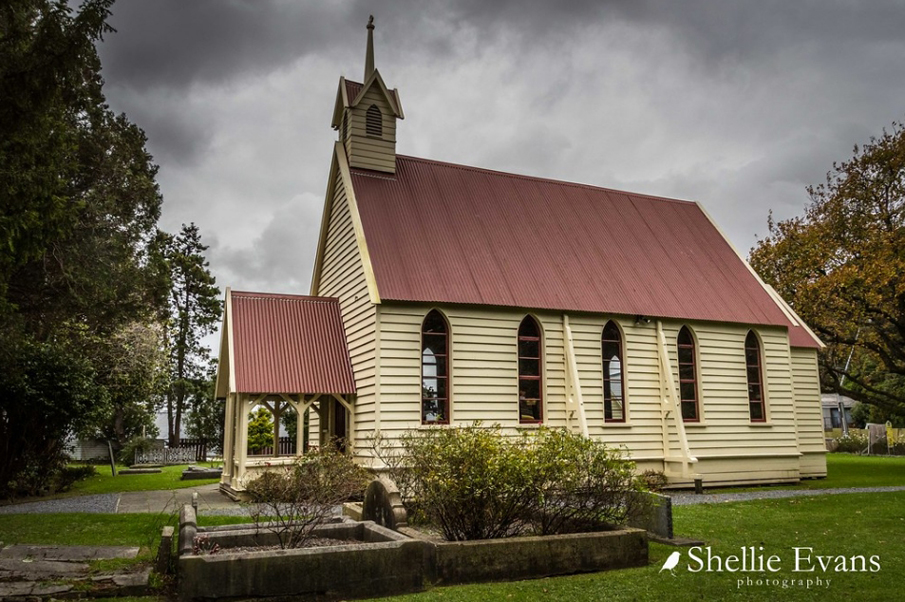
ARCHITECTURAL SIGNIFICANCE: This church is an example of an adaptation of an English parish church design to local materials and technology. That the church was built without nails is evidence of considerable skill on the part of Sidney Hirst, and overall its design is simple with little ornament, but a high standard of workmanship. TOWNSCAPE/LANDMARK SIGNIFICANCE: With the realignment of the railway and road the Christ Church Preservation Association built a memorial wall and lychgate to orient the church to the Eastern Hutt Road. This lychgate and wall was designed by Clere, Fitzgerald and Richmond and built by Maurice de Muth in 1951. The church is a townscape feature as an ecclesiastical building in a predominantly industrial area. It is plainly visible from both the railway at the rear and road at the front of the property.
Why is this place significant?
Historic Significance
Historical Significance or Value The land on which Christ Church stands was given by the Hon A G Tollemache, an Englishman who later farmed in Hawkes Bay. The church was built to serve the 32 European families in the district and was opened on 1 January 1854. Christ Church is one of the five first Anglican churches to be built in the Wellington District. The first vicar of Christ Church was Thomas Biddulph Hutton, who had been ordained as a priest at St Paul's, Wellington, on 23 February 1853, and was resident at St James Parsonage at the Hutt, until gifted land by Edward Gibbon Wakefield in 1855.
Physical Significance
ARCHITECTURAL SIGNIFICANCE: This church is an example of an adaptation of an English parish church design to local materials and technology. That the church was built without nails is evidence of considerable skill on the part of Sidney Hirst, and overall its design is simple with little ornament, but a high standard of workmanship. TOWNSCAPE/LANDMARK SIGNIFICANCE: With the realignment of the railway and road the Christ Church Preservation Association built a memorial wall and lychgate to orient the church to the Eastern Hutt Road. This lychgate and wall was designed by Clere, Fitzgerald and Richmond and built by Maurice de Muth in 1951. The church is a townscape feature as an ecclesiastical building in a predominantly industrial area. It is plainly visible from both the railway at the rear and road at the front of the property.
Construction Professional
Name
Bousfield, Octavius Woodthorpe
Type
Architect
Biography
Bousfield (1830-1882), an early surveyor who arrived in New Zealand in 1851, was a draughtsman with the Survey Department in Wellington from 1852. He became Assistant Surveyor at Wellington in 1857 before shifting to Napier. He was involved with the surveying of Maori land proposed for European purchase in Hawkes Bay and Poverty Bay. With Captain E J Winter he took part in a campaign against Pai Marire and Te Kooti in 1866. He edited the 'Hawkes Bay Times' and was a member of the Provincial Council (Hawkes Bay) from 1863-67. His architectural design ability is demonstrated by a drawing in the British Museum of a building believed to be the Provincial Buildings, Napier. Bousfield is also thought to have designed Christ Church, Taita (1853-54).
Name
Hirst, Sidney
Type
Builder
Biography
Sidney Hirst is referred to in all published histories of the Christ Church as its builder. He also was the builder of most of the houses in Sydney Street according to descendants. Coincidentally, this is where Bousfield lived. Sidney Hirst arrived at Wellington in 1842 with his wife and two children and stated his occupation as joiner and carpenter. Hirst moved to the Hutt some time in 1853, and this would fit with his being the successful tenderer for the building of the church as the tenders closed 1 March 1853.
Construction Details
Start Year
1991
Type
Reconstruction
Description
Restoration work
Start Year
1854
Type
Original Construction
Start Year
1951
startYearCirca
Type
Addition
Description
Lych-gate and memorial wall built
Start Year
1989
Type
Other
Description
Damaged by fire
Construction Materials
Totara logs (given by John Ings Daysh who arrived at Petone in the "Gertrude" in 1841) were pit sawn for the church. The frame of the building was constructed without the use of nails, and clad in weatherboard with an original roof of totara shingles. It sat on totara piles, and was unlined, with buttressed walls.
Notable Features
The pews, carved font, altar, lectern and reading desk are all totara and are special features which date from the opening of the church.
Construction Professional
Name
Bousfield, Octavius Woodthorpe
Type
Architect
Biography
Bousfield (1830-1882), an early surveyor who arrived in New Zealand in 1851, was a draughtsman with the Survey Department in Wellington from 1852. He became Assistant Surveyor at Wellington in 1857 before shifting to Napier. He was involved with the surveying of Maori land proposed for European purchase in Hawkes Bay and Poverty Bay. With Captain E J Winter he took part in a campaign against Pai Marire and Te Kooti in 1866. He edited the 'Hawkes Bay Times' and was a member of the Provincial Council (Hawkes Bay) from 1863-67. His architectural design ability is demonstrated by a drawing in the British Museum of a building believed to be the Provincial Buildings, Napier. Bousfield is also thought to have designed Christ Church, Taita (1853-54).
Name
Hirst, Sidney
Type
Builder
Biography
Sidney Hirst is referred to in all published histories of the Christ Church as its builder. He also was the builder of most of the houses in Sydney Street according to descendants. Coincidentally, this is where Bousfield lived. Sidney Hirst arrived at Wellington in 1842 with his wife and two children and stated his occupation as joiner and carpenter. Hirst moved to the Hutt some time in 1853, and this would fit with his being the successful tenderer for the building of the church as the tenders closed 1 March 1853.
Construction Details
Start Year
1991
Type
Reconstruction
Description
Restoration work
Start Year
1854
Type
Original Construction
Start Year
1951
startYearCirca
Type
Addition
Description
Lych-gate and memorial wall built
Start Year
1989
Type
Other
Description
Damaged by fire
Construction Materials
Totara logs (given by John Ings Daysh who arrived at Petone in the "Gertrude" in 1841) were pit sawn for the church. The frame of the building was constructed without the use of nails, and clad in weatherboard with an original roof of totara shingles. It sat on totara piles, and was unlined, with buttressed walls.
Notable Features
The pews, carved font, altar, lectern and reading desk are all totara and are special features which date from the opening of the church.
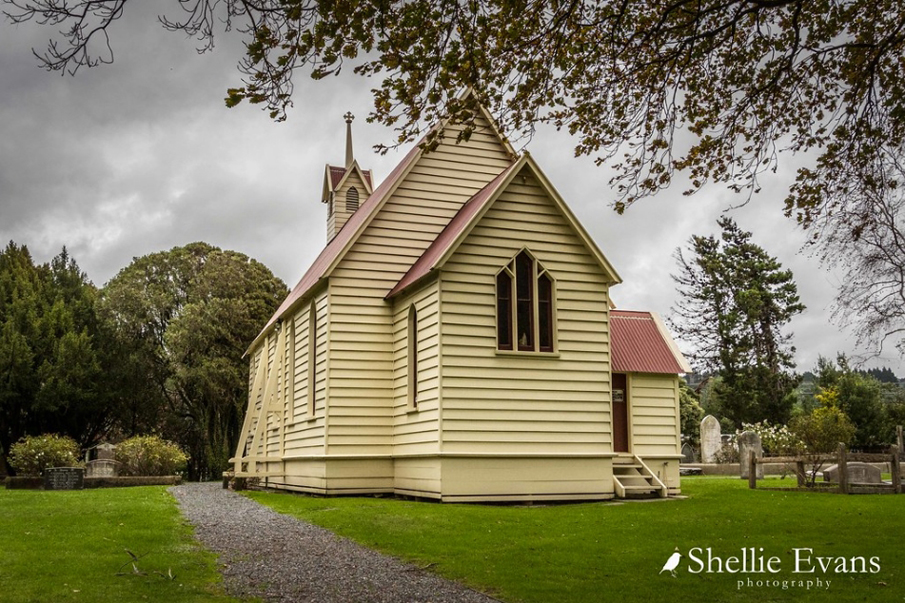
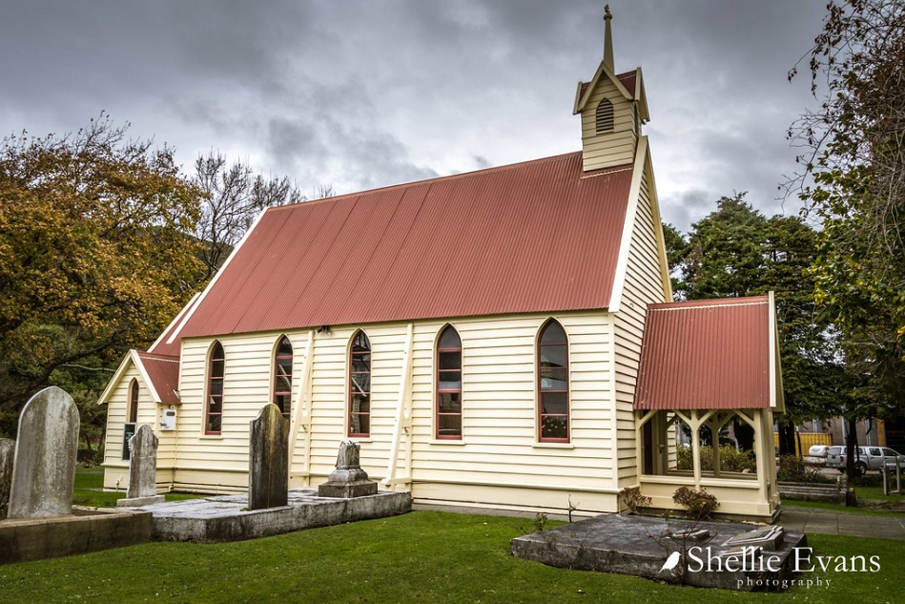
ARCHITECTURAL DESCRIPTION (STYLE): This is an early English Gothic Revival ecclesiastical building with an entrance in the west end through a covered porch, and apse and vestry in the east end. Its simple Gothic features are the lancet windows, altar rail and ornamental arch over the sanctuary which exhibits Gothic trefoil motifs. MODIFICATIONS: Wooden shingles have been replaced by iron roofing. The original vestry has been closed off and another built to the left of the entrance. Walls on the interior have been lined with tongue and groove match lining. The church has been repiled with wood, and the roof reclad in iron.
ARCHITECTURAL DESCRIPTION (STYLE): This is an early English Gothic Revival ecclesiastical building with an entrance in the west end through a covered porch, and apse and vestry in the east end. Its simple Gothic features are the lancet windows, altar rail and ornamental arch over the sanctuary which exhibits Gothic trefoil motifs. MODIFICATIONS: Wooden shingles have been replaced by iron roofing. The original vestry has been closed off and another built to the left of the entrance. Walls on the interior have been lined with tongue and groove match lining. The church has been repiled with wood, and the roof reclad in iron.
Historical and Associated Iwi / Hapū / Whānau
Completion Date
16th August 2001
Report Written By
Helen McCracken
Information Sources
Alexander Turnbull Library
Alexander Turnbull Library, Wellington
Archives New Zealand (Wgtn)
Archives New Zealand (Wellington)
Dominion
Dominion, 16 Jul 1915, p. 9.
Evening Post
Evening Post, 27 Jun 1919, p.7.
Fearnley, 1977
Charles Fearnley, Early Wellington Churches, Wellington, 1977
Hutt News
Hutt News
Jourdain, 1925
Jourdain, W R The history of land legislation and settlement in New Zealand, Wellington [N.Z.] : Govt. Printer, 1925
Lawn, 1971
C. A. Lawn, Pioneer Land Surveyors of New Zealand, unpublished, 1971
Millar, 1972
David Millar, Once Upon a Village, a History of Lower Hutt, 1819-1965, Wellington, 1972
New Zealand Spectator and Cook Strait Times
New Zealand Spectator and Cook Strait Times
Wellington Provincial Gazette
Wellington Provincial Gazette
Pascoe, 1901
C.F. Pascoe [Assistant Secretary of the Society] 200 Years of the Society for the Propagation of the Gospel in Foreign Parts 1701-1900, (London, 1901)
Other Information
This historic place was registered under the Historic Places Act 1980. This report includes the text from the original Building Classification Committee report considered by the NZHPT Board at the time of registration. Please note that entry on the New Zealand Heritage List/Rarangi Korero identifies only the heritage values of the property concerned, and should not be construed as advice on the state of the property, or as a comment of its soundness or safety, including in regard to earthquake risk, safety in the event of fire, or insanitary conditions.
Historical and Associated Iwi / Hapū / Whānau
Completion Date
16th August 2001
Report Written By
Helen McCracken
Information Sources
Alexander Turnbull Library
Alexander Turnbull Library, Wellington
Archives New Zealand (Wgtn)
Archives New Zealand (Wellington)
Dominion
Dominion, 16 Jul 1915, p. 9.
Evening Post
Evening Post, 27 Jun 1919, p.7.
Fearnley, 1977
Charles Fearnley, Early Wellington Churches, Wellington, 1977
Hutt News
Hutt News
Jourdain, 1925
Jourdain, W R The history of land legislation and settlement in New Zealand, Wellington [N.Z.] : Govt. Printer, 1925
Lawn, 1971
C. A. Lawn, Pioneer Land Surveyors of New Zealand, unpublished, 1971
Millar, 1972
David Millar, Once Upon a Village, a History of Lower Hutt, 1819-1965, Wellington, 1972
New Zealand Spectator and Cook Strait Times
New Zealand Spectator and Cook Strait Times
Wellington Provincial Gazette
Wellington Provincial Gazette
Pascoe, 1901
C.F. Pascoe [Assistant Secretary of the Society] 200 Years of the Society for the Propagation of the Gospel in Foreign Parts 1701-1900, (London, 1901)
Other Information
This historic place was registered under the Historic Places Act 1980. This report includes the text from the original Building Classification Committee report considered by the NZHPT Board at the time of registration. Please note that entry on the New Zealand Heritage List/Rarangi Korero identifies only the heritage values of the property concerned, and should not be construed as advice on the state of the property, or as a comment of its soundness or safety, including in regard to earthquake risk, safety in the event of fire, or insanitary conditions.
Current Usages
Uses: Religion
Specific Usage: Church
Current Usages
Uses: Religion
Specific Usage: Church
Location
Get the latest heritage news, features and events delivered
straight to your inbox.
