

Swan had a passion for the sea. He was Commodore of the Royal Port Nicholson Yacht Club (1906-7) and owned one of the world's largest collections of photographs of ships.
Following his death in 1936 the house was leased as a boarding house and gas rings were installed in the bedrooms. Guy and Hubertina Famularo bought the building in 1964 and in 1965 sold it to the present owners who continue to use it as a family home. A major upgrading has been undertaken as a result of which it is now structurally sound.
A motorway proclamation was issued in 1966 and as a result ten nearby houses were bought and demolished by the Ministry of Works and Development. Had the owners of the Moorings given way under pressure to sell the building would certainly be gone now and the Residential E Zone would be without one of its most important buildings.
List Entry Information
Status
Listed
List Entry Status
Historic Place Category 1
Access
Private/No Public Access
List Number
1437
Date Entered
28th June 1990
Date of Effect
28th June 1990
City/District Council
Wellington City
Region
Wellington Region
Extent of List Entry
Extent includes the land described as Pt Secs 519, 521 City of Wellington (RT WN13/33) and Pt Secs 519-520 City of Wellington (RT WN103/37), Wellington Land District, and the building known as The Moorings thereon.
Legal description
Pt Secs 519, 521 City of Wellington (RT WN13/33) and Pt Secs 519-520 City of Wellington (RT WN103/37), Wellington Land District
Status
Listed
List Entry Status
Historic Place Category 1
Access
Private/No Public Access
List Number
1437
Date Entered
28th June 1990
Date of Effect
28th June 1990
City/District Council
Wellington City
Region
Wellington Region
Extent of List Entry
Extent includes the land described as Pt Secs 519, 521 City of Wellington (RT WN13/33) and Pt Secs 519-520 City of Wellington (RT WN103/37), Wellington Land District, and the building known as The Moorings thereon.
Legal description
Pt Secs 519, 521 City of Wellington (RT WN13/33) and Pt Secs 519-520 City of Wellington (RT WN103/37), Wellington Land District
Why is this place significant?
Historic Significance
Historical Significance or Value The Moorings was designed by and built for one of Wellington's best known architects, J.S. Swan. In more recent years it was at the centre of the battle to save the Ascot Street/Glenbervie Terrace area from the encroaching motorway.
Physical Significance
ARCHITECTURAL QUALITY: The Moorings is a very good example of a large inner city residence of the early twentieth century. It is remarkably little changed since Swan's time and is therefore representative of the work of this locally important architect. Likewise, interior joinery and tilework are good examples of their type and period. Because of its scale the Moorings is the most prominent house in a zone specially listed on the Wellington District Scheme, with the intention of preserving the architectural and historical significance of the area. TOWNSCAPE/LANDMARK VALUE: Visible from a number of streets and vantage points the Moorings is a landmark and a pivotal building in the historically important Thorndon E Zone.
Why is this place significant?
Historic Significance
Historical Significance or Value The Moorings was designed by and built for one of Wellington's best known architects, J.S. Swan. In more recent years it was at the centre of the battle to save the Ascot Street/Glenbervie Terrace area from the encroaching motorway.
Physical Significance
ARCHITECTURAL QUALITY: The Moorings is a very good example of a large inner city residence of the early twentieth century. It is remarkably little changed since Swan's time and is therefore representative of the work of this locally important architect. Likewise, interior joinery and tilework are good examples of their type and period. Because of its scale the Moorings is the most prominent house in a zone specially listed on the Wellington District Scheme, with the intention of preserving the architectural and historical significance of the area. TOWNSCAPE/LANDMARK VALUE: Visible from a number of streets and vantage points the Moorings is a landmark and a pivotal building in the historically important Thorndon E Zone.
Construction Professional
Name
Swan, John Sydney
Type
Architect
Biography
Swan (1874-1936) practised architecture during the late nineteenth and early twentieth centuries. He formed part of the last group of architects to follow the traditional Gothic and Classical styles. He was articled to Frederick de Jersey Clere, working with Clere on many major designs such as the Wellington Rowing Club building (then known as the Naval Artillery Boat Shed, 1894) as well as smaller provincial buildings such as the Church of the Good Shepherd, Tinui. The firm was known as Clere, Fitzgerald and Richmond and was one of the most prominent architectural practices in Wellington. From 1901 to 1906 Swan was in partnership with Clere, practising on his own account from 1907. The first major design produced by Swan in this new practice was the Karori Crematorium (1907) which served to establish his architectural identity separate from Clere. During his long and varied career Swan produced a large and wide range of work, including a number of banks for the National Bank such as the head office building in Wellington (1907), educational buildings for the Wellington Technical College with William Gray Young (1922), and a number of major buildings for the Catholic Church including St Gerard's Church, Mt Victoria (1910), Sacred Heart Convent (later Erskine College), Island Bay (1909), and Wanganui Convent (1912). He was an architect of imagination as evidenced by the design of his own house 'The Moorings', Glenbervie Terrace (1905).
Construction Details
Start Year
1905
Type
Original Construction
Type
Modification
Description
1920s - Verandah added to south elevation (later glazed). Wash-house entry altered. Third storey added to west portion of house, later divided into four bedrooms.
Period
1920s
Type
Modification
Description
c.1930s - Ballroom (now games room) added to east side.
Period
1930s
Construction Materials
Timber framing and sheathing; concrete piles; corrugated iron roof sheathing.
Notable Features
Original joinery and tilework. Grand vestibule and hall. Impressive games room with nautical theme.
Construction Professional
Name
Swan, John Sydney
Type
Architect
Biography
Swan (1874-1936) practised architecture during the late nineteenth and early twentieth centuries. He formed part of the last group of architects to follow the traditional Gothic and Classical styles. He was articled to Frederick de Jersey Clere, working with Clere on many major designs such as the Wellington Rowing Club building (then known as the Naval Artillery Boat Shed, 1894) as well as smaller provincial buildings such as the Church of the Good Shepherd, Tinui. The firm was known as Clere, Fitzgerald and Richmond and was one of the most prominent architectural practices in Wellington. From 1901 to 1906 Swan was in partnership with Clere, practising on his own account from 1907. The first major design produced by Swan in this new practice was the Karori Crematorium (1907) which served to establish his architectural identity separate from Clere. During his long and varied career Swan produced a large and wide range of work, including a number of banks for the National Bank such as the head office building in Wellington (1907), educational buildings for the Wellington Technical College with William Gray Young (1922), and a number of major buildings for the Catholic Church including St Gerard's Church, Mt Victoria (1910), Sacred Heart Convent (later Erskine College), Island Bay (1909), and Wanganui Convent (1912). He was an architect of imagination as evidenced by the design of his own house 'The Moorings', Glenbervie Terrace (1905).
Construction Details
Start Year
1905
Type
Original Construction
Type
Modification
Description
1920s - Verandah added to south elevation (later glazed). Wash-house entry altered. Third storey added to west portion of house, later divided into four bedrooms.
Period
1920s
Type
Modification
Description
c.1930s - Ballroom (now games room) added to east side.
Period
1930s
Construction Materials
Timber framing and sheathing; concrete piles; corrugated iron roof sheathing.
Notable Features
Original joinery and tilework. Grand vestibule and hall. Impressive games room with nautical theme.
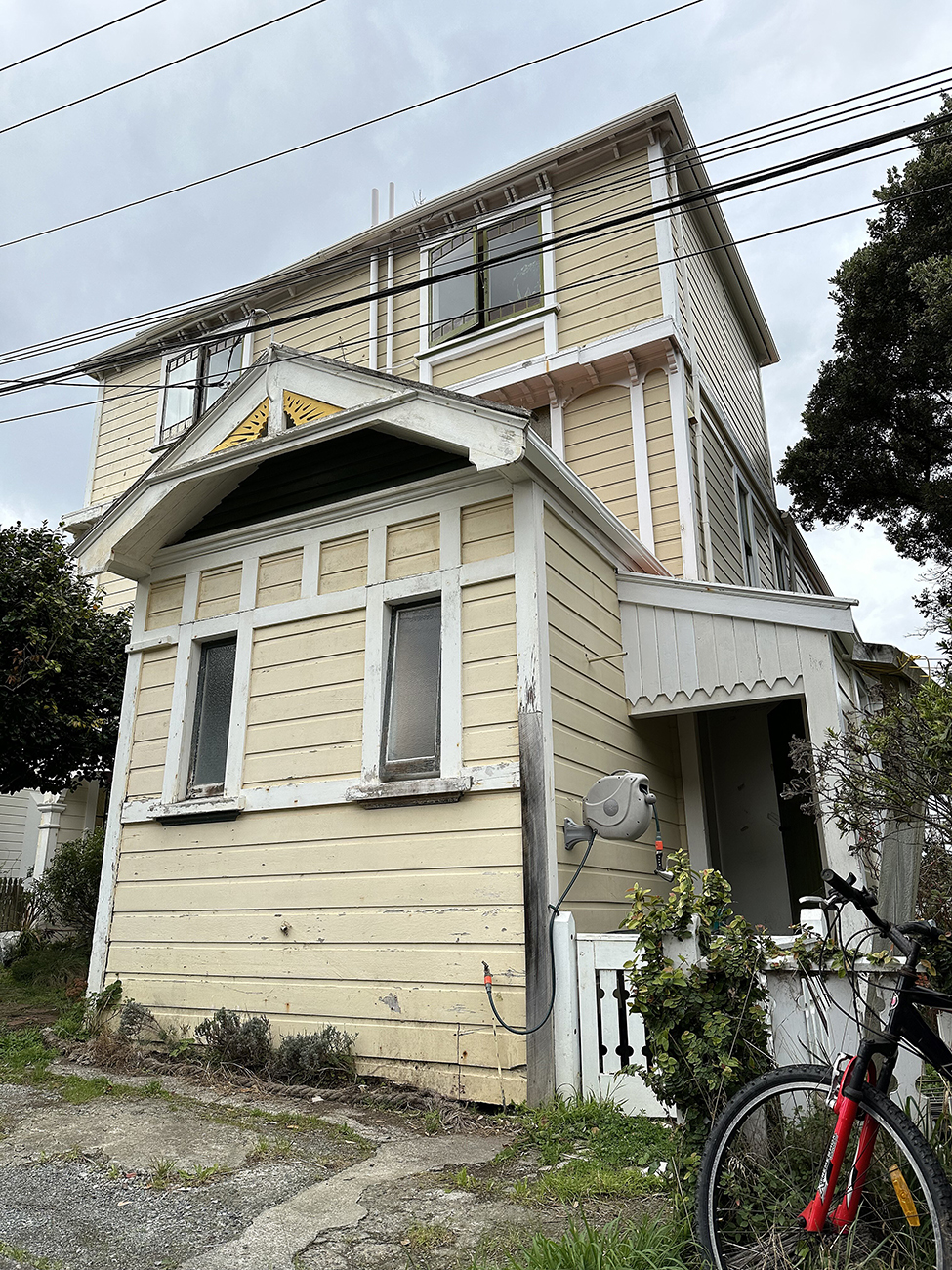
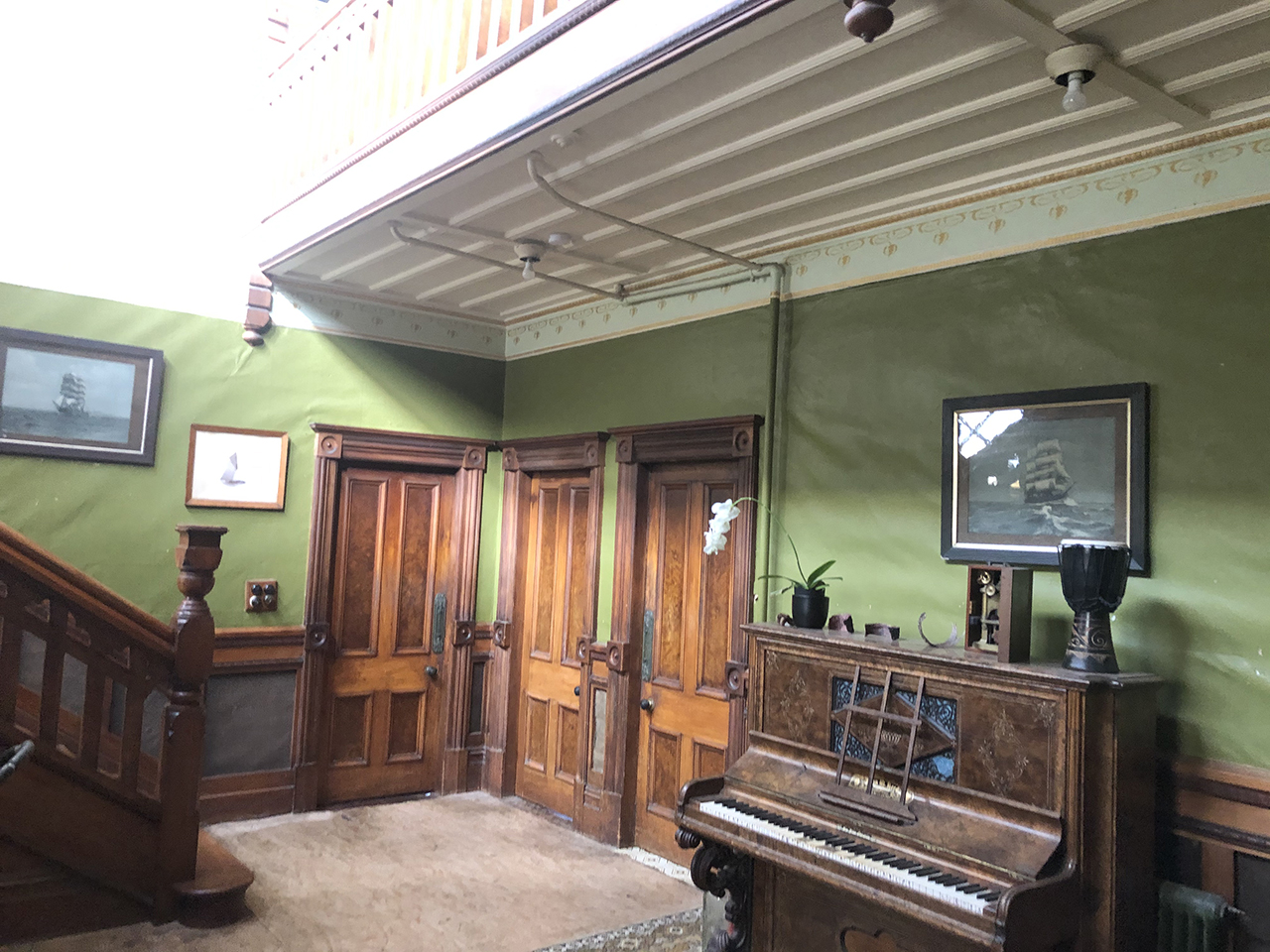
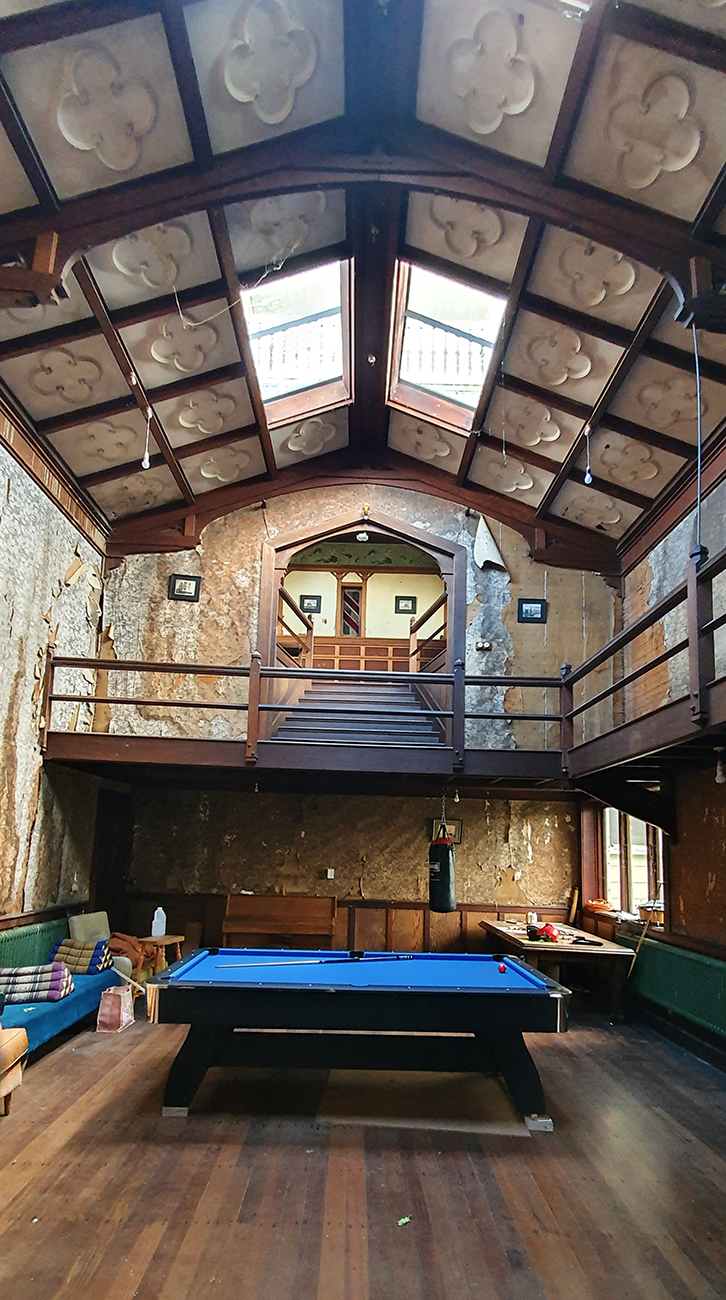
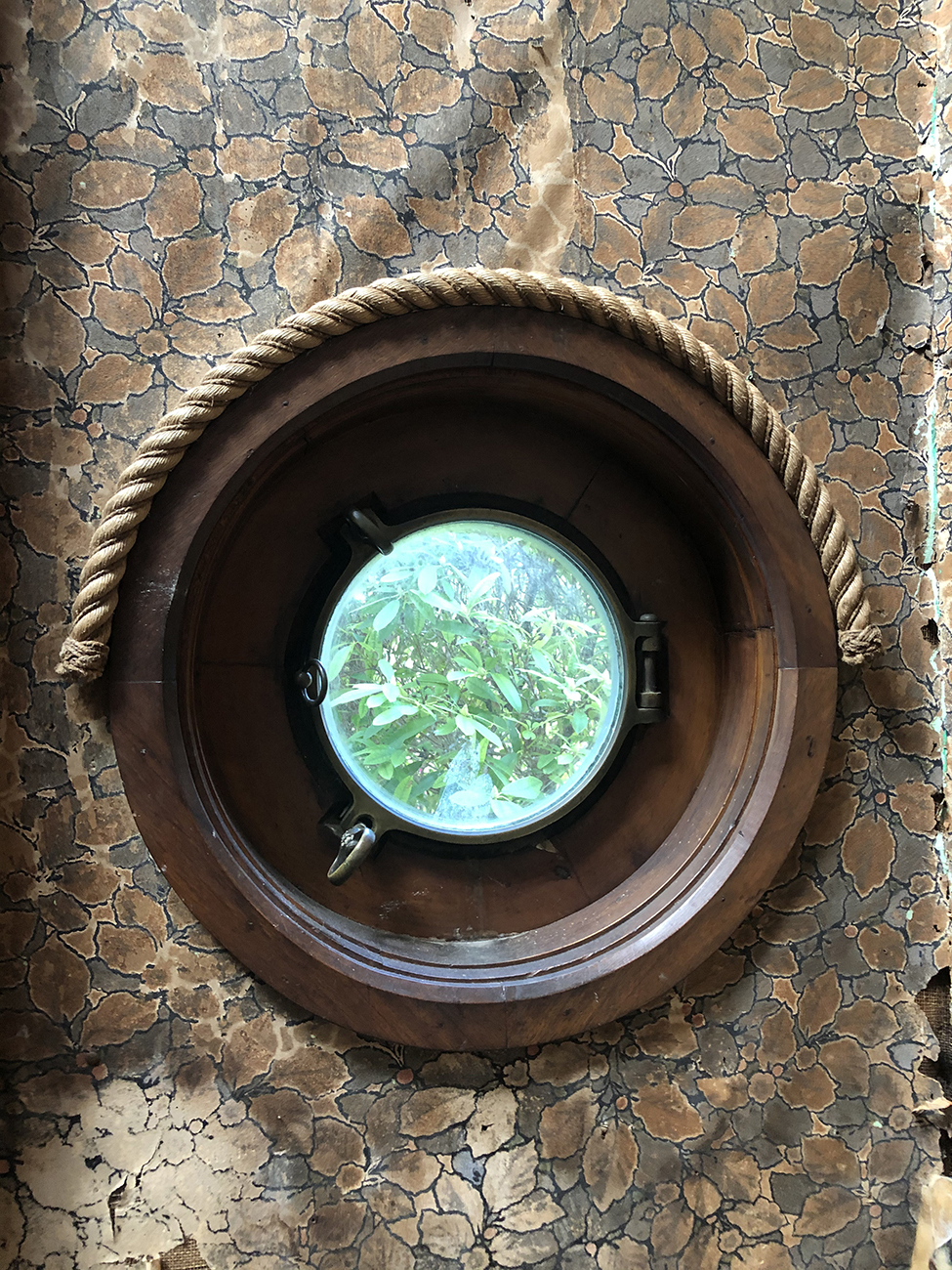
ARCHITECTURAL DESCRIPTION: The Moorings is a large, Edwardian house; originally two-storeyed it now encompasses four distinct levels. Elements of the 'stick style' are evident in the front (west) elevation while standard details have been used elsewhere. Decoration includes coloured glass, bracketted cornices and, on the east side, balustraded balconies. The interior has original joinery in mottled and contrasting timbers, original tilework in fireplaces, some early (probably original) wallpapers and freizes and a complete coal range. While the vestibule and hall are spacious and grand, it is the room called the games room (formerly ballroom) and added in c.1930, which is the most impressive. Entry is through a floor to ceiling sash window from the living room to a mezzanine. The room has a nautical theme with the mezzanine representing a ship's bridge or minstral gallery. This runs along the north and west walls. Other nautical references include the use of circular windows like portholes and port and starboard lights at opposite ends of the room. Originally a ship's wheel was stationed at the head of the 'bridge'. The games room is a double height space and on the lowest level of the house. MODIFICATIONS: 1920s - Verandah added to south elevation (later glazed). - Wash-house entry altered. - Third storey added to west portion of house, later divided into four bedrooms. c.1930 - Ballroom (now games room) added to east side.
ARCHITECTURAL DESCRIPTION: The Moorings is a large, Edwardian house; originally two-storeyed it now encompasses four distinct levels. Elements of the 'stick style' are evident in the front (west) elevation while standard details have been used elsewhere. Decoration includes coloured glass, bracketted cornices and, on the east side, balustraded balconies. The interior has original joinery in mottled and contrasting timbers, original tilework in fireplaces, some early (probably original) wallpapers and freizes and a complete coal range. While the vestibule and hall are spacious and grand, it is the room called the games room (formerly ballroom) and added in c.1930, which is the most impressive. Entry is through a floor to ceiling sash window from the living room to a mezzanine. The room has a nautical theme with the mezzanine representing a ship's bridge or minstral gallery. This runs along the north and west walls. Other nautical references include the use of circular windows like portholes and port and starboard lights at opposite ends of the room. Originally a ship's wheel was stationed at the head of the 'bridge'. The games room is a double height space and on the lowest level of the house. MODIFICATIONS: 1920s - Verandah added to south elevation (later glazed). - Wash-house entry altered. - Third storey added to west portion of house, later divided into four bedrooms. c.1930 - Ballroom (now games room) added to east side.
Historical and Associated Iwi / Hapū / Whānau
Information Sources
Alexander Turnbull Library
Alexander Turnbull Library, Wellington
Land Information New Zealand (LINZ)
Land Information New Zealand
New Zealand Historic Places Trust (NZHPT)
New Zealand Historic Places Trust
Wellington City Magazine
Wellington City Magazine
Independent Herald
Independent Herald
Other Information
This historic place was registered under the Historic Places Act 1980. This report includes the text from the original Building Classification Committee report considered by the NZHPT Board at the time of registration. Please note that entry on the New Zealand Heritage List/Rarangi Korero identifies only the heritage values of the property concerned, and should not be construed as advice on the state of the property, or as a comment of its soundness or safety, including in regard to earthquake risk, safety in the event of fire, or insanitary conditions.
Historical and Associated Iwi / Hapū / Whānau
Information Sources
Alexander Turnbull Library
Alexander Turnbull Library, Wellington
Land Information New Zealand (LINZ)
Land Information New Zealand
New Zealand Historic Places Trust (NZHPT)
New Zealand Historic Places Trust
Wellington City Magazine
Wellington City Magazine
Independent Herald
Independent Herald
Other Information
This historic place was registered under the Historic Places Act 1980. This report includes the text from the original Building Classification Committee report considered by the NZHPT Board at the time of registration. Please note that entry on the New Zealand Heritage List/Rarangi Korero identifies only the heritage values of the property concerned, and should not be construed as advice on the state of the property, or as a comment of its soundness or safety, including in regard to earthquake risk, safety in the event of fire, or insanitary conditions.
Current Usages
Uses: Accommodation
Specific Usage: House
Former Usages
General Usage: Accommodation
Specific Usage: House
Current Usages
Uses: Accommodation
Specific Usage: House
Former Usages
General Usage: Accommodation
Specific Usage: House
Location
Sign up to hear more
Get the latest heritage news, features and events delivered
straight to your inbox.
