

When the public hall was built in 1901, services were held there and in 1902 Reverend Major began a building fund for a church to be built at Waingaro. By 1907 the fund had reached £200. An additional £100 was borrowed from the General Trust Board of the Anglican Church. A
site was donated by Ronald Seavill and plans were drawn up by Reverend H.B. Wingfield, Vicar of St Alban's, Balmoral.
Construction began in 1907 and the church was dedicated by Bishop Neligan on 6 November of that year. In 1919 the burial ground was consecrated by Bishop Averill.
List Entry Information
Status
Listed
List Entry Status
Historic Place Category 1
Access
Private/No Public Access
List Number
153
Date Entered
28th June 1990
Date of Effect
28th June 1990
City/District Council
Waikato District
Region
Waikato Region
Legal description
Pt Allot 127 Parish of Waipa (RT SA125/276), South Auckland Land District
Status
Listed
List Entry Status
Historic Place Category 1
Access
Private/No Public Access
List Number
153
Date Entered
28th June 1990
Date of Effect
28th June 1990
City/District Council
Waikato District
Region
Waikato Region
Legal description
Pt Allot 127 Parish of Waipa (RT SA125/276), South Auckland Land District
Why is this place significant?
Historic Significance
Historical Significance or Value St Alban's Church is closely associated with the settlers of Waingaro and is a permanent reminder of their faith and dedication.
Physical Significance
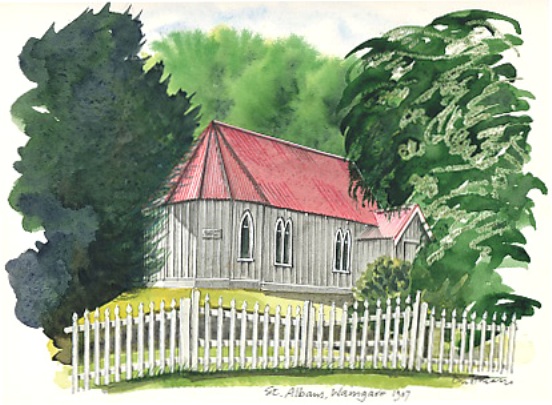
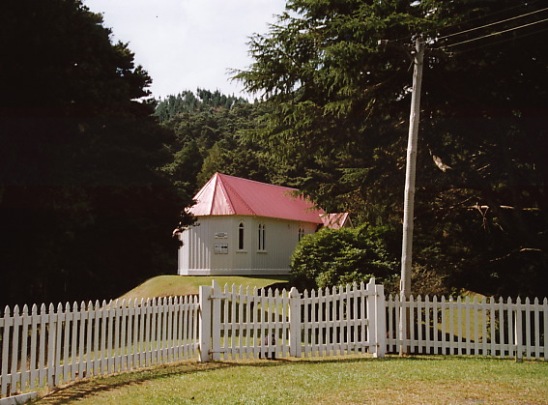
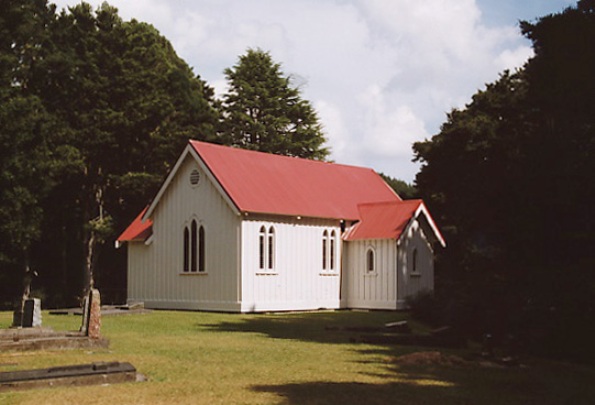
ARCHITECTURAL QUALITY: St Alban's Church is a fine example of the simple Gothic Revival Church erected throughout Victorian and Edwardian New Zealand. A pleasing, refined design both within and out, it is also sited in a most picturesque setting which enhances its appeal. TOWNSCAPE/LANDMARK VALUE: This church is somewhat obscured from the road but occupies a most attractive site amongst native trees and close to an adjacent graveyard.
Why is this place significant?
Historic Significance
Historical Significance or Value St Alban's Church is closely associated with the settlers of Waingaro and is a permanent reminder of their faith and dedication.
Physical Significance
ARCHITECTURAL QUALITY: St Alban's Church is a fine example of the simple Gothic Revival Church erected throughout Victorian and Edwardian New Zealand. A pleasing, refined design both within and out, it is also sited in a most picturesque setting which enhances its appeal. TOWNSCAPE/LANDMARK VALUE: This church is somewhat obscured from the road but occupies a most attractive site amongst native trees and close to an adjacent graveyard.
Construction Professional
Name
Wingfield, Rev Henry Barnard
Type
Architect
Biography
Wingfield (c.1865-1953) came to New Zealand when he was a boy and his family settled in Dunedin. He studied architecture before being ordained in 1897. In 1899 he was appointed first vicar at Pokeno and late in 1904 he was appointed to St Alban's in Balmoral, Auckland, where he served for 22 years. In 1926 he was appointed vicar to Holy Trinity Church, Devonport, remaining there until his retirement in 1931. During his life Wingfield devoted time to ecclesiastical architecture and has been credited with the design of St Mary's Church, Pokeno (1899), St Alban's, Waingaro (1907), St Bride's, Otorohanga, St Peter's, Te Kopuru, and additions to St Alban's, Balmoral (1905, 1911 and 1922).
Construction Details
Start Year
1907
Type
Original Construction
Start Year
1925
Type
Modification
Description
Stained glass window placed over font.
Start Year
1954
Type
Modification
Description
Electric lighting installed
Start Year
1964
Type
Modification
Description
Renovated
Start Year
1966
Type
Modification
Description
Repairs to altar following arson attack.
Start Year
1978
Type
Modification
Description
Repiled
Start Year
1980
Type
Modification
Description
Altar moved forward.
Start Year
1982
Type
Modification
Description
Re-roofed, bell tower removed.
Construction Materials
Timber frame clad with vertical board and batten. Corrugated iron roof sheathing.
Notable Features
The picturesque setting.
Construction Professional
Name
Wingfield, Rev Henry Barnard
Type
Architect
Biography
Wingfield (c.1865-1953) came to New Zealand when he was a boy and his family settled in Dunedin. He studied architecture before being ordained in 1897. In 1899 he was appointed first vicar at Pokeno and late in 1904 he was appointed to St Alban's in Balmoral, Auckland, where he served for 22 years. In 1926 he was appointed vicar to Holy Trinity Church, Devonport, remaining there until his retirement in 1931. During his life Wingfield devoted time to ecclesiastical architecture and has been credited with the design of St Mary's Church, Pokeno (1899), St Alban's, Waingaro (1907), St Bride's, Otorohanga, St Peter's, Te Kopuru, and additions to St Alban's, Balmoral (1905, 1911 and 1922).
Construction Details
Start Year
1907
Type
Original Construction
Start Year
1925
Type
Modification
Description
Stained glass window placed over font.
Start Year
1954
Type
Modification
Description
Electric lighting installed
Start Year
1964
Type
Modification
Description
Renovated
Start Year
1966
Type
Modification
Description
Repairs to altar following arson attack.
Start Year
1978
Type
Modification
Description
Repiled
Start Year
1980
Type
Modification
Description
Altar moved forward.
Start Year
1982
Type
Modification
Description
Re-roofed, bell tower removed.
Construction Materials
Timber frame clad with vertical board and batten. Corrugated iron roof sheathing.
Notable Features
The picturesque setting.
ARCHITECTURAL DESCRIPTION: St Alban's Church is a simple Gothic Revival style church with lancet windows and a steeply pitched roof. The rectangular nave has a vestry to the south, an apsidal chancel to the east and a porch to the north. The west facade has a group of three lancet windows above which is a circular air vent with wooden louvres. The west end originally had a small bell tower fixed to the ridge of the roof. The interior is also simple with vertically lined kauri boards and exposed roof framing in the apse.
ARCHITECTURAL DESCRIPTION: St Alban's Church is a simple Gothic Revival style church with lancet windows and a steeply pitched roof. The rectangular nave has a vestry to the south, an apsidal chancel to the east and a porch to the north. The west facade has a group of three lancet windows above which is a circular air vent with wooden louvres. The west end originally had a small bell tower fixed to the ridge of the roof. The interior is also simple with vertically lined kauri boards and exposed roof framing in the apse.
Historical and Associated Iwi / Hapū / Whānau
Information Sources
New Zealand Herald
New Zealand Herald, 12 July 1932, p. 6; 28 September 1933, p. 6.
University of Canterbury
University of Canterbury
Parr, 1986
Deirdre C Parr. (Ed), St Alban's Balmoral, Auckland, 1886-1986, St Alban's Centennial Committee, Auckland, 1986
Seavill, 1972
Geoffrey Seavill, Pack Horse to Jet; The Story of Waingaro from 1868, Whitianga, 1972
Other Information
This historic place was registered under the Historic Places Act 1980. This report includes the text from the original Building Classification Committee report considered by the NZHPT Board at the time of registration. Please note that entry on the New Zealand Heritage List/Rarangi Korero identifies only the heritage values of the property concerned, and should not be construed as advice on the state of the property, or as a comment of its soundness or safety, including in regard to earthquake risk, safety in the event of fire, or insanitary conditions.
Historical and Associated Iwi / Hapū / Whānau
Information Sources
New Zealand Herald
New Zealand Herald, 12 July 1932, p. 6; 28 September 1933, p. 6.
University of Canterbury
University of Canterbury
Parr, 1986
Deirdre C Parr. (Ed), St Alban's Balmoral, Auckland, 1886-1986, St Alban's Centennial Committee, Auckland, 1986
Seavill, 1972
Geoffrey Seavill, Pack Horse to Jet; The Story of Waingaro from 1868, Whitianga, 1972
Other Information
This historic place was registered under the Historic Places Act 1980. This report includes the text from the original Building Classification Committee report considered by the NZHPT Board at the time of registration. Please note that entry on the New Zealand Heritage List/Rarangi Korero identifies only the heritage values of the property concerned, and should not be construed as advice on the state of the property, or as a comment of its soundness or safety, including in regard to earthquake risk, safety in the event of fire, or insanitary conditions.
Current Usages
Uses: Religion
Specific Usage: Church
Former Usages
General Usage: Religion
Specific Usage: Church
Current Usages
Uses: Religion
Specific Usage: Church
Former Usages
General Usage: Religion
Specific Usage: Church
