

Te Ahurewa was built to replace Amate Māori Church, which was the first Maori church in the Motueka area. The driving force behind the project was Fredrick Augustus Bennett (1871-1950) an Anglican priest who later became the first Maori bishop. The church was designed by architect T. Roberts, and built by Andrew Miller. The £100 required for building materials was collected through the dedicated efforts of local iwi, some of whom returned to the area in order to assist with the project. Concerts were held to raise funds, and helpers travelled to Nelson by steam train to sell kete and other handicrafts. The church was named 'Te Ahurewa - The Sacred Place' by Huta Paaka, a faithful servant of the church and people.
Bennett, born to high-ranking Ngāti Whakaue woman Raiha Ratete and shopkeeper Thomas Jackson Bennett, was first 'discovered' at the age of 14 years by Bishop A. B. Suter of Nelson, who heard his lovely singing voice during a church service in Rotorua. Suter later asked Bennett to come with him to Nelson to go to school. In Nelson, Bennett was educated at Bishop's School and Nelson College. In 1896 Bennett was ordained a deacon in Nelson Cathedral. He was made a priest in 1897. He spent his first two years as a priest in the Nelson district and, through his efforts, Te Ahurewa Church was built during this period.
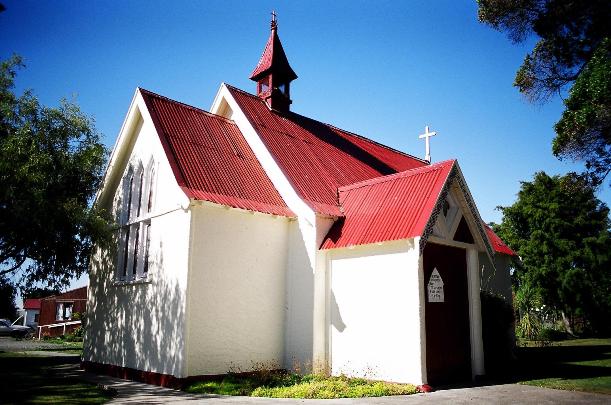
The small, rectangular church has a simple external appearance. Constructed from native timbers, the building consists of nave, chancel, a transept containing the porch, and a vestry and baptistery. On the roof of the church is a small bell tower. Designed in the Victorian Free Gothic style the church features a steeply pitched roof and exposed timber framing, cross bracing and cladding on the interior.
On the 2 December 1928, Bennett was consecrated bishop of Aotearoa, the first Maori bishop in New Zealand's history. He was married in Te Ahurewa Church to Hana Te Unuhi Mere Paaka (Hannah Mary Park) of Te Āti Awa, and his last visit was in 1947 when he attended the jubilee and presented a carved altar to the church. In 1948 he attended the Lambeth Conference in England and was in great demand as a preacher, he was invited to preach at both St Paul's Cathedral and Westminster Abbey. Along with these overseas commitments he was engaged in the revision of the Maori Bible. In the New Year's honours list of 1948 he was made a CMG. His work was complex and beset with difficulties, calling for talent, infinite patience and an ungrudging sacrifice of time. Bennet died on the 16th of September 1950.
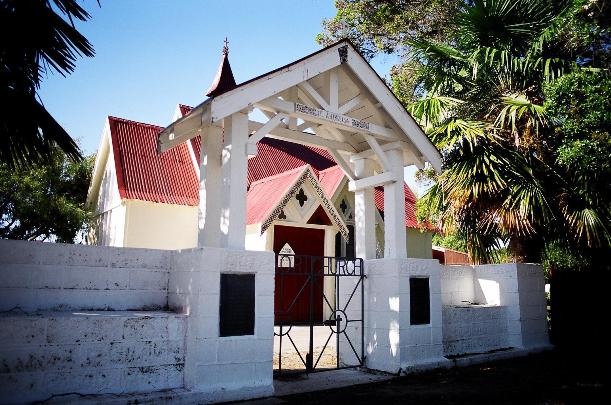
In 1958 a memorial lych-gate was unveiled in Te Ahurewa Church grounds, a memorial to Bennett and to 100 years of friendship between Māori and Pākehā in the area. Two plaques were set in the base of the gate, the first says, 'To commemorate the life and work of F.A. Bennett, first Bishop of Aoteoroa, and the father of the Māori people of the district'. The second reads, 'In thanksgiving for the friendship of Māori and Pākehā from the beginning of the Nelson province'. At the same time, the interior of the church was also decorated with kōwhaiwhai scroll patterns painted in the traditional manner using black, white and red ochre. Around the interior walls at the front and rear of the church two quotations from the address of Bishop Bennett a the opening ceremony in 1897, 'Ko au tena he hoa mo koutou I nga ra katoa a te mutunga ra ano o te ao' (Behold I will be with you even unto the end of the world); and 'Kia mataara koutou me te inoi' (Watch and pray).
Extensive renovation work to the church was carried out in the late 1970s through to the 1990s. This was required because of the considerable deterioration of the building, notably the rotting of the floor and walls due to poor ventilation and drainage. The altar staging and front flooring were replaced in 1978 after they collapsed. In 1979 students were hired to repair the exterior walls, this included steel brushing the walls, spraying for mould, applying sealing substance and repainting. In 1982 Mr Greaney laid a new tongue and groove floor plus bottom plate and floor joist in the vestry. He also replaced a small amount of rotted flooring by the church organ and another at the south-west corner, together with replacing a number of boards in the ceiling and of the south wall. In 1984 the floor and subfloor framing were replaced, with ventilation and drainage being added, the floor was also sanded and oiled, however the walls remained full of borer. The New Zealand Historic Places Trust provided grants of $1000 and $2000 at various points throughout the 1980s and 1990s to assist in the repair and restoration of the Church.
On 29 March 1997, the centenary of the church was celebrated, and the land on which it stands, originally gifted to the Weslyan church in Motueka, was handed back into the ownership of Ngāti Rārua Te Ātiawa Iwi Trust.
List Entry Information
Status
Listed
List Entry Status
Historic Place Category 2
Access
Private/No Public Access
List Number
1673
Date Entered
25th November 1982
Date of Effect
25th November 1982
City/District Council
Tasman District
Region
Tasman Region
Legal description
Lot 2 DP 1506
Status
Listed
List Entry Status
Historic Place Category 2
Access
Private/No Public Access
List Number
1673
Date Entered
25th November 1982
Date of Effect
25th November 1982
City/District Council
Tasman District
Region
Tasman Region
Legal description
Lot 2 DP 1506
Why is this place significant?
Historic Significance
Historical Significance or Value Historical, Spiritual, Cultural, Aesthetic Te Ahurewa Maori Church has historical significance as it is one of the few remaining links with the beginning of the settlement in Motueka. The church and the memorial gates mark the friendship, which has always existed between Maori and Pakeha, and also the life and work of Bishop Fred Bennett who began his work there, thus giving the church cultural value. The church has spiritual significance as the only Maori church in the Nelson district, and it is still in use today with services held once a month. The interior has aesthetic value because it is decorated with Maori designs and detailing such as the woven tukutuku panels on the altar and the traditionally painted scroll work.
Why is this place Category 1 / Category 2?
Detail Of Assessed Criteria
(b) The association of the place with events, persons, or ideas of importance in New Zealand history: The Church is associated with Bishop F.A. Bennett, New Zealand's first Maori Bishop. Bennett was the driving force behind the building of the church. The lych-gate erected to commemorate the life and work of Bishop F.A. Bennett and to symbolise the friendship between Maori and Pakeha. (d) The importance of the place to tangata whenua: There church is held in high esteem by the local iwi. Its construction was funded by the community, and it was constructed using voluntary labour. Members of the local community have cared for and restored the church since it was erected over a century ago. (h) The symbolic or commemorative value of the place: The Church has both symbolic and commemorative value. The church represents the development of the Maori Anglican parish in the Motueka area, and its continuing strength over the past century.
Why is this place significant?
Historic Significance
Historical Significance or Value Historical, Spiritual, Cultural, Aesthetic Te Ahurewa Maori Church has historical significance as it is one of the few remaining links with the beginning of the settlement in Motueka. The church and the memorial gates mark the friendship, which has always existed between Maori and Pakeha, and also the life and work of Bishop Fred Bennett who began his work there, thus giving the church cultural value. The church has spiritual significance as the only Maori church in the Nelson district, and it is still in use today with services held once a month. The interior has aesthetic value because it is decorated with Maori designs and detailing such as the woven tukutuku panels on the altar and the traditionally painted scroll work.
Why is this place Category 1 / Category 2?
Detail Of Assessed Criteria
(b) The association of the place with events, persons, or ideas of importance in New Zealand history: The Church is associated with Bishop F.A. Bennett, New Zealand's first Maori Bishop. Bennett was the driving force behind the building of the church. The lych-gate erected to commemorate the life and work of Bishop F.A. Bennett and to symbolise the friendship between Maori and Pakeha. (d) The importance of the place to tangata whenua: There church is held in high esteem by the local iwi. Its construction was funded by the community, and it was constructed using voluntary labour. Members of the local community have cared for and restored the church since it was erected over a century ago. (h) The symbolic or commemorative value of the place: The Church has both symbolic and commemorative value. The church represents the development of the Maori Anglican parish in the Motueka area, and its continuing strength over the past century.
Construction Professional
Name
Roberts, T
Type
Architect
Biography
No biography is currently available for this construction professional
Name
Miller, A
Type
Builder
Biography
No biography is currently available for this construction professional
Construction Details
Start Year
1897
Type
Original Construction
Description
Church built to replace original 'Amate' Church
Start Year
1947
Type
Other
Description
Bishop Bennett presented church with carved altar for Jubilee
Start Year
1955
Type
Modification
Description
Church clad in roughcast and renovated
Start Year
1958
Type
Other
Description
Lawrence Scott decorates interior of church with scrollwork; lych-gate unveiled
Start Year
1978
Finish Year
1979
Type
Other
Description
Repair work carried out
Start Year
1982
Type
Modification
Description
New floor, bottom plate and floor joist in vestry and parts of nave
Start Year
1984
Type
Modification
Description
Floor / subfloor material replaced
Construction Materials
The foundations of the church consist of a continuous concrete slab approximately 250 mm thick. The main body of the church is 7.93m x 5.18m with a sanctuary of 3.84m x 2.01m. The church is timber framed and lined. It has a corrugated, galvanised steel roof with timber barge and cover boards. Exterior walls, originally clad in weatherboards, are finished in stucco. The stucco finish was put on in 1967 and is 15mm thick on building paper and 35mm wire mesh. The interior is all timber with some of the linings being diagonal and others vertical.
Notable Features
Registration includes the entire church, its fittings and fixtures, and chattels, and the land on which it rests as comprised in Lot 2, DP 1506
Construction Professional
Name
Roberts, T
Type
Architect
Biography
No biography is currently available for this construction professional
Name
Miller, A
Type
Builder
Biography
No biography is currently available for this construction professional
Construction Details
Start Year
1897
Type
Original Construction
Description
Church built to replace original 'Amate' Church
Start Year
1947
Type
Other
Description
Bishop Bennett presented church with carved altar for Jubilee
Start Year
1955
Type
Modification
Description
Church clad in roughcast and renovated
Start Year
1958
Type
Other
Description
Lawrence Scott decorates interior of church with scrollwork; lych-gate unveiled
Start Year
1978
Finish Year
1979
Type
Other
Description
Repair work carried out
Start Year
1982
Type
Modification
Description
New floor, bottom plate and floor joist in vestry and parts of nave
Start Year
1984
Type
Modification
Description
Floor / subfloor material replaced
Construction Materials
The foundations of the church consist of a continuous concrete slab approximately 250 mm thick. The main body of the church is 7.93m x 5.18m with a sanctuary of 3.84m x 2.01m. The church is timber framed and lined. It has a corrugated, galvanised steel roof with timber barge and cover boards. Exterior walls, originally clad in weatherboards, are finished in stucco. The stucco finish was put on in 1967 and is 15mm thick on building paper and 35mm wire mesh. The interior is all timber with some of the linings being diagonal and others vertical.
Notable Features
Registration includes the entire church, its fittings and fixtures, and chattels, and the land on which it rests as comprised in Lot 2, DP 1506
At the entrance to Te Ahurewa Church is a memorial lych-gate, which commemorates the life and work of Frederick Augustus Bennett (1871-1950), the first Maori bishop of Aotearoa. The small church has a fairly commonplace external appearance and is finished in stucco and corrugated iron. It is based on a rectangular floor plan, and has a gable roof running in the east-west direction. A simple cross is located at the west end of the gable. The chancel at the east end is narrower than the nave, and there is a porch on the north side facing the road. On the south side there is a vestry and an alcove for the organ. Inside, the nave is divided into three bays by two heavy timber trusses spanning the width of the nave, which correspond with external buttresses. The walls and ceiling are lined with tongue and groove boards, fixed vertically and diagonally on the walls and running down the slopes of the ceiling. The boards are varnished. Around the walls at the front and rear of the church are two quotations from the address of Bishop Bennett a the opening ceremony in 1897, 'Ko au tena he hoa mo koutou I nga ra katoa a te mutunga ra ano o te ao' (Behold I will be with you even unto the end of the world); and 'Kia mataara koutou me te inoi' (Watch and pray). There is also an intricately carved font and the sanctuary is decorated with kowhaiwhai scroll patterns traditionally painted in black, white and red ochre. The memorial lych gate at the entrance to the Church grounds has a memorial plaque on each side of it, one in memory of Bishop Bennett of Aotearoa, and the other expressing thanksgiving for the friendship between Maori and Pakeha since the beginning of the settlement. Inside there is a finely carved altar table, which was presented to the church by Bennett, and features woven tukutuku panels. Beside the altar is a one-piece solid totara chair taken from the Amate Church. In a glass case alongside the first line of pews there are two Old Testament Bibles, printed in 1848. The bibles are two of the first six books translated from Hebrew into Maori. Also included in the case are two Maori Anglican prayer books printed in 1855 and 1859, and lastly two Maori bibles dated 1868.
At the entrance to Te Ahurewa Church is a memorial lych-gate, which commemorates the life and work of Frederick Augustus Bennett (1871-1950), the first Maori bishop of Aotearoa. The small church has a fairly commonplace external appearance and is finished in stucco and corrugated iron. It is based on a rectangular floor plan, and has a gable roof running in the east-west direction. A simple cross is located at the west end of the gable. The chancel at the east end is narrower than the nave, and there is a porch on the north side facing the road. On the south side there is a vestry and an alcove for the organ. Inside, the nave is divided into three bays by two heavy timber trusses spanning the width of the nave, which correspond with external buttresses. The walls and ceiling are lined with tongue and groove boards, fixed vertically and diagonally on the walls and running down the slopes of the ceiling. The boards are varnished. Around the walls at the front and rear of the church are two quotations from the address of Bishop Bennett a the opening ceremony in 1897, 'Ko au tena he hoa mo koutou I nga ra katoa a te mutunga ra ano o te ao' (Behold I will be with you even unto the end of the world); and 'Kia mataara koutou me te inoi' (Watch and pray). There is also an intricately carved font and the sanctuary is decorated with kowhaiwhai scroll patterns traditionally painted in black, white and red ochre. The memorial lych gate at the entrance to the Church grounds has a memorial plaque on each side of it, one in memory of Bishop Bennett of Aotearoa, and the other expressing thanksgiving for the friendship between Maori and Pakeha since the beginning of the settlement. Inside there is a finely carved altar table, which was presented to the church by Bennett, and features woven tukutuku panels. Beside the altar is a one-piece solid totara chair taken from the Amate Church. In a glass case alongside the first line of pews there are two Old Testament Bibles, printed in 1848. The bibles are two of the first six books translated from Hebrew into Maori. Also included in the case are two Maori Anglican prayer books printed in 1855 and 1859, and lastly two Maori bibles dated 1868.
Historical and Associated Iwi / Hapū / Whānau
Completion Date
12th December 2003
Report Written By
Penelope Laurenson
Information Sources
Corney, 1958
Rev. S. Corney, Te Ahurewa; the story of the Maori Church, Motueka, Nelson, 1958
Dictionary of New Zealand Biography
Dictionary of New Zealand Biography
New Zealand Historic Places
New Zealand Historic Places
Conservation Plan
Conservation Plan
Other Information
A fully referenced version of this report is available from the Central Region of the NZHPT Please note that entry on the New Zealand Heritage List/Rarangi Korero identifies only the heritage values of the property concerned, and should not be construed as advice on the state of the property, or as a comment of its soundness or safety, including in regard to earthquake risk, safety in the event of fire, or insanitary conditions.
Historical and Associated Iwi / Hapū / Whānau
Completion Date
12th December 2003
Report Written By
Penelope Laurenson
Information Sources
Corney, 1958
Rev. S. Corney, Te Ahurewa; the story of the Maori Church, Motueka, Nelson, 1958
Dictionary of New Zealand Biography
Dictionary of New Zealand Biography
New Zealand Historic Places
New Zealand Historic Places
Conservation Plan
Conservation Plan
Other Information
A fully referenced version of this report is available from the Central Region of the NZHPT Please note that entry on the New Zealand Heritage List/Rarangi Korero identifies only the heritage values of the property concerned, and should not be construed as advice on the state of the property, or as a comment of its soundness or safety, including in regard to earthquake risk, safety in the event of fire, or insanitary conditions.
Current Usages
Uses: Religion
Specific Usage: Church
Former Usages
General Usage: Religion
Specific Usage: Church
Themes
Of Significance to Maori
Current Usages
Uses: Religion
Specific Usage: Church
Former Usages
General Usage: Religion
Specific Usage: Church
Themes
Of Significance to Maori
Location
Sign up to hear more
Get the latest heritage news, features and events delivered
straight to your inbox.
