

European settlement in the South Malvern district was founded upon the area’s rich resources of coal, clay and limestone. The present day town of Whitecliffs was originally two settlements – Whitecliffs at the terminus of the branch railway and the South Malvern township formed in 1872. In 1880 the residents of South Malvern presented a petition to the North Canterbury Board of Education for a school in the township. A separate school district for South Malvern was formed in January 1882, but by June of that year pupils were still travelling to Glentunnel to attend lessons. In July 1882 Christchurch architect Thomas Stoddart Lambert was instructed by the North Canterbury Board of Education to prepare plans for a new school. At the end of that month Lambert invited tenders for building a school at South Malvern. The school was completed and opened in January 1883.
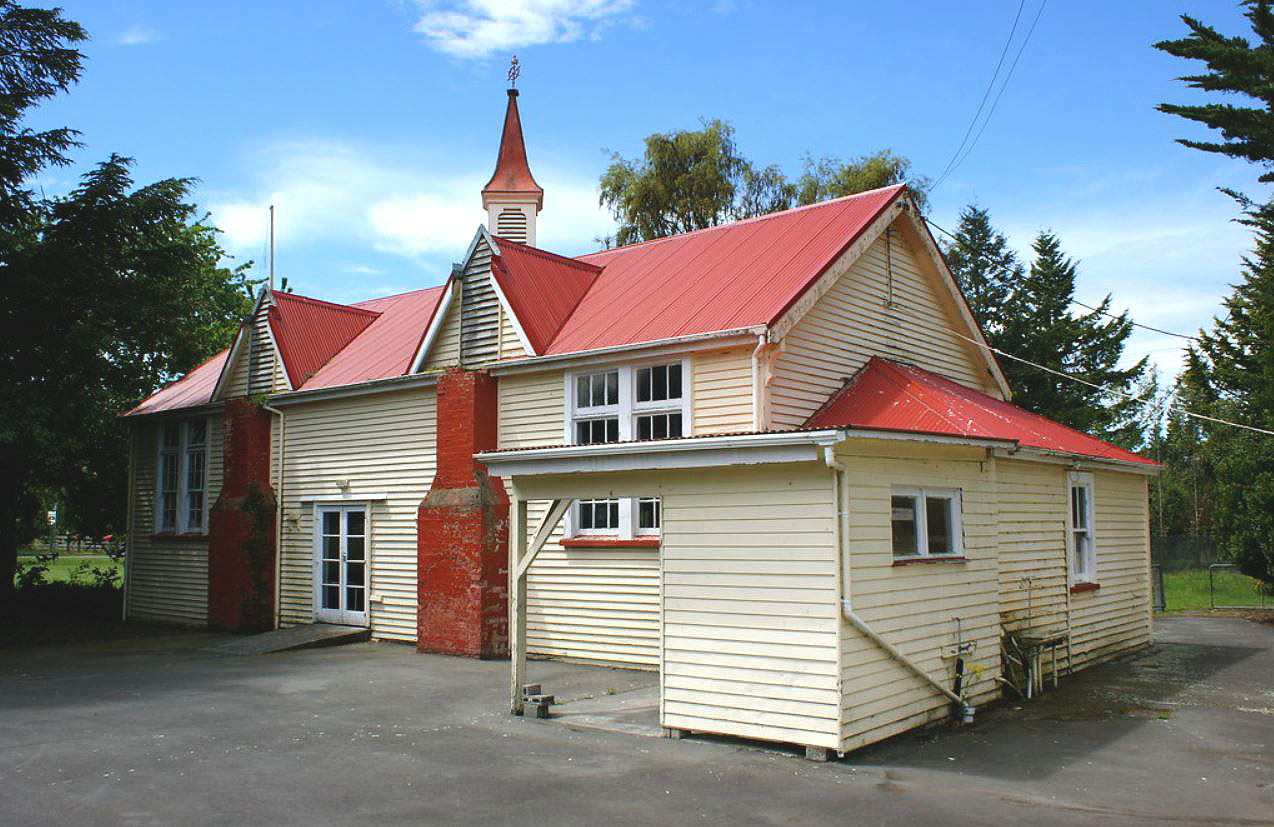
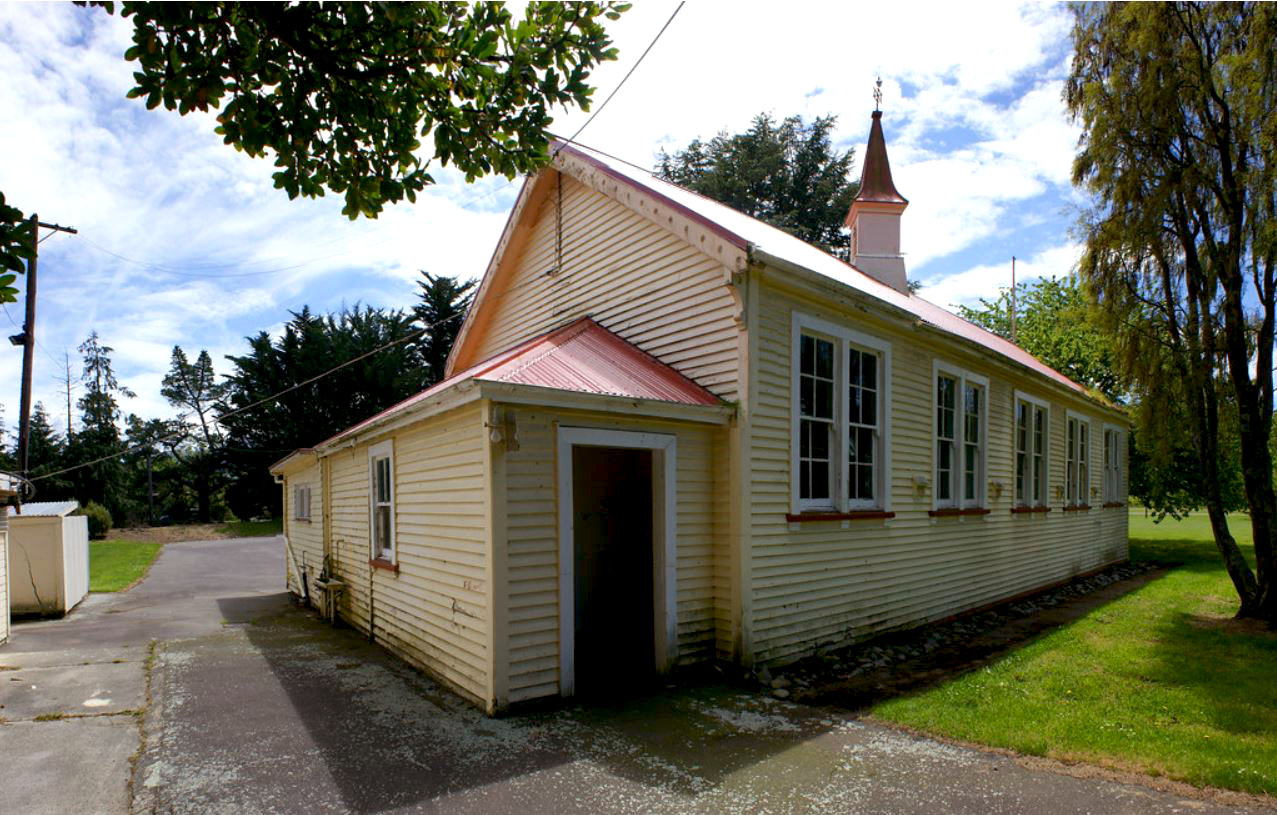
Lambert was contracted to the North Canterbury Board of Education from 1878 to 1882 and developed a standard, cost-effective set of designs for them. South Malvern School (Former) is a rectangular timber building clad in timber shiplap weatherboards with a corrugated iron gable roof. The building features five pairs of sash windows on the eastern elevation with a large window in four mullioned panels at the north end. Two pairs of taller sash windows are set in the western side, and a double door on this elevation is a presumed later addition. Internally the building is an open space with exposed timber trusses on decorative wall brackets. Two fire places have been enclosed with hearth stones removed, but ornate stone mantels remain.
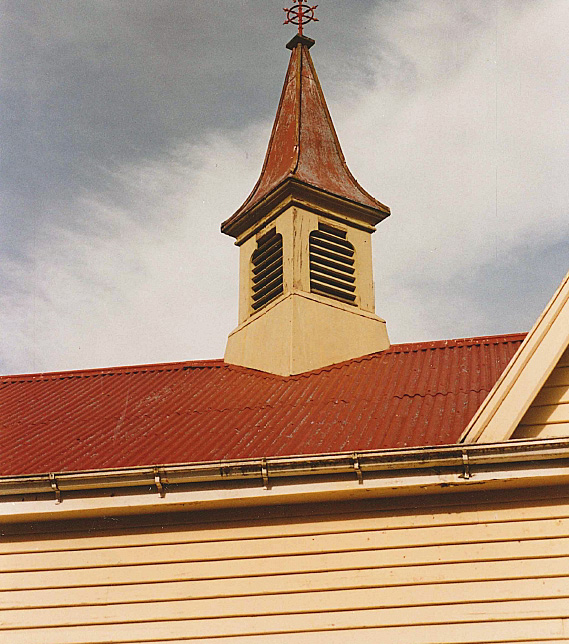
Of particular concern to Lambert was the provision of adequate sanitation and ventilation to improve the children’s learning environment. South Malvern School (Former) features a technological feature developed by Lambert and first employed in his design for the Colombo Road School, Sydenham in 1878; a turret situated on the ridgeline was partially clad in iron and fitted with iron louvres, designed to heat up and advance the egress of warm air. The ceiling is set with decorative brass ceiling roses (pateras) that conceal openings in the ceiling and fresh air is drawn into the building through adjustable “Sheringham” ventilators ducts set into the west wall. Ventilators were also originally set above the fire places to allow the circulation of hot air from the chimney bricks, but these vents have been removed.
South Malvern School (Former) closed in [1973] and until 2014 was used by Branston Intermediate School, Christchurch as an outdoor education facility. The building has been well-maintained with many original features intact. The building sustained some damage in the Darfield Earthquake of 2010 and both brick chimneys have been dismantled to below roof height. The roof has been replaced in recent times.
List Entry Information
Status
Listed
List Entry Status
Historic Place Category 2
Access
Private/No Public Access
List Number
1786
Date Entered
23rd June 1983
Date of Effect
23rd June 1983
City/District Council
Selwyn District
Region
Canterbury Region
Extent of List Entry
Extent includes part of the land described Lot 1DP 561552 (RT 1023525), Canterbury Land District, and the building known as South Malvern School (Former) thereon.
Legal description
Lot 1 DP 561552 (RT 1023525), Canterbury Land District
Status
Listed
List Entry Status
Historic Place Category 2
Access
Private/No Public Access
List Number
1786
Date Entered
23rd June 1983
Date of Effect
23rd June 1983
City/District Council
Selwyn District
Region
Canterbury Region
Extent of List Entry
Extent includes part of the land described Lot 1DP 561552 (RT 1023525), Canterbury Land District, and the building known as South Malvern School (Former) thereon.
Legal description
Lot 1 DP 561552 (RT 1023525), Canterbury Land District
Construction Professional
Name
Thomas Stoddart Lambert
Type
Architect
Biography
No biography is currently available for this construction professional
Construction Professional
Name
Thomas Stoddart Lambert
Type
Architect
Biography
No biography is currently available for this construction professional
Historical and Associated Iwi / Hapū / Whānau
Completion Date
23rd February 2015
Report Written By
Christine Whybrew
Other Information
This place was identified as significant under previous legislation with different information requirements. It remains significant under the current legislation. There is opportunity under our legislation and policies to add to this information. Further information about this place may be available from the Southern Regional Office of Heritage New Zealand Pouhere Taonga. Please note that entry on the New Zealand Heritage List/Rarangi Korero identifies only the heritage values of the property concerned, and should not be construed as advice on the state of the property, or as a comment of its soundness or safety, including in regard to earthquake risk, safety in the event of fire, or insanitary conditions. A fully referenced upgrade report is available on request from the Southern Regional Office of Heritage New Zealand
Historical and Associated Iwi / Hapū / Whānau
Completion Date
23rd February 2015
Report Written By
Christine Whybrew
Other Information
This place was identified as significant under previous legislation with different information requirements. It remains significant under the current legislation. There is opportunity under our legislation and policies to add to this information. Further information about this place may be available from the Southern Regional Office of Heritage New Zealand Pouhere Taonga. Please note that entry on the New Zealand Heritage List/Rarangi Korero identifies only the heritage values of the property concerned, and should not be construed as advice on the state of the property, or as a comment of its soundness or safety, including in regard to earthquake risk, safety in the event of fire, or insanitary conditions. A fully referenced upgrade report is available on request from the Southern Regional Office of Heritage New Zealand
Former Usages
General Usage: Education
Specific Usage: School
Former Usages
General Usage: Education
Specific Usage: School
Location
Sign up to hear more
Get the latest heritage news, features and events delivered
straight to your inbox.
