

The Hawke's Bay Club was founded in August 1863 as an exclusive residential men's club. Its founding members included provincial representatives, members of the Legislative Council, military personnel, wealthy landowners and other influential members of Hawke's Bay society. These included George (later Sir George) Stoddart Whitmore (1829-1903), John Nathaniel Wilson, Robert Stokes (1810-1880), Donald Gollan (1811-1887) and William R. Russell (1838-1913), Donald (later Sir Donald) McLean (1820-1877), J. D. Ormond (1832-1917), Colonel J. L. Herrick (1833-1890), and Colonel Charles Lambert (1809-1882).
In October 1863 the club acquired premises on the corner site of Marine Parade, Byron Street and Browning Street, and was officially opened on 14 October 1863. This site was originally a Provincial Council reserve and was later deeded to a club trustee in 1867. Very little is known about the first clubhouse. It is known that in 1876 a decision was made to expand the clubhouse to provide more sleeping accommodation. In 1888 the billiard room was rebuilt to the designs of T. R. Cooper to accommodate an extra table. This latter addition was incorporated into the present clubhouse built in 1906.
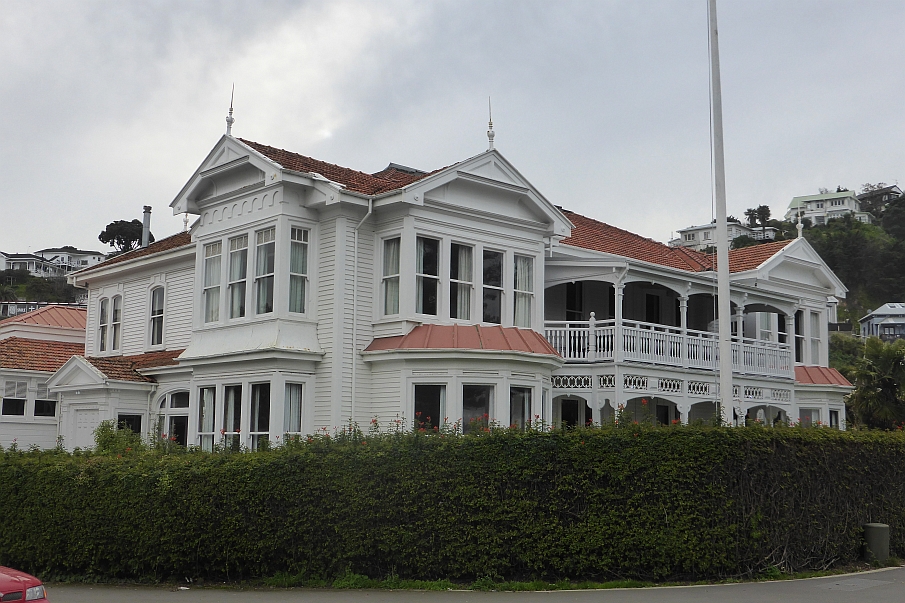
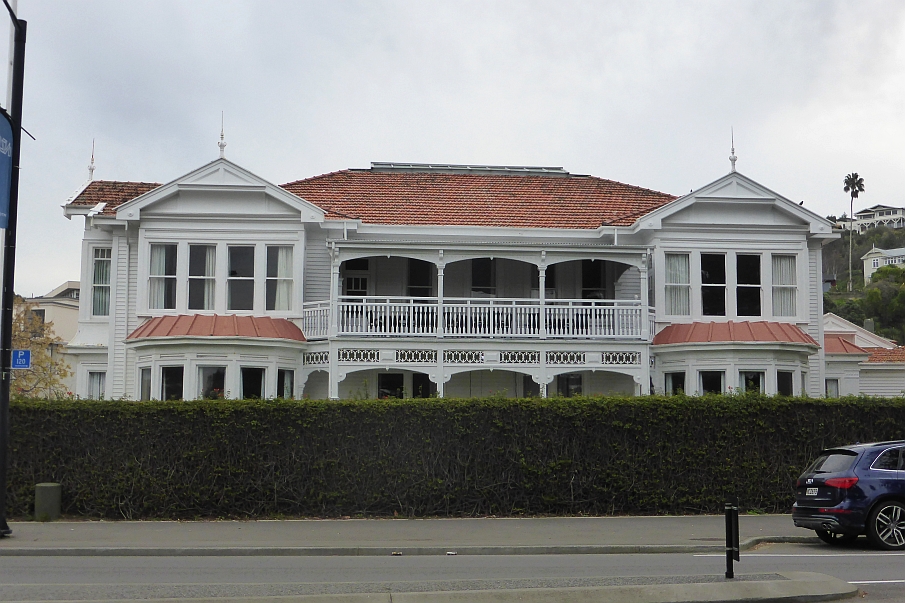
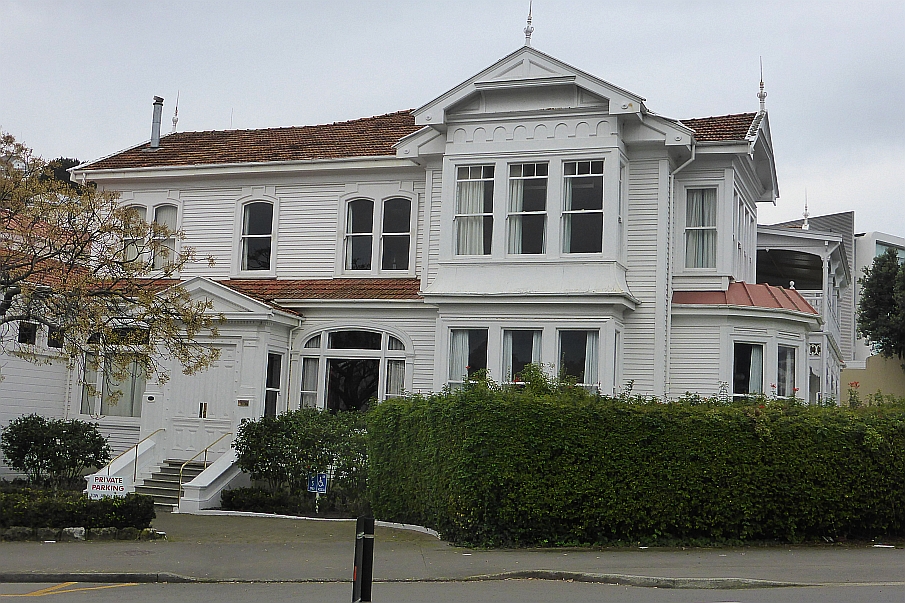
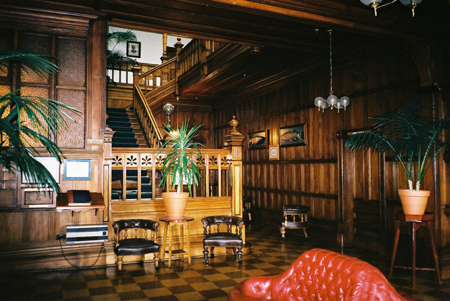
In 1904 expressions of interest were called for to design a new clubhouse on the site of the old clubhouse. The design was not to exceed £4000 and the architect whose design was to be accepted was to receive £50. A design by local architect W. P. Finch was eventually accepted, and the building was constructed in 1906 by J.H. Fairhurst of Dannevirke. The new clubhouse was reminiscent of a large residence, had a splendid interior with an imposing foyer and staircase. Fine timber panelled ceilings and walls were a feature of the larger rooms.
The clubhouse was a place where members could stay during their visits to Napier. Activities included the tennis (the courts were sold in 1950), bowls, snooker, and billiards. The club was also used by members as a place to host formal dinners. Over the years the club has received a number of royal guests including the Prince of Wales in 1920, the Duke of York (later King George VI) in 1927, and the Duke of Gloucester, as well as a number of New Zealand Governor-Generals. During the early years of the club the presence of women and children on the club grounds was frowned upon. Occasionally women were allowed to play croquet on the club lawn, or on very rare occasions allowed inside for a ball. It was not until the 1950s that women were allowed to dine in the club, however they had to enter the building through a specially constructed door from a card room to the verandah. In more recent years the rules allowing women to enter the club have become more relaxed and members' wives or partners have access to the club except for designated areas.
The Hawke's Bay Club has also contributed to the community. It participated in a number of charitable activities particularly during World War I, where the club raised money to fund an ambulance and medical facilities for the western front. The building was relatively unscathed by the Hawke's Bay Earthquake of 1931, and the clubhouse was used as a base for emergency workers, and a number of members played an important part in the reconstruction of the town. The club also offered its facilities to members of the Napier Club who had lost their building during the earthquake. The relationship subsequently formed between the two clubs is still evoked. Today, although the building has been modified to accommodate a bar, an upstairs flat and modern kitchen, the club still retains its sense of grandeur. It remains a gentleman's club, but on occasions is used for social gatherings such as weddings and other functions.
The Hawke's Bay Club is an important reminder of a time when men's clubs were an integral part of social life in the nineteenth and first half of the twentieth centuries. In the days when many people resided outside of the town on pastoral runs, the clubs provided a venue where members could stay, conduct business, and or socialise without the presence of women. To a large extent the club reflects an attempt to introduce the English tradition of exclusive male clubs into colonial New Zealand society. The Hawke's Bay Club's founding members included provincial representatives, members of the Legislative Council, military personnel, and wealthy landowners. The clubhouse represents over 140 years of history, of which 135 have been on the same site and in the present clubroom for over a century. The pride of its members is reflected in the excellent condition of the clubrooms. Together with the adjacent former Napier Courthouse (built 1875), they form a notable historic grouping on Napier's Marine Parade.
List Entry Information
Status
Listed
List Entry Status
Historic Place Category 1
Access
Private/No Public Access
List Number
180
Date Entered
24th November 1983
Date of Effect
24th November 1983
City/District Council
Napier City
Region
Hawke's Bay Region
Extent of List Entry
Extent includes the land described as Pt Lot 1 Deeds Plan 792 (RT HB163/172), Lot 2 DP 162 and Lots 1 and 2 DP 807 (RT HB95/281), Hawkes Bay Land District and the building known as the Hawkes Bay Club and its fittings and fixtures.
Legal description
Pt Lot 1 Deeds Plan 792 (RT HB163/172), Lot 2 DP 162 and Lots 1 and 2 DP 807 (RT HB95/281), Hawkes Bay Land District
Status
Listed
List Entry Status
Historic Place Category 1
Access
Private/No Public Access
List Number
180
Date Entered
24th November 1983
Date of Effect
24th November 1983
City/District Council
Napier City
Region
Hawke's Bay Region
Extent of List Entry
Extent includes the land described as Pt Lot 1 Deeds Plan 792 (RT HB163/172), Lot 2 DP 162 and Lots 1 and 2 DP 807 (RT HB95/281), Hawkes Bay Land District and the building known as the Hawkes Bay Club and its fittings and fixtures.
Legal description
Pt Lot 1 Deeds Plan 792 (RT HB163/172), Lot 2 DP 162 and Lots 1 and 2 DP 807 (RT HB95/281), Hawkes Bay Land District
Construction Professional
Name
Finch, Walter Phillip (1860-1943)
Type
Architect
Biography
Walter Phillip Finch was born in Dunedin in 1860. He received his education in the area and was articled to his profession under Mr James Johnston of Oamaru. Finch moved to Napier in 1883, entering into a partnership with Mr T R Cooper. In 1891 Cooper withdrew from the practice and Finch practised alone. He was appointed architect to the Hawkes Bay Education Board in 1895 and was also architect for some time to the original Napier Hospital and Charitable Aid Board. In approximately 1903/1904, while continuing to operate on his own account in Napier, Finch entered into a partnership with Mr Sholto Douglas Lamb in order to establish an office in Dannevirke. Among the buildings Finch designed in Napier during this period were the Hawkes Bay Club, 1906 (Category I historic place, Register No 180) and the Hawkes Bay County Council Offices, 1910 (Category II historic place, Register no 4820). In 1929 Finch designed the Waiapu Diocesan Office Building and Synod Hall and in 1930 designed the St Paul's Presbyterian Church with Louis Hay which had only just been completed at the time of the 1931 Hawkes Bay earthquake. Finch entered into partnership with Herbert A Westerholm in approximately 1931. Finch and Westerholm are credited with designing more buildings than any other during the reconstruction. Finch died in 1943. (Registration Report for the Waiapu Diocesan Office Building and Synod Hall, 2008).
Construction Details
Start Year
1906
Type
Original Construction
Start Year
1888
Type
Other
Description
Billiard Room rebuilt to designs of T. R. Cooper (incorporated into 1906 building).
Construction Materials
Timber frame.
Construction Professional
Name
Finch, Walter Phillip (1860-1943)
Type
Architect
Biography
Walter Phillip Finch was born in Dunedin in 1860. He received his education in the area and was articled to his profession under Mr James Johnston of Oamaru. Finch moved to Napier in 1883, entering into a partnership with Mr T R Cooper. In 1891 Cooper withdrew from the practice and Finch practised alone. He was appointed architect to the Hawkes Bay Education Board in 1895 and was also architect for some time to the original Napier Hospital and Charitable Aid Board. In approximately 1903/1904, while continuing to operate on his own account in Napier, Finch entered into a partnership with Mr Sholto Douglas Lamb in order to establish an office in Dannevirke. Among the buildings Finch designed in Napier during this period were the Hawkes Bay Club, 1906 (Category I historic place, Register No 180) and the Hawkes Bay County Council Offices, 1910 (Category II historic place, Register no 4820). In 1929 Finch designed the Waiapu Diocesan Office Building and Synod Hall and in 1930 designed the St Paul's Presbyterian Church with Louis Hay which had only just been completed at the time of the 1931 Hawkes Bay earthquake. Finch entered into partnership with Herbert A Westerholm in approximately 1931. Finch and Westerholm are credited with designing more buildings than any other during the reconstruction. Finch died in 1943. (Registration Report for the Waiapu Diocesan Office Building and Synod Hall, 2008).
Construction Details
Start Year
1906
Type
Original Construction
Start Year
1888
Type
Other
Description
Billiard Room rebuilt to designs of T. R. Cooper (incorporated into 1906 building).
Construction Materials
Timber frame.
Historical and Associated Iwi / Hapū / Whānau
Completion Date
28th November 2002
Report Written By
Helen McCracken
Information Sources
Conly, 1991
Geoff Conly, The Hawke's Bay Club, 1863-1991: a memoir, Napier, 1991
Other Information
This place was identified as significant under previous legislation with different information requirements. It remains significant under the current legislation. There is opportunity under our legislation and policies to add to this information. Further information about this place may be available from the Central Regional Office of Heritage New Zealand Pouhere Taonga. Please note that entry on the New Zealand Heritage List/Rarangi Korero identifies only the heritage values of the property concerned, and should not be construed as advice on the state of the property, or as a comment of its soundness or safety, including in regard to earthquake risk, safety in the event of fire, or insanitary conditions.
Historical and Associated Iwi / Hapū / Whānau
Completion Date
28th November 2002
Report Written By
Helen McCracken
Information Sources
Conly, 1991
Geoff Conly, The Hawke's Bay Club, 1863-1991: a memoir, Napier, 1991
Other Information
This place was identified as significant under previous legislation with different information requirements. It remains significant under the current legislation. There is opportunity under our legislation and policies to add to this information. Further information about this place may be available from the Central Regional Office of Heritage New Zealand Pouhere Taonga. Please note that entry on the New Zealand Heritage List/Rarangi Korero identifies only the heritage values of the property concerned, and should not be construed as advice on the state of the property, or as a comment of its soundness or safety, including in regard to earthquake risk, safety in the event of fire, or insanitary conditions.
Current Usages
Uses: Civic Facilities
Specific Usage: Club rooms/building
Former Usages
General Usage: Civic Facilities
Specific Usage: Club rooms/building
Web Links
description:
Current Usages
Uses: Civic Facilities
Specific Usage: Club rooms/building
Former Usages
General Usage: Civic Facilities
Specific Usage: Club rooms/building
Web Links
description:
Location
Sign up to hear more
Get the latest heritage news, features and events delivered
straight to your inbox.
