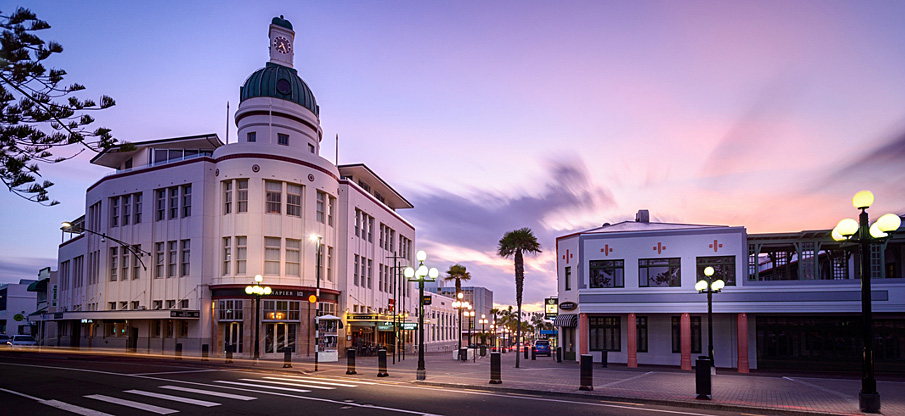
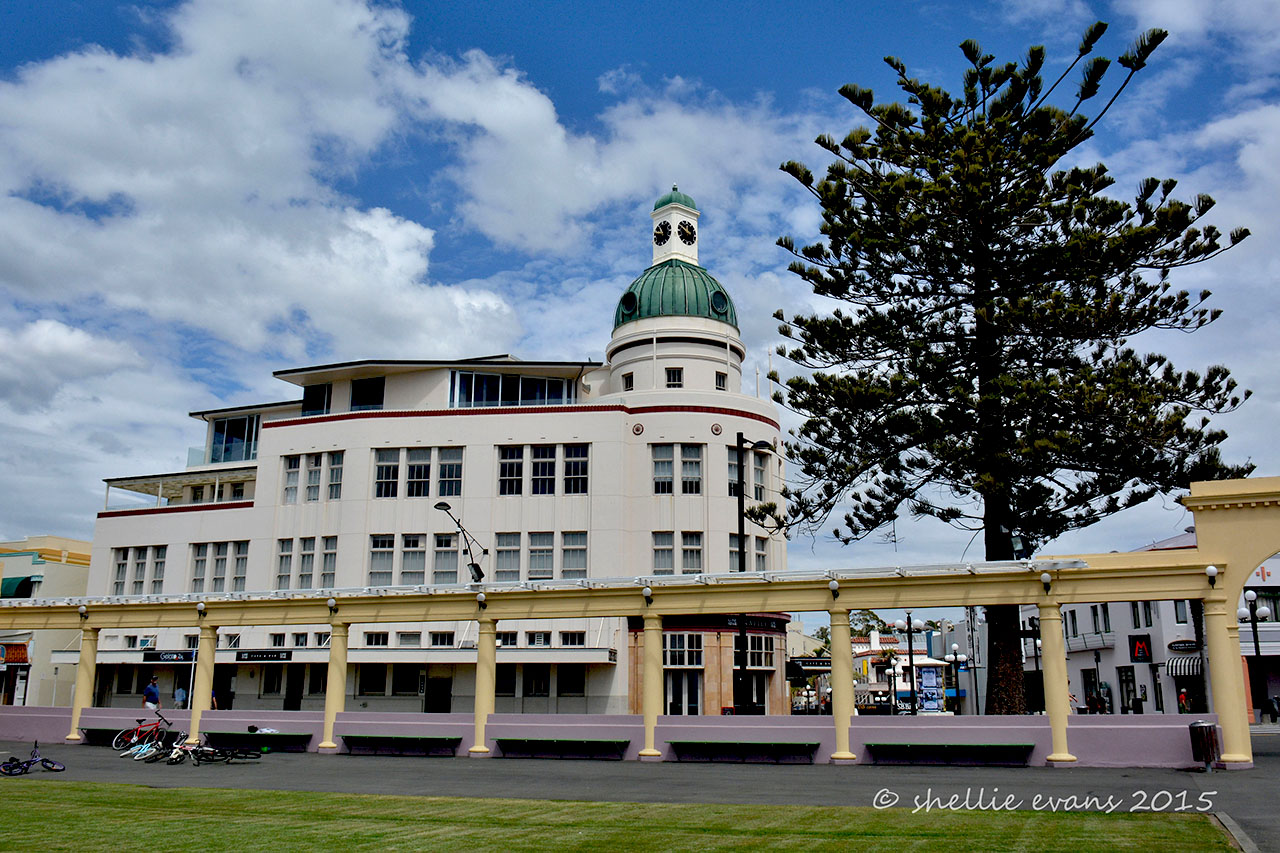
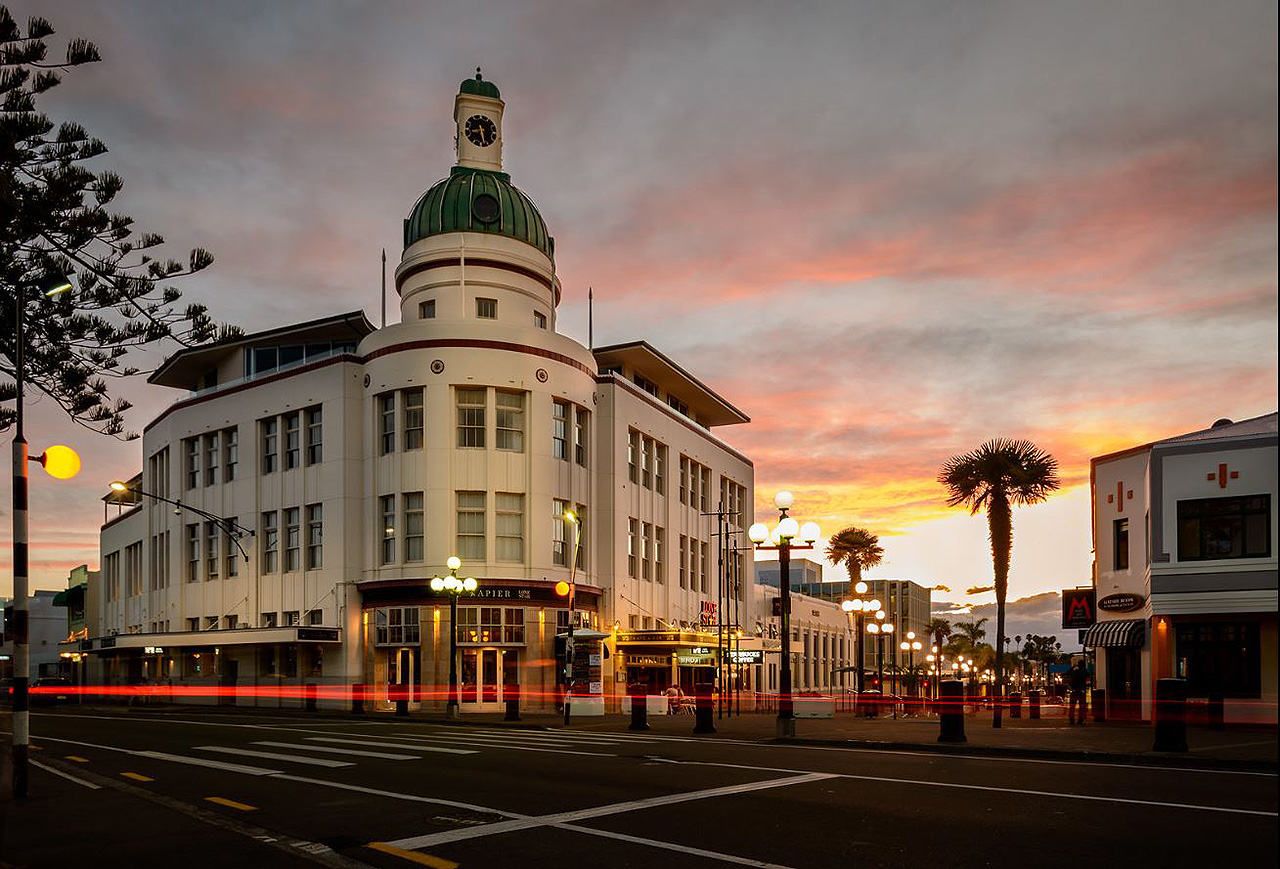
Sited prominently on the corner of Marine Parade and Emerson Street this large commercial building is a landmark. It was completed in 1936 and designed by Mitchell and Mitchell, an architectural practice in Wellington.
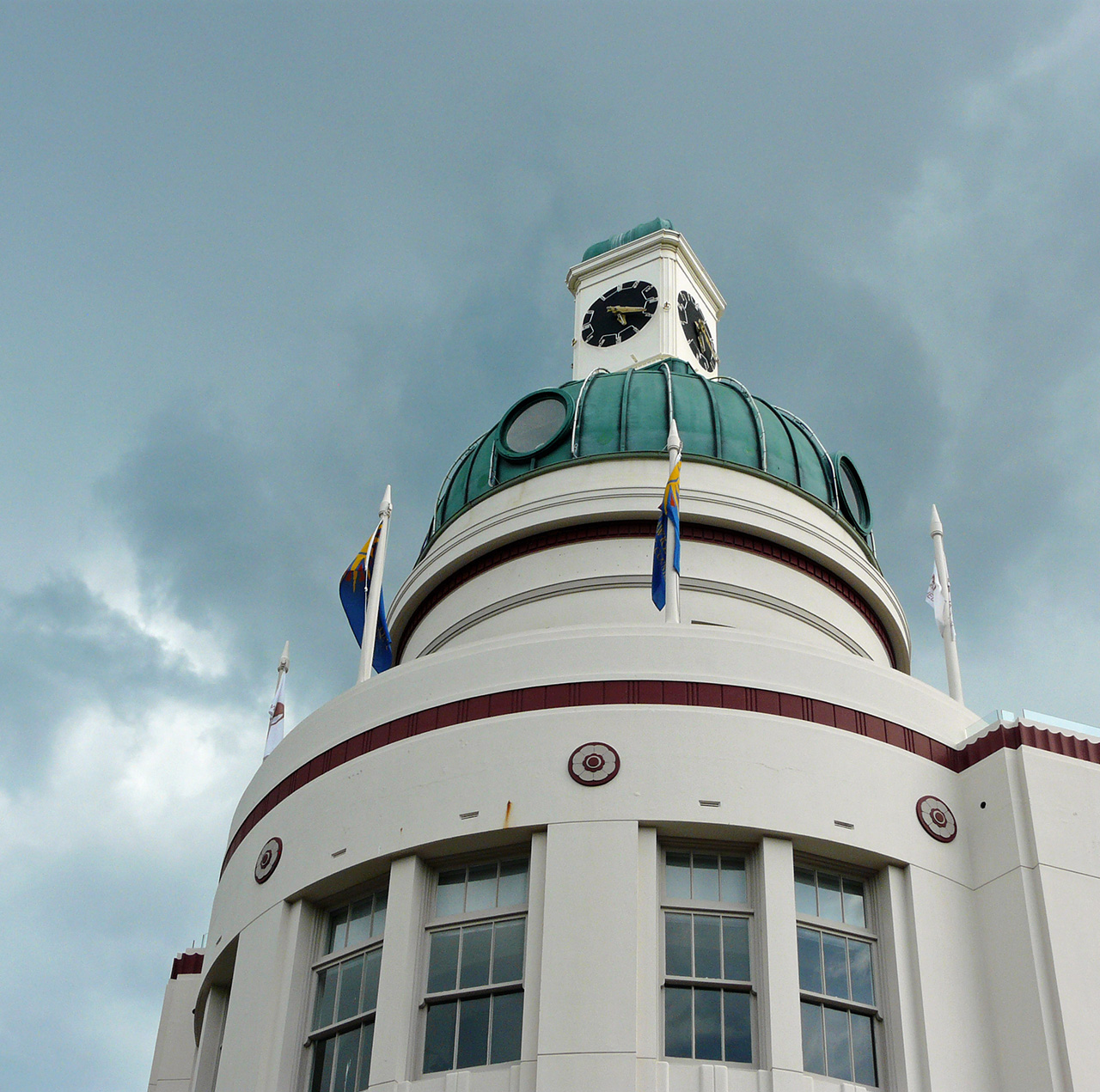
The building is notable for an impressive bowed corner and a fine tower and clock. The unadorned facades have well proportioned fenestration to contrast with the domed clock tower. The T & G Mutual Building is a most significant townscape element on the renowned Marine Parade.
List Entry Information
Status
Listed
List Entry Status
Historic Place Category 1
Access
Private/No Public Access
List Number
183
Date Entered
27th June 1985
Date of Effect
27th June 1985
City/District Council
Napier City
Region
Hawke's Bay Region
Legal description
Lot 1 & 2 DP 6368
Status
Listed
List Entry Status
Historic Place Category 1
Access
Private/No Public Access
List Number
183
Date Entered
27th June 1985
Date of Effect
27th June 1985
City/District Council
Napier City
Region
Hawke's Bay Region
Legal description
Lot 1 & 2 DP 6368
Construction Professional
Name
Angus, William McKenzie
Type
Builder
Biography
William McKenzie Angus was born in Naseby in 1883. At age 14 he moved to Wellington to work as a blacksmith but changed to carpentry and worked in several North Island centres before coming to Napier in approximately 1907. He founded the firm W M Angus Ltd in 1923, with approximately 4-5 employees. At the time of his death in July 1968 the firm had 200 employees. His first major job in Napier, the Chief Post Office, withstood the 1931 Hawkes Bay earthquake as did the other buildings he had erected in Napier by this time. (Registration Report for the Waiapu Diocesan Office Building and Synod Hall, 2008).
Name
Atkins & Mitchell
Type
Architectural Partnership
Biography
The firm of Atkins and Bacon was established in Wellington in 1908 by Alfred Atkins (1850-1919) and Roger Bacon. Cyril Hawthorn Mitchell (1891-1949) was taken on as a draughtsman in 1909 and became a partner in 1918. This partnership was shortlived, however, as Roger Bacon moved to Blenheim owing to failing health and Alfred Atkins died in 1919 leaving the young Mitchell on his own. C.H. Mitchell built up the firm of Atkins and Mitchell, renaming it Mitchell and Mitchell when joined by his brother Allan Hawthorn Mitchell (d.-1973) in 1932. The firm of Mitchell and Mitchell continues today as Gooch Mitchell Macdiarmid. During his time in the firm (1909-1949) C.H. Mitchell was responsible for such buildings as the Commercial Travellers Club Building (1929), the Waterloo Hotel (1936), the Central Fire Station (1935) M.L.C. Building, 33-37 Hunter Street, (1940). He was architect to the Reserve Bank of New Zealand and studied the construction of banking chambers in Europe.
Construction Details
Start Year
1935
Type
Original Construction
Description
Stripped Classical
Construction Materials
Reinforced concrete, flat roof; three storey & tower
Construction Professional
Name
Angus, William McKenzie
Type
Builder
Biography
William McKenzie Angus was born in Naseby in 1883. At age 14 he moved to Wellington to work as a blacksmith but changed to carpentry and worked in several North Island centres before coming to Napier in approximately 1907. He founded the firm W M Angus Ltd in 1923, with approximately 4-5 employees. At the time of his death in July 1968 the firm had 200 employees. His first major job in Napier, the Chief Post Office, withstood the 1931 Hawkes Bay earthquake as did the other buildings he had erected in Napier by this time. (Registration Report for the Waiapu Diocesan Office Building and Synod Hall, 2008).
Name
Atkins & Mitchell
Type
Architectural Partnership
Biography
The firm of Atkins and Bacon was established in Wellington in 1908 by Alfred Atkins (1850-1919) and Roger Bacon. Cyril Hawthorn Mitchell (1891-1949) was taken on as a draughtsman in 1909 and became a partner in 1918. This partnership was shortlived, however, as Roger Bacon moved to Blenheim owing to failing health and Alfred Atkins died in 1919 leaving the young Mitchell on his own. C.H. Mitchell built up the firm of Atkins and Mitchell, renaming it Mitchell and Mitchell when joined by his brother Allan Hawthorn Mitchell (d.-1973) in 1932. The firm of Mitchell and Mitchell continues today as Gooch Mitchell Macdiarmid. During his time in the firm (1909-1949) C.H. Mitchell was responsible for such buildings as the Commercial Travellers Club Building (1929), the Waterloo Hotel (1936), the Central Fire Station (1935) M.L.C. Building, 33-37 Hunter Street, (1940). He was architect to the Reserve Bank of New Zealand and studied the construction of banking chambers in Europe.
Construction Details
Start Year
1935
Type
Original Construction
Description
Stripped Classical
Construction Materials
Reinforced concrete, flat roof; three storey & tower
Historical and Associated Iwi / Hapū / Whānau
Other Information
This place was identified as significant under previous legislation with different information requirements. It remains significant under the current legislation. There is opportunity under our legislation and policies to add to this information. Further information about this place may be available from the Central Regional Office of Heritage New Zealand Pouhere Taonga. Please note that entry on the New Zealand Heritage List/Rarangi Korero identifies only the heritage values of the property concerned, and should not be construed as advice on the state of the property, or as a comment of its soundness or safety, including in regard to earthquake risk, safety in the event of fire, or insanitary conditions. This historic place was registered under the Historic Places Act 1980. The following text is the original citation considered by the NZHPT Board at the time of registration. Information in square brackets indicate modifications made after the paper was considered by the NZHPT Board.
Historical and Associated Iwi / Hapū / Whānau
Other Information
This place was identified as significant under previous legislation with different information requirements. It remains significant under the current legislation. There is opportunity under our legislation and policies to add to this information. Further information about this place may be available from the Central Regional Office of Heritage New Zealand Pouhere Taonga. Please note that entry on the New Zealand Heritage List/Rarangi Korero identifies only the heritage values of the property concerned, and should not be construed as advice on the state of the property, or as a comment of its soundness or safety, including in regard to earthquake risk, safety in the event of fire, or insanitary conditions. This historic place was registered under the Historic Places Act 1980. The following text is the original citation considered by the NZHPT Board at the time of registration. Information in square brackets indicate modifications made after the paper was considered by the NZHPT Board.
Current Usages
Uses: Civic Facilities
Specific Usage: Conference centre
Uses: Trade
Specific Usage: Restaurant/cafe/tearoom
Former Usages
General Usage: Trade
Specific Usage: Office building/Offices
Current Usages
Uses: Civic Facilities
Specific Usage: Conference centre
Uses: Trade
Specific Usage: Restaurant/cafe/tearoom
Former Usages
General Usage: Trade
Specific Usage: Office building/Offices