DonateMembershipVisit Heritage
  • Tūrangawaewae
    Places
  • Tira Māori
    Māori Heritage
  • Poutairangahia
    Archaeology
  • Rauemi
    Resources
  • Mō Tātou
    About Us
  • New Zealand Heritage List
  • Nominate and submit
  • Explore the List
  • National Historic Landmarks
  • Plaques
  • Rainbow List Project
  • Lost heritage
  • Visit Heritage
  • Our properties
  • Turnbull House Project
  • Collections
  • Shop
  • Tohu Whenua
  • Tira Māori
  • Conserving Māori heritage
  • Marae built heritage
  • Māori heritage on the List
  • Hinemihi—Te Hokinga Mai
  • What is archaeology?
  • Is there a site on my property?
  • What are my legal requirements?
  • Affecting an archaeological site
  • Declaring an archaeological site
  • Archaeology FAQs
  • Archaeology Digital Library
  • Archaeology guidelines and templates
  • Resources
  • Funding
  • Publications
  • Sustainable management guides
  • Disaster recovery
  • Podcasts & digital resources
  • Education Hub
  • Conservation plans
  • About
  • Board
  • Māori Heritage Council
  • Senior Staff
  • Offices
  • Contact us
  • Careers
  • Covenants
  • Fast-track
  • Corporate documents
  • Currently consulting on
  • Our submissions
  • News
  • Covid-19 response
Quick links
Rārangi Kōrero | The List
Explore the List
National Historic Landmarks
Ngā Manawhenua o Aotearoa me ōna Kōrero Tūturu
Quick links
Tapuwae
A Vision for Places of Māori Heritage
Funding for Māori Heritage
Resources
Quick links
Archaeological Authority Portal
Applying for an archaeological authority
Archaeology FAQs
Browse the most frequently asked questions about archaeological authorities and the archaeological process.
Quick links
Quick links
News
News Keep up to date with Heritage New Zealand Pouhere Taonga
Membership
Membership Find out more and sign up today
DonateMembershipVisit Heritage
  • Tūrangawaewae
    Places
  • Tira Māori
    Māori Heritage
  • Poutairangahia
    Archaeology
  • Rauemi
    Resources
  • Mō Tātou
    About Us
  • New Zealand Heritage List
  • Nominate and submit
  • Explore the List
  • National Historic Landmarks
  • Plaques
  • Rainbow List Project
  • Lost heritage
  • Visit Heritage
  • Our properties
  • Turnbull House Project
  • Collections
  • Shop
  • Tohu Whenua
  • Tira Māori
  • Conserving Māori heritage
  • Marae built heritage
  • Māori heritage on the List
  • Hinemihi—Te Hokinga Mai
  • What is archaeology?
  • Is there a site on my property?
  • What are my legal requirements?
  • Affecting an archaeological site
  • Declaring an archaeological site
  • Archaeology FAQs
  • Archaeology Digital Library
  • Archaeology guidelines and templates
  • Resources
  • Funding
  • Publications
  • Sustainable management guides
  • Disaster recovery
  • Podcasts & digital resources
  • Education Hub
  • Conservation plans
  • About
  • Board
  • Māori Heritage Council
  • Senior Staff
  • Offices
  • Contact us
  • Careers
  • Covenants
  • Fast-track
  • Corporate documents
  • Currently consulting on
  • Our submissions
  • News
  • Covid-19 response
Quick links
Rārangi Kōrero | The List
Explore the List
National Historic Landmarks
Ngā Manawhenua o Aotearoa me ōna Kōrero Tūturu
Quick links
Tapuwae
A Vision for Places of Māori Heritage
Funding for Māori Heritage
Resources
Quick links
Archaeological Authority Portal
Applying for an archaeological authority
Archaeology FAQs
Browse the most frequently asked questions about archaeological authorities and the archaeological process.
Quick links
Quick links
News
News Keep up to date with Heritage New Zealand Pouhere Taonga
Membership
Membership Find out more and sign up today
  • Places
  • Nominate and submit
  • National Historic Landmarks
  • Places
  • Nominate and submit
  • National Historic Landmarks
  • Tira Māori
  • Conserving Māori heritage
  • Marae built heritage
  • Tira Māori
  • Conserving Māori heritage
  • Marae built heritage
  • Archaeological authorities
  • Archaeology Digital Library
  • Archaeological authorities
  • Archaeology Digital Library
  • All resources
  • Publications
  • Funding
  • All resources
  • Publications
  • Funding
  • FAQs
  • FAQs
Follow us on:
Places
  • Places
  • Nominate and submit
  • National Historic Landmarks
Tira Māori
  • Tira Māori
  • Conserving Māori heritage
  • Marae built heritage
Archaeology
  • Archaeological authorities
  • Archaeology Digital Library
Resources
  • All resources
  • Publications
  • Funding
FAQs
  • FAQs
Follow us on
HomePrivacyTerms and conditionsAbout this site
© Heritage New Zealand Pouhere Taonga 2026.
 
Cook Statue

Victoria Square, CHRISTCHURCH

Public

Historic Place Category 2

List No. 1860

Quick links:
List GalleryLocationDetails
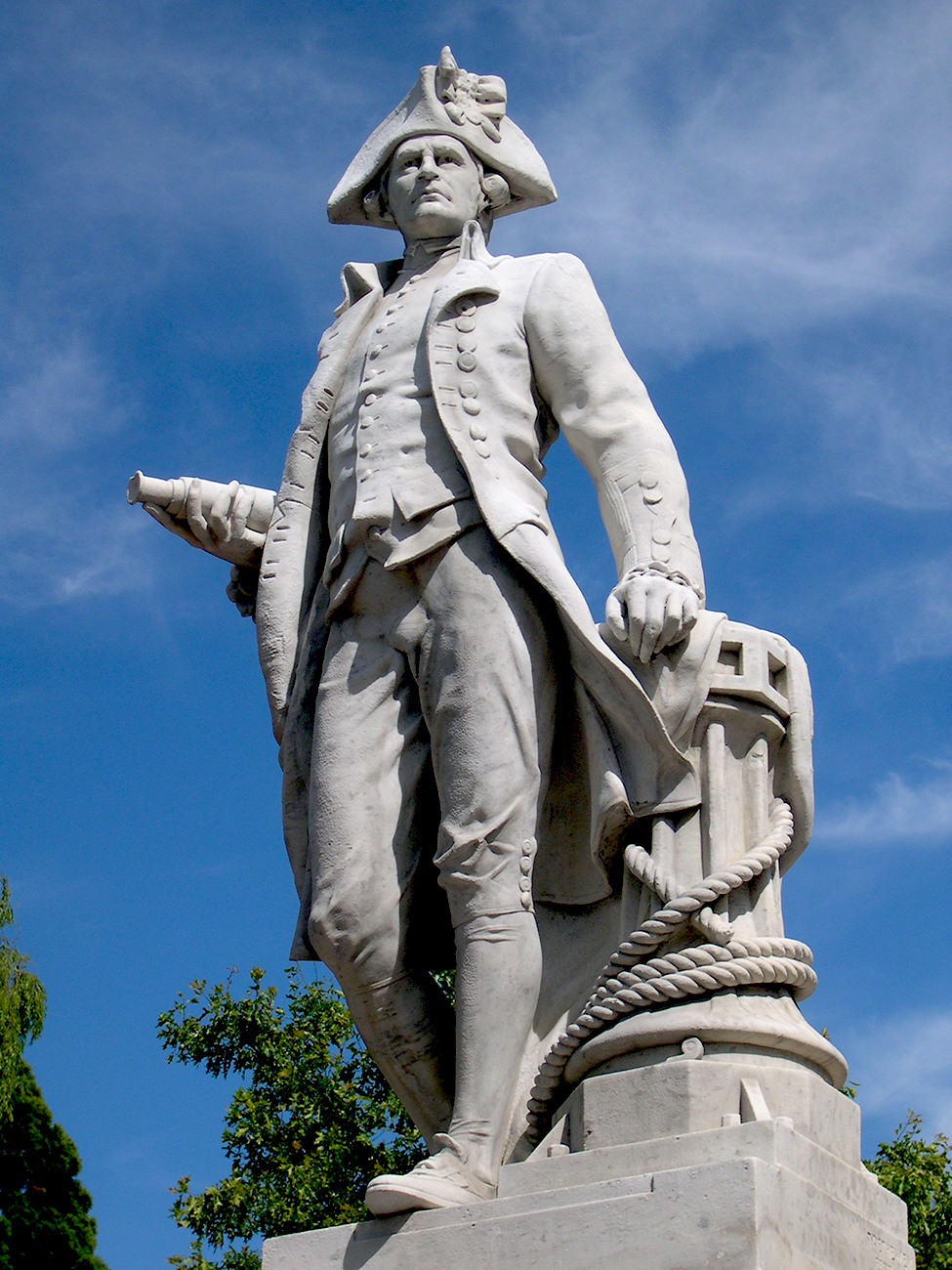
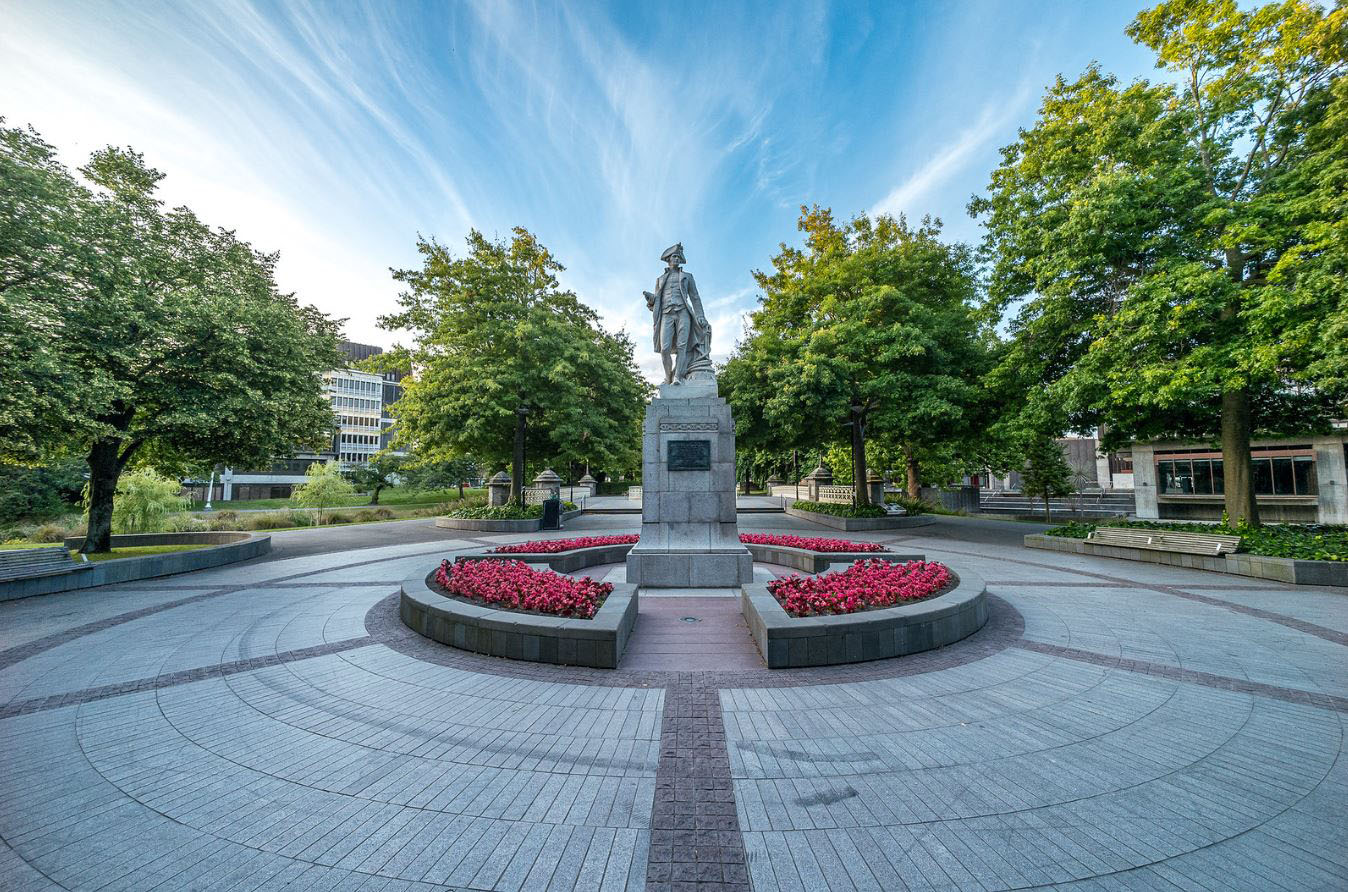
This statue of Captain James Cook (1728-1779) was presented to Christchurch by a bookmaker, Matthew Frank Barnett. It was sculpted by William Thomas Trethewey (1892-1956), a monumental mason by trade, who also sculpted the Citizens War Memorial in Cathedral Square. Born in Christchurch, Trethewey was largely self-taught, although he did study wood carving under Frederick Gurnsey, the noted Christchurch carver, and life modelling for a year in Wellington. He won the commission for the statue of Cook in 1928.

Trethewey carved the statue of Cook from a twelve-tonne block of imported marble. It is an over-lifesize portrait in a heroic pose. The statue was officially unveiled by Lord Bledisloe, the Governor-General, on 10 August 1932. The inscription states: 'James Cook/Captain Royal Navy/Circumnavigator who first hoisted the British flag in New Zealand and explored her seas and coasts/1769-70 1773-4 1777/Oceani Investigator Acerrimus'

Cook made three voyages to New Zealand (in 1769, 1773 and 1776-1777), and was the first European to map the outline of the country. His charts served subsequent navigators for years to come and his voyages are still remembered in the names he gave to many natural features around the coast of New Zealand. To previous generations of Pakeha Cook has been seen as the 'true' founder of New Zealand, the Englishman who discovered the islands and thus made them available for colonisation by the British. As James Belich said, 'Cook was the first of a Pakeha pantheon of deified ancestors'. Such a portrayal of him led to the creation of numerous memorials built in his honour throughout New Zealand. Current opinion about Cook, however, ranges from his continued deification to a view of him as an agent of colonisation.

This statue is significant as an example of Trethewey's work, as one of the many monuments around New Zealand dedicated to Cook and as one of the landmarks of Victoria Square.
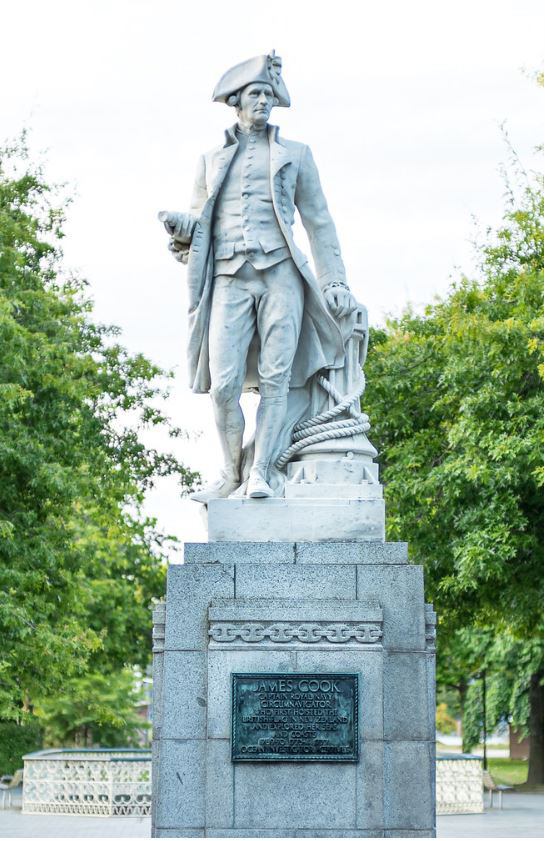
Cook Statue, Christchurch. Image courtesy of www.flickr.com | Phil Clark | 01/01/2023 | phil1066photography.com
Cook Statue, Christchurch. CC BY-SA 2.0 Image courtesy of commons.wikimedia.org | John Steedman | 27/12/2007 | John Steedman - Wikimedia Commons
Cook Statue, Christchurch. Image courtesy of www.flickr.com | Phil Clark | 01/01/2023 | phil1066photography.com
Cook Statue, Christchurch. CC BY-SA 2.0 Image courtesy of commons.wikimedia.org | John Steedman | 27/12/2007 | John Steedman - Wikimedia Commons
Cook Statue, Christchurch. Image courtesy of www.flickr.com | Phil Clark | 01/01/2023 | phil1066photography.com

List Entry Information

Overview

Status
Listed

List Entry Status
Historic Place Category 2

Access
Able to Visit

List Number
1860

Date Entered
26th November 1981

Date of Effect
26th November 1981

City/District Council
Christchurch City

Region
Canterbury Region

Legal description

Sec 1221 Town of Christchurch (RT CB29F/301), Canterbury Land District

Detailed List Entry

Construction Professional

Name

Trethewey, William

Type

Sculptor

Biography

William Trethewey (1892-1956) was born in Christchurch. He left school at the age of 13 and began work as a wood carver, studying at night at the Canterbury College School of Art, where he came into contact with Frederick Gurnsey. In 1914 he moved to Wellington and studied life modelling under J. Ellis. Trethewey returned to Christchurch and decided to shift from wood carving to stone, and for the remainder of his life worked as a monumental mason, 'supplying angels and carving headstones for the people of Canterbury'. He became aware of the potential for memorial sculptures at the end of the First World War and his first commission in this line was a St Andrews cross as a memorial for Elmwood School. In 1920 he submitted a piece, 'The Bomb-thrower', to the annual Christchurch Art Society exhibition. This piece aroused a great deal of public interest, and the Society purchased it for their collection. It was considered unsuitable for a war memorial, because it was a realistic portrait of a New Zealand soldier about to hurl a grenade, rather than the idealised image of heroic youth that was preferred for war memorials. Despite this, in 1920, Trethewey was awarded the commission for the Kaiapoi war memorial, which, when unveiled in 1922, was described by the mayor as being a 'typical Anzac' down to the 'broken boot-lace'. Other sculptures of Trethewey's between 1920 and the early 1930s include a bust of Hyman Marks, the statue of Captain James Cook, in Victoria Square, Christchurch and a statue of Maui Pomare for Manukorihi Pa in Waitara. He began his most famous work, the Citizens War Memorial in Christchurch, in 1933 and it was unveiled in 1937. This memorial is, arguably, the finest public monument in New Zealand. Subsequently he was commissioned to sculpt most of the statuary for the centennial exhibition in Wellington. The only piece of this to survive is the statue of Kupe. The interest in monumental sculpture waned over the course of the twentieth century, and Trethewey spent the last years of his life making clocks. He died in 1956. (Chris Maclean and Jock Phillips, 'The Sorrow and the Pride : New Zealand War Memorials', Wellington, 1990.)

Construction Details

Start Year

1929

Finish Year

1932

Type

Original Construction

Start Year

1989

Type

Relocation

Description

Moved from Armagh St/Colombo St corner to current site near Hamish Hay Bridge

Reference

Completion Date

4th December 2001

Report Written By

Melanie Lovell-Smith

Information Sources

Belich, 1996

James Belich, 'Making Peoples. A History of the New Zealanders from Polynesian Settlement to the End of the Nineteenth Century', Auckland, 1996

Dictionary of New Zealand Biography

Dictionary of New Zealand Biography

Report Written By

This place was identified as significant under previous legislation with different information requirements. It remains significant under the current legislation. There is opportunity under our legislation and policies to add to this information. Further information about this place may be available from the Southern Regional Office of Heritage New Zealand Pouhere Taonga. In 1932, Matthew Barnett donated the statue of Captain Cook to the city, which stands in Victoria Square. He resided in 'Wharetiki', an eclectic Queen Anne style building located at 854 Colombo Street, Christchurch (also registered - 7551). Please note that entry on the New Zealand Heritage List/Rarangi Korero identifies only the heritage values of the property concerned, and should not be construed as advice on the state of the property, or as a comment of its soundness or safety, including in regard to earthquake risk, safety in the event of fire, or insanitary conditions.

Further Information

Current Usages

Uses: Commemoration

Specific Usage: Memorial - Particular person or group

Former Usages

General Usage:: Commemoration

Specific Usage: Memorial - Particular person or group

Themes

Web Links

Overview

Status

Listed

List Entry Status

Historic Place Category 2

Access

Able to Visit

List Number

1860

Date Entered

26th November 1981

Date of Effect

26th November 1981

City/District Council

Christchurch City

Region

Canterbury Region

Legal description

Sec 1221 Town of Christchurch (RT CB29F/301), Canterbury Land District

Status

Listed

List Entry Status

Historic Place Category 2

Access

Able to Visit

List Number

1860

Date Entered

26th November 1981

Date of Effect

26th November 1981

City/District Council

Christchurch City

Region

Canterbury Region

Legal description

Sec 1221 Town of Christchurch (RT CB29F/301), Canterbury Land District

Construction Information

Construction Professional

Name

Trethewey, William

Type

Sculptor

Biography

William Trethewey (1892-1956) was born in Christchurch. He left school at the age of 13 and began work as a wood carver, studying at night at the Canterbury College School of Art, where he came into contact with Frederick Gurnsey. In 1914 he moved to Wellington and studied life modelling under J. Ellis. Trethewey returned to Christchurch and decided to shift from wood carving to stone, and for the remainder of his life worked as a monumental mason, 'supplying angels and carving headstones for the people of Canterbury'. He became aware of the potential for memorial sculptures at the end of the First World War and his first commission in this line was a St Andrews cross as a memorial for Elmwood School. In 1920 he submitted a piece, 'The Bomb-thrower', to the annual Christchurch Art Society exhibition. This piece aroused a great deal of public interest, and the Society purchased it for their collection. It was considered unsuitable for a war memorial, because it was a realistic portrait of a New Zealand soldier about to hurl a grenade, rather than the idealised image of heroic youth that was preferred for war memorials. Despite this, in 1920, Trethewey was awarded the commission for the Kaiapoi war memorial, which, when unveiled in 1922, was described by the mayor as being a 'typical Anzac' down to the 'broken boot-lace'. Other sculptures of Trethewey's between 1920 and the early 1930s include a bust of Hyman Marks, the statue of Captain James Cook, in Victoria Square, Christchurch and a statue of Maui Pomare for Manukorihi Pa in Waitara. He began his most famous work, the Citizens War Memorial in Christchurch, in 1933 and it was unveiled in 1937. This memorial is, arguably, the finest public monument in New Zealand. Subsequently he was commissioned to sculpt most of the statuary for the centennial exhibition in Wellington. The only piece of this to survive is the statue of Kupe. The interest in monumental sculpture waned over the course of the twentieth century, and Trethewey spent the last years of his life making clocks. He died in 1956. (Chris Maclean and Jock Phillips, 'The Sorrow and the Pride : New Zealand War Memorials', Wellington, 1990.)

Construction Details

Start Year

1929

Finish Year

1932

Type

Original Construction

Start Year

1989

Type

Relocation

Description

Moved from Armagh St/Colombo St corner to current site near Hamish Hay Bridge

Construction Professional

Name

Trethewey, William

Type

Sculptor

Biography

William Trethewey (1892-1956) was born in Christchurch. He left school at the age of 13 and began work as a wood carver, studying at night at the Canterbury College School of Art, where he came into contact with Frederick Gurnsey. In 1914 he moved to Wellington and studied life modelling under J. Ellis. Trethewey returned to Christchurch and decided to shift from wood carving to stone, and for the remainder of his life worked as a monumental mason, 'supplying angels and carving headstones for the people of Canterbury'. He became aware of the potential for memorial sculptures at the end of the First World War and his first commission in this line was a St Andrews cross as a memorial for Elmwood School. In 1920 he submitted a piece, 'The Bomb-thrower', to the annual Christchurch Art Society exhibition. This piece aroused a great deal of public interest, and the Society purchased it for their collection. It was considered unsuitable for a war memorial, because it was a realistic portrait of a New Zealand soldier about to hurl a grenade, rather than the idealised image of heroic youth that was preferred for war memorials. Despite this, in 1920, Trethewey was awarded the commission for the Kaiapoi war memorial, which, when unveiled in 1922, was described by the mayor as being a 'typical Anzac' down to the 'broken boot-lace'. Other sculptures of Trethewey's between 1920 and the early 1930s include a bust of Hyman Marks, the statue of Captain James Cook, in Victoria Square, Christchurch and a statue of Maui Pomare for Manukorihi Pa in Waitara. He began his most famous work, the Citizens War Memorial in Christchurch, in 1933 and it was unveiled in 1937. This memorial is, arguably, the finest public monument in New Zealand. Subsequently he was commissioned to sculpt most of the statuary for the centennial exhibition in Wellington. The only piece of this to survive is the statue of Kupe. The interest in monumental sculpture waned over the course of the twentieth century, and Trethewey spent the last years of his life making clocks. He died in 1956. (Chris Maclean and Jock Phillips, 'The Sorrow and the Pride : New Zealand War Memorials', Wellington, 1990.)

Construction Details

Start Year

1929

Finish Year

1932

Type

Original Construction

Start Year

1989

Type

Relocation

Description

Moved from Armagh St/Colombo St corner to current site near Hamish Hay Bridge

Reference

Historical and Associated Iwi / Hapū / Whānau

Completion Date

4th December 2001

Report Written By

Melanie Lovell-Smith

Information Sources

Belich, 1996

James Belich, 'Making Peoples. A History of the New Zealanders from Polynesian Settlement to the End of the Nineteenth Century', Auckland, 1996

Dictionary of New Zealand Biography

Dictionary of New Zealand Biography

Other Information

This place was identified as significant under previous legislation with different information requirements. It remains significant under the current legislation. There is opportunity under our legislation and policies to add to this information. Further information about this place may be available from the Southern Regional Office of Heritage New Zealand Pouhere Taonga. In 1932, Matthew Barnett donated the statue of Captain Cook to the city, which stands in Victoria Square. He resided in 'Wharetiki', an eclectic Queen Anne style building located at 854 Colombo Street, Christchurch (also registered - 7551). Please note that entry on the New Zealand Heritage List/Rarangi Korero identifies only the heritage values of the property concerned, and should not be construed as advice on the state of the property, or as a comment of its soundness or safety, including in regard to earthquake risk, safety in the event of fire, or insanitary conditions.

Historical and Associated Iwi / Hapū / Whānau

Completion Date

4th December 2001

Report Written By

Melanie Lovell-Smith

Information Sources

Belich, 1996

James Belich, 'Making Peoples. A History of the New Zealanders from Polynesian Settlement to the End of the Nineteenth Century', Auckland, 1996

Dictionary of New Zealand Biography

Dictionary of New Zealand Biography

Other Information

This place was identified as significant under previous legislation with different information requirements. It remains significant under the current legislation. There is opportunity under our legislation and policies to add to this information. Further information about this place may be available from the Southern Regional Office of Heritage New Zealand Pouhere Taonga. In 1932, Matthew Barnett donated the statue of Captain Cook to the city, which stands in Victoria Square. He resided in 'Wharetiki', an eclectic Queen Anne style building located at 854 Colombo Street, Christchurch (also registered - 7551). Please note that entry on the New Zealand Heritage List/Rarangi Korero identifies only the heritage values of the property concerned, and should not be construed as advice on the state of the property, or as a comment of its soundness or safety, including in regard to earthquake risk, safety in the event of fire, or insanitary conditions.

Further Information

Current Usages

Uses: Commemoration

Specific Usage: Memorial - Particular person or group

Former Usages

General Usage: Commemoration

Specific Usage: Memorial - Particular person or group

Current Usages

Uses: Commemoration

Specific Usage: Memorial - Particular person or group

Former Usages

General Usage: Commemoration

Specific Usage: Memorial - Particular person or group

Location

Loading
Stay up to date with Heritage this month