DonateMembershipVisit Heritage
  • Tūrangawaewae
    Places
  • Tira Māori
    Māori Heritage
  • Poutairangahia
    Archaeology
  • Rauemi
    Resources
  • Mō Tātou
    About Us
  • New Zealand Heritage List
  • Nominate and submit
  • Explore the List
  • National Historic Landmarks
  • Plaques
  • Rainbow List Project
  • Lost heritage
  • Visit Heritage
  • Our properties
  • Turnbull House Project
  • Collections
  • Shop
  • Tohu Whenua
  • Tira Māori
  • Conserving Māori heritage
  • Marae built heritage
  • Māori heritage on the List
  • Hinemihi—Te Hokinga Mai
  • What is archaeology?
  • Is there a site on my property?
  • What are my legal requirements?
  • Affecting an archaeological site
  • Declaring an archaeological site
  • Archaeology FAQs
  • Archaeology Digital Library
  • Archaeology guidelines and templates
  • Resources
  • Funding
  • Publications
  • Sustainable management guides
  • Disaster recovery
  • Podcasts & digital resources
  • Education Hub
  • Conservation plans
  • About
  • Board
  • Māori Heritage Council
  • Senior Staff
  • Offices
  • Contact us
  • Careers
  • Covenants
  • Fast-track
  • Corporate documents
  • Currently consulting on
  • Our submissions
  • News
  • Covid-19 response
Quick links
Rārangi Kōrero | The List
Explore the List
National Historic Landmarks
Ngā Manawhenua o Aotearoa me ōna Kōrero Tūturu
Quick links
Tapuwae
A Vision for Places of Māori Heritage
Funding for Māori Heritage
Resources
Quick links
Archaeological Authority Portal
Applying for an archaeological authority
Archaeology FAQs
Browse the most frequently asked questions about archaeological authorities and the archaeological process.
Quick links
Quick links
News
News Keep up to date with Heritage New Zealand Pouhere Taonga
Membership
Membership Find out more and sign up today
DonateMembershipVisit Heritage
  • Tūrangawaewae
    Places
  • Tira Māori
    Māori Heritage
  • Poutairangahia
    Archaeology
  • Rauemi
    Resources
  • Mō Tātou
    About Us
  • New Zealand Heritage List
  • Nominate and submit
  • Explore the List
  • National Historic Landmarks
  • Plaques
  • Rainbow List Project
  • Lost heritage
  • Visit Heritage
  • Our properties
  • Turnbull House Project
  • Collections
  • Shop
  • Tohu Whenua
  • Tira Māori
  • Conserving Māori heritage
  • Marae built heritage
  • Māori heritage on the List
  • Hinemihi—Te Hokinga Mai
  • What is archaeology?
  • Is there a site on my property?
  • What are my legal requirements?
  • Affecting an archaeological site
  • Declaring an archaeological site
  • Archaeology FAQs
  • Archaeology Digital Library
  • Archaeology guidelines and templates
  • Resources
  • Funding
  • Publications
  • Sustainable management guides
  • Disaster recovery
  • Podcasts & digital resources
  • Education Hub
  • Conservation plans
  • About
  • Board
  • Māori Heritage Council
  • Senior Staff
  • Offices
  • Contact us
  • Careers
  • Covenants
  • Fast-track
  • Corporate documents
  • Currently consulting on
  • Our submissions
  • News
  • Covid-19 response
Quick links
Rārangi Kōrero | The List
Explore the List
National Historic Landmarks
Ngā Manawhenua o Aotearoa me ōna Kōrero Tūturu
Quick links
Tapuwae
A Vision for Places of Māori Heritage
Funding for Māori Heritage
Resources
Quick links
Archaeological Authority Portal
Applying for an archaeological authority
Archaeology FAQs
Browse the most frequently asked questions about archaeological authorities and the archaeological process.
Quick links
Quick links
News
News Keep up to date with Heritage New Zealand Pouhere Taonga
Membership
Membership Find out more and sign up today
  • Places
  • Nominate and submit
  • National Historic Landmarks
  • Places
  • Nominate and submit
  • National Historic Landmarks
  • Tira Māori
  • Conserving Māori heritage
  • Marae built heritage
  • Tira Māori
  • Conserving Māori heritage
  • Marae built heritage
  • Archaeological authorities
  • Archaeology Digital Library
  • Archaeological authorities
  • Archaeology Digital Library
  • All resources
  • Publications
  • Funding
  • All resources
  • Publications
  • Funding
  • FAQs
  • FAQs
Follow us on:
Places
  • Places
  • Nominate and submit
  • National Historic Landmarks
Tira Māori
  • Tira Māori
  • Conserving Māori heritage
  • Marae built heritage
Archaeology
  • Archaeological authorities
  • Archaeology Digital Library
Resources
  • All resources
  • Publications
  • Funding
FAQs
  • FAQs
Follow us on
HomePrivacyTerms and conditionsAbout this site
© Heritage New Zealand Pouhere Taonga 2026.
 
Theatre Royal

145 Gloucester Street, CHRISTCHURCH

Private

Historic Place Category 1

List No. 1936

Quick links:
List GalleryLocationDetails
The Theatre Royal is one of the oldest theatres in Christchurch still in use as a theatre. It was built between 1906 and 1908 and was the third theatre of this name to be built in Gloucester Street.

In 1861 Christchurch's first theatre, the Canterbury Music Hall, was built on a site across the road from the current Theatre Royal. The Canterbury Music Hall was renamed the Theatre Royal in 1866 and the building was replaced by another on the same site in 1876. This building of 1876 is still standing, although no longer used as a theatre, and is also registered by the New Zealand Historic Places Trust/Pouhere Taonga.

The third Theatre Royal, the subject of this registration, was designed by the Luttrell brothers, Alfred and Sidney, who arrived in New Zealand in 1902. Their chief contribution to New Zealand architecture was in the introduction of the Chicago 'skyscraper' style, as seen in the New Zealand Express Company buildings in Christchurch (1905-1907) and Dunedin (1908-1910). They also specialised in the design of race course grandstands and worked as unofficial diocesan architects for the Roman Catholic Church in Canterbury. The theatre they designed in Gloucester Street, for a syndicate headed by American-born J.C. Williamson (1845-1913), differed from their contemporary work by looking back to the Victorian love of decoration, as expressed on the theatre's ornate façade, instead of a bolder Edwardian or American style. The theatre also had an elaborate cast iron verandah, which gave it something of an Australian feel. This was removed in 1928 and replaced by a plain verandah suspended from the first floor. The acoustics of the theatre have always been acknowledged to be superb.

Initially the Theatre Royal was used for live theatre, although it did show motion pictures occasionally. In 1928 it was refitted as a cinema and for some time that became its primary function. It was run by Christchurch Cinemas from 1941 to 1956. From the mid 1950s the theatre was again used for live performances and over the years it hosted wrestling matches, musical performances and opera. The Theatre Royal began to lose customers and acts from 1972 and was threatened with demolition. In 1980 it was purchased by the Theatre Royal Charitable Foundation, a trust established by local people who wished to see the theatre preserved. Today it is still used as a theatre.

The Theatre Royal is significant as one of the earliest theatres in Christchurch and as part of the history of theatre in Canterbury, particularly in conjunction with its earlier namesake across the street. Within the wider history of New Zealand cinema the Theatre Royal is one of a number of cinemas built or taken over by the J.C. Williamson Picture Corporation. The theatre is a fine example of the Luttrells' architectural skill and diversity and the building forms an important part of the townscape of Gloucester Street. The establishment of a trust to buy the building in 1980 indicates the public feeling for the building.

[The following information describing the situation of the building following the Canterbury earthquakes of 2010-11 is from the Isaac Theatre Royal website: http://isaactheatreroyal.co.nz/our-history/theatre-history/ (accessed 27 July 2017):
'Mercifully our Grand Old Lady of Christchurch Theatre has survived the massive earthquake and considerable aftershocks that rocked the city in 2010 and 2011. The Theatre re-opened on 17 November 2014. The project was significantly more elaborate in design and complexity of construction than originally estimated with the Theatre essentially being rebuilt from Façade to Proscenium Arch. The rebuild and restoration had significant challenges throughout, making it one of the most intricate building projects in the earthquake damaged Christchurch CBD with an overall rebuild cost of NZ$40M. Some extensive earthquake strengthening work undertaken in 1998/99 has without doubt saved this 100 year old Heritage building from complete collapse but some significant deconstruction was required to secure and protect the key interior and exterior heritage elements.'

[In 2016 the Isaac Theatre Royal was the winner of the 'Public Realm - Saved and Restored' category of the Canterbury Heritage Awards, in recognition of the rebuild and restoration work carried out on the building.]
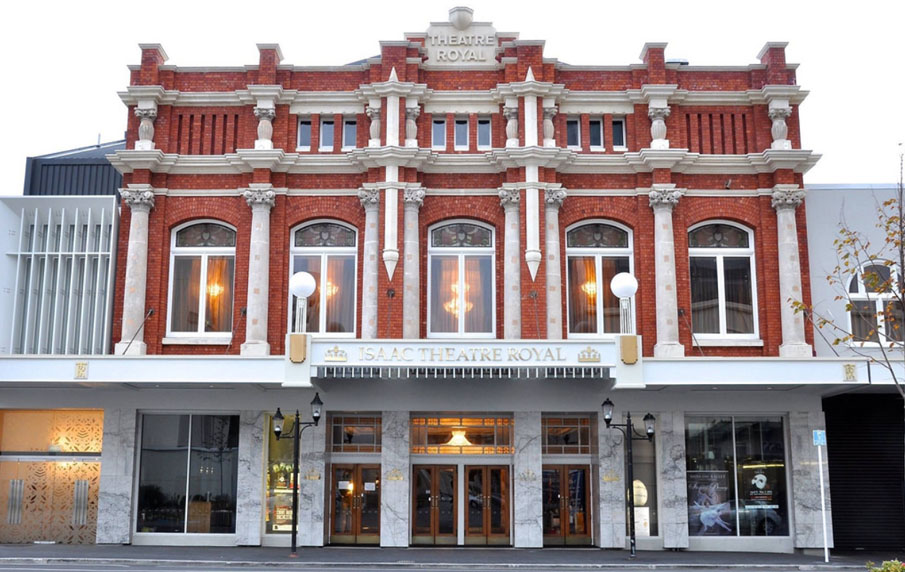
Theatre Royal, Christchurch (aka The Isaac Theatre Roya). Image courtesy of www.flickr.com | Rod Taylor | 06/04/2015 | Rod Taylor
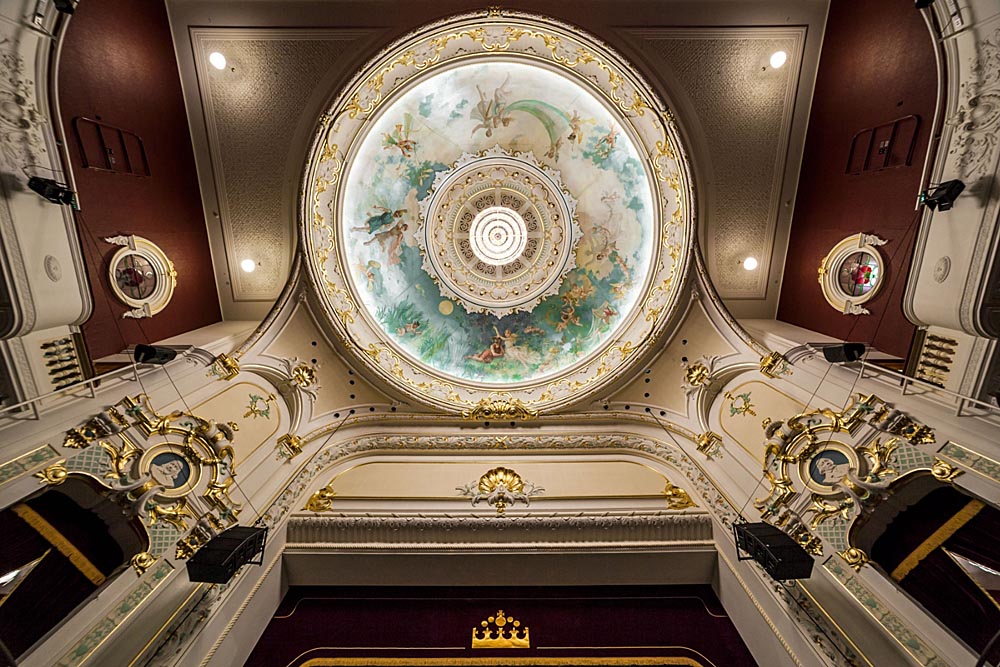
Theatre Royal, Christchurch (aka The Isaac Theatre Royal). Image courtesy of www.rcp.co.nz | © RCP 2017
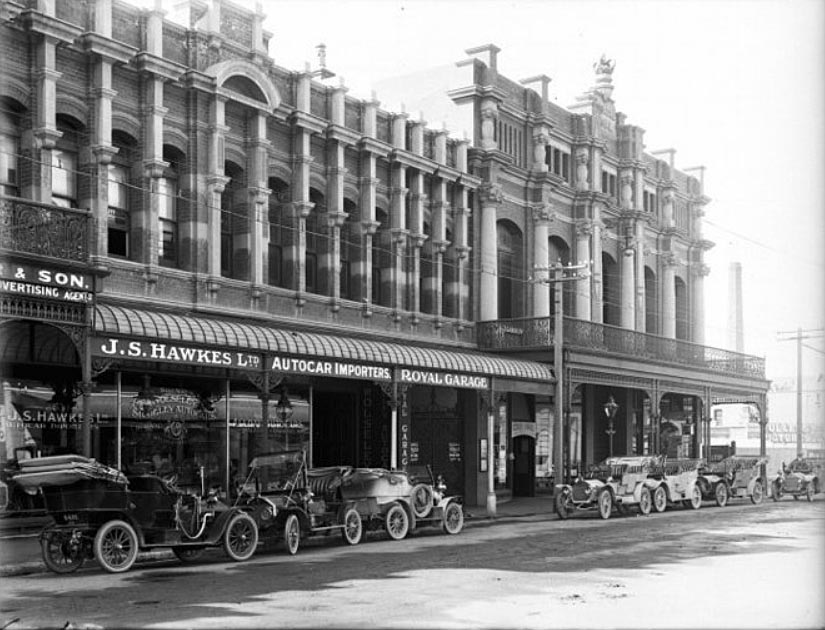
Theatre Royal, Christchurch (aka The Isaac Theatre Royal) to the right of JS Hawkes Ltd, motor car importers c.1915 Gloucester Street, Christchurch. Webb, Steffano, 1880-1967 : Collection of negatives. Ref: 1/1-009087-G. Alexander Turnbull Library, Wellington, New Zealand. /records/23209906 | No Known Copyright Restrictions
Theatre Royal, Christchurch (aka The Isaac Theatre Roya). Image courtesy of www.flickr.com | Rod Taylor | 06/04/2015 | Rod Taylor
Theatre Royal, Christchurch (aka The Isaac Theatre Royal). Image courtesy of www.rcp.co.nz | © RCP 2017
Theatre Royal, Christchurch (aka The Isaac Theatre Royal) to the right of JS Hawkes Ltd, motor car importers c.1915 Gloucester Street, Christchurch. Webb, Steffano, 1880-1967 : Collection of negatives. Ref: 1/1-009087-G. Alexander Turnbull Library, Wellington, New Zealand. /records/23209906 | No Known Copyright Restrictions

List Entry Information

Overview

Status
Listed

List Entry Status
Historic Place Category 1

Access
Private/No Public Access

List Number
1936

Date Entered
16th November 1989

Date of Effect
16th November 1989

City/District Council
Christchurch City

Region
Canterbury Region

Legal description

Pt Lots 1,2, DP 1858 Lot 2 DP 5051 Lot 4 DP 6294 Pt Lot 2

Detailed List Entry

Construction Professional

Name

Luttrell, Alfred Edgar And Edward Sidney

Type

Architect

Biography

Alfred (1865-1924) and Sidney (1872-1932) Luttrell established one of New Zealand's foremost Edwardian architectural practices when they arrived in Christchurch in 1902. The brothers had left Australia on the eve of Federation to pursue a more rewarding career in New Zealand. Alfred had been based in Launceston, Tasmania, where he had been the apprentice of Harry Conway. In 1886 he stared his own firm. His younger brother into partnership in 1897. The two men assumed different responsibilities within the firm, with Alfred acting as the principal designer and engineer while Sidney co-ordinated building programmes and dealt with clients. Sidney served his apprenticeship whit his brother, and in 1897 they became partners of A. & S. Luttrell. By 1902 they had established themselves in New Zealand, where they were known as S. & A. Luttrell The Luttrells ran their own contracting firm for many years, designing a wide variety of building types throughout the country. They were the unofficial Diocesan architects for the Roman Catholic Church in Christchurch during the second decade of the twentieth century. Their chief contribution to New Zealand architecture was in the introduction of the Chicago "skyscraper" style, as seen in the New Zealand Express Company buildings in Christchurch (1905-7) and Dunedin (1908-10). Alfred's habitual use of concrete construction, both mass and reinforced, is another significant feature of his work. The grandstands at Trentham racecourse are his most important work in reinforced concrete, and reveal Sidney's close involvement with the racing world, which led to numerous commissions for the firm.

Construction Details

Start Year

1906

Finish Year

1908

Type

Original Construction

Start Year

1928

Type

Modification

Description

Interior largely rebuilt as movie cinema. Marble staircase added at this time

Notable Features

Notable features include a marble staircase added during the 1928-1929 refurbishment and two portrait busts above the stage boxes showing Shakespeare and Sir Henry Irving, a leading Victorian English actor.

Reference

Completion Date

17th October 2001

Report Written By

Melanie Lovell-Smith

Information Sources

Downes, 1975

Peter Downes, Shadows on the Stage: Theatre in New Zealand - the first 70 years, Dunedin, 1975

Kentish-Barnes, 1997

Cosmo Kentish-Barnes (director), Shadows on the Stage: A documentary film on the Theatre Royal, [Christchurch], 1997

McEwan, 1988

Ann McEwan, 'The Architecture of A.E. and E.S. Luttrell in Tasmania and New Zealand', MA thesis, University of Canterbury, 1988

Report Written By

This place was identified as significant under previous legislation with different information requirements. It remains significant under the current legislation. There is opportunity under our legislation and policies to add to this information. Further information about this place may be available from the Southern Regional Office of Heritage New Zealand Pouhere Taonga. Please note that entry on the New Zealand Heritage List/Rarangi Korero identifies only the heritage values of the property concerned, and should not be construed as advice on the state of the property, or as a comment of its soundness or safety, including in regard to earthquake risk, safety in the event of fire, or insanitary conditions.

Further Information

Current Usages

Uses: Civic Facilities

Specific Usage: Theatre

Former Usages

General Usage:: Civic Facilities

Specific Usage: Cinema/movie theatre

General Usage:: Civic Facilities

Specific Usage: Opera House

General Usage:: Civic Facilities

Specific Usage: Theatre

Themes

Web Links

description:

url: http://www.isaactheatreroyal.co.nz/

Overview

Status

Listed

List Entry Status

Historic Place Category 1

Access

Private/No Public Access

List Number

1936

Date Entered

16th November 1989

Date of Effect

16th November 1989

City/District Council

Christchurch City

Region

Canterbury Region

Legal description

Pt Lots 1,2, DP 1858 Lot 2 DP 5051 Lot 4 DP 6294 Pt Lot 2

Status

Listed

List Entry Status

Historic Place Category 1

Access

Private/No Public Access

List Number

1936

Date Entered

16th November 1989

Date of Effect

16th November 1989

City/District Council

Christchurch City

Region

Canterbury Region

Legal description

Pt Lots 1,2, DP 1858 Lot 2 DP 5051 Lot 4 DP 6294 Pt Lot 2

Construction Information

Construction Professional

Name

Luttrell, Alfred Edgar And Edward Sidney

Type

Architect

Biography

Alfred (1865-1924) and Sidney (1872-1932) Luttrell established one of New Zealand's foremost Edwardian architectural practices when they arrived in Christchurch in 1902. The brothers had left Australia on the eve of Federation to pursue a more rewarding career in New Zealand. Alfred had been based in Launceston, Tasmania, where he had been the apprentice of Harry Conway. In 1886 he stared his own firm. His younger brother into partnership in 1897. The two men assumed different responsibilities within the firm, with Alfred acting as the principal designer and engineer while Sidney co-ordinated building programmes and dealt with clients. Sidney served his apprenticeship whit his brother, and in 1897 they became partners of A. & S. Luttrell. By 1902 they had established themselves in New Zealand, where they were known as S. & A. Luttrell The Luttrells ran their own contracting firm for many years, designing a wide variety of building types throughout the country. They were the unofficial Diocesan architects for the Roman Catholic Church in Christchurch during the second decade of the twentieth century. Their chief contribution to New Zealand architecture was in the introduction of the Chicago "skyscraper" style, as seen in the New Zealand Express Company buildings in Christchurch (1905-7) and Dunedin (1908-10). Alfred's habitual use of concrete construction, both mass and reinforced, is another significant feature of his work. The grandstands at Trentham racecourse are his most important work in reinforced concrete, and reveal Sidney's close involvement with the racing world, which led to numerous commissions for the firm.

Construction Details

Start Year

1906

Finish Year

1908

Type

Original Construction

Start Year

1928

Type

Modification

Description

Interior largely rebuilt as movie cinema. Marble staircase added at this time

Notable Features

Notable features include a marble staircase added during the 1928-1929 refurbishment and two portrait busts above the stage boxes showing Shakespeare and Sir Henry Irving, a leading Victorian English actor.

Construction Professional

Name

Luttrell, Alfred Edgar And Edward Sidney

Type

Architect

Biography

Alfred (1865-1924) and Sidney (1872-1932) Luttrell established one of New Zealand's foremost Edwardian architectural practices when they arrived in Christchurch in 1902. The brothers had left Australia on the eve of Federation to pursue a more rewarding career in New Zealand. Alfred had been based in Launceston, Tasmania, where he had been the apprentice of Harry Conway. In 1886 he stared his own firm. His younger brother into partnership in 1897. The two men assumed different responsibilities within the firm, with Alfred acting as the principal designer and engineer while Sidney co-ordinated building programmes and dealt with clients. Sidney served his apprenticeship whit his brother, and in 1897 they became partners of A. & S. Luttrell. By 1902 they had established themselves in New Zealand, where they were known as S. & A. Luttrell The Luttrells ran their own contracting firm for many years, designing a wide variety of building types throughout the country. They were the unofficial Diocesan architects for the Roman Catholic Church in Christchurch during the second decade of the twentieth century. Their chief contribution to New Zealand architecture was in the introduction of the Chicago "skyscraper" style, as seen in the New Zealand Express Company buildings in Christchurch (1905-7) and Dunedin (1908-10). Alfred's habitual use of concrete construction, both mass and reinforced, is another significant feature of his work. The grandstands at Trentham racecourse are his most important work in reinforced concrete, and reveal Sidney's close involvement with the racing world, which led to numerous commissions for the firm.

Construction Details

Start Year

1906

Finish Year

1908

Type

Original Construction

Start Year

1928

Type

Modification

Description

Interior largely rebuilt as movie cinema. Marble staircase added at this time

Notable Features

Notable features include a marble staircase added during the 1928-1929 refurbishment and two portrait busts above the stage boxes showing Shakespeare and Sir Henry Irving, a leading Victorian English actor.

Reference

Historical and Associated Iwi / Hapū / Whānau

Completion Date

17th October 2001

Report Written By

Melanie Lovell-Smith

Information Sources

Downes, 1975

Peter Downes, Shadows on the Stage: Theatre in New Zealand - the first 70 years, Dunedin, 1975

Kentish-Barnes, 1997

Cosmo Kentish-Barnes (director), Shadows on the Stage: A documentary film on the Theatre Royal, [Christchurch], 1997

McEwan, 1988

Ann McEwan, 'The Architecture of A.E. and E.S. Luttrell in Tasmania and New Zealand', MA thesis, University of Canterbury, 1988

Other Information

This place was identified as significant under previous legislation with different information requirements. It remains significant under the current legislation. There is opportunity under our legislation and policies to add to this information. Further information about this place may be available from the Southern Regional Office of Heritage New Zealand Pouhere Taonga. Please note that entry on the New Zealand Heritage List/Rarangi Korero identifies only the heritage values of the property concerned, and should not be construed as advice on the state of the property, or as a comment of its soundness or safety, including in regard to earthquake risk, safety in the event of fire, or insanitary conditions.

Historical and Associated Iwi / Hapū / Whānau

Completion Date

17th October 2001

Report Written By

Melanie Lovell-Smith

Information Sources

Downes, 1975

Peter Downes, Shadows on the Stage: Theatre in New Zealand - the first 70 years, Dunedin, 1975

Kentish-Barnes, 1997

Cosmo Kentish-Barnes (director), Shadows on the Stage: A documentary film on the Theatre Royal, [Christchurch], 1997

McEwan, 1988

Ann McEwan, 'The Architecture of A.E. and E.S. Luttrell in Tasmania and New Zealand', MA thesis, University of Canterbury, 1988

Other Information

This place was identified as significant under previous legislation with different information requirements. It remains significant under the current legislation. There is opportunity under our legislation and policies to add to this information. Further information about this place may be available from the Southern Regional Office of Heritage New Zealand Pouhere Taonga. Please note that entry on the New Zealand Heritage List/Rarangi Korero identifies only the heritage values of the property concerned, and should not be construed as advice on the state of the property, or as a comment of its soundness or safety, including in regard to earthquake risk, safety in the event of fire, or insanitary conditions.

Further Information

Current Usages

Uses: Civic Facilities

Specific Usage: Theatre

Former Usages

General Usage: Civic Facilities

Specific Usage: Cinema/movie theatre

General Usage: Civic Facilities

Specific Usage: Opera House

General Usage: Civic Facilities

Specific Usage: Theatre

Web Links

description:

url: http://www.isaactheatreroyal.co.nz/

Current Usages

Uses: Civic Facilities

Specific Usage: Theatre

Former Usages

General Usage: Civic Facilities

Specific Usage: Cinema/movie theatre

General Usage: Civic Facilities

Specific Usage: Opera House

General Usage: Civic Facilities

Specific Usage: Theatre

Web Links

description:

url: http://www.isaactheatreroyal.co.nz/

Location

Loading
Stay up to date with Heritage this month