

Between the 1865 and 1880s, a number of stone bridges and culverts were constructed in South Canterbury. Most were small single span structures built of local limestone or bluestone (basalt). Early newspaper reports of the Levels Road Board meetings contained references to a ‘manuka bridge’ at Totara Flat. In 1874, Mr W Williamson, Engineer to the Board, suggested that it might be better to discontinue having anything further to do with bush bridges and recommended the use of stone as a material for bridge works where it could be easily procured. One of these stone bridges built was on Cleland Road, probably around 1870. Cleland Road is named after Scottish-born Andrew Cleland, who took up 2060 acres which he named ‘Loudon’, in the Totara Valley. He was a member of the Levels Road Board from 1875 to 1880.
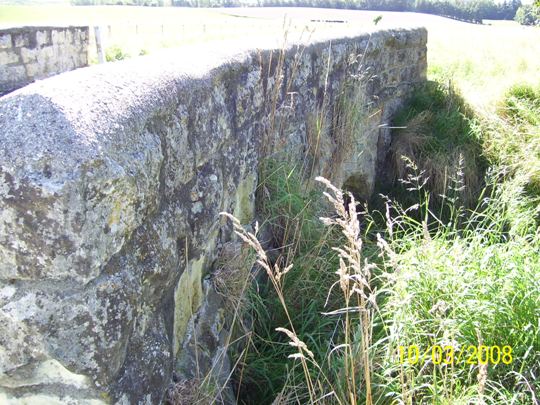
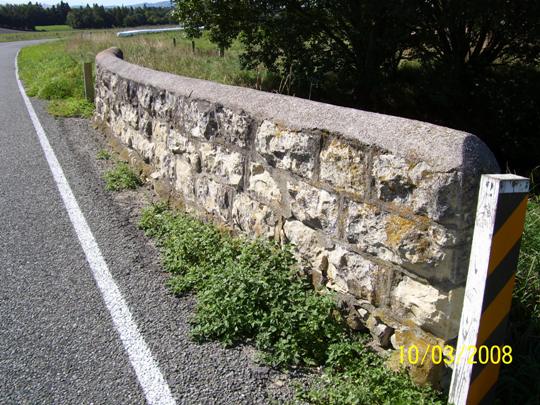
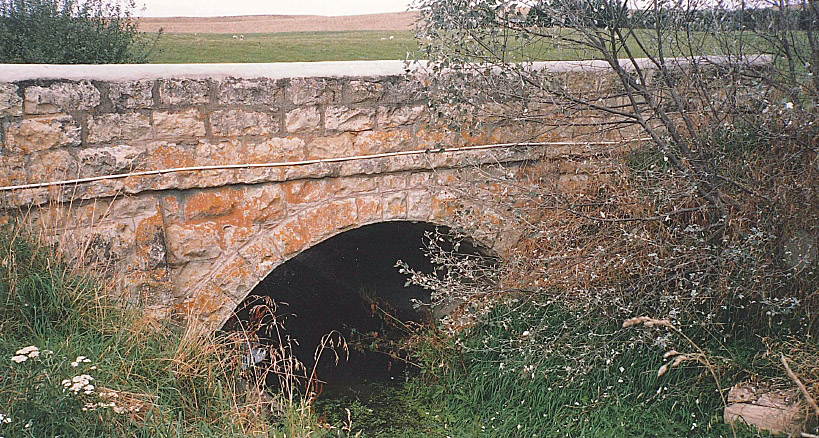
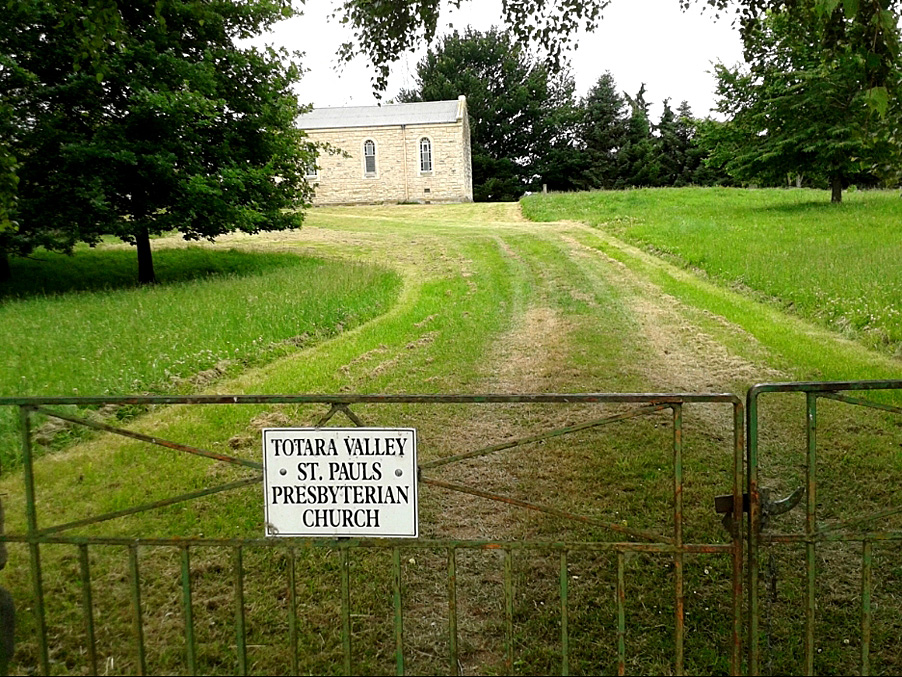
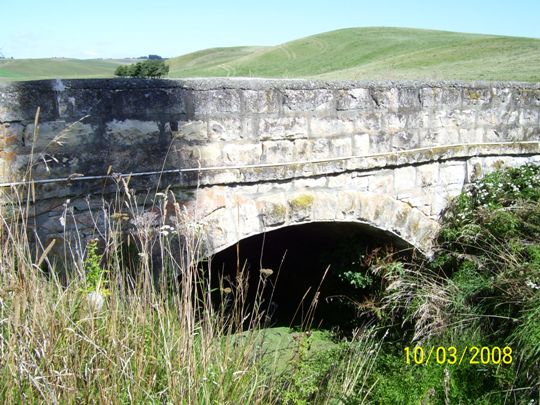
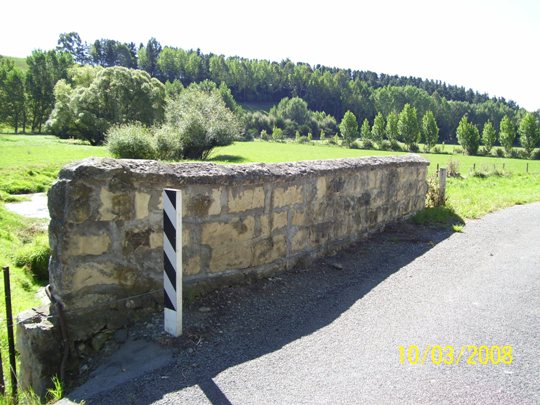
The Limestone Bridge is on a mostly straight stretch of Cleland Road, around 200 metres to the north of the T-junction where Hays Road joins Cleland Road which is also the entrance to the St Paul’s Presbyterian Church (Former) (List No. 1995). The Limestone Bridge has a span of approximately 3.8 metres. The road width is 5.5 metres and the depth of the crown of the arch to water level is approximately 2 metres. The materials are local limestone. In his 1958 publication, South Canterbury – A Record of Settlement, Oliver A Gillespie records the construction of these early bridges as follows: ‘Before building a stone bridge, a wooden framework was erected to support the weight as the prepared stones were placed in position. Cement was used only for foundations and to smooth over interstices between the stones after these had been filled with chips. Stones, shaped at an angle to give an arch, were packed as tightly as possible. Those last to be placed in position were the wedge-shaped keystones which locked the whole structure and gave it strength. Once they were placed, the framework was removed and the bridge was ready to take the weight of traffic.’
In the early 1990s the side walls of the bridge were repaired and repointed.
List Entry Information
Status
Listed
List Entry Status
Historic Place Category 2
Access
Able to Visit
List Number
1986
Date Entered
23rd June 1983
Date of Effect
23rd June 1983
City/District Council
Timaru District
Region
Canterbury Region
Extent of List Entry
Extent includes part of the land described as Legal Road, Canterbury Land District and the structure known as Limestone Bridge thereon. Refer to extent map tabled at Heritage New Zealand Board meeting on 26 June 2014.
Legal description
Legal Road, Canterbury Land District
Location Description
There is no street number. The GPS coordinates are 1440299.0438, 5100182.8528.
Status
Listed
List Entry Status
Historic Place Category 2
Access
Able to Visit
List Number
1986
Date Entered
23rd June 1983
Date of Effect
23rd June 1983
City/District Council
Timaru District
Region
Canterbury Region
Extent of List Entry
Extent includes part of the land described as Legal Road, Canterbury Land District and the structure known as Limestone Bridge thereon. Refer to extent map tabled at Heritage New Zealand Board meeting on 26 June 2014.
Legal description
Legal Road, Canterbury Land District
Location Description
There is no street number. The GPS coordinates are 1440299.0438, 5100182.8528.
Construction Details
Start Year
1990
startYearCirca
Type
Maintenance/repairs
Description
Bridge repaired and repointed
Start Year
1870
startYearCirca
Type
Original Construction
Construction Materials
Limestone.
Construction Details
Start Year
1990
startYearCirca
Type
Maintenance/repairs
Description
Bridge repaired and repointed
Start Year
1870
startYearCirca
Type
Original Construction
Construction Materials
Limestone.
Historical and Associated Iwi / Hapū / Whānau
Completion Date
4th December 2017
Report Written By
Robyn Burgess
Information Sources
Stone Bridges of South Canterbury
Fougere, J R, Stone Bridges of South Canterbury, Timaru, 1993 (unpublished).
South Canterbury: A record of settlement, 1958
Gillespie, Oliver A, South Canterbury: A record of settlement, 1958 (second edition 1971)
Timaru District Built Heritage Inventory: From Mesopotamia to Pareora River
Opus International Consultants, Timaru District Built Heritage Inventory: From Mesopotamia to Pareora River, July 2004
Historic Stone Arch Bridges
Waugh, John, ‘Historic Stone Arch Bridges’, New Zealand Historic Places, No. 47, May 1994, pp. 20-21.
Other Information
This place was identified as significant under previous legislation with different information requirements. It remains significant under the current legislation. There is opportunity under our legislation and policies to add to this information. Further information about this place may be available from the Southern Regional Office of Heritage New Zealand Pouhere Taonga. Please note that entry on the New Zealand Heritage List/Rarangi Korero identifies only the heritage values of the property concerned, and should not be construed as advice on the state of the property, or as a comment of its soundness or safety, including in regard to earthquake risk, safety in the event of fire, or insanitary conditions. A fully referenced upgrade report is available on request from the Southern Regional Office of Heritage New Zealand
Historical and Associated Iwi / Hapū / Whānau
Completion Date
4th December 2017
Report Written By
Robyn Burgess
Information Sources
Stone Bridges of South Canterbury
Fougere, J R, Stone Bridges of South Canterbury, Timaru, 1993 (unpublished).
South Canterbury: A record of settlement, 1958
Gillespie, Oliver A, South Canterbury: A record of settlement, 1958 (second edition 1971)
Timaru District Built Heritage Inventory: From Mesopotamia to Pareora River
Opus International Consultants, Timaru District Built Heritage Inventory: From Mesopotamia to Pareora River, July 2004
Historic Stone Arch Bridges
Waugh, John, ‘Historic Stone Arch Bridges’, New Zealand Historic Places, No. 47, May 1994, pp. 20-21.
Other Information
This place was identified as significant under previous legislation with different information requirements. It remains significant under the current legislation. There is opportunity under our legislation and policies to add to this information. Further information about this place may be available from the Southern Regional Office of Heritage New Zealand Pouhere Taonga. Please note that entry on the New Zealand Heritage List/Rarangi Korero identifies only the heritage values of the property concerned, and should not be construed as advice on the state of the property, or as a comment of its soundness or safety, including in regard to earthquake risk, safety in the event of fire, or insanitary conditions. A fully referenced upgrade report is available on request from the Southern Regional Office of Heritage New Zealand
Current Usages
Uses: Transport
Specific Usage: Bridge/ Viaduct
Former Usages
General Usage: Transport
Specific Usage: Bridge/ Viaduct
Current Usages
Uses: Transport
Specific Usage: Bridge/ Viaduct
Former Usages
General Usage: Transport
Specific Usage: Bridge/ Viaduct
Location
Related listings
Sign up to hear more
Get the latest heritage news, features and events delivered
straight to your inbox.
