

List Entry Information
Status
Listed
List Entry Status
Historic Place Category 1
Access
Private/No Public Access
List Number
2136
Date Entered
27th July 1988
Date of Effect
27th July 1988
City/District Council
Dunedin City
Region
Otago Region
Legal description
Secs 46 & 47 Blk 31 Town of Dunedin
Status
Listed
List Entry Status
Historic Place Category 1
Access
Private/No Public Access
List Number
2136
Date Entered
27th July 1988
Date of Effect
27th July 1988
City/District Council
Dunedin City
Region
Otago Region
Legal description
Secs 46 & 47 Blk 31 Town of Dunedin
Why is this place significant?
Historic Significance
Historical Significance or Value The old St Pauls was the first major Anglican church in Dunedin, built in 1862 and demolished early in this century. A wooded church was built at Caversham in 1864, which was moved to Mornington and demolished about the 1960s. All Saints was the third Anglican church built in 1865 and hence is the oldest standing Anglican church in Dunedin. The land was given by Mr James Allen and the foundation stone laid on 11 February 1865. The church was built rapidly (admittedly only the nave and baptistery) and opened on 23 July 1865. The transepts and chancel were added in 1873, by Mason to Clayton's plan. The church has had close ties with the University, particularly through Selwyn College immediately behind it, which was built as an Anglican theological college in 1892, added to in 1928 and converted to a University Hall of Residence in 1966.
Physical Significance
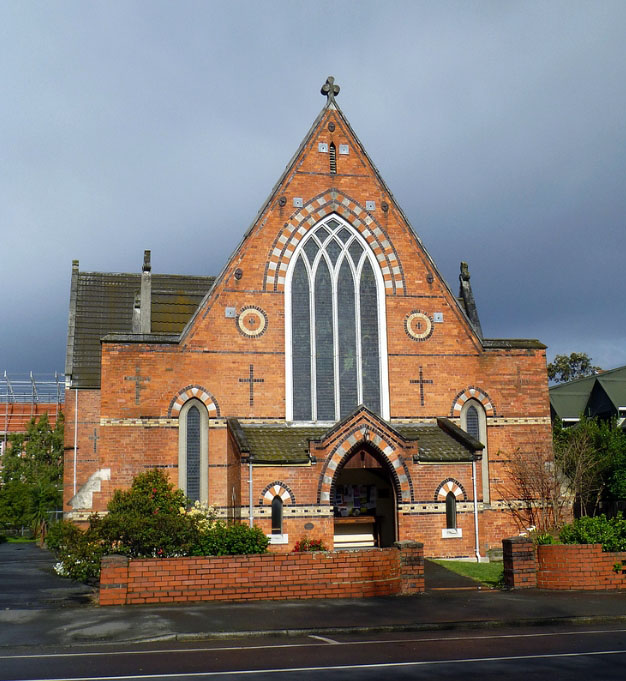
ARCHITECTURAL SIGNIFICANCE: This is one of the few buildings in Dunedin which can be attributed to Clayton, Mason's early partner. It is the only polychromatic brick church in Dunedin. TOWNSCAPE/LANDMARK SIGNIFICANCE: An important element in the old buildings surrounding the North Ground, which form with its old trees a harmonious inner cityscape around a green space.
Why is this place significant?
Historic Significance
Historical Significance or Value The old St Pauls was the first major Anglican church in Dunedin, built in 1862 and demolished early in this century. A wooded church was built at Caversham in 1864, which was moved to Mornington and demolished about the 1960s. All Saints was the third Anglican church built in 1865 and hence is the oldest standing Anglican church in Dunedin. The land was given by Mr James Allen and the foundation stone laid on 11 February 1865. The church was built rapidly (admittedly only the nave and baptistery) and opened on 23 July 1865. The transepts and chancel were added in 1873, by Mason to Clayton's plan. The church has had close ties with the University, particularly through Selwyn College immediately behind it, which was built as an Anglican theological college in 1892, added to in 1928 and converted to a University Hall of Residence in 1966.
Physical Significance
ARCHITECTURAL SIGNIFICANCE: This is one of the few buildings in Dunedin which can be attributed to Clayton, Mason's early partner. It is the only polychromatic brick church in Dunedin. TOWNSCAPE/LANDMARK SIGNIFICANCE: An important element in the old buildings surrounding the North Ground, which form with its old trees a harmonious inner cityscape around a green space.
Construction Professional
Name
Clayton, William Henry
Type
Architect
Biography
Born in Tasmania, Clayton (1823-1877) travelled to Europe with his family in 1842. He studied architecture in Brussells and was then articled to Sir John Rennie, engineer to the Admiralty, in London. He returned to Tasmania in 1848 and worked in private practice until he was appointed Government Surveyor in 1852. He resumed private practice in 1855 and was involved with surveying in the Launceston area. In 1857 he was elected an alderman on the Launceston Municipal Council. By the time Clayton immigrated to Dunedin in 1863 he had been responsible for the design of many buildings including churches, banks, a mechanics' institute, a theatre, steam and water mills, breweries, bridges, mansions and villas, in addition to being a land surveyor and road engineer. In 1864 he entered partnership with William Mason. Mason and Clayton were responsible for some important buildings in Dunedin including All Saints Church (1865) and The Exchange (former Post Office) (1865) as well as the Colonial Museum, Wellington (1865). These were two of the most prominent architects of their day in New Zealand. In 1869 Clayton became the first and only Colonial Architect and was responsible for the design of Post and Telegraph offices, courthouses, customhouses, Government department offices and ministerial residences. His acknowledged masterpiece is Government Buildings, Wellington (1876) a stone-simulated wooden building and the largest timber framed building in the Southern Hemisphere. Clayton was a prolific and highly accomplished architect both within the Public Service and in private practice, in New Zealand and Australia. See https://teara.govt.nz/en/biographies/2c20/clayton-william-henry
Name
Gore, James
Type
Builder
Biography
No biography is currently available for this construction professional
Name
Mason, William
Type
Architect
Biography
William Mason was born at Suffolk, England, in 1810. He attended a private school in Ipswich and was then articled to his father. He moved to London to study architecture under Thomas Telford and Peter Nicholson and was later employed by Edward Blore, special architect to William IV and to Queen Victoria. In 1838 he moved to New South Wales with wife Sarah and young son, working with colonial architect Mortimer Lewis. Mason was offered the position of superintendent of public works under Felton Mathew by William Hobson, Governor of New Zealand. Mason arrived at the Bay of Islands on 17 March 1840. He was a member of the founding party which arrived at the site of Auckland on 16 September 1840. In July 1841 Mason resigned his position and entered a three-year partnership with Thomas Paton and became involved in farming and local politics as well as architecture. Mason had been in New Zealand for 20 years when he first set up as an architect in the gold mining boom town of Dunedin in 1862, employed to design the southern offices for the recently formed Bank of New Zealand in Dunedin. He set up practice with David Ross, and later with W. H. Clayton. In this period, he designed the Colonial Bank, the 1864 exhibition building which became part of the Dunedin Hospital, the combined post office and courthouse, and Edinburgh House. Mason was elected the first mayor of Dunedin and served two terms. Mason had retired briefly in the late 1860s but returned to work entering into partnership with N. Y. A. Wales in 1871. During this time he designed Bishopscourt and the extension to All Saints Church. In 1876 Mason and his second wife retired to live at Queenstown. After building at Paradise and farming for a few years, a period of ill health drove him back to Dunedin where he died at the Grand Hotel on 22 June 1897.
Construction Details
Start Year
1865
Type
Original Construction
Start Year
1873
Type
Addition
Description
The transepts and chancel were added
Start Year
1970
Type
Modification
Description
Pulpit and altar moved forward into the transept and new railings made around the altar.
Start Year
1970
Type
Modification
Description
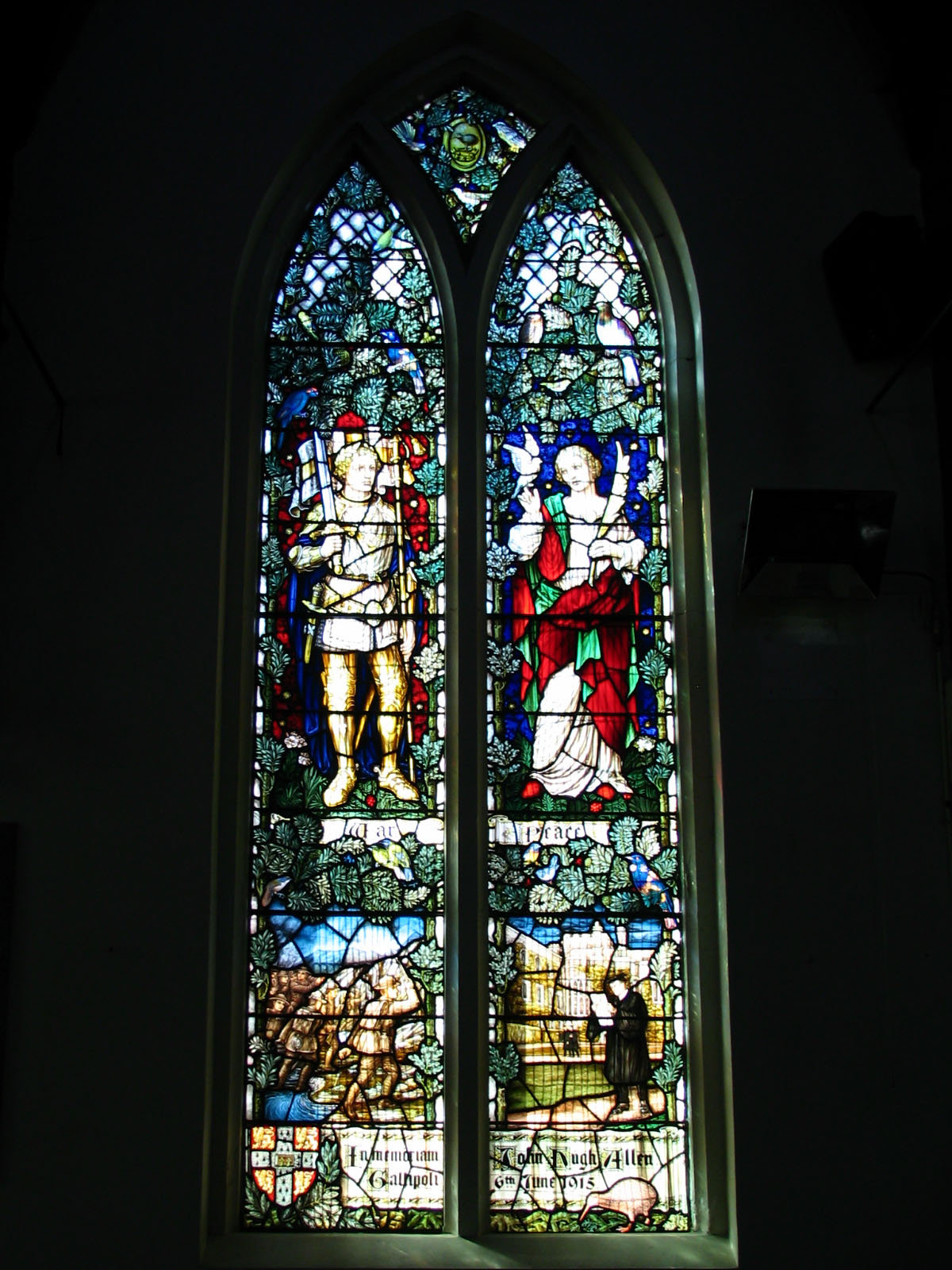
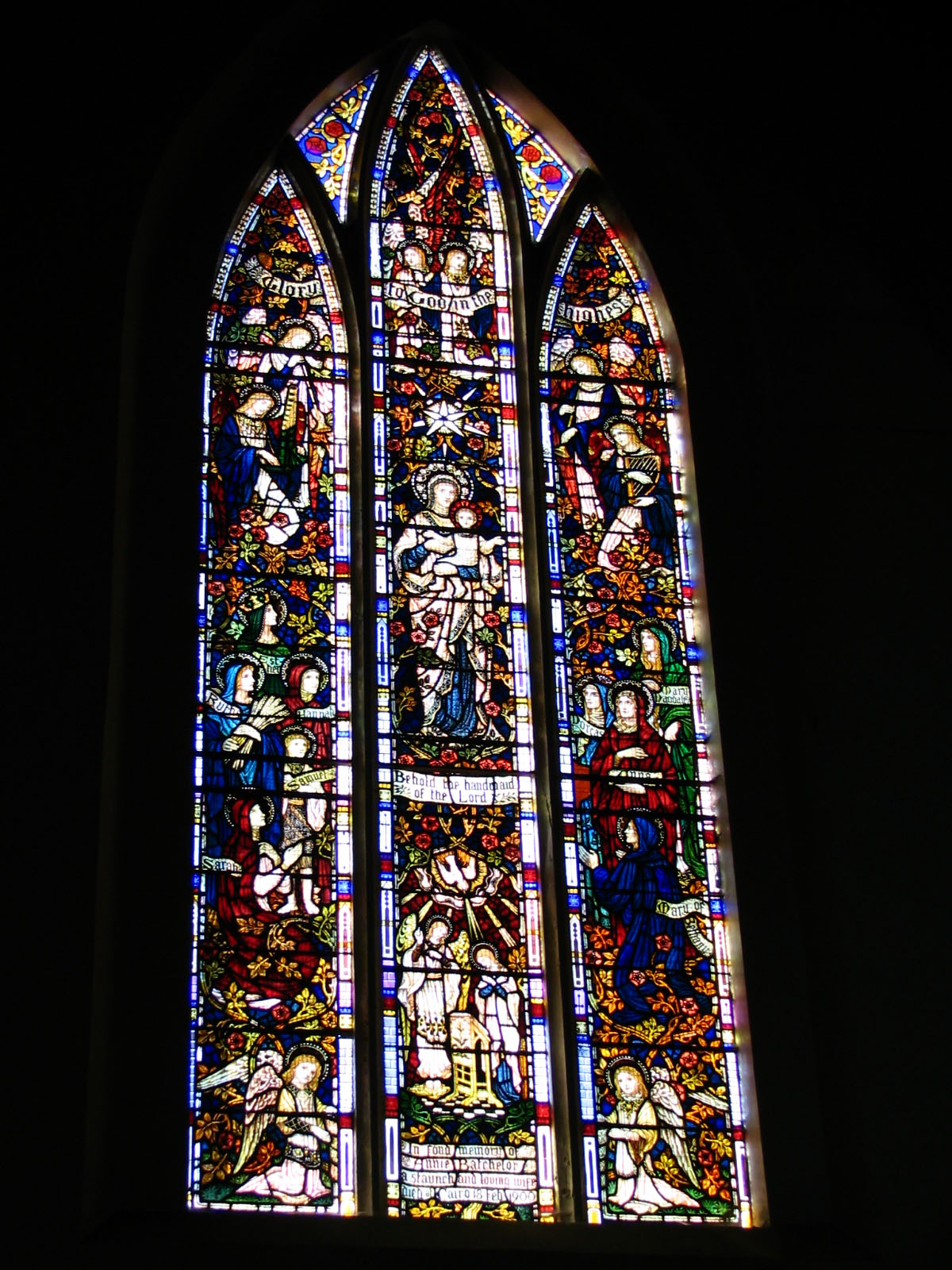
Two stained glass windows from St Hildas old chapel have been placed in the nave and in the sacristy.
Construction Materials
The Church was founded 'nigh to a bog into which a horse disappeared' (Janet Angus). James Gore was the builder. The front north walls are triple brick of a softer orange-red than most of Dunedin's bricks, relieved by bands of cream bricks with crosses, circles and arches outlined in black and white tiles. The chancel walls are concrete or plaster over brick and the south wall of the nave is rough casted with orange-brown Moeraki gravel. The walls were built by an 'advanced' method without buttresses. The roof was covered with fish-tail slates but has been re-roofed with dark brown tiles. The interior was richly painted in part as 'a gesture towards the new fashion for decoration which men like Pugin and Butterfield had pioneered in England' (Stacpoole1976), but it is now plain white plaster enriched by handsome stained glass windows. A photo of the interior (held by the church) in 1879 shows that the arch into the sanctuary was framed by a biblical text in ornate gothic lettering and the walls were covered either with tiles or with a painted tile pattern with a small fan in the bottom left hand corner of each tile. The altar windows were smaller than the present ones with elaborate chequered arches painted around them. The present larger windows were donated by P C Neill. There are two altars in carved wood, the front one being the older and well carved in gothic style.
Notable Features
Its age, its polychromatic brick, its association with Clayton.
Construction Professional
Name
Clayton, William Henry
Type
Architect
Biography
Born in Tasmania, Clayton (1823-1877) travelled to Europe with his family in 1842. He studied architecture in Brussells and was then articled to Sir John Rennie, engineer to the Admiralty, in London. He returned to Tasmania in 1848 and worked in private practice until he was appointed Government Surveyor in 1852. He resumed private practice in 1855 and was involved with surveying in the Launceston area. In 1857 he was elected an alderman on the Launceston Municipal Council. By the time Clayton immigrated to Dunedin in 1863 he had been responsible for the design of many buildings including churches, banks, a mechanics' institute, a theatre, steam and water mills, breweries, bridges, mansions and villas, in addition to being a land surveyor and road engineer. In 1864 he entered partnership with William Mason. Mason and Clayton were responsible for some important buildings in Dunedin including All Saints Church (1865) and The Exchange (former Post Office) (1865) as well as the Colonial Museum, Wellington (1865). These were two of the most prominent architects of their day in New Zealand. In 1869 Clayton became the first and only Colonial Architect and was responsible for the design of Post and Telegraph offices, courthouses, customhouses, Government department offices and ministerial residences. His acknowledged masterpiece is Government Buildings, Wellington (1876) a stone-simulated wooden building and the largest timber framed building in the Southern Hemisphere. Clayton was a prolific and highly accomplished architect both within the Public Service and in private practice, in New Zealand and Australia. See https://teara.govt.nz/en/biographies/2c20/clayton-william-henry
Name
Gore, James
Type
Builder
Biography
No biography is currently available for this construction professional
Name
Mason, William
Type
Architect
Biography
William Mason was born at Suffolk, England, in 1810. He attended a private school in Ipswich and was then articled to his father. He moved to London to study architecture under Thomas Telford and Peter Nicholson and was later employed by Edward Blore, special architect to William IV and to Queen Victoria. In 1838 he moved to New South Wales with wife Sarah and young son, working with colonial architect Mortimer Lewis. Mason was offered the position of superintendent of public works under Felton Mathew by William Hobson, Governor of New Zealand. Mason arrived at the Bay of Islands on 17 March 1840. He was a member of the founding party which arrived at the site of Auckland on 16 September 1840. In July 1841 Mason resigned his position and entered a three-year partnership with Thomas Paton and became involved in farming and local politics as well as architecture. Mason had been in New Zealand for 20 years when he first set up as an architect in the gold mining boom town of Dunedin in 1862, employed to design the southern offices for the recently formed Bank of New Zealand in Dunedin. He set up practice with David Ross, and later with W. H. Clayton. In this period, he designed the Colonial Bank, the 1864 exhibition building which became part of the Dunedin Hospital, the combined post office and courthouse, and Edinburgh House. Mason was elected the first mayor of Dunedin and served two terms. Mason had retired briefly in the late 1860s but returned to work entering into partnership with N. Y. A. Wales in 1871. During this time he designed Bishopscourt and the extension to All Saints Church. In 1876 Mason and his second wife retired to live at Queenstown. After building at Paradise and farming for a few years, a period of ill health drove him back to Dunedin where he died at the Grand Hotel on 22 June 1897.
Construction Details
Start Year
1865
Type
Original Construction
Start Year
1873
Type
Addition
Description
The transepts and chancel were added
Start Year
1970
Type
Modification
Description
Pulpit and altar moved forward into the transept and new railings made around the altar.
Start Year
1970
Type
Modification
Description
Two stained glass windows from St Hildas old chapel have been placed in the nave and in the sacristy.
Construction Materials
The Church was founded 'nigh to a bog into which a horse disappeared' (Janet Angus). James Gore was the builder. The front north walls are triple brick of a softer orange-red than most of Dunedin's bricks, relieved by bands of cream bricks with crosses, circles and arches outlined in black and white tiles. The chancel walls are concrete or plaster over brick and the south wall of the nave is rough casted with orange-brown Moeraki gravel. The walls were built by an 'advanced' method without buttresses. The roof was covered with fish-tail slates but has been re-roofed with dark brown tiles. The interior was richly painted in part as 'a gesture towards the new fashion for decoration which men like Pugin and Butterfield had pioneered in England' (Stacpoole1976), but it is now plain white plaster enriched by handsome stained glass windows. A photo of the interior (held by the church) in 1879 shows that the arch into the sanctuary was framed by a biblical text in ornate gothic lettering and the walls were covered either with tiles or with a painted tile pattern with a small fan in the bottom left hand corner of each tile. The altar windows were smaller than the present ones with elaborate chequered arches painted around them. The present larger windows were donated by P C Neill. There are two altars in carved wood, the front one being the older and well carved in gothic style.
Notable Features
Its age, its polychromatic brick, its association with Clayton.
ARCHITECTURAL DESCRIPTION (Style): The style of the building is Early English (Lombardo-Gothic) with notable constructional polychromy. Instead of a spire there is a high front gable with a very large window with narrow gothic tracery. The great front door repeats the pattern of the window. MODIFICATIONS: The roof had been renewed with tiles instead of slates and the interior repainted plain white. Soon after the building was erected the south wall sagged and was buttressed. There is now no sign of a buttress (except for the wings of the façade), and the church had been strengthened with unobtrusive steel cross ties. One side door in the southern transept chapel has been removed to combat dampness. The pulpit and altar have been bought forward into the transept and new railings made in 1970 around the altar. Two stained glass windows from St Hildas old chapel have been placed in the nave and sacristy.
ARCHITECTURAL DESCRIPTION (Style): The style of the building is Early English (Lombardo-Gothic) with notable constructional polychromy. Instead of a spire there is a high front gable with a very large window with narrow gothic tracery. The great front door repeats the pattern of the window. MODIFICATIONS: The roof had been renewed with tiles instead of slates and the interior repainted plain white. Soon after the building was erected the south wall sagged and was buttressed. There is now no sign of a buttress (except for the wings of the façade), and the church had been strengthened with unobtrusive steel cross ties. One side door in the southern transept chapel has been removed to combat dampness. The pulpit and altar have been bought forward into the transept and new railings made in 1970 around the altar. Two stained glass windows from St Hildas old chapel have been placed in the nave and sacristy.
Historical and Associated Iwi / Hapū / Whānau
Other Information
This historic place was registered under the Historic Places Act 1980. This report includes the text from the original Building Classification Committee report considered by the NZHPT Board at the time of registration. Please note that entry on the New Zealand Heritage List/Rarangi Korero identifies only the heritage values of the property concerned, and should not be construed as advice on the state of the property, or as a comment of its soundness or safety, including in regard to earthquake risk, safety in the event of fire, or insanitary conditions.
Historical and Associated Iwi / Hapū / Whānau
Other Information
This historic place was registered under the Historic Places Act 1980. This report includes the text from the original Building Classification Committee report considered by the NZHPT Board at the time of registration. Please note that entry on the New Zealand Heritage List/Rarangi Korero identifies only the heritage values of the property concerned, and should not be construed as advice on the state of the property, or as a comment of its soundness or safety, including in regard to earthquake risk, safety in the event of fire, or insanitary conditions.
Current Usages
Uses: Religion
Specific Usage: Church
Former Usages
General Usage: Religion
Specific Usage: Church
Web Links
description:
Current Usages
Uses: Religion
Specific Usage: Church
Former Usages
General Usage: Religion
Specific Usage: Church
Web Links
description:
