DonateMembershipVisit Heritage
  • Tūrangawaewae
    Places
  • Tira Māori
    Māori Heritage
  • Poutairangahia
    Archaeology
  • Rauemi
    Resources
  • Mō Tātou
    About Us
  • New Zealand Heritage List
  • Nominate and submit
  • Explore the List
  • National Historic Landmarks
  • Plaques
  • Rainbow List Project
  • Lost heritage
  • Visit Heritage
  • Our properties
  • Turnbull House Project
  • Collections
  • Shop
  • Tohu Whenua
  • Tira Māori
  • Conserving Māori heritage
  • Marae built heritage
  • Māori heritage on the List
  • Hinemihi—Te Hokinga Mai
  • What is archaeology?
  • Is there a site on my property?
  • What are my legal requirements?
  • Affecting an archaeological site
  • Declaring an archaeological site
  • Archaeology FAQs
  • Archaeology Digital Library
  • Archaeology guidelines and templates
  • Resources
  • Funding
  • Publications
  • Sustainable management guides
  • Disaster recovery
  • Podcasts & digital resources
  • Education Hub
  • Conservation plans
  • About
  • Board
  • Māori Heritage Council
  • Senior Staff
  • Offices
  • Contact us
  • Careers
  • Covenants
  • Fast-track
  • Corporate documents
  • Currently consulting on
  • Our submissions
  • News
  • Covid-19 response
Quick links
Rārangi Kōrero | The List
Explore the List
National Historic Landmarks
Ngā Manawhenua o Aotearoa me ōna Kōrero Tūturu
Quick links
Tapuwae
A Vision for Places of Māori Heritage
Funding for Māori Heritage
Resources
Quick links
Archaeological Authority Portal
Applying for an archaeological authority
Archaeology FAQs
Browse the most frequently asked questions about archaeological authorities and the archaeological process.
Quick links
Quick links
News
News Keep up to date with Heritage New Zealand Pouhere Taonga
Membership
Membership Find out more and sign up today
DonateMembershipVisit Heritage
  • Tūrangawaewae
    Places
  • Tira Māori
    Māori Heritage
  • Poutairangahia
    Archaeology
  • Rauemi
    Resources
  • Mō Tātou
    About Us
  • New Zealand Heritage List
  • Nominate and submit
  • Explore the List
  • National Historic Landmarks
  • Plaques
  • Rainbow List Project
  • Lost heritage
  • Visit Heritage
  • Our properties
  • Turnbull House Project
  • Collections
  • Shop
  • Tohu Whenua
  • Tira Māori
  • Conserving Māori heritage
  • Marae built heritage
  • Māori heritage on the List
  • Hinemihi—Te Hokinga Mai
  • What is archaeology?
  • Is there a site on my property?
  • What are my legal requirements?
  • Affecting an archaeological site
  • Declaring an archaeological site
  • Archaeology FAQs
  • Archaeology Digital Library
  • Archaeology guidelines and templates
  • Resources
  • Funding
  • Publications
  • Sustainable management guides
  • Disaster recovery
  • Podcasts & digital resources
  • Education Hub
  • Conservation plans
  • About
  • Board
  • Māori Heritage Council
  • Senior Staff
  • Offices
  • Contact us
  • Careers
  • Covenants
  • Fast-track
  • Corporate documents
  • Currently consulting on
  • Our submissions
  • News
  • Covid-19 response
Quick links
Rārangi Kōrero | The List
Explore the List
National Historic Landmarks
Ngā Manawhenua o Aotearoa me ōna Kōrero Tūturu
Quick links
Tapuwae
A Vision for Places of Māori Heritage
Funding for Māori Heritage
Resources
Quick links
Archaeological Authority Portal
Applying for an archaeological authority
Archaeology FAQs
Browse the most frequently asked questions about archaeological authorities and the archaeological process.
Quick links
Quick links
News
News Keep up to date with Heritage New Zealand Pouhere Taonga
Membership
Membership Find out more and sign up today
  • Places
  • Nominate and submit
  • National Historic Landmarks
  • Places
  • Nominate and submit
  • National Historic Landmarks
  • Tira Māori
  • Conserving Māori heritage
  • Marae built heritage
  • Tira Māori
  • Conserving Māori heritage
  • Marae built heritage
  • Archaeological authorities
  • Archaeology Digital Library
  • Archaeological authorities
  • Archaeology Digital Library
  • All resources
  • Publications
  • Funding
  • All resources
  • Publications
  • Funding
  • FAQs
  • FAQs
Follow us on:
Places
  • Places
  • Nominate and submit
  • National Historic Landmarks
Tira Māori
  • Tira Māori
  • Conserving Māori heritage
  • Marae built heritage
Archaeology
  • Archaeological authorities
  • Archaeology Digital Library
Resources
  • All resources
  • Publications
  • Funding
FAQs
  • FAQs
Follow us on
HomePrivacyTerms and conditionsAbout this site
© Heritage New Zealand Pouhere Taonga 2026.
 
Cenotaph

Queens Gardens, DUNEDIN

Public

Historic Place Category 2

List No. 2221

Quick links:
List GalleryLocationDetails
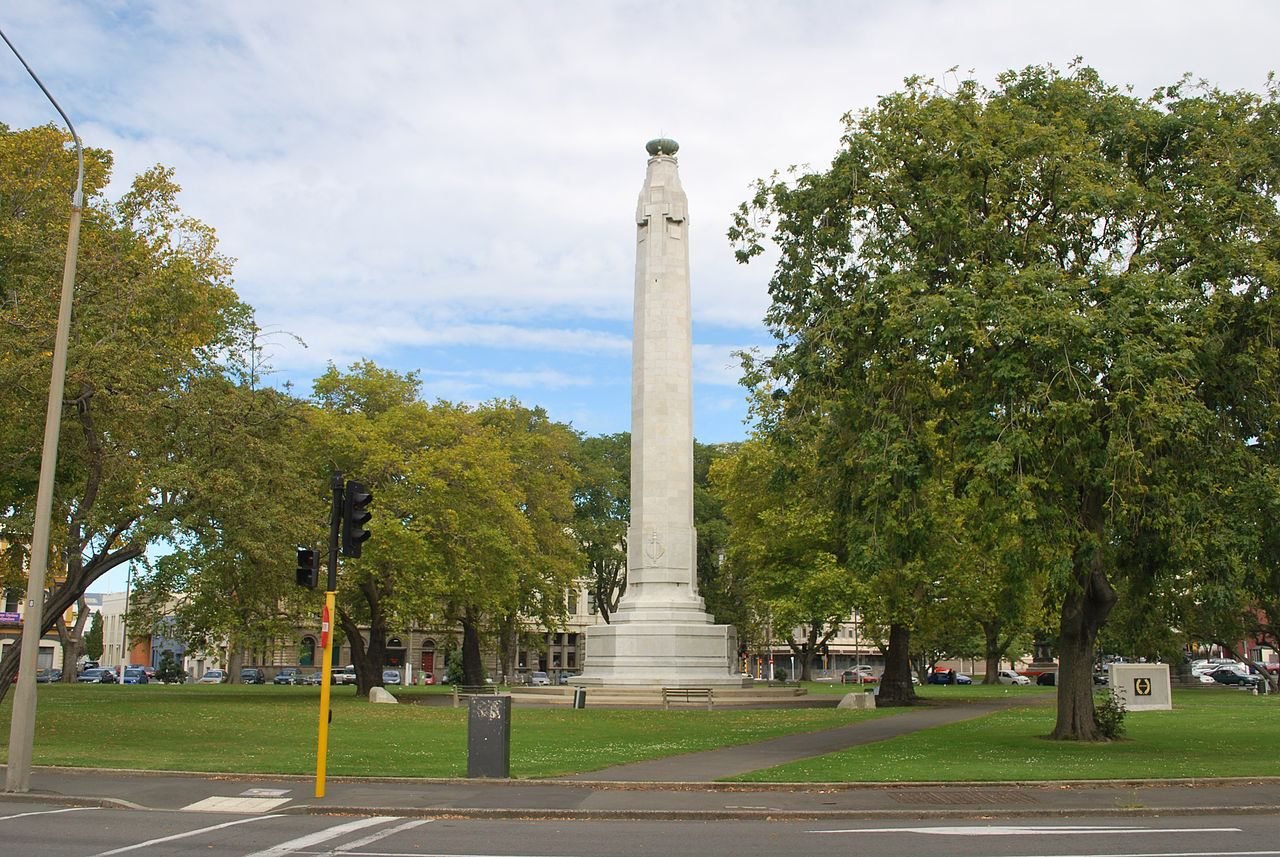
Dunedin’s cenotaph, designed by Auckland architect William Gummer in 1921 and unveiled in 1927, stands sentinel over Queens Gardens in the centre of the city. It has significance historically as a memorial to Dunedin citizens killed in both World Wars and architecturally as an example of the design of memorials in the wake of conflict.

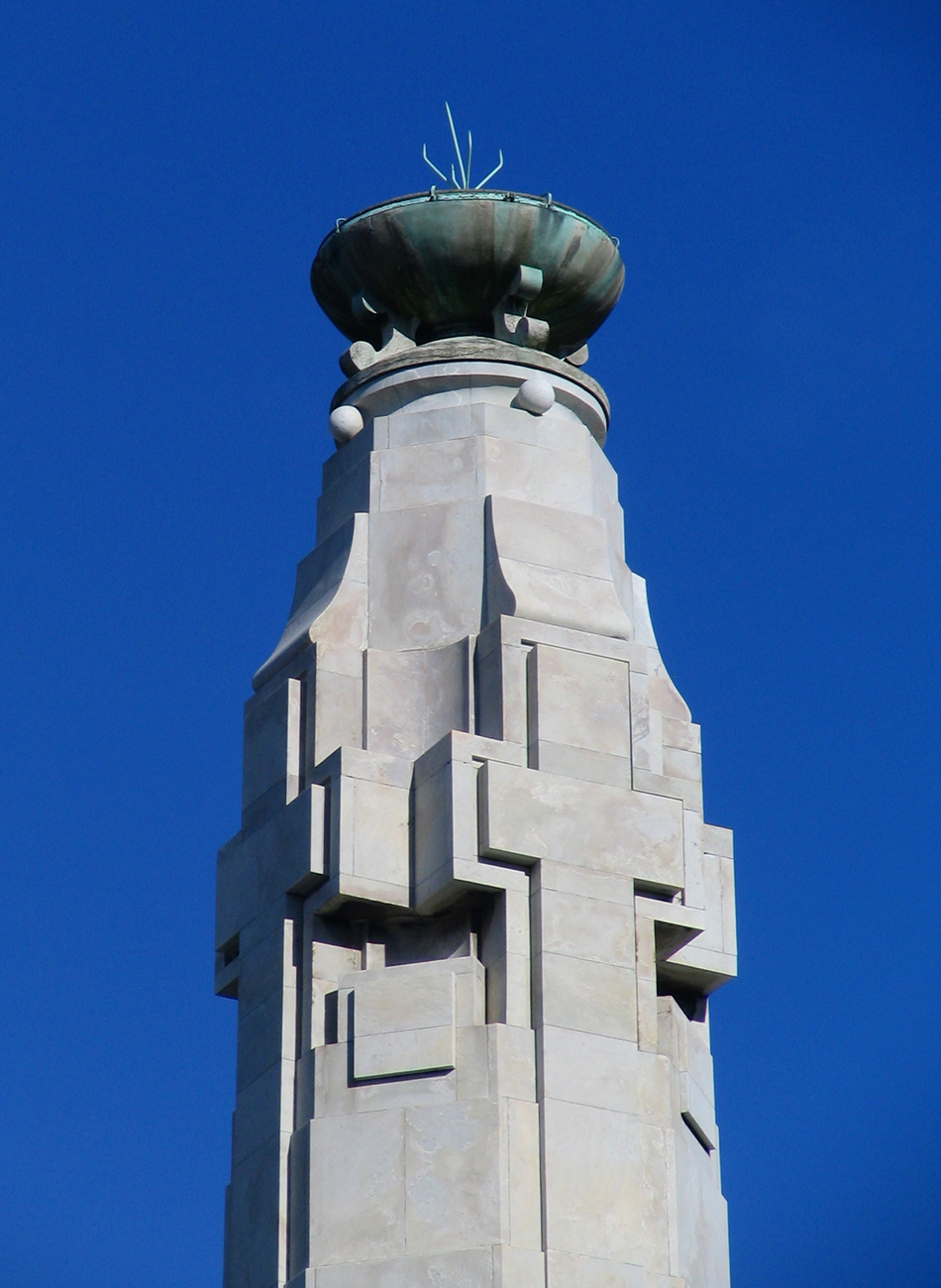
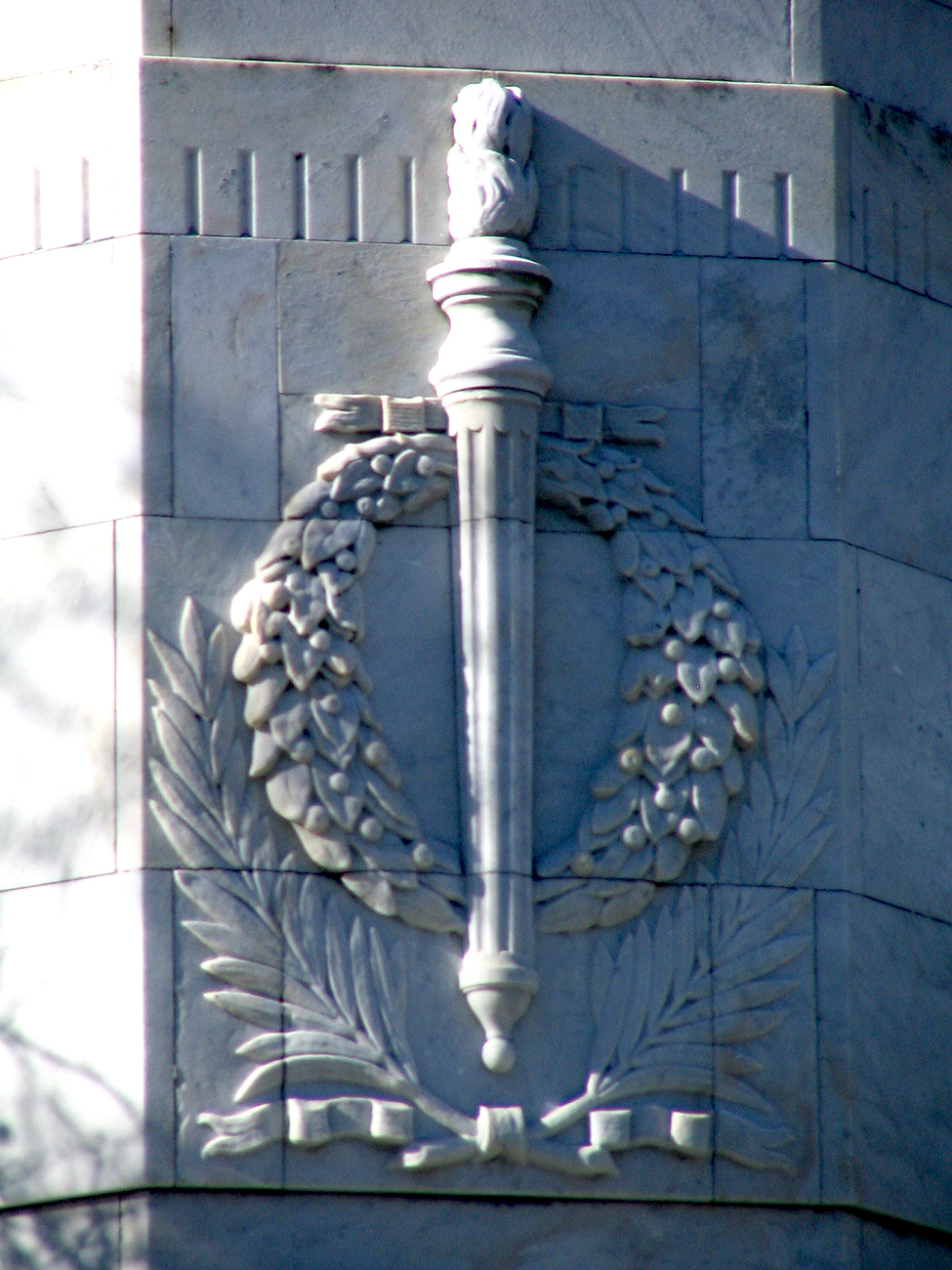
In the aftermath of World War One, Dunedin, like other communities, debated the best way to acknowledge and commemorate the sacrifice made by those who had served their country, many giving their lives the Empire. After considerable to-and-froing, the Dunedin war memorial committee held a design competition for a suitable memorial. The adjudicator, Invercargill architect E.R. Wilson, selected William Gummer’s entry because it reflected the ‘great sacrifices’ and ‘mighty deeds’ of the soldiers. Gummer’s design was a soaring eight-sided column, ‘a proud assertion of manhood and triumph’, with a sacrificial urn and four crosses emerging out of the column expressing sacrifice. Richard Gross’s relief sculpture complements Gummer’s design.

The Mayor laid the foundation stone on Anzac Day, 1924. Budget constraints meant that the memorial was built of concrete with an outer casing of Carrara marble. Slabs of stone replaced the planned bronze plaques. Only a stone lion, classically inspired panels, and a further panel inscribed with a ‘the Glorious Dead 1914-1918’ were built. H.S. Bingham and Co. won the tender for construction, with a price of £8,420.

In 1927, Prince Albert, the Duke of York (later George VI) unveiled the ‘Citizens’ War Memorial’ at a ceremony with seats for 1,000 for the next of kin of the fallen soldiers, and some 800 returned servicemen. The Mayor told the crowd that the memorial expressed the citizens of Dunedin’s ‘unswerving loyalty to the throne, as well as their proud sense of the dauntless spirit in which the youth of Otago offered their lives in defence of the Empire and of the maintenance of freedom, honour and justice.’

The memorial became known as the cenotaph. The term ‘cenotaph’, came into common use in the 1920s, referring to monuments modelled on British architect Sir Edwin Lutyens’ 1919 cenotaph for London’s Whitehall. Cenotaph means ‘empty tomb’ and memorials were proportioned to represent that form. The term became so charged with meaning that it came to refer more widely to other types of memorial, whatever their shape – because in the end, all memorials, whatever their form, were ‘empty tombs.’ This seems to be so in Dunedin – the Dunedin ‘Citizens’ War Memorial’ became known as ‘The Cenotaph’, though its form is a column rather than a tomb.

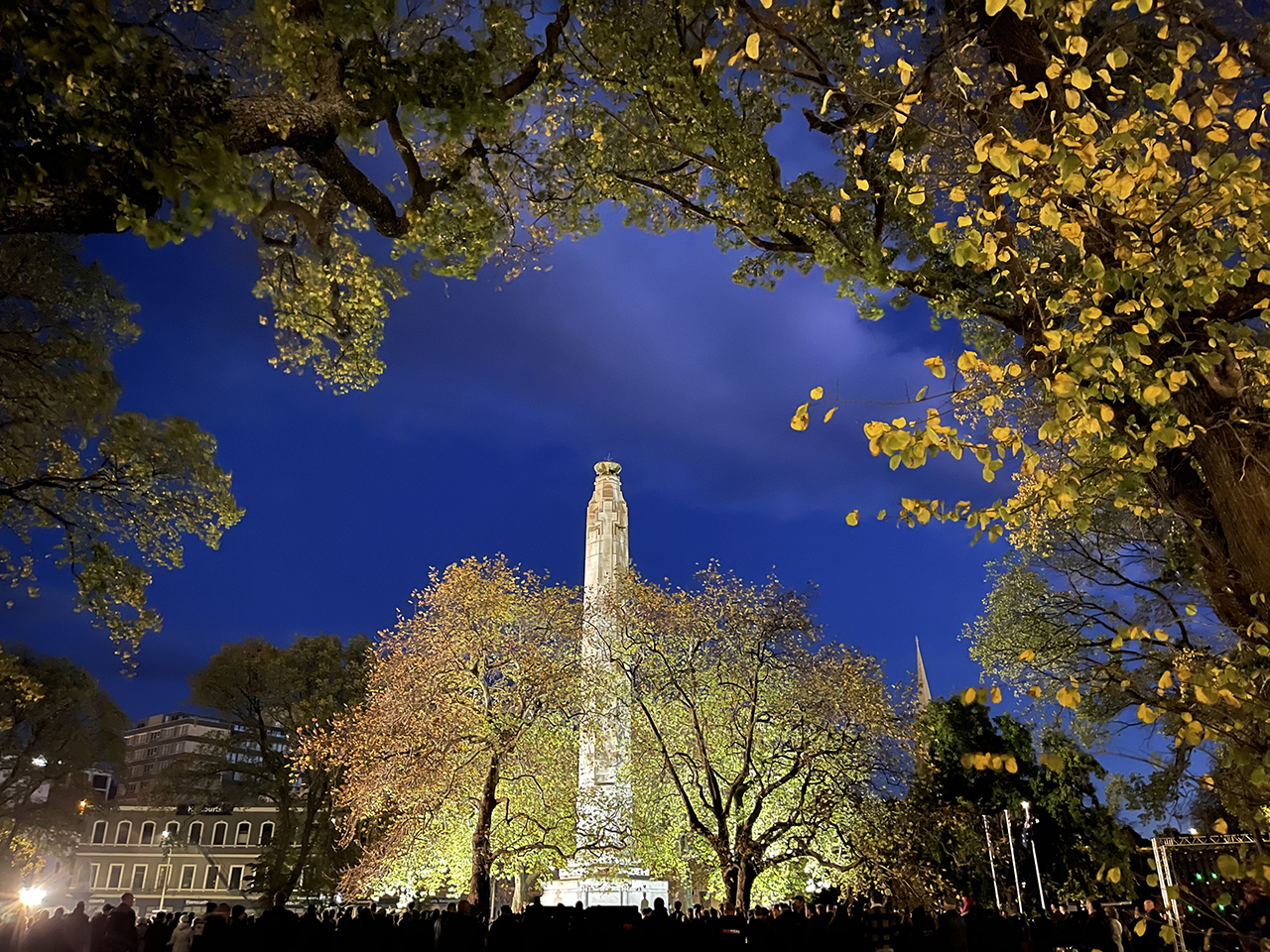
Throughout the twentieth century and into the twenty-first century, the cenotaph has been the centre of Dunedin’s Anzac Day services. After World War Two a plaque commemorating the conflict was added to the memorial. In 2012, over 10,000 people gathered to remember the fallen soldiers. The cenotaph is a place for reflection and remembrance and remains the focus of Dunedin’s Anzac Day commemorations.
Cenotaph, Queens Gardens, Dunedin. CC BY Licence | Alison Petrie | 25/04/2021 | Alison Petrie
Cenotaph, Queens Gardens, Dunedin. CC BY-SA 2.0 Image courtesy of commons.wikimedia.org | Mattinbgn | 10/03/2011 | Mattinbgn - Wikimedia Commons
Cenotaph, Queens Gardens, Dunedin. CC BY-SA 3.0 Image courtesy of commons.wikimedia.org | Benchill | 14/08/2009 | Benchill - Wikimedia Commons
Cenotaph, Queens Gardens, Dunedin. CC BY Licence | Alison Petrie | 25/04/2021 | Alison Petrie
Cenotaph, Queens Gardens, Dunedin. CC BY-SA 2.0 Image courtesy of commons.wikimedia.org | Mattinbgn | 10/03/2011 | Mattinbgn - Wikimedia Commons
Cenotaph, Queens Gardens, Dunedin. CC BY-SA 3.0 Image courtesy of commons.wikimedia.org | Benchill | 14/08/2009 | Benchill - Wikimedia Commons

List Entry Information

Overview

Status
Listed

List Entry Status
Historic Place Category 2

Access
Able to Visit

List Number
2221

Date Entered
2nd July 1982

Date of Effect
2nd July 1982

City/District Council
Dunedin City

Region
Otago Region

Extent of List Entry

The extent includes part of the land described as Pt Blk XLV Town of Dunedin (NZ Gazette 1987, p. 714), Otago Land District, and the structure known as the Cenotaph thereon.

Legal description

Pt Blk XLV Town of Dunedin (NZ Gazette 1987, p. 714), Otago Land District

Detailed List Entry

Construction Professional

Name

Gummer & Prouse

Type

Architectural Partnership

Biography

No biography is currently available for this construction professional

Name

Gross, Richard Oliver

Type

Sculptor

Biography

Gross was born in England and immigrated to New Zealand in 1914 having been trained in sculpture at the London Camberwell School of Art under Albert Toft. Toft was a regular exhibitor at the Royal Academy of Arts from 1885. Gross' works include the Auckland Domain gates' statues, Wellington Citizen's Peace Memorial, the Savage Memorial at Orakei, the carved lion head fountain on the Carillon at Wellington and the stone lion in the Auckland Domain Wintergardens. At one time Gross was the only New Zealand sculptor casting in bronze at his own foundry. Gross was president of the Auckland Society of Arts for ten years, chairman of the McKelvie Trust Board and chairman of the Associated Art Societies of New Zealand.

Construction Details

Start Year

1924

Finish Year

1927

Type

Original Construction

Description

From laying of the foundation stone to unveiling

Start Year

1921

Type

Designed

Type

Addition

Description

Plaque commemorating World War Two added

Period

Post 1945

Reference

Completion Date

8th April 2014

Report Written By

Heather Bauchop

Information Sources

Phillips & Maclean, 1990.

Phillips, Jock and Chris Maclean, The Sorrow and the Pride: New Zealand War Memorials, Department of Internal Affairs, Historical Branch, Wellington, 1990.

Inglis, 1998

Inglis, K.S., Sacred Places: War Memorials in the Australian Landscape, Melbourne University Press, Melbourne, 2001 [first published 1998]

Report Written By

This place was identified as significant under previous legislation with different information requirements. It remains significant under the current legislation. There is opportunity under our legislation and policies to add to this information. Further information about this place may be available from the Otago/Southland Office of Heritage New Zealand Pouhere Taonga. A fully referenced upgrade report is available on request from the Otago/Southland Area Office of Heritage New Zealand. Please note that entry on the New Zealand Heritage List/Rarangi Korero identifies only the heritage values of the property concerned, and should not be construed as advice on the state of the property, or as a comment of its soundness or safety, including in regard to earthquake risk, safety in the event of fire, or insanitary conditions.

Further Information

Current Usages

Uses: Commemoration

Specific Usage: Memorial - World War One

Uses: Commemoration

Specific Usage: Memorial - World War Two

Former Usages

Themes

Web Links

Overview

Status

Listed

List Entry Status

Historic Place Category 2

Access

Able to Visit

List Number

2221

Date Entered

2nd July 1982

Date of Effect

2nd July 1982

City/District Council

Dunedin City

Region

Otago Region

Extent of List Entry

The extent includes part of the land described as Pt Blk XLV Town of Dunedin (NZ Gazette 1987, p. 714), Otago Land District, and the structure known as the Cenotaph thereon.

Legal description

Pt Blk XLV Town of Dunedin (NZ Gazette 1987, p. 714), Otago Land District

Status

Listed

List Entry Status

Historic Place Category 2

Access

Able to Visit

List Number

2221

Date Entered

2nd July 1982

Date of Effect

2nd July 1982

City/District Council

Dunedin City

Region

Otago Region

Extent of List Entry

The extent includes part of the land described as Pt Blk XLV Town of Dunedin (NZ Gazette 1987, p. 714), Otago Land District, and the structure known as the Cenotaph thereon.

Legal description

Pt Blk XLV Town of Dunedin (NZ Gazette 1987, p. 714), Otago Land District

Construction Information

Construction Professional

Name

Gummer & Prouse

Type

Architectural Partnership

Biography

No biography is currently available for this construction professional

Name

Gross, Richard Oliver

Type

Sculptor

Biography

Gross was born in England and immigrated to New Zealand in 1914 having been trained in sculpture at the London Camberwell School of Art under Albert Toft. Toft was a regular exhibitor at the Royal Academy of Arts from 1885. Gross' works include the Auckland Domain gates' statues, Wellington Citizen's Peace Memorial, the Savage Memorial at Orakei, the carved lion head fountain on the Carillon at Wellington and the stone lion in the Auckland Domain Wintergardens. At one time Gross was the only New Zealand sculptor casting in bronze at his own foundry. Gross was president of the Auckland Society of Arts for ten years, chairman of the McKelvie Trust Board and chairman of the Associated Art Societies of New Zealand.

Construction Details

Start Year

1924

Finish Year

1927

Type

Original Construction

Description

From laying of the foundation stone to unveiling

Start Year

1921

Type

Designed

Type

Addition

Description

Plaque commemorating World War Two added

Period

Post 1945

Construction Professional

Name

Gummer & Prouse

Type

Architectural Partnership

Biography

No biography is currently available for this construction professional

Name

Gross, Richard Oliver

Type

Sculptor

Biography

Gross was born in England and immigrated to New Zealand in 1914 having been trained in sculpture at the London Camberwell School of Art under Albert Toft. Toft was a regular exhibitor at the Royal Academy of Arts from 1885. Gross' works include the Auckland Domain gates' statues, Wellington Citizen's Peace Memorial, the Savage Memorial at Orakei, the carved lion head fountain on the Carillon at Wellington and the stone lion in the Auckland Domain Wintergardens. At one time Gross was the only New Zealand sculptor casting in bronze at his own foundry. Gross was president of the Auckland Society of Arts for ten years, chairman of the McKelvie Trust Board and chairman of the Associated Art Societies of New Zealand.

Construction Details

Start Year

1924

Finish Year

1927

Type

Original Construction

Description

From laying of the foundation stone to unveiling

Start Year

1921

Type

Designed

Type

Addition

Description

Plaque commemorating World War Two added

Period

Post 1945

Reference

Historical and Associated Iwi / Hapū / Whānau

Completion Date

8th April 2014

Report Written By

Heather Bauchop

Information Sources

Phillips & Maclean, 1990.

Phillips, Jock and Chris Maclean, The Sorrow and the Pride: New Zealand War Memorials, Department of Internal Affairs, Historical Branch, Wellington, 1990.

Inglis, 1998

Inglis, K.S., Sacred Places: War Memorials in the Australian Landscape, Melbourne University Press, Melbourne, 2001 [first published 1998]

Other Information

This place was identified as significant under previous legislation with different information requirements. It remains significant under the current legislation. There is opportunity under our legislation and policies to add to this information. Further information about this place may be available from the Otago/Southland Office of Heritage New Zealand Pouhere Taonga. A fully referenced upgrade report is available on request from the Otago/Southland Area Office of Heritage New Zealand. Please note that entry on the New Zealand Heritage List/Rarangi Korero identifies only the heritage values of the property concerned, and should not be construed as advice on the state of the property, or as a comment of its soundness or safety, including in regard to earthquake risk, safety in the event of fire, or insanitary conditions.

Historical and Associated Iwi / Hapū / Whānau

Completion Date

8th April 2014

Report Written By

Heather Bauchop

Information Sources

Phillips & Maclean, 1990.

Phillips, Jock and Chris Maclean, The Sorrow and the Pride: New Zealand War Memorials, Department of Internal Affairs, Historical Branch, Wellington, 1990.

Inglis, 1998

Inglis, K.S., Sacred Places: War Memorials in the Australian Landscape, Melbourne University Press, Melbourne, 2001 [first published 1998]

Other Information

This place was identified as significant under previous legislation with different information requirements. It remains significant under the current legislation. There is opportunity under our legislation and policies to add to this information. Further information about this place may be available from the Otago/Southland Office of Heritage New Zealand Pouhere Taonga. A fully referenced upgrade report is available on request from the Otago/Southland Area Office of Heritage New Zealand. Please note that entry on the New Zealand Heritage List/Rarangi Korero identifies only the heritage values of the property concerned, and should not be construed as advice on the state of the property, or as a comment of its soundness or safety, including in regard to earthquake risk, safety in the event of fire, or insanitary conditions.

Further Information

Current Usages

Uses: Commemoration

Specific Usage: Memorial - World War One

Uses: Commemoration

Specific Usage: Memorial - World War Two

Current Usages

Uses: Commemoration

Specific Usage: Memorial - World War One

Uses: Commemoration

Specific Usage: Memorial - World War Two

Location

Loading
Stay up to date with Heritage this month