

The Anglican church was established in Wakatipu by 1863, by which time historian F.W.G. Miller writes ‘there was a flourishing church community, with an active committee and a small church.’ William Rees, run holder, led early services, while resident magistrate and goldfields warden Richmond Beetham was a lay reader. The first ‘Church of England Committee’ met in November 1863, with plans to improve the primitive church. Rees, who was also a building contractor and timber merchant, undertook to finance the building. The improvements made it a ‘substantial wooden building of character with two transepts.’ The next priority was raising money to support a vicar for the area.
In 1869, the Dunedin became a separate diocese, and the new bishop was instructed to send to find a clergyman who could service both the Dunstan and Wakatipu. The congregation invited the Reverend Richard Coffey and he became the first vicar of the newly constituted parishes of Queenstown and Arrowtown in 1869, his stipend £250, including residence.
By the middle of February 1869, £100 had been collected for a parsonage, and a further meeting at Arrowtown had raised sufficient funds to buy a buggy. Tenders for the vicarage were sought and the lowest (£49.10.0), that of a Mr Forsythe, was accepted. Historian Alan De La Mare considers that this was probably a labour only price because the timber was likely supplied by parishioner J.W. Robertson. By March 1869, the parsonage was nearly finished and provided ‘a most comfortable and commodious residence’ all thanks to the ‘liberality of some few public spirited individuals, and to the close proximity of Messrs. Robertson and Co.’s saw mills.’
Coffey had plans for a more substantial stone church, and corresponded with Dunedin architectural partnership Mason and Wales about a new building, but lack of funds prevented the project going ahead. Instead, the existing church was enlarged.
By 1871, alterations had been made to the vicarage, a pattern of ad hoc additions that was to continue for the life of the building. Life was hard for the vicars – they had an enormous parish, had to travel over primitive and dangerous tracks and roads in mountainous country, and were subject to the extremes of heat in the summer and the extremes of cold in the winter.
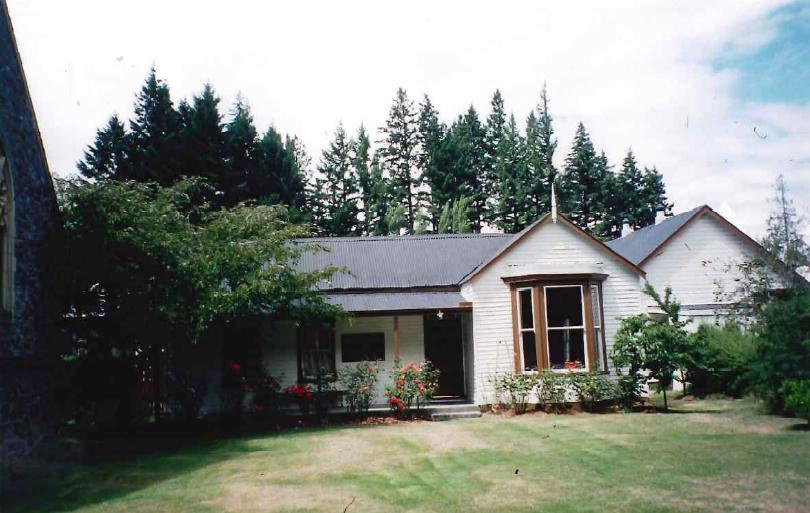
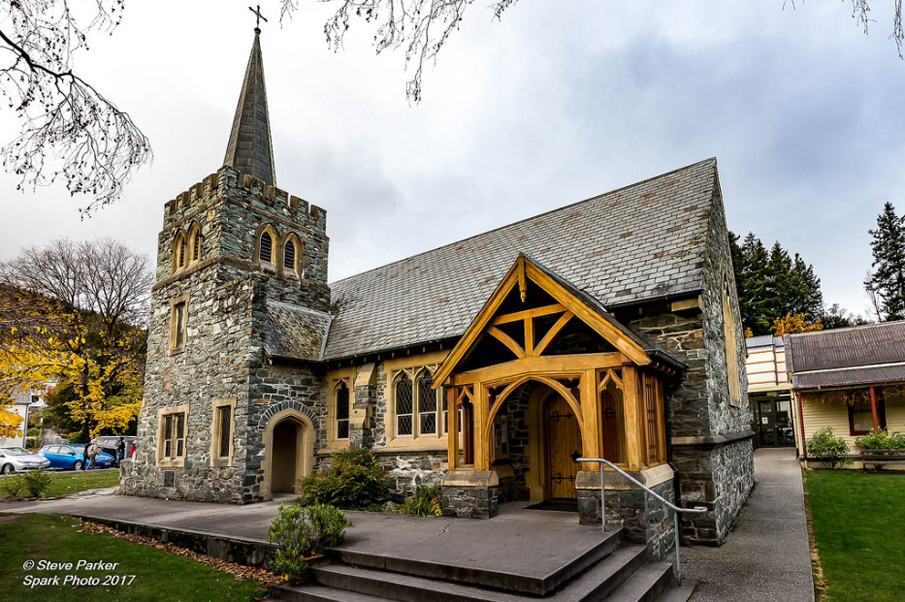
In the early twentieth century, the parish continued to consolidate – the church was enlarged, a Sunday School was built (1904) and there were plans to build a new church. Dunedin architect John McDowall Smith prepared plans, and these were approved in 1926, although the building didn’t go ahead until 1932. The parish decided to build the church on the site of the vicarage, and the contractors, W. McLellan Ltd, moved the vicarage on to the adjoining section and reconditioned the building.
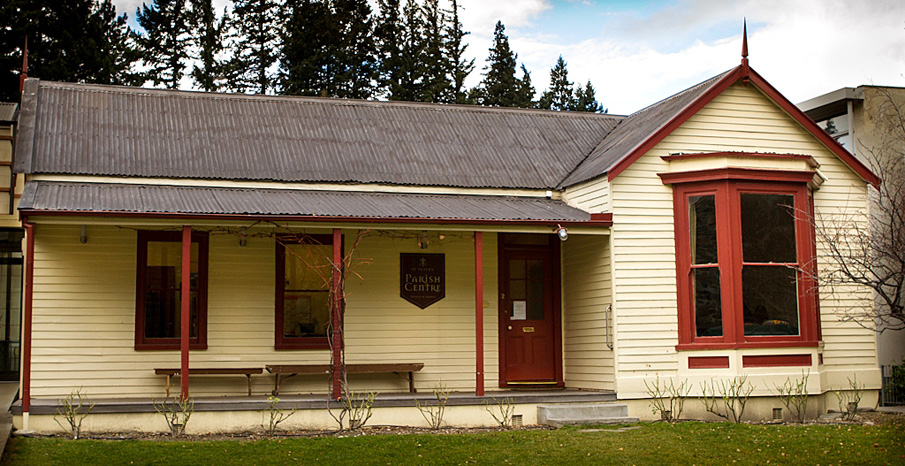
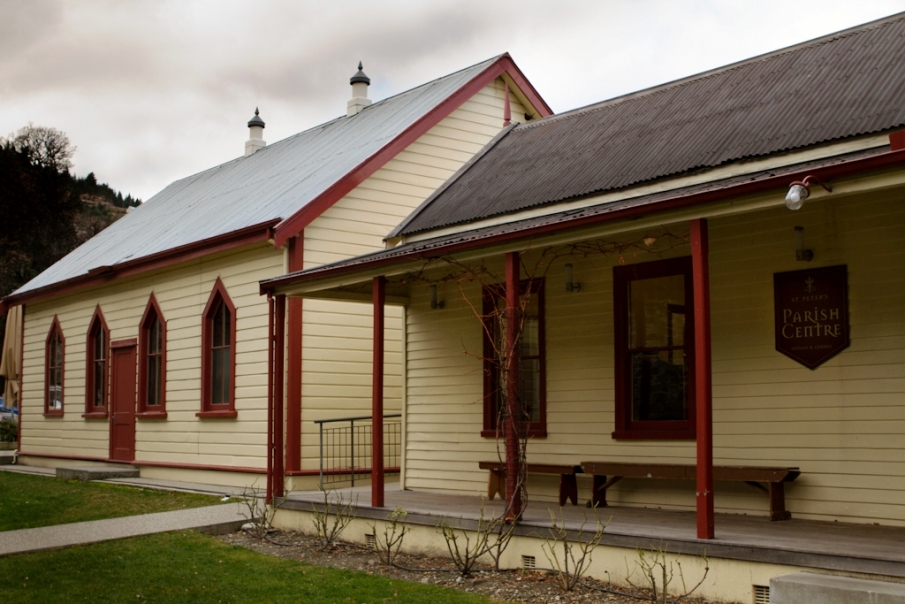
In 1946, the parish decided that the vicarage ‘which consisted of the original section, now almost eighty years old, and a hotchpotch of additions’ was no longer acceptable. Fundraising began for a new building, and once that was complete, the former vicarage became the parish centre, a function that it still holds in 2016.
List Entry Information
Status
Listed
List Entry Status
Historic Place Category 2
Access
Private/No Public Access
List Number
2342
Date Entered
19th April 1990
Date of Effect
19th April 1990
City/District Council
Queenstown-Lakes District
Region
Otago Region
Extent of List Entry
Extent includes part of the land described as Lot 2 DP 365052 (RT 263967), Otago Land District, and the building known as St Peter’s Vicarage (Former), thereon, as shown in the extent map tabled at the Rārangi Kōrero Committee meeting on 5 April 2016.
Legal description
Lot 2 DP 365052 (RT 263967), Otago Land District
Status
Listed
List Entry Status
Historic Place Category 2
Access
Private/No Public Access
List Number
2342
Date Entered
19th April 1990
Date of Effect
19th April 1990
City/District Council
Queenstown-Lakes District
Region
Otago Region
Extent of List Entry
Extent includes part of the land described as Lot 2 DP 365052 (RT 263967), Otago Land District, and the building known as St Peter’s Vicarage (Former), thereon, as shown in the extent map tabled at the Rārangi Kōrero Committee meeting on 5 April 2016.
Legal description
Lot 2 DP 365052 (RT 263967), Otago Land District
Construction Professional
Name
Mr Forsythe (builder)
Type
Builder
Biography
No biography is currently available for this construction professional
Construction Details
Start Year
1869
Type
Original Construction
Start Year
1871
Type
Addition
Description
Additions to vicarage
Start Year
1903
Type
Addition
Description
Additions to vicarage
Start Year
1932
Type
Relocation
Description
Vicarage moved slightly south (closer to the 1905 Sunday School Hall) to accommodate the new St Peter's Church
Type
Original Construction
Description
New vicarage built on the site, to the east of the 1869 vicarage
Construction Professional
Name
Mr Forsythe (builder)
Type
Builder
Biography
No biography is currently available for this construction professional
Construction Details
Start Year
1869
Type
Original Construction
Start Year
1871
Type
Addition
Description
Additions to vicarage
Start Year
1903
Type
Addition
Description
Additions to vicarage
Start Year
1932
Type
Relocation
Description
Vicarage moved slightly south (closer to the 1905 Sunday School Hall) to accommodate the new St Peter's Church
Type
Original Construction
Description
New vicarage built on the site, to the east of the 1869 vicarage
Historical and Associated Iwi / Hapū / Whānau
Public NZAA Number
E41/245
Completion Date
9th March 2016
Report Written By
Heather Bauchop
Information Sources
Petchey, 2007
Peter Petchey, St Peter's Vicarage, Queenstown: Report on the Archaeological Excavation of the Vicarage Site, Southern Archaeology Ltd, 2007.
De La Mare, 2013
A.J. De La Mare, This Recent Wilderness: A History of the Anglican Church in the Wakatipu 1863-1982, Anglican Parish of Wakatipu [Queenstown] [2013]
Miller, 1962
F.W.G. Miller, Golden Days of Lake County, Whitcombe and Tombs Limited, Dunedin, 1962
Other Information
This place was identified as significant under previous legislation with different information requirements. It remains significant under the current legislation. There is opportunity under our legislation and policies to add to this information. Further information about this place may be available from the Otago/Southland Office of Heritage New Zealand Pouhere Taonga. Please note that entry on the New Zealand Heritage List/Rarangi Korero identifies only the heritage values of the property concerned, and should not be construed as advice on the state of the property, or as a comment of its soundness or safety, including in regard to earthquake risk, safety in the event of fire, or insanitary conditions. A fully referenced upgrade report is available on request from the Otago/Southland Area Office of Heritage New Zealand
Historical and Associated Iwi / Hapū / Whānau
Public NZAA Number
E41/245
Completion Date
9th March 2016
Report Written By
Heather Bauchop
Information Sources
Petchey, 2007
Peter Petchey, St Peter's Vicarage, Queenstown: Report on the Archaeological Excavation of the Vicarage Site, Southern Archaeology Ltd, 2007.
De La Mare, 2013
A.J. De La Mare, This Recent Wilderness: A History of the Anglican Church in the Wakatipu 1863-1982, Anglican Parish of Wakatipu [Queenstown] [2013]
Miller, 1962
F.W.G. Miller, Golden Days of Lake County, Whitcombe and Tombs Limited, Dunedin, 1962
Other Information
This place was identified as significant under previous legislation with different information requirements. It remains significant under the current legislation. There is opportunity under our legislation and policies to add to this information. Further information about this place may be available from the Otago/Southland Office of Heritage New Zealand Pouhere Taonga. Please note that entry on the New Zealand Heritage List/Rarangi Korero identifies only the heritage values of the property concerned, and should not be construed as advice on the state of the property, or as a comment of its soundness or safety, including in regard to earthquake risk, safety in the event of fire, or insanitary conditions. A fully referenced upgrade report is available on request from the Otago/Southland Area Office of Heritage New Zealand
Current Usages
Uses: Accommodation
Specific Usage: House
Former Usages
General Usage: Accommodation
Specific Usage: House
General Usage: Religion
Specific Usage: Vicarage/Manse/Presbytery/Rectory
Current Usages
Uses: Accommodation
Specific Usage: House
Former Usages
General Usage: Accommodation
Specific Usage: House
General Usage: Religion
Specific Usage: Vicarage/Manse/Presbytery/Rectory
Location
Related listings
Sign up to hear more
Get the latest heritage news, features and events delivered
straight to your inbox.
