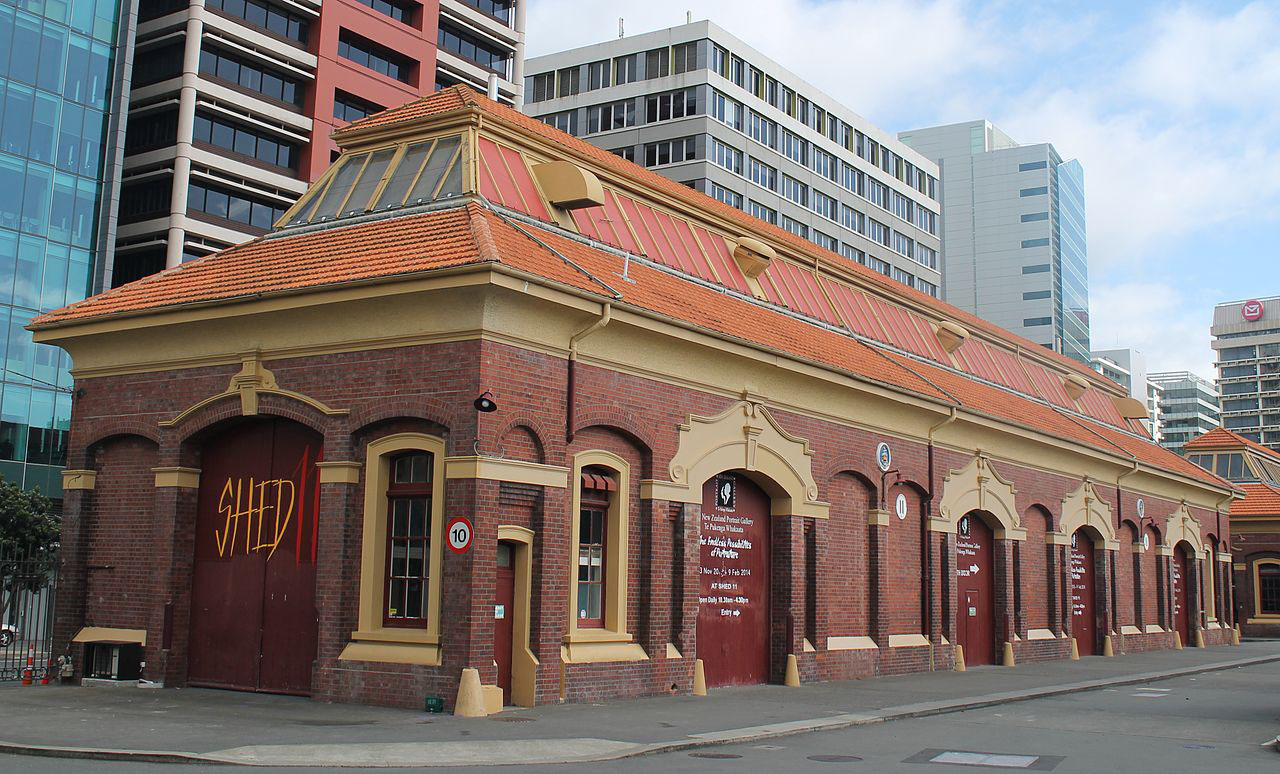
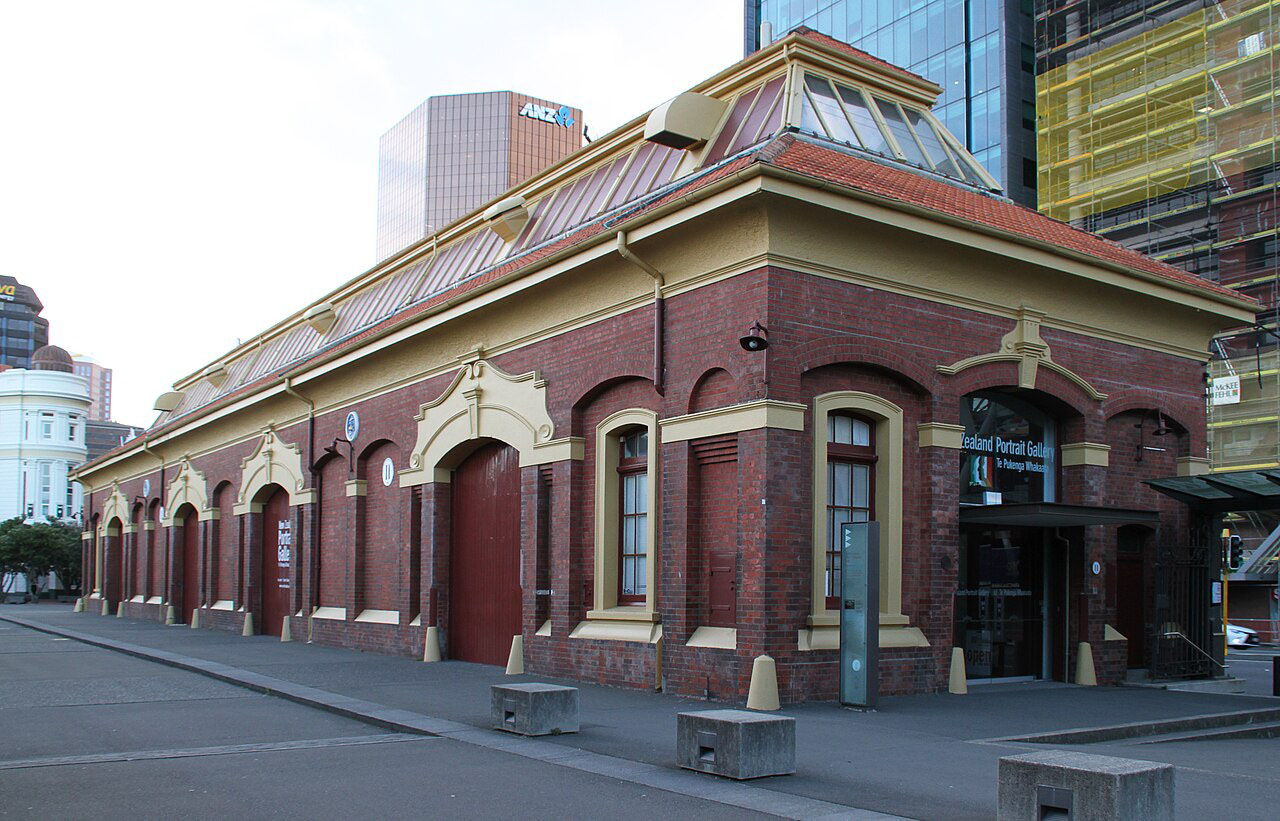
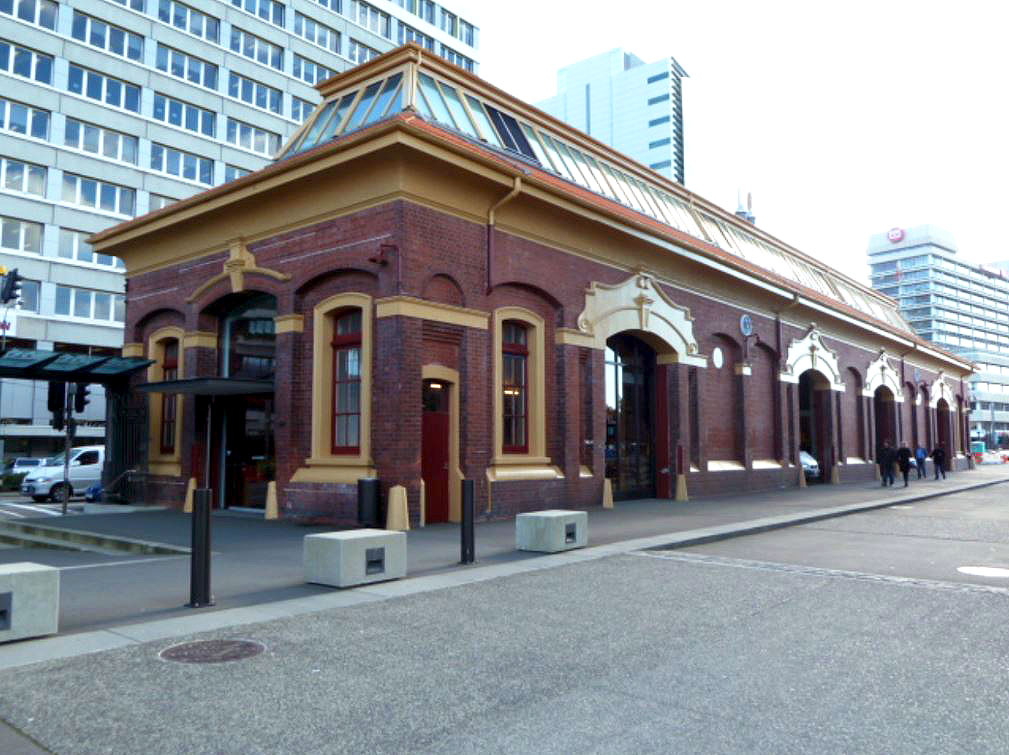
Built in 1905 as a storehouse for the Wellington Harbour Board, the simple, elegant ‘Shed 11’ has played an integral part in Wellington’s trading and commercial history and remains an important part of the city’s waterfront.
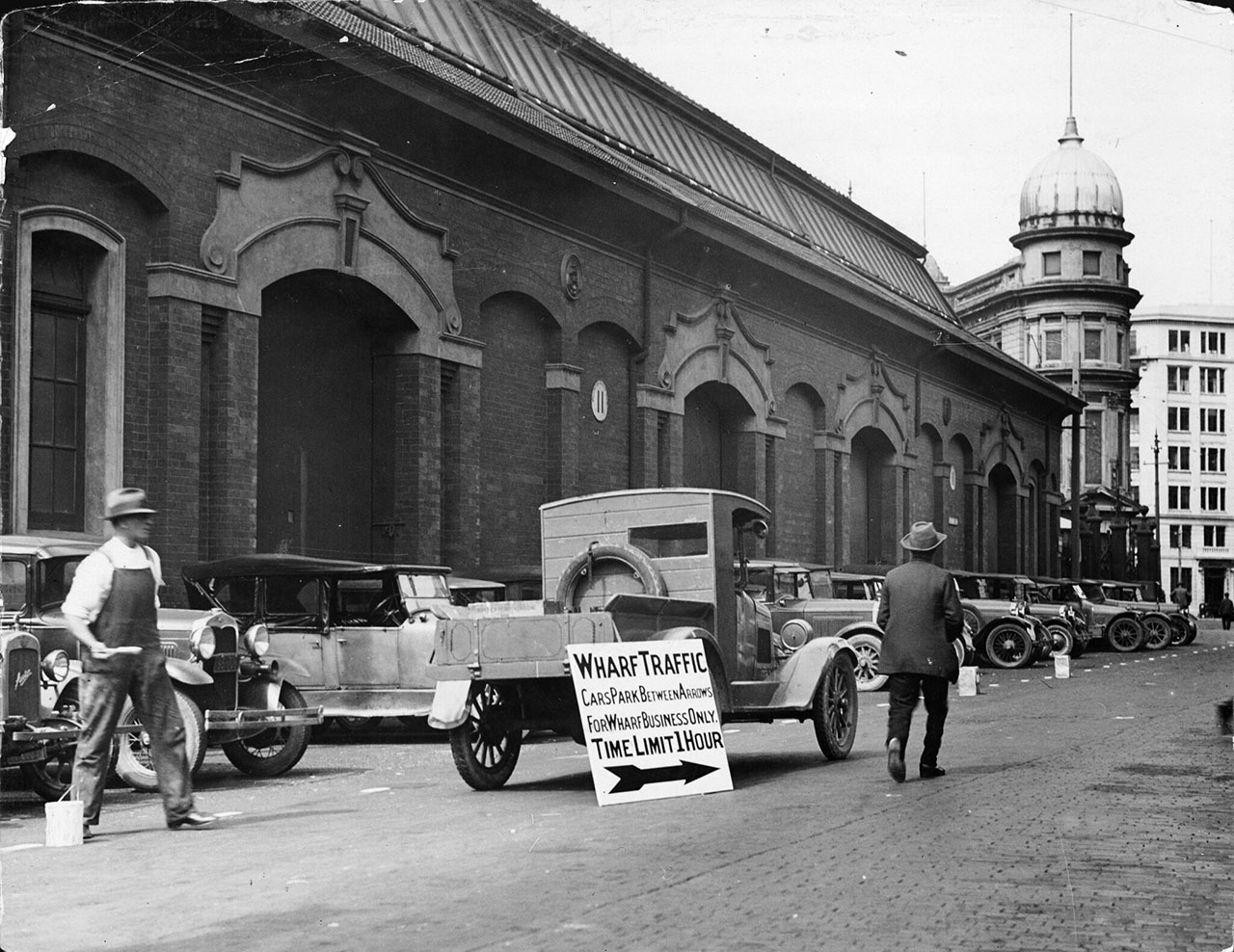
In 1880 the Harbour Board was established to ensure that profits made from shipping were channelled back into shipping through the development of Wellington's harbour facilities. Shipping was then the primary means of transporting goods to, from, and around the country, and trade depended on safe harbours that were well equipped for the loading, unloading and storage of freight. When the new Board acquired control of Queen's Wharf in 1882, it began erecting wharves and warehouses on reclaimed land that would accommodate the needs of the steamships docking at the harbour.
In 1904, following the successful reclamation of the land along Queens Wharf to Railway Wharf, the Wellington Harbour Board decided to build new storehouses. In the process of consolidating the land between the wharves, an extra 500 feet of berthing accommodation had been added. The new stores would accommodate the increase in goods coming into Wellington, replace the old facilities, and serve as a customs examination point for international goods.
Plans for the stores were drawn by Harbour Board staff. On the 23 of June 1904, the Board accepted the tender put in by Hunt and McDonald for £8,519 to construct the stores. To create sturdy foundations for the sheds, the contractors were to drive ‘piers of piles connected together by beams of concrete, reinforced with steel’ deep into the reclaimed land. The sheds were to feature patented skylights along the length of the buildings, and were to be clad in roughcast and stucco under the parapets, with the Harbour Board crest to be placed above the doors. The doors would be painted blue, the gutters, downpipes, frames and glazing bars were to be white, and the lamps were to be pillar-box red. The cement used for the sheds was also rendered with an ochre colour while the windows and doors were darker; the red was a common colour of the time for the harbour board buildings.
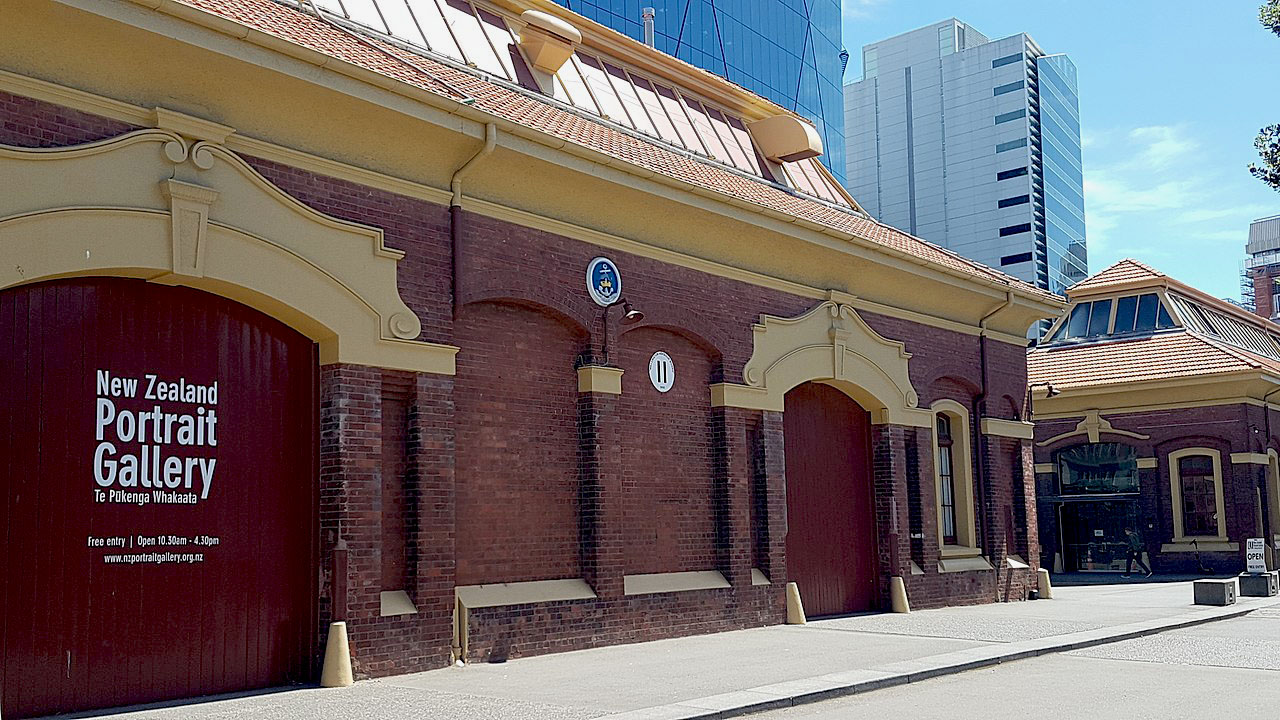
Built as a matching pair stretching parallel to the waterfront, the sheds are both 51.9 metres long by 10.3 metres wide, and have 10 large doors. The interiors were originally designed as one large storage space although there were timber partitions built to create smaller storage spaces and offices. Shed 11 had a waterman’s store, toll office and a fireman’s hose store. The exteriors were built using brick and plaster with tiling on the roof, in a Dutch colonial style, which can especially be seen in the detailing above the doors. The interiors used both indigenous and imported timbers including matai, rimu, Baltic pine and Oregon.
Upon completion in 1905, the new sheds were called V and W, but were renamed with numbers 11 and 13 in 1922. Between 1936 and 1938, restoration work was carried out. The tiles were replaced, the walls were cleaned and re-pointed, and the plasterwork coloured with a cream wash. The offices at the south end of shed 11 were removed and a doorway was cut in the southern wall to make the store more easily accessible.
By 1975, with the arrival of container shipping and the reduction of coastal trade, cargo was no longer being stored in Shed 11 and the machinery was largely removed. The shed would not regain a use until the 1980s when it was purchased by the New Zealand National Art Gallery for use as a temporary contemporary art gallery space. At this time Shed 11 also received some earthquake strengthening of the main building. In 2000 Shed 11 became the permanent gallery space for the New Zealand Portrait Gallery, a unique gallery that displays the talents and viewpoints and stories of New Zealanders and New Zealand from both local and international artists. Conservation and restoration was carried out on the exterior and interior of Shed 11 when it became the home of the Portrait Gallery. During the restoration, the exterior received maintenance and was re-painted in the Harbour Boards specified colours while the interior work created the space needed for a gallery. The imaginative re-use of Shed 11 has created a unique atmosphere on the waterfront for national and international visitors to Wellington.
In 1880 the Harbour Board was established to ensure that profits made from shipping were channelled back into shipping through the development of Wellington's harbour facilities. Shipping was then the primary means of transporting goods to, from, and around the country, and trade depended on safe harbours that were well equipped for the loading, unloading and storage of freight. When the new Board acquired control of Queen's Wharf in 1882, it began erecting wharves and warehouses on reclaimed land that would accommodate the needs of the steamships docking at the harbour.
In 1904, following the successful reclamation of the land along Queens Wharf to Railway Wharf, the Wellington Harbour Board decided to build new storehouses. In the process of consolidating the land between the wharves, an extra 500 feet of berthing accommodation had been added. The new stores would accommodate the increase in goods coming into Wellington, replace the old facilities, and serve as a customs examination point for international goods.
Plans for the stores were drawn by Harbour Board staff. On the 23 of June 1904, the Board accepted the tender put in by Hunt and McDonald for £8,519 to construct the stores. To create sturdy foundations for the sheds, the contractors were to drive ‘piers of piles connected together by beams of concrete, reinforced with steel’ deep into the reclaimed land. The sheds were to feature patented skylights along the length of the buildings, and were to be clad in roughcast and stucco under the parapets, with the Harbour Board crest to be placed above the doors. The doors would be painted blue, the gutters, downpipes, frames and glazing bars were to be white, and the lamps were to be pillar-box red. The cement used for the sheds was also rendered with an ochre colour while the windows and doors were darker; the red was a common colour of the time for the harbour board buildings.
Built as a matching pair stretching parallel to the waterfront, the sheds are both 51.9 metres long by 10.3 metres wide, and have 10 large doors. The interiors were originally designed as one large storage space although there were timber partitions built to create smaller storage spaces and offices. Shed 11 had a waterman’s store, toll office and a fireman’s hose store. The exteriors were built using brick and plaster with tiling on the roof, in a Dutch colonial style, which can especially be seen in the detailing above the doors. The interiors used both indigenous and imported timbers including matai, rimu, Baltic pine and Oregon.
Upon completion in 1905, the new sheds were called V and W, but were renamed with numbers 11 and 13 in 1922. Between 1936 and 1938, restoration work was carried out. The tiles were replaced, the walls were cleaned and re-pointed, and the plasterwork coloured with a cream wash. The offices at the south end of shed 11 were removed and a doorway was cut in the southern wall to make the store more easily accessible.
By 1975, with the arrival of container shipping and the reduction of coastal trade, cargo was no longer being stored in Shed 11 and the machinery was largely removed. The shed would not regain a use until the 1980s when it was purchased by the New Zealand National Art Gallery for use as a temporary contemporary art gallery space. At this time Shed 11 also received some earthquake strengthening of the main building. In 2000 Shed 11 became the permanent gallery space for the New Zealand Portrait Gallery, a unique gallery that displays the talents and viewpoints and stories of New Zealanders and New Zealand from both local and international artists. Conservation and restoration was carried out on the exterior and interior of Shed 11 when it became the home of the Portrait Gallery. During the restoration, the exterior received maintenance and was re-painted in the Harbour Boards specified colours while the interior work created the space needed for a gallery. The imaginative re-use of Shed 11 has created a unique atmosphere on the waterfront for national and international visitors to Wellington.