DonateSupporterVisit Heritage
  • Tūrangawaewae
    Places
  • Tira Māori
    Māori Heritage
  • Poutairangahia
    Archaeology
  • Rauemi
    Resources
  • Mō Tātou
    About Us
  • New Zealand Heritage List
  • Nominate and submit
  • Explore the List
  • National Historic Landmarks
  • Plaques
  • Rainbow List Project
  • Lost heritage
  • Visit Heritage
  • Our properties
  • Turnbull House Project
  • Collections
  • Shop
  • Tohu Whenua
  • Tira Māori
  • Conserving Māori heritage
  • Marae built heritage
  • Māori heritage on the List
  • Hinemihi—Te Hokinga Mai
  • What is archaeology?
  • Is there a site on my property?
  • What are my legal requirements?
  • Affecting an archaeological site
  • Declaring an archaeological site
  • Archaeology FAQs
  • Archaeology Digital Library
  • Archaeology guidelines and templates
  • Resources
  • Funding
  • Publications
  • Sustainable management guides
  • Disaster recovery
  • Podcasts & digital resources
  • Education Hub
  • Conservation plans
  • About
  • Board
  • Māori Heritage Council
  • Senior Staff
  • Offices
  • Contact us
  • Careers
  • Covenants
  • Fast-track
  • Corporate documents
  • Currently consulting on
  • Our submissions
  • News
Quick links
Rārangi Kōrero | The List
Explore the List
National Historic Landmarks
Ngā Manawhenua o Aotearoa me ōna Kōrero Tūturu
Quick links
Tapuwae
A Vision for Places of Māori Heritage
Funding for Māori Heritage
Resources
Quick links
Archaeological Authority Portal
Applying for an archaeological authority
Archaeology FAQs
Browse the most frequently asked questions about archaeological authorities and the archaeological process.
Quick links
Quick links
Contact us
Offices
DonateSupporterVisit Heritage
  • Tūrangawaewae
    Places
  • Tira Māori
    Māori Heritage
  • Poutairangahia
    Archaeology
  • Rauemi
    Resources
  • Mō Tātou
    About Us
  • New Zealand Heritage List
  • Nominate and submit
  • Explore the List
  • National Historic Landmarks
  • Plaques
  • Rainbow List Project
  • Lost heritage
  • Visit Heritage
  • Our properties
  • Turnbull House Project
  • Collections
  • Shop
  • Tohu Whenua
  • Tira Māori
  • Conserving Māori heritage
  • Marae built heritage
  • Māori heritage on the List
  • Hinemihi—Te Hokinga Mai
  • What is archaeology?
  • Is there a site on my property?
  • What are my legal requirements?
  • Affecting an archaeological site
  • Declaring an archaeological site
  • Archaeology FAQs
  • Archaeology Digital Library
  • Archaeology guidelines and templates
  • Resources
  • Funding
  • Publications
  • Sustainable management guides
  • Disaster recovery
  • Podcasts & digital resources
  • Education Hub
  • Conservation plans
  • About
  • Board
  • Māori Heritage Council
  • Senior Staff
  • Offices
  • Contact us
  • Careers
  • Covenants
  • Fast-track
  • Corporate documents
  • Currently consulting on
  • Our submissions
  • News
Quick links
Rārangi Kōrero | The List
Explore the List
National Historic Landmarks
Ngā Manawhenua o Aotearoa me ōna Kōrero Tūturu
Quick links
Tapuwae
A Vision for Places of Māori Heritage
Funding for Māori Heritage
Resources
Quick links
Archaeological Authority Portal
Applying for an archaeological authority
Archaeology FAQs
Browse the most frequently asked questions about archaeological authorities and the archaeological process.
Quick links
Quick links
Contact us
Offices
  • Places
  • Nominate and submit
  • National Historic Landmarks
  • Places
  • Nominate and submit
  • National Historic Landmarks
  • Tira Māori
  • Conserving Māori heritage
  • Marae built heritage
  • Tira Māori
  • Conserving Māori heritage
  • Marae built heritage
  • Archaeological authorities
  • Archaeology Digital Library
  • Archaeological authorities
  • Archaeology Digital Library
  • All resources
  • Publications
  • Funding
  • All resources
  • Publications
  • Funding
  • FAQs
  • FAQs
Follow us on:
Places
  • Places
  • Nominate and submit
  • National Historic Landmarks
Tira Māori
  • Tira Māori
  • Conserving Māori heritage
  • Marae built heritage
Archaeology
  • Archaeological authorities
  • Archaeology Digital Library
Resources
  • All resources
  • Publications
  • Funding
FAQs
  • FAQs
Follow us on
HomePrivacyTerms and conditionsAbout this site
© Heritage New Zealand Pouhere Taonga 2026.
 
House

170 Balmoral Dr, INVERCARGILL

Private

Historic Place Category 2

List No. 2474

Quick links:
List GalleryLocationDetails
This modest Invercargill villa was probably constructed for Southland Education Board architect William Armstrong McCaw between July 1898 and November 1900. The house has historic and architectural significance because of its association with McCaw, who presumably designed and possibly also built the house.

Section 18 was originally included in five quarter acre sections belonging to run holder David McKellar in the 1870s. McKellar transferred the land to Jane Katherine McKellar in 1882, and she in turn sold three sections to Catherine Galbraith in February 1897. The sections were sold as building sites. Galbraith sold section 18 to Southland Education Board architect William Armstrong McCaw the following year. McCaw’s address in the 1897 street directories is Eye Street, and in 1898-1899 in Venus Street, and in 1900 on Biggar Street.

McCaw’s wife Annie gave birth to a son at Biggar St in November 1900 indicating that the McCaw were living there by that time, and the couple are recorded at Biggar Street on the 1900 electoral roll. Given his profession, it would seem likely that McCaw was responsible for the design and possibly the construction of the house. McCaw owned the property until 1907 and it has since changed hands numerous times.

The house is a modest single storey dwelling which has the appearance of having been modified from its original form, which may have been a villa with a central door and hall. Modifications in the bungalow style appear to have been undertaken, such as the removal of the central door. The curved timber brackets on the front bay window are suggestive of a villa and appear at odds with the plain knee braces in the arts and crafts style which could have been added later to the veranda posts, replacing original detail. The Heritage New Zealand field record form dating from 1982 refers to the use of asbestos cement sheets for the exterior walls; however this is likely to be a later modification rather than an original feature of the building, and probably replaced timber weatherboards. In 2018, 170 Balmoral Drive remains a private dwelling.
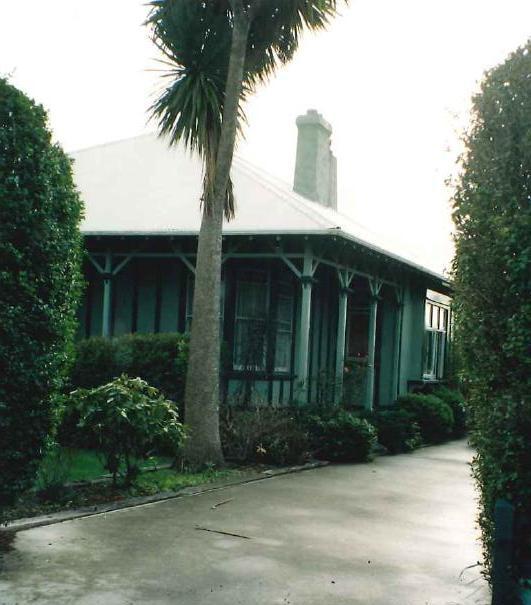
House. Original image submitted at time of registration | Heritage New Zealand Pouhere Taonga

List Entry Information

Overview

Status
Listed

List Entry Status
Historic Place Category 2

Access
Private/No Public Access

List Number
2474

Date Entered
24th November 1983

Date of Effect
24th November 1983

City/District Council
Invercargill City

Region
Southland Region

Extent of List Entry

Extent includes the land described as Sec 18 Blk LI Town of Invercargill (RT SL10A/148), Southland Land District, and the House thereon.

Legal description

Sec 18 Blk LI Town of Invercargill (RT SL10A/148), Southland Land District

Detailed List Entry

Construction Professional

Name

William Armstrong McCaw

Type

Architect

Biography

Scottish-born William Armstrong McCaw (1863-1935) immigrated to New Zealand in 1880 with his parents and eight siblings. After working on his father’s farm at Glenore, he entered the building trade in Gore and later practised as an architect. McCaw went on to hold the position of Southland Education Board architect from 1893 till 1929. The large area covered by the Education Board brought challenges - McCaw was often required to walk for miles to get around the district, although he was later assisted by the use of a bicycle, then a motorcycle, and eventually a car. McCaw was also a driving force behind technical education in Southland, as Director of Technical Instruction for the Southland Education Board, and woodwork instructor. His interest in and contribution to technical education in Southland appear to have won him much respect. McCaw came from a strong Presbyterian family and was heavily involved in the Church and other community affairs such as the St Andrew’s Scottish Society. McCaw’s obituary in the Southland Times described McCaw as ‘one of Invercargill’s oldest and most highly respected citizens.’

Construction Details

Start Year

1898

Finish Year

1900

Type

Original Construction

Reference

Completion Date

16th April 2018

Report Written By

Jane O'Dea

Information Sources

Southern People: A Dictionary of Otago Southland Biography

A Roby, ‘McCaw, William Armstrong’ in Jane Thomson (ed), Southern People: A Dictionary of Otago Southland Biography, Dunedin, Longacre Press in association with Dunedin City Council, 1998

Report Written By

This place was identified as significant under previous legislation with different information requirements. It remains significant under the current legislation. There is opportunity under our legislation and policies to add to this information. Further information about this place may be available from the Otago/Southland Office of Heritage New Zealand Pouhere Taonga. Please note that entry on the New Zealand Heritage List/Rarangi Korero identifies only the heritage values of the property concerned, and should not be construed as advice on the state of the property, or as a comment of its soundness or safety, including in regard to earthquake risk, safety in the event of fire, or insanitary conditions. A fully referenced upgrade report is available on request from the Otago Southland Area Office of Heritage New Zealand

Further Information

Current Usages

Uses: Accommodation

Specific Usage: House

Former Usages

General Usage:: Accommodation

Specific Usage: House

Themes

Web Links

Overview

Status

Listed

List Entry Status

Historic Place Category 2

Access

Private/No Public Access

List Number

2474

Date Entered

24th November 1983

Date of Effect

24th November 1983

City/District Council

Invercargill City

Region

Southland Region

Extent of List Entry

Extent includes the land described as Sec 18 Blk LI Town of Invercargill (RT SL10A/148), Southland Land District, and the House thereon.

Legal description

Sec 18 Blk LI Town of Invercargill (RT SL10A/148), Southland Land District

Status

Listed

List Entry Status

Historic Place Category 2

Access

Private/No Public Access

List Number

2474

Date Entered

24th November 1983

Date of Effect

24th November 1983

City/District Council

Invercargill City

Region

Southland Region

Extent of List Entry

Extent includes the land described as Sec 18 Blk LI Town of Invercargill (RT SL10A/148), Southland Land District, and the House thereon.

Legal description

Sec 18 Blk LI Town of Invercargill (RT SL10A/148), Southland Land District

Construction Information

Construction Professional

Name

William Armstrong McCaw

Type

Architect

Biography

Scottish-born William Armstrong McCaw (1863-1935) immigrated to New Zealand in 1880 with his parents and eight siblings. After working on his father’s farm at Glenore, he entered the building trade in Gore and later practised as an architect. McCaw went on to hold the position of Southland Education Board architect from 1893 till 1929. The large area covered by the Education Board brought challenges - McCaw was often required to walk for miles to get around the district, although he was later assisted by the use of a bicycle, then a motorcycle, and eventually a car. McCaw was also a driving force behind technical education in Southland, as Director of Technical Instruction for the Southland Education Board, and woodwork instructor. His interest in and contribution to technical education in Southland appear to have won him much respect. McCaw came from a strong Presbyterian family and was heavily involved in the Church and other community affairs such as the St Andrew’s Scottish Society. McCaw’s obituary in the Southland Times described McCaw as ‘one of Invercargill’s oldest and most highly respected citizens.’

Construction Details

Start Year

1898

Finish Year

1900

Type

Original Construction

Construction Professional

Name

William Armstrong McCaw

Type

Architect

Biography

Scottish-born William Armstrong McCaw (1863-1935) immigrated to New Zealand in 1880 with his parents and eight siblings. After working on his father’s farm at Glenore, he entered the building trade in Gore and later practised as an architect. McCaw went on to hold the position of Southland Education Board architect from 1893 till 1929. The large area covered by the Education Board brought challenges - McCaw was often required to walk for miles to get around the district, although he was later assisted by the use of a bicycle, then a motorcycle, and eventually a car. McCaw was also a driving force behind technical education in Southland, as Director of Technical Instruction for the Southland Education Board, and woodwork instructor. His interest in and contribution to technical education in Southland appear to have won him much respect. McCaw came from a strong Presbyterian family and was heavily involved in the Church and other community affairs such as the St Andrew’s Scottish Society. McCaw’s obituary in the Southland Times described McCaw as ‘one of Invercargill’s oldest and most highly respected citizens.’

Construction Details

Start Year

1898

Finish Year

1900

Type

Original Construction

Reference

Historical and Associated Iwi / Hapū / Whānau

Completion Date

16th April 2018

Report Written By

Jane O'Dea

Information Sources

Southern People: A Dictionary of Otago Southland Biography

A Roby, ‘McCaw, William Armstrong’ in Jane Thomson (ed), Southern People: A Dictionary of Otago Southland Biography, Dunedin, Longacre Press in association with Dunedin City Council, 1998

Other Information

This place was identified as significant under previous legislation with different information requirements. It remains significant under the current legislation. There is opportunity under our legislation and policies to add to this information. Further information about this place may be available from the Otago/Southland Office of Heritage New Zealand Pouhere Taonga. Please note that entry on the New Zealand Heritage List/Rarangi Korero identifies only the heritage values of the property concerned, and should not be construed as advice on the state of the property, or as a comment of its soundness or safety, including in regard to earthquake risk, safety in the event of fire, or insanitary conditions. A fully referenced upgrade report is available on request from the Otago Southland Area Office of Heritage New Zealand

Historical and Associated Iwi / Hapū / Whānau

Completion Date

16th April 2018

Report Written By

Jane O'Dea

Information Sources

Southern People: A Dictionary of Otago Southland Biography

A Roby, ‘McCaw, William Armstrong’ in Jane Thomson (ed), Southern People: A Dictionary of Otago Southland Biography, Dunedin, Longacre Press in association with Dunedin City Council, 1998

Other Information

This place was identified as significant under previous legislation with different information requirements. It remains significant under the current legislation. There is opportunity under our legislation and policies to add to this information. Further information about this place may be available from the Otago/Southland Office of Heritage New Zealand Pouhere Taonga. Please note that entry on the New Zealand Heritage List/Rarangi Korero identifies only the heritage values of the property concerned, and should not be construed as advice on the state of the property, or as a comment of its soundness or safety, including in regard to earthquake risk, safety in the event of fire, or insanitary conditions. A fully referenced upgrade report is available on request from the Otago Southland Area Office of Heritage New Zealand

Further Information

Current Usages

Uses: Accommodation

Specific Usage: House

Former Usages

General Usage: Accommodation

Specific Usage: House

Current Usages

Uses: Accommodation

Specific Usage: House

Former Usages

General Usage: Accommodation

Specific Usage: House

Location

Loading
Sign up to hear more

Get the latest heritage news, features and events delivered
straight to your inbox.

Subscribe