DonateSupporterVisit Heritage
  • Tūrangawaewae
    Places
  • Tira Māori
    Māori Heritage
  • Poutairangahia
    Archaeology
  • Rauemi
    Resources
  • Mō Tātou
    About Us
  • New Zealand Heritage List
  • Nominate and submit
  • Explore the List
  • National Historic Landmarks
  • Plaques
  • Rainbow List Project
  • Lost heritage
  • Visit Heritage
  • Our properties
  • Turnbull House Project
  • Collections
  • Shop
  • Tohu Whenua
  • Tira Māori
  • Conserving Māori heritage
  • Marae built heritage
  • Māori heritage on the List
  • Hinemihi—Te Hokinga Mai
  • What is archaeology?
  • Is there a site on my property?
  • What are my legal requirements?
  • Affecting an archaeological site
  • Declaring an archaeological site
  • Archaeology FAQs
  • Archaeology Digital Library
  • Archaeology guidelines and templates
  • Resources
  • Funding
  • Publications
  • Sustainable management guides
  • Disaster recovery
  • Podcasts & digital resources
  • Education Hub
  • Conservation plans
  • About
  • Board
  • Māori Heritage Council
  • Senior Staff
  • Offices
  • Contact us
  • Careers
  • Covenants
  • Fast-track
  • Corporate documents
  • Currently consulting on
  • Our submissions
  • News
  • Covid-19 response
Quick links
Rārangi Kōrero | The List
Explore the List
National Historic Landmarks
Ngā Manawhenua o Aotearoa me ōna Kōrero Tūturu
Quick links
Tapuwae
A Vision for Places of Māori Heritage
Funding for Māori Heritage
Resources
Quick links
Archaeological Authority Portal
Applying for an archaeological authority
Archaeology FAQs
Browse the most frequently asked questions about archaeological authorities and the archaeological process.
Quick links
Quick links
Contact us
Offices
DonateSupporterVisit Heritage
  • Tūrangawaewae
    Places
  • Tira Māori
    Māori Heritage
  • Poutairangahia
    Archaeology
  • Rauemi
    Resources
  • Mō Tātou
    About Us
  • New Zealand Heritage List
  • Nominate and submit
  • Explore the List
  • National Historic Landmarks
  • Plaques
  • Rainbow List Project
  • Lost heritage
  • Visit Heritage
  • Our properties
  • Turnbull House Project
  • Collections
  • Shop
  • Tohu Whenua
  • Tira Māori
  • Conserving Māori heritage
  • Marae built heritage
  • Māori heritage on the List
  • Hinemihi—Te Hokinga Mai
  • What is archaeology?
  • Is there a site on my property?
  • What are my legal requirements?
  • Affecting an archaeological site
  • Declaring an archaeological site
  • Archaeology FAQs
  • Archaeology Digital Library
  • Archaeology guidelines and templates
  • Resources
  • Funding
  • Publications
  • Sustainable management guides
  • Disaster recovery
  • Podcasts & digital resources
  • Education Hub
  • Conservation plans
  • About
  • Board
  • Māori Heritage Council
  • Senior Staff
  • Offices
  • Contact us
  • Careers
  • Covenants
  • Fast-track
  • Corporate documents
  • Currently consulting on
  • Our submissions
  • News
  • Covid-19 response
Quick links
Rārangi Kōrero | The List
Explore the List
National Historic Landmarks
Ngā Manawhenua o Aotearoa me ōna Kōrero Tūturu
Quick links
Tapuwae
A Vision for Places of Māori Heritage
Funding for Māori Heritage
Resources
Quick links
Archaeological Authority Portal
Applying for an archaeological authority
Archaeology FAQs
Browse the most frequently asked questions about archaeological authorities and the archaeological process.
Quick links
Quick links
Contact us
Offices
  • Places
  • Nominate and submit
  • National Historic Landmarks
  • Places
  • Nominate and submit
  • National Historic Landmarks
  • Tira Māori
  • Conserving Māori heritage
  • Marae built heritage
  • Tira Māori
  • Conserving Māori heritage
  • Marae built heritage
  • Archaeological authorities
  • Archaeology Digital Library
  • Archaeological authorities
  • Archaeology Digital Library
  • All resources
  • Publications
  • Funding
  • All resources
  • Publications
  • Funding
  • FAQs
  • FAQs
Follow us on:
Places
  • Places
  • Nominate and submit
  • National Historic Landmarks
Tira Māori
  • Tira Māori
  • Conserving Māori heritage
  • Marae built heritage
Archaeology
  • Archaeological authorities
  • Archaeology Digital Library
Resources
  • All resources
  • Publications
  • Funding
FAQs
  • FAQs
Follow us on
HomePrivacyTerms and conditionsAbout this site
© Heritage New Zealand Pouhere Taonga 2026.
 
Rockhaven

397 Queens Drive, Windsor, INVERCARGILL

Private

Historic Place Category 2

List No. 2509

Quick links:
List GalleryLocationDetails
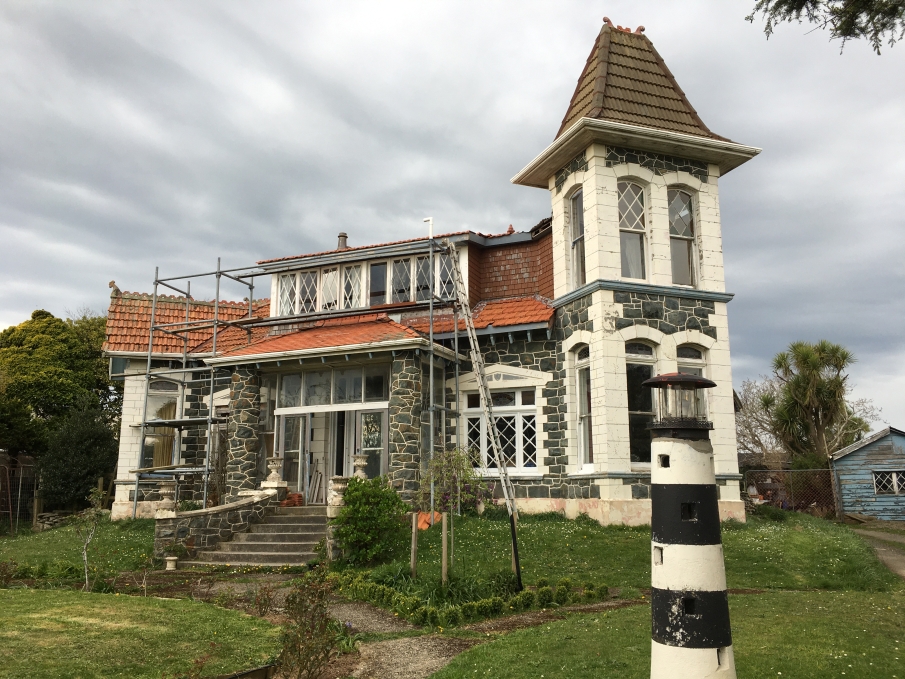
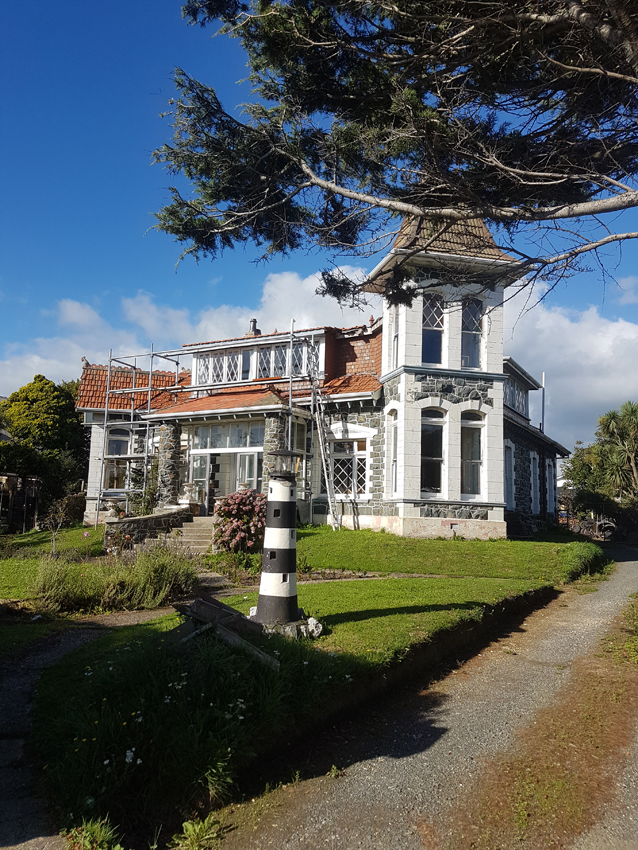
Ernest Godward, one of New Zealand’s most successful inventors, built this exuberant Queen Anne style residence in the Invercargill suburb of Windsor. Dating from around 1905-08, Rockhaven is significant for its association with Godward and its flamboyant architectural style.

Ernest Godward had an eventful life. He was born in London in 1869 and started school at nine. He ran away to sea to the East aged twelve, only to be sent home, where he became an apprentice mechanic. Setting sail again, he ended up in Port Chalmers in 1886. In Dunedin, Godward worked as a photographer and indulged his sporting talents. He was a champion rower, cyclist, runner and swimmer. In 1893, Godward moved to Invercargill where he became a partner in the Southland Cycle Works. He married Marguerita (Madge) Treweek in 1896 and they had ten children.

To make extra money and to keep his curious mind busy, Godward began inventing. By 1900, he exhibited a passion for invention and had patented an eggbeater, a post hole borer, a hair curler, a draught protector and a burglar proof window. His breakthrough came in 1900, when he invented the spiral hair pin. It was an immediate success. He established Godward’s Spiral Pin & New Inventions Company to manufacture and distribute his products and travelled to America to secure patents. Keeping the New Zealand and Australian rights for the spiral hair pin, in 1901 Godward sold the American rights for £2,500 plus royalties. One English company alone made two tons of hair pins a week.

Inspired by houses he saw in America, Godward brought back drawings for a grand residence. Rockhaven was completed by 1908, a fitting home for the family of this energetic entrepreneur. Invercargill architect Peter Walker oversaw the construction of Rockhaven in bluestone from Green Island, near Dunedin, and Ocean Beach near Bluff. The Queen Anne style, characterised by the use of asymmetry, a variety of roof lines, verandahs and bay windows, was popular in the late 1890s through to the First World War. Rockhaven is asymmetrical, with a Marseilles tiled roof embellished with ridge line decorations and finials. When completed in 1908, it had sixteen rooms and a tower. The metal ceilings were imported from America, Godward hand painted the dining room ceiling and the hallway was paved with ceramic floor tiles.

Godward worked in a garage in the back garden among the fruit trees. In between landscape painting, playing musical instruments, singing in musicals and being an elocutionist, he turned his attention to motor mechanics and invented an important forerunner to the carburettor – the Godward Gas Generator – also known as the Eclipse Petrol Economiser. In 1916, Godward established a New York base. Marguerita and the rest of the family stayed in Invercargill. By the late 1920s, Godward was a world leader in the workings of internal combustion engines. His success was cut short by the 1929 stock market crash and he lost much of his fortune. Godward died at sea (after winning an on-board skipping competition) on his way home to New Zealand in 1936.

Marguerita Godward lived on in Rockhaven until 1946. Invercargill farmer Harold Smith bought Rockhaven in the same year and the Smith family owned the house until 1977. In 2013, Rockhaven is a private residence and the garage where Godward worked survives in the garden.
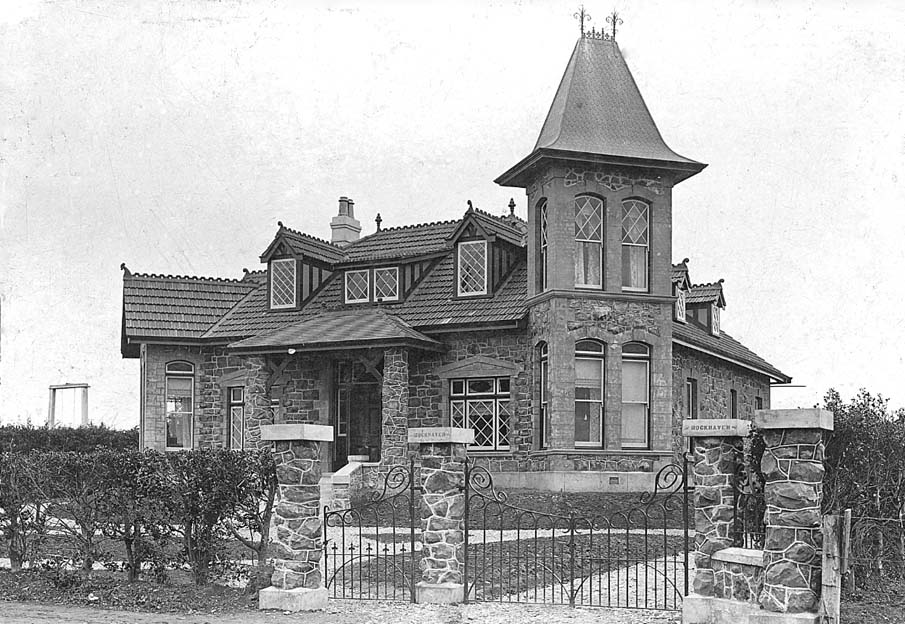
Rockhaven, Invercargill. 1908. Historic image courtesy of Shirley Walker | Unknown | Shirley Walker
Rockhaven, Invercargill | Sarah Gallagher | 02/10/2020 | Heritage New Zealand
Rockhaven, Invercargill | Chris Horwell | 07/03/2018 | Heritage New Zealand
Rockhaven, Invercargill. 1908. Historic image courtesy of Shirley Walker | Unknown | Shirley Walker
Rockhaven, Invercargill | Sarah Gallagher | 02/10/2020 | Heritage New Zealand
Rockhaven, Invercargill | Chris Horwell | 07/03/2018 | Heritage New Zealand

List Entry Information

Overview

Status
Listed

List Entry Status
Historic Place Category 2

Access
Private/No Public Access

List Number
2509

Date Entered
24th November 1983

Date of Effect
24th November 1983

City/District Council
Invercargill City

Region
Southland Region

Extent of List Entry

Extent includes the land described as Lot 3 DP 8776 (RT SL4A/1161), Southland Land District, and the building known as Rockhaven, thereon.

Legal description

Lot 3 DP 8776 (RT SL4A/1161), Southland Land District

Detailed List Entry

Construction Professional

Name

Walker, Peter

Type

Architect

Biography

Peter Walker was an Invercargill architect. Little is known about his early life. Walker may have started out as a builder in the 1870s. There was a man of the same name working with architect F.W. Burwell in Queenstown as a contractor. Walker may have moved to Melbourne in the 1880s, where a ‘Peter Walker formerly of Invercargill’, is noted as clerk of works. From 1896, Peter Walker advertises himself as an architect in Invercargill. His tender notices show that he designed residences and commercial buildings in Invercargill and Southland. He tenders for work up until 1905. After 1905, the tender notices stop and Walker disappears from New Zealand newspapers. It is possible Walker moved overseas. (Source: Information Upgrade Report, Heather Bauchop, Apr 2014)

Construction Details

Start Year

1933

Type

Addition

Description

Additions and alterations to the first floor.

Construction Materials

Bluestone, Marseilles tiles

Reference

Completion Date

17th April 2014

Report Written By

Heather Bauchop

Information Sources

Walker, 2013

Shirley Walker, Ernest R Godward: Inventor, Riverpress, Dunedin, 2013.

Report Written By

This place was identified as significant under previous legislation with different information requirements. It remains significant under the current legislation. There is opportunity under our legislation and policies to add to this information. Further information about this place may be available from the Otago/Southland Office of Heritage New Zealand Pouhere Taonga. A fully referenced upgrade report is available on request from the Otago/Southland Area Office of Heritage New Zealand. Please note that entry on the New Zealand Heritage List/Rarangi Korero identifies only the heritage values of the property concerned, and should not be construed as advice on the state of the property, or as a comment of its soundness or safety, including in regard to earthquake risk, safety in the event of fire, or insanitary conditions.

Further Information

Current Usages

Uses: Accommodation

Specific Usage: House

Former Usages

Themes

Web Links

Overview

Status

Listed

List Entry Status

Historic Place Category 2

Access

Private/No Public Access

List Number

2509

Date Entered

24th November 1983

Date of Effect

24th November 1983

City/District Council

Invercargill City

Region

Southland Region

Extent of List Entry

Extent includes the land described as Lot 3 DP 8776 (RT SL4A/1161), Southland Land District, and the building known as Rockhaven, thereon.

Legal description

Lot 3 DP 8776 (RT SL4A/1161), Southland Land District

Status

Listed

List Entry Status

Historic Place Category 2

Access

Private/No Public Access

List Number

2509

Date Entered

24th November 1983

Date of Effect

24th November 1983

City/District Council

Invercargill City

Region

Southland Region

Extent of List Entry

Extent includes the land described as Lot 3 DP 8776 (RT SL4A/1161), Southland Land District, and the building known as Rockhaven, thereon.

Legal description

Lot 3 DP 8776 (RT SL4A/1161), Southland Land District

Construction Information

Construction Professional

Name

Walker, Peter

Type

Architect

Biography

Peter Walker was an Invercargill architect. Little is known about his early life. Walker may have started out as a builder in the 1870s. There was a man of the same name working with architect F.W. Burwell in Queenstown as a contractor. Walker may have moved to Melbourne in the 1880s, where a ‘Peter Walker formerly of Invercargill’, is noted as clerk of works. From 1896, Peter Walker advertises himself as an architect in Invercargill. His tender notices show that he designed residences and commercial buildings in Invercargill and Southland. He tenders for work up until 1905. After 1905, the tender notices stop and Walker disappears from New Zealand newspapers. It is possible Walker moved overseas. (Source: Information Upgrade Report, Heather Bauchop, Apr 2014)

Construction Details

Start Year

1933

Type

Addition

Description

Additions and alterations to the first floor.

Construction Materials

Bluestone, Marseilles tiles

Construction Professional

Name

Walker, Peter

Type

Architect

Biography

Peter Walker was an Invercargill architect. Little is known about his early life. Walker may have started out as a builder in the 1870s. There was a man of the same name working with architect F.W. Burwell in Queenstown as a contractor. Walker may have moved to Melbourne in the 1880s, where a ‘Peter Walker formerly of Invercargill’, is noted as clerk of works. From 1896, Peter Walker advertises himself as an architect in Invercargill. His tender notices show that he designed residences and commercial buildings in Invercargill and Southland. He tenders for work up until 1905. After 1905, the tender notices stop and Walker disappears from New Zealand newspapers. It is possible Walker moved overseas. (Source: Information Upgrade Report, Heather Bauchop, Apr 2014)

Construction Details

Start Year

1933

Type

Addition

Description

Additions and alterations to the first floor.

Construction Materials

Bluestone, Marseilles tiles

Reference

Historical and Associated Iwi / Hapū / Whānau

Completion Date

17th April 2014

Report Written By

Heather Bauchop

Information Sources

Walker, 2013

Shirley Walker, Ernest R Godward: Inventor, Riverpress, Dunedin, 2013.

Other Information

This place was identified as significant under previous legislation with different information requirements. It remains significant under the current legislation. There is opportunity under our legislation and policies to add to this information. Further information about this place may be available from the Otago/Southland Office of Heritage New Zealand Pouhere Taonga. A fully referenced upgrade report is available on request from the Otago/Southland Area Office of Heritage New Zealand. Please note that entry on the New Zealand Heritage List/Rarangi Korero identifies only the heritage values of the property concerned, and should not be construed as advice on the state of the property, or as a comment of its soundness or safety, including in regard to earthquake risk, safety in the event of fire, or insanitary conditions.

Historical and Associated Iwi / Hapū / Whānau

Completion Date

17th April 2014

Report Written By

Heather Bauchop

Information Sources

Walker, 2013

Shirley Walker, Ernest R Godward: Inventor, Riverpress, Dunedin, 2013.

Other Information

This place was identified as significant under previous legislation with different information requirements. It remains significant under the current legislation. There is opportunity under our legislation and policies to add to this information. Further information about this place may be available from the Otago/Southland Office of Heritage New Zealand Pouhere Taonga. A fully referenced upgrade report is available on request from the Otago/Southland Area Office of Heritage New Zealand. Please note that entry on the New Zealand Heritage List/Rarangi Korero identifies only the heritage values of the property concerned, and should not be construed as advice on the state of the property, or as a comment of its soundness or safety, including in regard to earthquake risk, safety in the event of fire, or insanitary conditions.

Further Information

Current Usages

Uses: Accommodation

Specific Usage: House

Current Usages

Uses: Accommodation

Specific Usage: House

Location

Loading
Sign up to hear more

Get the latest heritage news, features and events delivered
straight to your inbox.

Subscribe