

In July 1857, eight years after the sale of the Rangitikei block, Scottish settler Duncan Fraser acquired 150 acres of Section 34 from George Adamson, at a price of 75 pounds. Fraser increased the size of his property with two further purchases of land, including Section 34A in 1864 and Section 45 in 1878. Like many other settlers in the area, Fraser gave his estate a Maori name, 'Pukehou', which local residents interpret as 'above the hills' or 'amongst the hills'. As the land is flat, the reason for the name remains unclear.
The first house occupied by the Fraser family at Pukehou was a whare made of clay and thatched with bark and toe-toe. A new house, commonly known as Fraserfield Cottage, was built in the 1850s, and was thought to have been located directly across the road from the current Pukehou homestead. As the Fraser children began reaching adulthood it became apparent that a larger home was needed to accommodate them, and the decision was made to build the current Pukehou house in the 1860s.
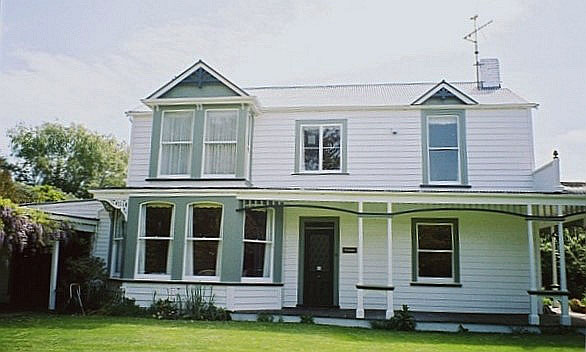
The Pukehou homestead was constructed on Section 34 around 1865 by the son in law of Duncan Fraser - Thomas Furner Richardson. The Victorian style villa was of timber construction. It had two rooms on the first level along with a small study which may have been maids' quarters, and five rooms on the second level. It is believed that the larger of the five rooms on the second level was occasionally used as a school room before the Parewanui school was opened in 1879. Attached to the side of the house is what appears to have been the gardener's quarters. This room can only be accessed from the exterior of the house.
Upon the death of Duncan Fraser in 1879, the estate was passed on to Donald Fraser, who further increased the size of the Pukehou property to 3500 acres. In 1918, the year following the death of Donald Fraser, the Pukehou property was subdivided and put up for sale. Lot 4, which included the Pukehou homestead, was purchased in 1919 by Stewart McKenzie. In 1929 the property was transferred to Thomas Andrew, and in 1940 to Samuel Richard Waugh, and then to Clifford Samuel Waugh. The current owners purchased 4.6235 hectares of the Pukehou property in 1973. Pukehou has been well maintained by its present owners and is in excellent condition. Members of the Fraser family continue to visit the house, which is held in high esteem by family members and the local community alike.
The Pukehou homestead is of significance due to its association with the Fraser family and early settlement in the Rangitikei region. The Frasers are one of the best-known families in the Rangitikei region. Duncan and Marjory came to the district in 1852 and were amongst some of the earliest colonists to settle in the lower Rangitikei. Donald Fraser, the third son of Duncan and Marjory, was a well known farmer in the district with a property that was 'renowned for bullock fattening and grain growing.' He was perhaps best known for his reputation as a breeder and association with the Rangitikei Racing Club. Descendants of the Frasers have remained in the area to the present day. Pukehou is an example of a well preserved mid nineteenth century homestead, and provides valuable insight into the lives of pioneer settlers in nineteenth century New Zealand.
List Entry Information
Status
Listed
List Entry Status
Historic Place Category 2
Access
Private/No Public Access
List Number
2824
Date Entered
11th December 2003
Date of Effect
11th December 2003
City/District Council
Rangitīkei District
Region
Horizons (Manawatū-Whanganui) Region
Legal description
Lot 1 DP 34644 (RT 373/134), Wellington Land District
Status
Listed
List Entry Status
Historic Place Category 2
Access
Private/No Public Access
List Number
2824
Date Entered
11th December 2003
Date of Effect
11th December 2003
City/District Council
Rangitīkei District
Region
Horizons (Manawatū-Whanganui) Region
Legal description
Lot 1 DP 34644 (RT 373/134), Wellington Land District
Why is this place significant?
Historic Significance
Historical Significance or Value The Pukehou homestead is of historical significance due to its association with the Fraser family and early settlement in the Rangitikei region. It is an example of a well preserved mid nineteenth century villa and provides valuable insight into the lives of pioneer settlers in nineteenth century New Zealand. Through reflecting the lifestyles of early land proprieters in New Zealand and the social status that is conveyed through the home, Pukehou has social value. This is further enhanced through its association with early Scottish settlement in the lower Rangitikei.
Why is this place Category 1 / Category 2?
Detail Of Assessed Criteria
(a) Pukehou can provide valuable insight into the lifestyles of some of the early land proprietors and pioneers in New Zealand history. The layout of the home indicates the social emphasis that was placed on the division of hired service and those that reside in the home. It also shows the multiple functions that homes often adopted in the stages of early settlement, with one of the rooms in Pukehou sometimes functioning as a school room. (b) The homestead is associated with the Fraser family, who are a well-known family in the area. Duncan and Marjory Fraser, the original proprietors of the Pukehou estate, were among the earliest settlers in the district. (c) Pukehou has potential to provide knowledge of New Zealand history. It represents a type of lifestyle associated with early settlement and the social divisions found within the home of wealthy land proprietors. (e) Pukehou is held in high regard by the local community due to the Fraser family having such an important role in the history of the area. People throughout the Rangitikei frequently visit the homestead.
Why is this place significant?
Historic Significance
Historical Significance or Value The Pukehou homestead is of historical significance due to its association with the Fraser family and early settlement in the Rangitikei region. It is an example of a well preserved mid nineteenth century villa and provides valuable insight into the lives of pioneer settlers in nineteenth century New Zealand. Through reflecting the lifestyles of early land proprieters in New Zealand and the social status that is conveyed through the home, Pukehou has social value. This is further enhanced through its association with early Scottish settlement in the lower Rangitikei.
Why is this place Category 1 / Category 2?
Detail Of Assessed Criteria
(a) Pukehou can provide valuable insight into the lifestyles of some of the early land proprietors and pioneers in New Zealand history. The layout of the home indicates the social emphasis that was placed on the division of hired service and those that reside in the home. It also shows the multiple functions that homes often adopted in the stages of early settlement, with one of the rooms in Pukehou sometimes functioning as a school room. (b) The homestead is associated with the Fraser family, who are a well-known family in the area. Duncan and Marjory Fraser, the original proprietors of the Pukehou estate, were among the earliest settlers in the district. (c) Pukehou has potential to provide knowledge of New Zealand history. It represents a type of lifestyle associated with early settlement and the social divisions found within the home of wealthy land proprietors. (e) Pukehou is held in high regard by the local community due to the Fraser family having such an important role in the history of the area. People throughout the Rangitikei frequently visit the homestead.
Construction Professional
Name
Thomas Furner Richardson
Type
Builder
Biography
No biography is currently available for this construction professional
Construction Details
Start Year
1840
Type
Other
Description
Duncan and Marjory Fraser arrive in NZ
Start Year
1857
Type
Other
Description
Duncan Fraser purchases 150 acres of Section 34 from George Adamson
Start Year
1865
startYearCirca
Type
Original Construction
Description
Pukehou constructed on Section 34
Start Year
1918
Type
Other
Description
Pukehou estate subdivided
Start Year
1919
Type
Other
Description
Stewart McKenzie purchases Pukehou homestead and Lot 4 of Section 34
Start Year
1929
Type
Other
Description
Land sold to Thomas Andrew
Start Year
1940
Type
Other
Description
Land sold to Samuel Richard Waugh and then Clifford Samuel Waugh
Start Year
1973
Type
Other
Description
Land sold
Construction Materials
Constructed from timber with a corrugated iron roof.
Construction Professional
Name
Thomas Furner Richardson
Type
Builder
Biography
No biography is currently available for this construction professional
Construction Details
Start Year
1840
Type
Other
Description
Duncan and Marjory Fraser arrive in NZ
Start Year
1857
Type
Other
Description
Duncan Fraser purchases 150 acres of Section 34 from George Adamson
Start Year
1865
startYearCirca
Type
Original Construction
Description
Pukehou constructed on Section 34
Start Year
1918
Type
Other
Description
Pukehou estate subdivided
Start Year
1919
Type
Other
Description
Stewart McKenzie purchases Pukehou homestead and Lot 4 of Section 34
Start Year
1929
Type
Other
Description
Land sold to Thomas Andrew
Start Year
1940
Type
Other
Description
Land sold to Samuel Richard Waugh and then Clifford Samuel Waugh
Start Year
1973
Type
Other
Description
Land sold
Construction Materials
Constructed from timber with a corrugated iron roof.
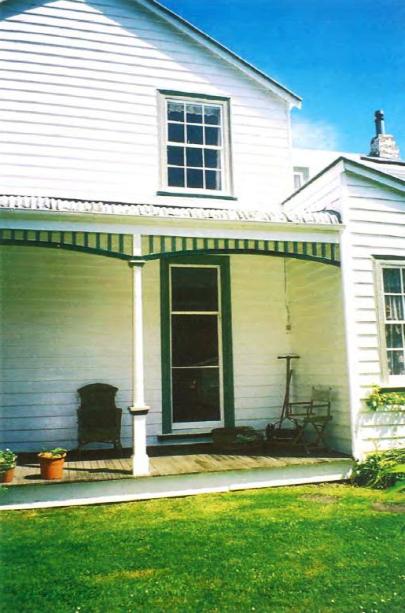
Pukehou is a two-storey residential structure that is made from timber and has a corrugated iron roof. On the first level there are two rooms, a kitchen, bathroom and a small study which was perhaps once a maids quarters. There are five rooms on the second level along with another bathroom. Attached to the side of the house is what would appear to have once been the gardeners' quarters. This room can only be accessed through the exterior of the house. The verandah from the second level of Pukehou was removed at an unknown date. On the first level the verandah remains in its original form. It is indicative of the simple verandah style apparent in many villas from this time period due to having a simple design and resting on plain posts with a decorated bracked placed between the posts and the beam.
Pukehou is a two-storey residential structure that is made from timber and has a corrugated iron roof. On the first level there are two rooms, a kitchen, bathroom and a small study which was perhaps once a maids quarters. There are five rooms on the second level along with another bathroom. Attached to the side of the house is what would appear to have once been the gardeners' quarters. This room can only be accessed through the exterior of the house. The verandah from the second level of Pukehou was removed at an unknown date. On the first level the verandah remains in its original form. It is indicative of the simple verandah style apparent in many villas from this time period due to having a simple design and resting on plain posts with a decorated bracked placed between the posts and the beam.
Historical and Associated Iwi / Hapū / Whānau
Completion Date
11th December 2003
Report Written By
Laura Burbery
Information Sources
Clapham, 1996
I. Clapham, Pukehou: The Frasers of the Lower Rangitikei, Feilding, 1996
Parewanui Centennial Committee, 1979
Parewanui Centenary Committee, History of the Parewanui District and Schools 1819-1857-1979, Parewanui, 1979
Other Information
A fully referenced version of this report is available from the Central Region of the NZHPT. Please note that entry on the New Zealand Heritage List/Rarangi Korero identifies only the heritage values of the property concerned, and should not be construed as advice on the state of the property, or as a comment of its soundness or safety, including in regard to earthquake risk, safety in the event of fire, or insanitary conditions.
Historical and Associated Iwi / Hapū / Whānau
Completion Date
11th December 2003
Report Written By
Laura Burbery
Information Sources
Clapham, 1996
I. Clapham, Pukehou: The Frasers of the Lower Rangitikei, Feilding, 1996
Parewanui Centennial Committee, 1979
Parewanui Centenary Committee, History of the Parewanui District and Schools 1819-1857-1979, Parewanui, 1979
Other Information
A fully referenced version of this report is available from the Central Region of the NZHPT. Please note that entry on the New Zealand Heritage List/Rarangi Korero identifies only the heritage values of the property concerned, and should not be construed as advice on the state of the property, or as a comment of its soundness or safety, including in regard to earthquake risk, safety in the event of fire, or insanitary conditions.
Current Usages
Uses: Accommodation
Specific Usage: House
Former Usages
General Usage: Accommodation
Specific Usage: House
Current Usages
Uses: Accommodation
Specific Usage: House
Former Usages
General Usage: Accommodation
Specific Usage: House
Location
Sign up to hear more
Get the latest heritage news, features and events delivered
straight to your inbox.
