

Beath retired from active participation in the business in 1901, although he remained a director until his death in 1914. The year after his retirement Beath's was floated as a limited liability company. By 1915 the turnover of the store had doubled and it was decided to expand the premises once more. [James] Mitchell, the managing director since 1906, travelled through Britain, Europe and the United States to garner ideas for the modernisation of the store. Following his return it was decided to add a further three storeys, thus making it, at six storeys, the tallest drapery store in New Zealand at the time. (This building was demolished in 1975.)
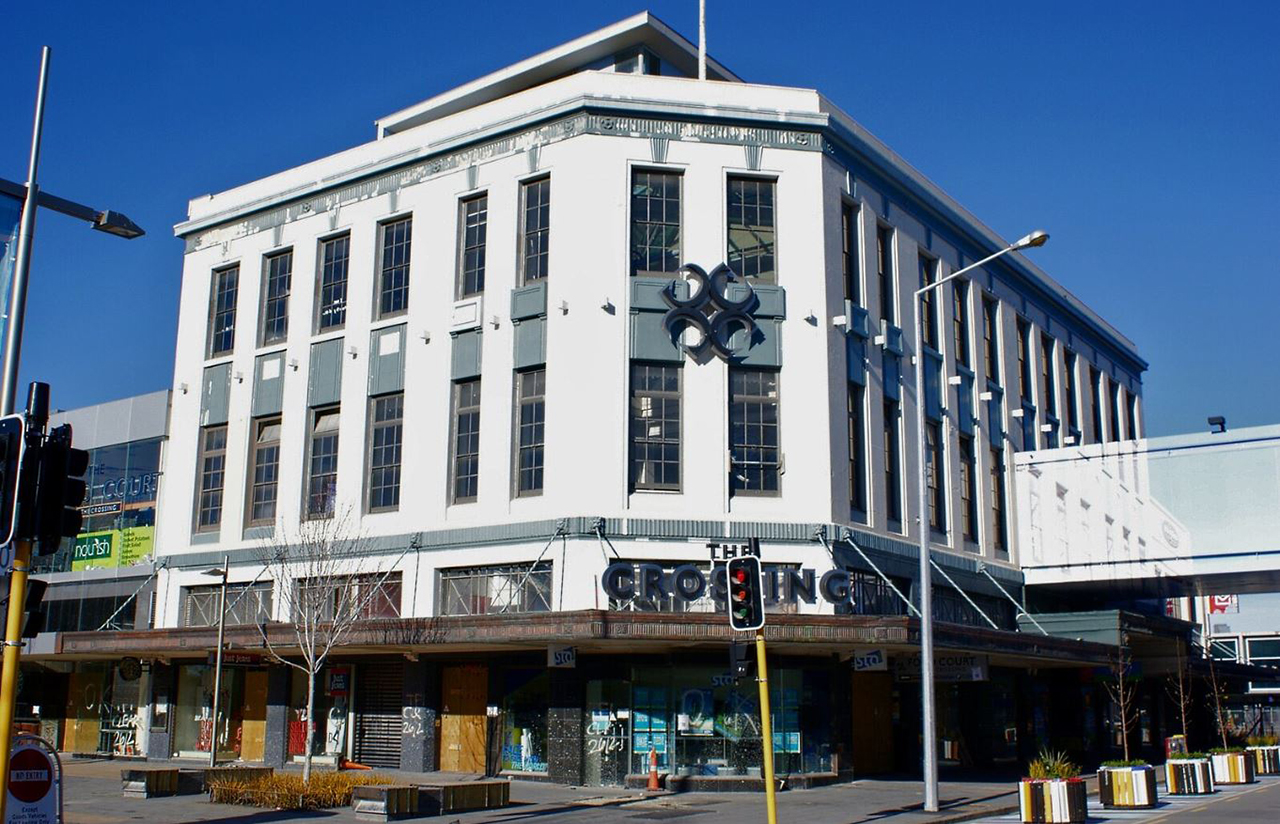
The business continued to grow and in 1934 Beath's purchased the 'Sorrenson's Block', which gave the firm access to Lichfield Street, and a block of buildings on the corner of Cashel and Colombo streets, thus providing the company with one of the best retail sites in Christchurch. The following year Beath's erected another new building on this site, the subject of this registration by the New Zealand Historic Places Trust Pouhere Taonga.
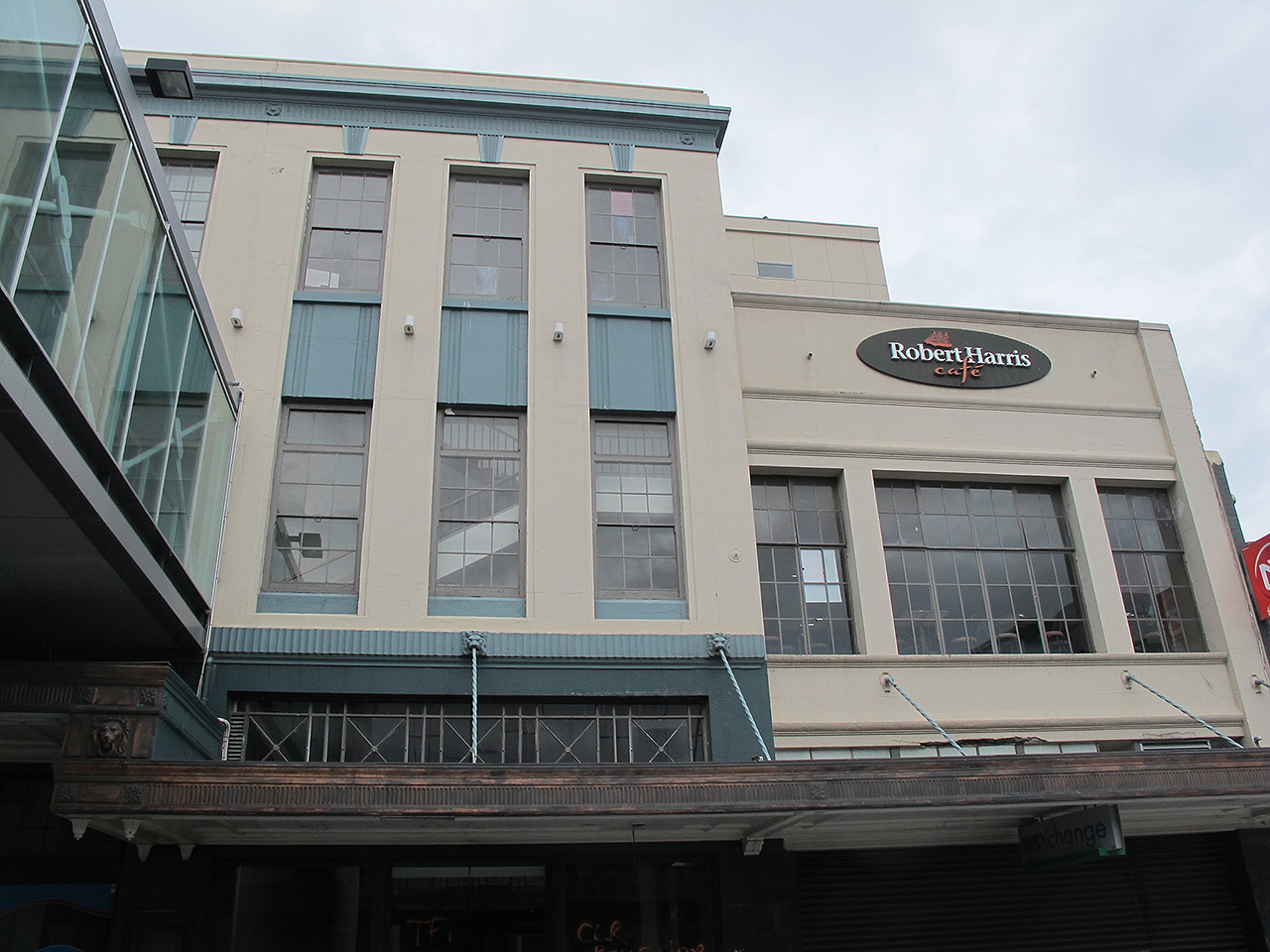
This new store had been originally designed as a five or six-storeyed Chicago-style building in 1929 by the architectural firm S. & A. Luttrell. The Luttrell's chief contribution to New Zealand architecture was in the introduction of the Chicago 'skyscraper' style, as seen in the New Zealand Express Company buildings in Christchurch (1905-1907) and Dunedin (1908-1910). The firm's architects for the Beath's project were Allan Manson and Jack Hollis, and Hollis was sent to the United States to observe recent trends in department store design before preparing plans. Because of the Depression the eventual structure was more modest than Hollis's original plans. However, one notable feature, from the public's point of view, was the green and gold restaurant, which occupied most of the first floor. This was used for a Royal banquet in 1954, but was closed three years later to make more room for the increasing amount of merchandise.
Changes in usage throughout the store have mirrored changes in society. By 1960, for example, Beath's had altered their basement floor to include a coffee bar, a toy section and a music department, while on the ground floor space had been made for radios, televisions and other household appliances. In 1978 Beath's merged with the D.I.C. (Drapery and General Importing Company) and traded under the D.I.C. name from the Beath's building. In 1987 the building was transferred to Arthur Barnett Ltd, as part of Arthur Barnett's take-over of the D.I.C. in both Christchurch and Dunedin. Today the building houses a food court on the top floor, shops below, and part of the west end of the building has become the city's main bus terminus.
The former Beath's Department Store Building is significant today as a late example of the Luttrells' work and as a building that has remained in use as a department store for over 65 years. It is associated with a long-standing Christchurch firm, which was known for the calibre of its goods and the quality of service. The history of the firm from its beginnings as a men's outfitters to its culmination as a modern department store, illustrates the development of department stores in Christchurch. The building is a well-known landmark on the corner of Cashel Mall and Colombo Street.
List Entry Information
Status
Listed
List Entry Status
Historic Place Category 2
Access
Private/No Public Access
List Number
3094
Date Entered
26th November 1981
Date of Effect
26th November 1981
City/District Council
Christchurch City
Region
Canterbury Region
Legal description
Lot 1 DP 7650 Lot 1 DP 6642 Lots 1-4 DP 2564 Pt TS 885
Status
Listed
List Entry Status
Historic Place Category 2
Access
Private/No Public Access
List Number
3094
Date Entered
26th November 1981
Date of Effect
26th November 1981
City/District Council
Christchurch City
Region
Canterbury Region
Legal description
Lot 1 DP 7650 Lot 1 DP 6642 Lots 1-4 DP 2564 Pt TS 885
Construction Professional
Name
Luttrell, Alfred Edgar And Edward Sidney
Type
Architect
Biography
Alfred (1865-1924) and Sidney (1872-1932) Luttrell established one of New Zealand's foremost Edwardian architectural practices when they arrived in Christchurch in 1902. The brothers had left Australia on the eve of Federation to pursue a more rewarding career in New Zealand. Alfred had been based in Launceston, Tasmania, where he had been the apprentice of Harry Conway. In 1886 he stared his own firm. His younger brother into partnership in 1897. The two men assumed different responsibilities within the firm, with Alfred acting as the principal designer and engineer while Sidney co-ordinated building programmes and dealt with clients. Sidney served his apprenticeship whit his brother, and in 1897 they became partners of A. & S. Luttrell. By 1902 they had established themselves in New Zealand, where they were known as S. & A. Luttrell The Luttrells ran their own contracting firm for many years, designing a wide variety of building types throughout the country. They were the unofficial Diocesan architects for the Roman Catholic Church in Christchurch during the second decade of the twentieth century. Their chief contribution to New Zealand architecture was in the introduction of the Chicago "skyscraper" style, as seen in the New Zealand Express Company buildings in Christchurch (1905-7) and Dunedin (1908-10). Alfred's habitual use of concrete construction, both mass and reinforced, is another significant feature of his work. The grandstands at Trentham racecourse are his most important work in reinforced concrete, and reveal Sidney's close involvement with the racing world, which led to numerous commissions for the firm.
Construction Details
Start Year
1929
Type
Designed
Description
Originally designed as a five or six storey building
Start Year
1935
Type
Original Construction
Construction Professional
Name
Luttrell, Alfred Edgar And Edward Sidney
Type
Architect
Biography
Alfred (1865-1924) and Sidney (1872-1932) Luttrell established one of New Zealand's foremost Edwardian architectural practices when they arrived in Christchurch in 1902. The brothers had left Australia on the eve of Federation to pursue a more rewarding career in New Zealand. Alfred had been based in Launceston, Tasmania, where he had been the apprentice of Harry Conway. In 1886 he stared his own firm. His younger brother into partnership in 1897. The two men assumed different responsibilities within the firm, with Alfred acting as the principal designer and engineer while Sidney co-ordinated building programmes and dealt with clients. Sidney served his apprenticeship whit his brother, and in 1897 they became partners of A. & S. Luttrell. By 1902 they had established themselves in New Zealand, where they were known as S. & A. Luttrell The Luttrells ran their own contracting firm for many years, designing a wide variety of building types throughout the country. They were the unofficial Diocesan architects for the Roman Catholic Church in Christchurch during the second decade of the twentieth century. Their chief contribution to New Zealand architecture was in the introduction of the Chicago "skyscraper" style, as seen in the New Zealand Express Company buildings in Christchurch (1905-7) and Dunedin (1908-10). Alfred's habitual use of concrete construction, both mass and reinforced, is another significant feature of his work. The grandstands at Trentham racecourse are his most important work in reinforced concrete, and reveal Sidney's close involvement with the racing world, which led to numerous commissions for the firm.
Construction Details
Start Year
1929
Type
Designed
Description
Originally designed as a five or six storey building
Start Year
1935
Type
Original Construction
Historical and Associated Iwi / Hapū / Whānau
Completion Date
23rd August 2001
Report Written By
Melanie Lovell-Smith
Information Sources
McEwan, 1988
Ann McEwan, 'The Architecture of A.E. and E.S. Luttrell in Tasmania and New Zealand', MA thesis, University of Canterbury, 1988
Other Information
This place was identified as significant under previous legislation with different information requirements. It remains significant under the current legislation. There is opportunity under our legislation and policies to add to this information. Further information about this place may be available from the Southern Regional Office of Heritage New Zealand Pouhere Taonga. Please note that entry on the New Zealand Heritage List/Rarangi Korero identifies only the heritage values of the property concerned, and should not be construed as advice on the state of the property, or as a comment of its soundness or safety, including in regard to earthquake risk, safety in the event of fire, or insanitary conditions.
Historical and Associated Iwi / Hapū / Whānau
Completion Date
23rd August 2001
Report Written By
Melanie Lovell-Smith
Information Sources
McEwan, 1988
Ann McEwan, 'The Architecture of A.E. and E.S. Luttrell in Tasmania and New Zealand', MA thesis, University of Canterbury, 1988
Other Information
This place was identified as significant under previous legislation with different information requirements. It remains significant under the current legislation. There is opportunity under our legislation and policies to add to this information. Further information about this place may be available from the Southern Regional Office of Heritage New Zealand Pouhere Taonga. Please note that entry on the New Zealand Heritage List/Rarangi Korero identifies only the heritage values of the property concerned, and should not be construed as advice on the state of the property, or as a comment of its soundness or safety, including in regard to earthquake risk, safety in the event of fire, or insanitary conditions.
Current Usages
Uses: Trade
Specific Usage: Department Store
Current Usages
Uses: Trade
Specific Usage: Department Store
Location
Sign up to hear more
Get the latest heritage news, features and events delivered
straight to your inbox.
