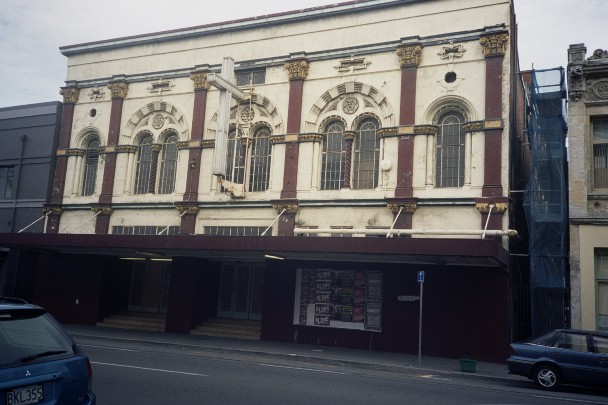
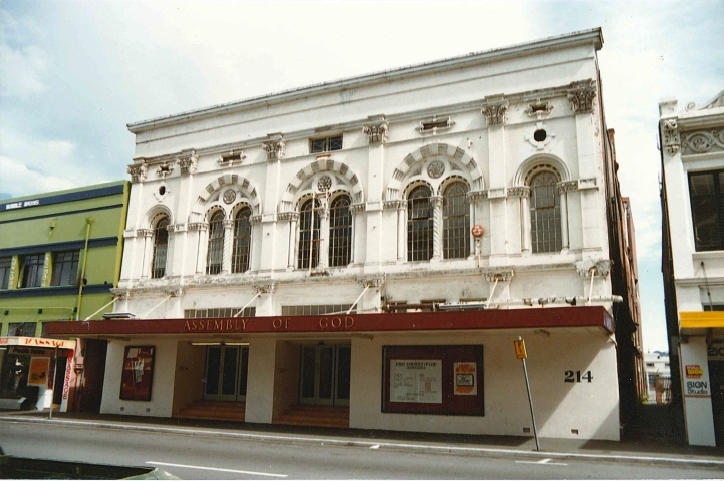
The Odeon Theatre, 1883, is the oldest, masonry theatre in New Zealand and one of only three intact, purpose built theatres that were built in the nineteenth century. In Christchurch, only the now stripped, timber building that served for three decades as the original Theatre Royal is older.
First known as the Tuam Street Hall or Theatre it was a popular venue for all types of public meetings, entertainment and exhibitions. These varied uses demonstrated the versatility of its internal planning. During the 1880s and 90s the theatre functioned as a roller skating rink in conjunction with the other usual activities. Through the nineteenth century the theatre's use reflected the tastes and interests typical of the time, catering to differing levels of society. One of the most notable and nationally significant uses was for the public meetings held in 1893 when Kate Sheppard led the campaign for women's suffrage from Christchurch. By the turn of the century vaudeville was the dominating entertainment and in 1903 John Fuller and Sons Ltd, the prominent Australasian theatrical firm, began their long association with this building. Use as a theatre rather than a public hall increasingly dominated.
Designed by prominent Christchurch architect T.S Lambert, the building is of brick construction with a majestic stone façade of Italianate design with Venetian Gothic elements. The Luttrell Brothers, also notable architects, modified the interior in 1927, providing the theatre with superior comfort, acoustics and viewing qualities. Lambert's façade continues to make a strong visual contribution to the streetscape, while the auditorium largely retains the appearance given by the Luttrell Brothers, despite later minor alterations.
In 1930, with cinema usage introduced, the theatre was renamed St James. After a brief closure during the depression this continued along with live theatre and the St James hosted some special performers through the 1940s, including the Trapp family singers, Stanley Holloway, Lawrence Olivier and Vivien Leigh. With ownership by Kerridge-Odeon Ltd in 1960, changes were made again. As part of a modernising programme the parapet was removed from the façade, minor alterations were made to the auditorium and updated cinema equipment was installed. The theatre was now named the Odeon. The introduction of television led to a decline in cinema patronage and this, accompanied by a reduction in live performances led to the theatre's closure. The Sydenham Assembly of God purchased the building in 1983, using it as a place of worship with associated administration offices. The theatre, which had been one of the city's most notable places for entertainment and public gatherings for one hundred years, took on a new role, serving the needs of a religious group.
The changes in use of the theatre over the years reflect the changes in the nature of popular entertainment. Although some other New Zealand theatres can illustrate similar characteristics, the Odeon's age along with its long and extremely varied use gives it special regional and national importance. The association with Kate Sheppard and the fight for votes for women in New Zealand add to this significance. It also has major architectural values with its imposing nineteenth century façade and its grand interior, an exemplar of theatre design from 1927.
First known as the Tuam Street Hall or Theatre it was a popular venue for all types of public meetings, entertainment and exhibitions. These varied uses demonstrated the versatility of its internal planning. During the 1880s and 90s the theatre functioned as a roller skating rink in conjunction with the other usual activities. Through the nineteenth century the theatre's use reflected the tastes and interests typical of the time, catering to differing levels of society. One of the most notable and nationally significant uses was for the public meetings held in 1893 when Kate Sheppard led the campaign for women's suffrage from Christchurch. By the turn of the century vaudeville was the dominating entertainment and in 1903 John Fuller and Sons Ltd, the prominent Australasian theatrical firm, began their long association with this building. Use as a theatre rather than a public hall increasingly dominated.
Designed by prominent Christchurch architect T.S Lambert, the building is of brick construction with a majestic stone façade of Italianate design with Venetian Gothic elements. The Luttrell Brothers, also notable architects, modified the interior in 1927, providing the theatre with superior comfort, acoustics and viewing qualities. Lambert's façade continues to make a strong visual contribution to the streetscape, while the auditorium largely retains the appearance given by the Luttrell Brothers, despite later minor alterations.
In 1930, with cinema usage introduced, the theatre was renamed St James. After a brief closure during the depression this continued along with live theatre and the St James hosted some special performers through the 1940s, including the Trapp family singers, Stanley Holloway, Lawrence Olivier and Vivien Leigh. With ownership by Kerridge-Odeon Ltd in 1960, changes were made again. As part of a modernising programme the parapet was removed from the façade, minor alterations were made to the auditorium and updated cinema equipment was installed. The theatre was now named the Odeon. The introduction of television led to a decline in cinema patronage and this, accompanied by a reduction in live performances led to the theatre's closure. The Sydenham Assembly of God purchased the building in 1983, using it as a place of worship with associated administration offices. The theatre, which had been one of the city's most notable places for entertainment and public gatherings for one hundred years, took on a new role, serving the needs of a religious group.
The changes in use of the theatre over the years reflect the changes in the nature of popular entertainment. Although some other New Zealand theatres can illustrate similar characteristics, the Odeon's age along with its long and extremely varied use gives it special regional and national importance. The association with Kate Sheppard and the fight for votes for women in New Zealand add to this significance. It also has major architectural values with its imposing nineteenth century façade and its grand interior, an exemplar of theatre design from 1927.