DonateMembershipVisit Heritage
  • Tūrangawaewae
    Places
  • Tira Māori
    Māori Heritage
  • Poutairangahia
    Archaeology
  • Rauemi
    Resources
  • Mō Tātou
    About Us
  • New Zealand Heritage List
  • Nominate and submit
  • Explore the List
  • National Historic Landmarks
  • Plaques
  • Rainbow List Project
  • Lost heritage
  • Visit Heritage
  • Our properties
  • Turnbull House Project
  • Collections
  • Shop
  • Tohu Whenua
  • Tira Māori
  • Conserving Māori heritage
  • Marae built heritage
  • Māori heritage on the List
  • Hinemihi—Te Hokinga Mai
  • What is archaeology?
  • Is there a site on my property?
  • What are my legal requirements?
  • Affecting an archaeological site
  • Declaring an archaeological site
  • Archaeology FAQs
  • Archaeology Digital Library
  • Archaeology guidelines and templates
  • Resources
  • Funding
  • Publications
  • Sustainable management guides
  • Disaster recovery
  • Podcasts & digital resources
  • Education Hub
  • Conservation plans
  • About
  • Board
  • Māori Heritage Council
  • Senior Staff
  • Offices
  • Contact us
  • Careers
  • Covenants
  • Fast-track
  • Corporate documents
  • Currently consulting on
  • Our submissions
  • News
  • Covid-19 response
Quick links
Rārangi Kōrero | The List
Explore the List
National Historic Landmarks
Ngā Manawhenua o Aotearoa me ōna Kōrero Tūturu
Quick links
Tapuwae
A Vision for Places of Māori Heritage
Funding for Māori Heritage
Resources
Quick links
Archaeological Authority Portal
Applying for an archaeological authority
Archaeology FAQs
Browse the most frequently asked questions about archaeological authorities and the archaeological process.
Quick links
Quick links
News
News Keep up to date with Heritage New Zealand Pouhere Taonga
Membership
Membership Find out more and sign up today
DonateMembershipVisit Heritage
  • Tūrangawaewae
    Places
  • Tira Māori
    Māori Heritage
  • Poutairangahia
    Archaeology
  • Rauemi
    Resources
  • Mō Tātou
    About Us
  • New Zealand Heritage List
  • Nominate and submit
  • Explore the List
  • National Historic Landmarks
  • Plaques
  • Rainbow List Project
  • Lost heritage
  • Visit Heritage
  • Our properties
  • Turnbull House Project
  • Collections
  • Shop
  • Tohu Whenua
  • Tira Māori
  • Conserving Māori heritage
  • Marae built heritage
  • Māori heritage on the List
  • Hinemihi—Te Hokinga Mai
  • What is archaeology?
  • Is there a site on my property?
  • What are my legal requirements?
  • Affecting an archaeological site
  • Declaring an archaeological site
  • Archaeology FAQs
  • Archaeology Digital Library
  • Archaeology guidelines and templates
  • Resources
  • Funding
  • Publications
  • Sustainable management guides
  • Disaster recovery
  • Podcasts & digital resources
  • Education Hub
  • Conservation plans
  • About
  • Board
  • Māori Heritage Council
  • Senior Staff
  • Offices
  • Contact us
  • Careers
  • Covenants
  • Fast-track
  • Corporate documents
  • Currently consulting on
  • Our submissions
  • News
  • Covid-19 response
Quick links
Rārangi Kōrero | The List
Explore the List
National Historic Landmarks
Ngā Manawhenua o Aotearoa me ōna Kōrero Tūturu
Quick links
Tapuwae
A Vision for Places of Māori Heritage
Funding for Māori Heritage
Resources
Quick links
Archaeological Authority Portal
Applying for an archaeological authority
Archaeology FAQs
Browse the most frequently asked questions about archaeological authorities and the archaeological process.
Quick links
Quick links
News
News Keep up to date with Heritage New Zealand Pouhere Taonga
Membership
Membership Find out more and sign up today
  • Nominate and submit
  • National Historic Landmarks
  • Nominate and submit
  • National Historic Landmarks
  • Conserving Māori heritage
  • Marae built heritage
  • Conserving Māori heritage
  • Marae built heritage
  • Archaeological authorities
  • Archaeology Digital Library
  • Archaeological authorities
  • Archaeology Digital Library
  • All resources
  • Publications
  • Funding
  • All resources
  • Publications
  • Funding
  • FAQs
  • FAQs
Follow us on:
Places
  • Nominate and submit
  • National Historic Landmarks
Tira Māori
  • Conserving Māori heritage
  • Marae built heritage
Archaeology
  • Archaeological authorities
  • Archaeology Digital Library
Resources
  • All resources
  • Publications
  • Funding
FAQs
  • FAQs
Follow us on
HomePrivacyTerms and conditionsAbout this site
© Heritage New Zealand Pouhere Taonga 2026.
 
St Mary’s Church (Anglican)

1889 Te Araroa Road (State Highway 35), TIKITIKI

Private

Historic Place Category 1

List No. 3306

Quick links:
List GalleryLocationDetails
DESCRIPTION:
St Mary's Church, which was dedicated in 1926 is a memorial to the Maori soldiers of the East Coast who fell during the First World War. It is of great spiritual and historical significance to the people of Ngati Porou.

The church also commemorates the establishment of Christianity in Waiapu and the East Coast. Taumata-a-Kura of Ngati Porou had been captured in the early [1820s] by a Ngapuhi war party and taken by them in enslavement to the Bay of Islands. After several years he escaped and came under the protection of the Missionaries, by whom he was taught to read and write, and was introduced to Christianity. In 1834 he returned to Waiapu and introduced the Christian gospel to his people. It was not until after this that William Williams formally established a mission on the East Coast.

St Mary's is one of the great decorated buildings of Ngati Porou whose building was inspired and directed by Apirana T. Ngata, as part of his endeavours to restore knowledge of traditional arts and crafts and traditional values to his people. Ngata was a dynamic and revered leader of the Maori people, and especially of his Ngati Porou people, throughout the first half of the twentieth century.

The foundation stone of St Mary's was laid in 1924 and the building was dedicated in 1926.
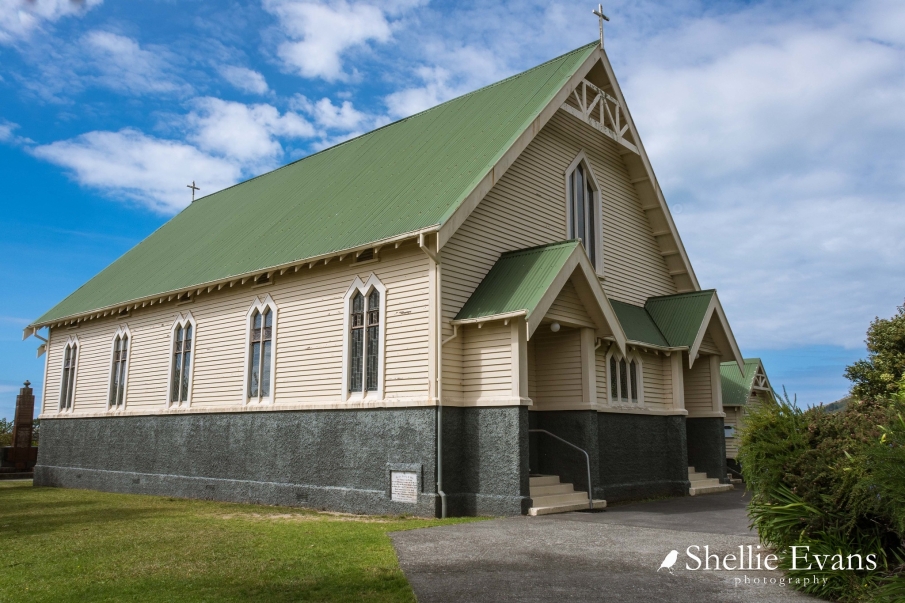
St Mary's Church (Anglican), Tikitiki. CC BY 2.0 Image courtesy of www.flickr.com | Shellie Evans – flyingkiwigirl | 27/03/2018 | Shellie Evans
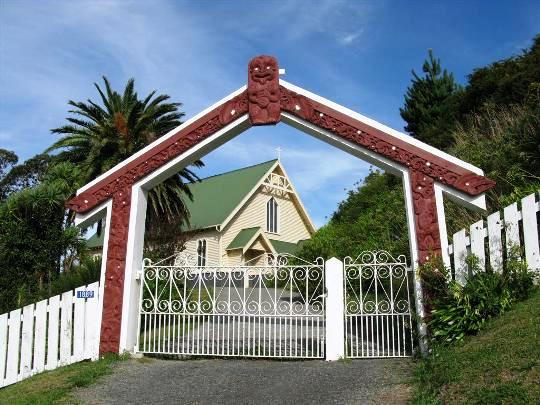
St Mary's Church (Anglican), Tikitiki. CC BY-NC-ND 2.0 Image courtesy of www.flickr.com | Shellie Evans – flyingkiwigirl | 27/03/2018 | Shellie Evans
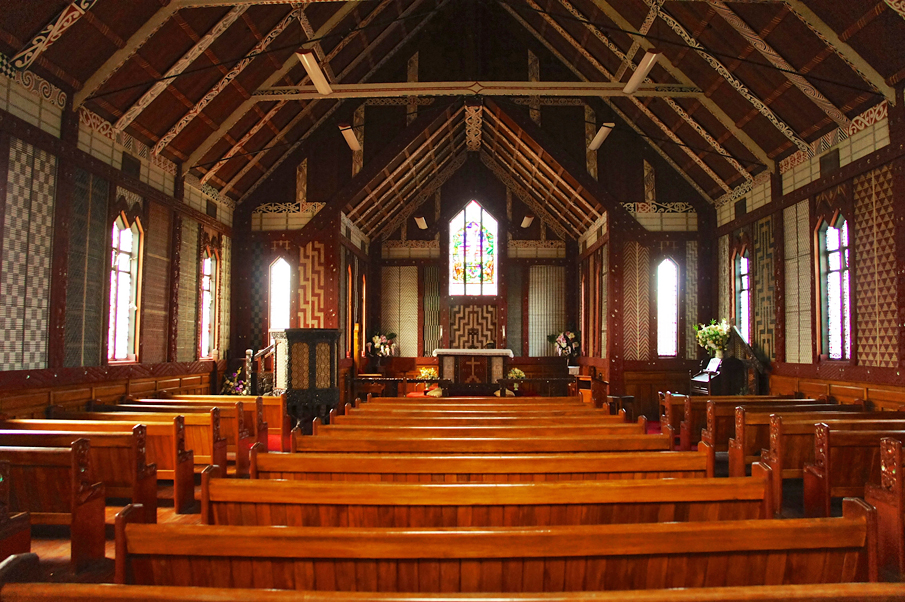
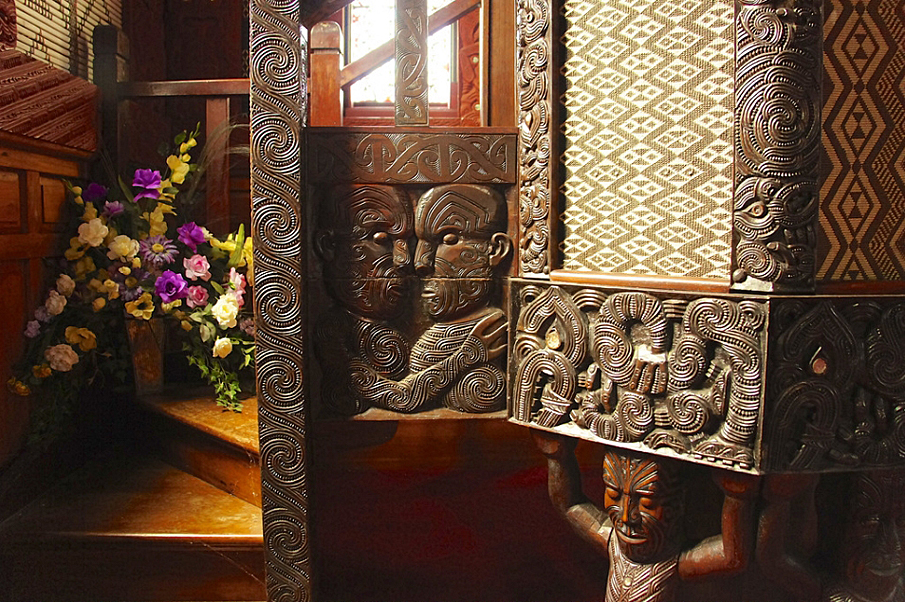
St Mary's Church (Anglican), Tikitiki. Interior detail. CC BY 2.0 Image courtesy of www.flickr.com | Natalia Volna - itravelNZ® | 18/02/2013 | Natalia Volna
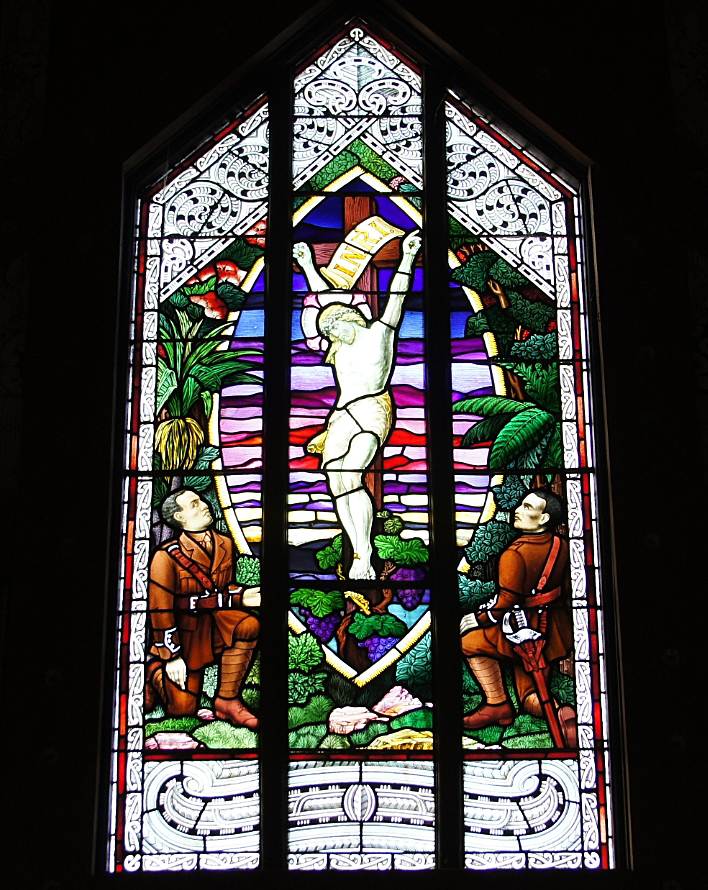
St Mary's Church (Anglican), Tikitiki. CC BY 2.0 Image courtesy of www.flickr.com | Natalia Volna - itravelNZ® | 18/02/2013 | Natalia Volna
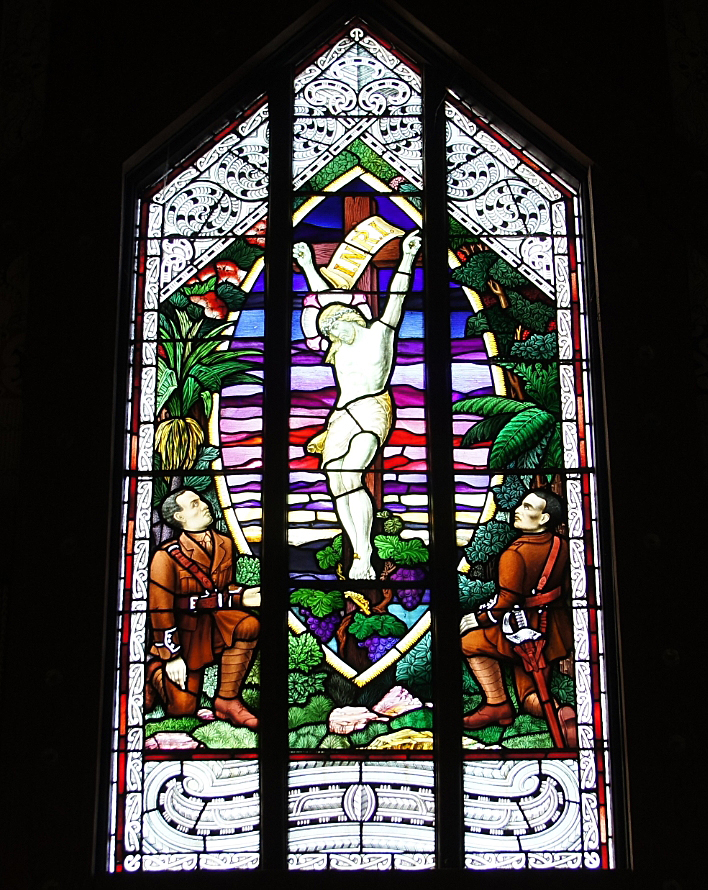
St Mary's Church (Anglican), Tikitiki. CC BY 2.0 This stained-glass window is part of the church’s memorial to Ngāti Porou soldiers who died in the First World War. Two Māori soldiers look up at Christ on the cross | Natalia Volna - itravelNZ® | 18/02/2013 | Natalia Volna

St Mary's Church (Anglican), Tikitiki. CC BY 2.0 Image courtesy of www.flickr.com | Shellie Evans – flyingkiwigirl | 27/03/2018 | Shellie Evans
St Mary's Church (Anglican), Tikitiki. CC BY-NC-ND 2.0 Image courtesy of www.flickr.com | Shellie Evans – flyingkiwigirl | 27/03/2018 | Shellie Evans
St Mary's Church (Anglican), Tikitiki. Interior detail. CC BY 2.0 Image courtesy of www.flickr.com | Natalia Volna - itravelNZ® | 18/02/2013 | Natalia Volna
St Mary's Church (Anglican), Tikitiki. CC BY 2.0 Image courtesy of www.flickr.com | Natalia Volna - itravelNZ® | 18/02/2013 | Natalia Volna
St Mary's Church (Anglican), Tikitiki. CC BY 2.0 This stained-glass window is part of the church’s memorial to Ngāti Porou soldiers who died in the First World War. Two Māori soldiers look up at Christ on the cross | Natalia Volna - itravelNZ® | 18/02/2013 | Natalia Volna

List Entry Information

Overview

Status
Listed

List Entry Status
Historic Place Category 1

Access
Private/No Public Access

List Number
3306

Date Entered
28th June 1990

Date of Effect
28th June 1990

City/District Council
Gisborne District

Region
Gisborne Region

Legal description

Pt Tikitiki A18 (Church & Cemetery Reserve) Blk and Pt Tikitiki A18 (Church & Cemetery Reserve) Blk (RT 435804), Gisborne Land District

Detailed List Entry
Significance

Historic Significance

Historical Significance or Value St Mary's Church is one of such great significance to the Ngati Porou people that it is referred to as their Cathedral. It commemorates the establishment of Christianity on the East Coast, it is a memorial to the local Maori dead of World War I and it is a personal tribute to Sir Apirana Ngata.

Physical Significance

ARCHITECTURAL QUALITY: The exterior of St Mary's Church is relatively simple in design although the entry porch has received special attention. In contrast, the interior of the church is one of the most elaborate and ornate Maori carved buildings in New Zealand. The decorative kowhaiwhai and tukutuku artwork is executed in traditional materials to traditional design, and the designs are carried over to the new medium of glass in the windows. The quality and innovative use of stained glass is one of the glories of the church. TOWNSCAPE/LANDMARK VALUE: The church stands on a hillside overlooking State highway 35. It has considerable landmark qualities in its setting on its prominent elevated site.

Construction Professional

Name

Ngata, Sir Apirana Turupa

Type

Architect

Biography

Apirana Ngata (1874-1954) was educated at Wai-o-Matatini Native School, Te Aute College and Canterbury University College. In 1893 he graduated Bachelor of Arts and in 1894 he became the first Maori to graduate Master of Arts (with honours in political science). He completed a law degree in 1896 and was admitted as a barrister and solicitor in 1897. Two years later he became the travelling secretary to the Te Aute Students Association (Young Maori Party). He was organising inspector to the Maori Council from 1902-04, and then sat on the Royal Commission appointed under the Native Lands Act 1904 (1905), the Commission of Investigation into the Te Aute and Wanganui Trusts (1906), and the Commission on Native Land Tenure (1907-08). He represented the Eastern Maori electorate in the House of Representatives (1905-1943), was a member of the Executive Council representing the Maori race (1909-12), and was Minister of Native Affairs (1928-34). He was knighted in 1927. Sir Apirana devoted his life to the betterment of the Maori people. He promoted the best use of their land and the reawakening of belief in their culture and language. He wrote a Maori grammar and a collection of waiata, patere and oriori under the title "Nga Moteatea". Sir Apirana was also interested in Maori arts and crafts and the construction of ornate but durable meeting houses.

Name

Ngatoto, Hone

Type

Carver

Biography

Hone Ngatoto was a renowned East Coast carver, and the last of an ancestral line of carvers. He was responsible for the carving of the meeting house at Hinetapora near Ruatoria.

Construction Details

Type

Other

Description

Site of Te Maniatanga o Makahuri

Start Year

1924

Finish Year

1926

Type

Original Construction

Description

Construction of St Mary's Church, including interior

Start Year

1989

Type

Modification

Description

Conservation of stained glass windows

Start Year

2001

Finish Year

2002

Type

Modification

Description

Extensive conservation of interior

Construction Materials

Concrete piles and foundation wall; timber framing with lapped weatherboards; roof of corrugated galvanised iron.

Notable Features

Registration covers the entire building, its fixtures and finishes. It also includes recent modifications. The carving and decoration of the interior.

Physical Description

ARCHITECTURAL DESCRIPTION: The exterior of St Mary's Church is in a simple ecclesiastical style deriving from the Gothic Revival. Triangular headed windows allude to lancet windows and combine with the steeply pitched roof and gables to give the building this Gothic interpretation. The nave has a chancel to the east, vestry to the south and porch to the west. The roof of the chancel is lower than that of the nave but is pitched at the same angle. Gable ends to the east and west elevations are decorated with timber members in line with the barge boards. The east and west ends both have one large triangular headed window, centrally located and divided into three panels by mullions. Below this window on the west facade is the porch, consisting of a gable, enclosing double doors at either end, with a lean-to between. The lean-to has three triangular headed windows. Like the windows, doors are also triangular headed. The north and south facades have paired windows to the nave and single windows to the chancel, all with triangular heads. In contrast to the relatively unadorned exterior, the interior is highly decorated with elaborate carvings, painted rafters and woven tukutuku panels. In the nave the kowhaiwhai patterns on the rafters do not follow the traditional pairing on each side of the ridge, although they do in the chancel. A cornice is also adorned with kowhaiwhai decoration. The walls are decorated with tukutuku panels in eight traditional designs. The weaving was supervised by Ngata who aimed to decorate the interior with traditional designs, and did not include "modern" designs which he considered to be inappropriate for such a building. In addition to the use of kowhaiwhai and tukutuku panels, lavish stained glass windows make an important contribution to the continuity and success of the interior. Wood carvings are featured between tukutuku panels, above a panelled dado and above window apexes. Window frames are also carved and a full-length carved ridge pole is a very important symbolic element. The interior is complemented by a carved communion rail, tukutuku panels to the carved altar, and a carved pulpit, gifts from the Te Arawa people.

Reference

Historical and Associated Iwi / Hapū / Whānau

Iwi

Ngāti Porou

Completion Date

2nd February 2002

Report Written By

Martin Jones

Information Sources

Dictionary of New Zealand Biography

Dictionary of New Zealand Biography

Gisborne Herald

14 Dec 2012

Mackay, 1949

J A Mackay, Historic Poverty Bay and the East Coast, N.I., N.Z, Gisborne, 1949.

New Zealand Historic Places Trust (NZHPT)

New Zealand Historic Places Trust

Porter, 1979

Frances Porter (ed.), Historic Buildings of New Zealand: North Island, Auckland, 1979

Poverty Bay Herald

Poverty Bay Herald

Gisborne Times

Gisborne Times

Porter, 1983 (2)

Frances Porter (ed.), Historic Buildings of New Zealand: North Island (2nd edn.), Auckland, 1983

Conservation Plan

Conservation Plan

Report Written By

This historic place was registered under the Historic Places Act 1980. This report includes the text from the original Building Classification Committee report considered by the NZHPT Board at the time of registration. Please note that entry on the New Zealand Heritage List/Rarangi Korero identifies only the heritage values of the property concerned, and should not be construed as advice on the state of the property, or as a comment of its soundness or safety, including in regard to earthquake risk, safety in the event of fire, or insanitary conditions.

Further Information

Current Usages

Uses: Commemoration

Specific Usage: Memorial - World War One

Uses: Religion

Specific Usage: Church

Former Usages

Themes

War Memorial

Of Significance to Maori

Web Links

Overview

Status

Listed

List Entry Status

Historic Place Category 1

Access

Private/No Public Access

List Number

3306

Date Entered

28th June 1990

Date of Effect

28th June 1990

City/District Council

Gisborne District

Region

Gisborne Region

Legal description

Pt Tikitiki A18 (Church & Cemetery Reserve) Blk and Pt Tikitiki A18 (Church & Cemetery Reserve) Blk (RT 435804), Gisborne Land District

Status

Listed

List Entry Status

Historic Place Category 1

Access

Private/No Public Access

List Number

3306

Date Entered

28th June 1990

Date of Effect

28th June 1990

City/District Council

Gisborne District

Region

Gisborne Region

Legal description

Pt Tikitiki A18 (Church & Cemetery Reserve) Blk and Pt Tikitiki A18 (Church & Cemetery Reserve) Blk (RT 435804), Gisborne Land District

Significance

Why is this place significant?

Historic Significance

Historical Significance or Value St Mary's Church is one of such great significance to the Ngati Porou people that it is referred to as their Cathedral. It commemorates the establishment of Christianity on the East Coast, it is a memorial to the local Maori dead of World War I and it is a personal tribute to Sir Apirana Ngata.

Physical Significance

ARCHITECTURAL QUALITY: The exterior of St Mary's Church is relatively simple in design although the entry porch has received special attention. In contrast, the interior of the church is one of the most elaborate and ornate Maori carved buildings in New Zealand. The decorative kowhaiwhai and tukutuku artwork is executed in traditional materials to traditional design, and the designs are carried over to the new medium of glass in the windows. The quality and innovative use of stained glass is one of the glories of the church. TOWNSCAPE/LANDMARK VALUE: The church stands on a hillside overlooking State highway 35. It has considerable landmark qualities in its setting on its prominent elevated site.

Why is this place significant?

Historic Significance

Historical Significance or Value St Mary's Church is one of such great significance to the Ngati Porou people that it is referred to as their Cathedral. It commemorates the establishment of Christianity on the East Coast, it is a memorial to the local Maori dead of World War I and it is a personal tribute to Sir Apirana Ngata.

Physical Significance

ARCHITECTURAL QUALITY: The exterior of St Mary's Church is relatively simple in design although the entry porch has received special attention. In contrast, the interior of the church is one of the most elaborate and ornate Maori carved buildings in New Zealand. The decorative kowhaiwhai and tukutuku artwork is executed in traditional materials to traditional design, and the designs are carried over to the new medium of glass in the windows. The quality and innovative use of stained glass is one of the glories of the church. TOWNSCAPE/LANDMARK VALUE: The church stands on a hillside overlooking State highway 35. It has considerable landmark qualities in its setting on its prominent elevated site.

Construction Information

Construction Professional

Name

Ngata, Sir Apirana Turupa

Type

Architect

Biography

Apirana Ngata (1874-1954) was educated at Wai-o-Matatini Native School, Te Aute College and Canterbury University College. In 1893 he graduated Bachelor of Arts and in 1894 he became the first Maori to graduate Master of Arts (with honours in political science). He completed a law degree in 1896 and was admitted as a barrister and solicitor in 1897. Two years later he became the travelling secretary to the Te Aute Students Association (Young Maori Party). He was organising inspector to the Maori Council from 1902-04, and then sat on the Royal Commission appointed under the Native Lands Act 1904 (1905), the Commission of Investigation into the Te Aute and Wanganui Trusts (1906), and the Commission on Native Land Tenure (1907-08). He represented the Eastern Maori electorate in the House of Representatives (1905-1943), was a member of the Executive Council representing the Maori race (1909-12), and was Minister of Native Affairs (1928-34). He was knighted in 1927. Sir Apirana devoted his life to the betterment of the Maori people. He promoted the best use of their land and the reawakening of belief in their culture and language. He wrote a Maori grammar and a collection of waiata, patere and oriori under the title "Nga Moteatea". Sir Apirana was also interested in Maori arts and crafts and the construction of ornate but durable meeting houses.

Name

Ngatoto, Hone

Type

Carver

Biography

Hone Ngatoto was a renowned East Coast carver, and the last of an ancestral line of carvers. He was responsible for the carving of the meeting house at Hinetapora near Ruatoria.

Construction Details

Type

Other

Description

Site of Te Maniatanga o Makahuri

Start Year

1924

Finish Year

1926

Type

Original Construction

Description

Construction of St Mary's Church, including interior

Start Year

1989

Type

Modification

Description

Conservation of stained glass windows

Start Year

2001

Finish Year

2002

Type

Modification

Description

Extensive conservation of interior

Construction Materials

Concrete piles and foundation wall; timber framing with lapped weatherboards; roof of corrugated galvanised iron.

Notable Features

Registration covers the entire building, its fixtures and finishes. It also includes recent modifications. The carving and decoration of the interior.

Construction Professional

Name

Ngata, Sir Apirana Turupa

Type

Architect

Biography

Apirana Ngata (1874-1954) was educated at Wai-o-Matatini Native School, Te Aute College and Canterbury University College. In 1893 he graduated Bachelor of Arts and in 1894 he became the first Maori to graduate Master of Arts (with honours in political science). He completed a law degree in 1896 and was admitted as a barrister and solicitor in 1897. Two years later he became the travelling secretary to the Te Aute Students Association (Young Maori Party). He was organising inspector to the Maori Council from 1902-04, and then sat on the Royal Commission appointed under the Native Lands Act 1904 (1905), the Commission of Investigation into the Te Aute and Wanganui Trusts (1906), and the Commission on Native Land Tenure (1907-08). He represented the Eastern Maori electorate in the House of Representatives (1905-1943), was a member of the Executive Council representing the Maori race (1909-12), and was Minister of Native Affairs (1928-34). He was knighted in 1927. Sir Apirana devoted his life to the betterment of the Maori people. He promoted the best use of their land and the reawakening of belief in their culture and language. He wrote a Maori grammar and a collection of waiata, patere and oriori under the title "Nga Moteatea". Sir Apirana was also interested in Maori arts and crafts and the construction of ornate but durable meeting houses.

Name

Ngatoto, Hone

Type

Carver

Biography

Hone Ngatoto was a renowned East Coast carver, and the last of an ancestral line of carvers. He was responsible for the carving of the meeting house at Hinetapora near Ruatoria.

Construction Details

Type

Other

Description

Site of Te Maniatanga o Makahuri

Start Year

1924

Finish Year

1926

Type

Original Construction

Description

Construction of St Mary's Church, including interior

Start Year

1989

Type

Modification

Description

Conservation of stained glass windows

Start Year

2001

Finish Year

2002

Type

Modification

Description

Extensive conservation of interior

Construction Materials

Concrete piles and foundation wall; timber framing with lapped weatherboards; roof of corrugated galvanised iron.

Notable Features

Registration covers the entire building, its fixtures and finishes. It also includes recent modifications. The carving and decoration of the interior.

Physical Description

ARCHITECTURAL DESCRIPTION: The exterior of St Mary's Church is in a simple ecclesiastical style deriving from the Gothic Revival. Triangular headed windows allude to lancet windows and combine with the steeply pitched roof and gables to give the building this Gothic interpretation. The nave has a chancel to the east, vestry to the south and porch to the west. The roof of the chancel is lower than that of the nave but is pitched at the same angle. Gable ends to the east and west elevations are decorated with timber members in line with the barge boards. The east and west ends both have one large triangular headed window, centrally located and divided into three panels by mullions. Below this window on the west facade is the porch, consisting of a gable, enclosing double doors at either end, with a lean-to between. The lean-to has three triangular headed windows. Like the windows, doors are also triangular headed. The north and south facades have paired windows to the nave and single windows to the chancel, all with triangular heads. In contrast to the relatively unadorned exterior, the interior is highly decorated with elaborate carvings, painted rafters and woven tukutuku panels. In the nave the kowhaiwhai patterns on the rafters do not follow the traditional pairing on each side of the ridge, although they do in the chancel. A cornice is also adorned with kowhaiwhai decoration. The walls are decorated with tukutuku panels in eight traditional designs. The weaving was supervised by Ngata who aimed to decorate the interior with traditional designs, and did not include "modern" designs which he considered to be inappropriate for such a building. In addition to the use of kowhaiwhai and tukutuku panels, lavish stained glass windows make an important contribution to the continuity and success of the interior. Wood carvings are featured between tukutuku panels, above a panelled dado and above window apexes. Window frames are also carved and a full-length carved ridge pole is a very important symbolic element. The interior is complemented by a carved communion rail, tukutuku panels to the carved altar, and a carved pulpit, gifts from the Te Arawa people.

ARCHITECTURAL DESCRIPTION: The exterior of St Mary's Church is in a simple ecclesiastical style deriving from the Gothic Revival. Triangular headed windows allude to lancet windows and combine with the steeply pitched roof and gables to give the building this Gothic interpretation. The nave has a chancel to the east, vestry to the south and porch to the west. The roof of the chancel is lower than that of the nave but is pitched at the same angle. Gable ends to the east and west elevations are decorated with timber members in line with the barge boards. The east and west ends both have one large triangular headed window, centrally located and divided into three panels by mullions. Below this window on the west facade is the porch, consisting of a gable, enclosing double doors at either end, with a lean-to between. The lean-to has three triangular headed windows. Like the windows, doors are also triangular headed. The north and south facades have paired windows to the nave and single windows to the chancel, all with triangular heads. In contrast to the relatively unadorned exterior, the interior is highly decorated with elaborate carvings, painted rafters and woven tukutuku panels. In the nave the kowhaiwhai patterns on the rafters do not follow the traditional pairing on each side of the ridge, although they do in the chancel. A cornice is also adorned with kowhaiwhai decoration. The walls are decorated with tukutuku panels in eight traditional designs. The weaving was supervised by Ngata who aimed to decorate the interior with traditional designs, and did not include "modern" designs which he considered to be inappropriate for such a building. In addition to the use of kowhaiwhai and tukutuku panels, lavish stained glass windows make an important contribution to the continuity and success of the interior. Wood carvings are featured between tukutuku panels, above a panelled dado and above window apexes. Window frames are also carved and a full-length carved ridge pole is a very important symbolic element. The interior is complemented by a carved communion rail, tukutuku panels to the carved altar, and a carved pulpit, gifts from the Te Arawa people.

Reference

Historical and Associated Iwi / Hapū / Whānau

Iwi: Ngāti Porou

Completion Date

2nd February 2002

Report Written By

Martin Jones

Information Sources

Dictionary of New Zealand Biography

Dictionary of New Zealand Biography

Gisborne Herald

14 Dec 2012

Mackay, 1949

J A Mackay, Historic Poverty Bay and the East Coast, N.I., N.Z, Gisborne, 1949.

New Zealand Historic Places Trust (NZHPT)

New Zealand Historic Places Trust

Porter, 1979

Frances Porter (ed.), Historic Buildings of New Zealand: North Island, Auckland, 1979

Poverty Bay Herald

Poverty Bay Herald

Gisborne Times

Gisborne Times

Porter, 1983 (2)

Frances Porter (ed.), Historic Buildings of New Zealand: North Island (2nd edn.), Auckland, 1983

Conservation Plan

Conservation Plan

Other Information

This historic place was registered under the Historic Places Act 1980. This report includes the text from the original Building Classification Committee report considered by the NZHPT Board at the time of registration. Please note that entry on the New Zealand Heritage List/Rarangi Korero identifies only the heritage values of the property concerned, and should not be construed as advice on the state of the property, or as a comment of its soundness or safety, including in regard to earthquake risk, safety in the event of fire, or insanitary conditions.

Historical and Associated Iwi / Hapū / Whānau

Iwi: Ngāti Porou

Completion Date

2nd February 2002

Report Written By

Martin Jones

Information Sources

Dictionary of New Zealand Biography

Dictionary of New Zealand Biography

Gisborne Herald

14 Dec 2012

Mackay, 1949

J A Mackay, Historic Poverty Bay and the East Coast, N.I., N.Z, Gisborne, 1949.

New Zealand Historic Places Trust (NZHPT)

New Zealand Historic Places Trust

Porter, 1979

Frances Porter (ed.), Historic Buildings of New Zealand: North Island, Auckland, 1979

Poverty Bay Herald

Poverty Bay Herald

Gisborne Times

Gisborne Times

Porter, 1983 (2)

Frances Porter (ed.), Historic Buildings of New Zealand: North Island (2nd edn.), Auckland, 1983

Conservation Plan

Conservation Plan

Other Information

This historic place was registered under the Historic Places Act 1980. This report includes the text from the original Building Classification Committee report considered by the NZHPT Board at the time of registration. Please note that entry on the New Zealand Heritage List/Rarangi Korero identifies only the heritage values of the property concerned, and should not be construed as advice on the state of the property, or as a comment of its soundness or safety, including in regard to earthquake risk, safety in the event of fire, or insanitary conditions.

Further Information

Current Usages

Uses: Commemoration

Specific Usage: Memorial - World War One

Uses: Religion

Specific Usage: Church

Themes

War Memorial

Of Significance to Maori

Current Usages

Uses: Commemoration

Specific Usage: Memorial - World War One

Uses: Religion

Specific Usage: Church

Themes

War Memorial

Of Significance to Maori

Location

Loading
Stay up to date with Heritage this month