Quick links


Quick links
Quick links
Quick links
Quick links
Quick links
Christ Church
State Highway 35, RAUKOKORE
Private
Historic Place Category 1
List No. 3471
Quick links:
List GalleryLocationDetails
State Highway 35, RAUKOKORE
Private
Historic Place Category 1
List No. 3471
List Entry Information
Status
Listed
List Entry Status
Historic Place Category 1
Access
Private/No Public Access
List Number
3471
Date Entered
16th November 1989
Date of Effect
16th November 1989
City/District Council
Ōpōtiki District
Region
Bay of Plenty Region
Legal description
Church site Adj Pohaturoa 4 Blk IV Whangaparaoa SD
Status
Listed
List Entry Status
Historic Place Category 1
Access
Private/No Public Access
List Number
3471
Date Entered
16th November 1989
Date of Effect
16th November 1989
City/District Council
Ōpōtiki District
Region
Bay of Plenty Region
Legal description
Church site Adj Pohaturoa 4 Blk IV Whangaparaoa SD
Why is this place significant?
Historic Significance
Historical Significance or Value This church makes a valuable contribution to the legacy of Maori Christian churches in New Zealand. Duncan Stirling and the church he designed are appropriate symbols of the strong relationship between the Maori and Christian religion.
Physical Significance
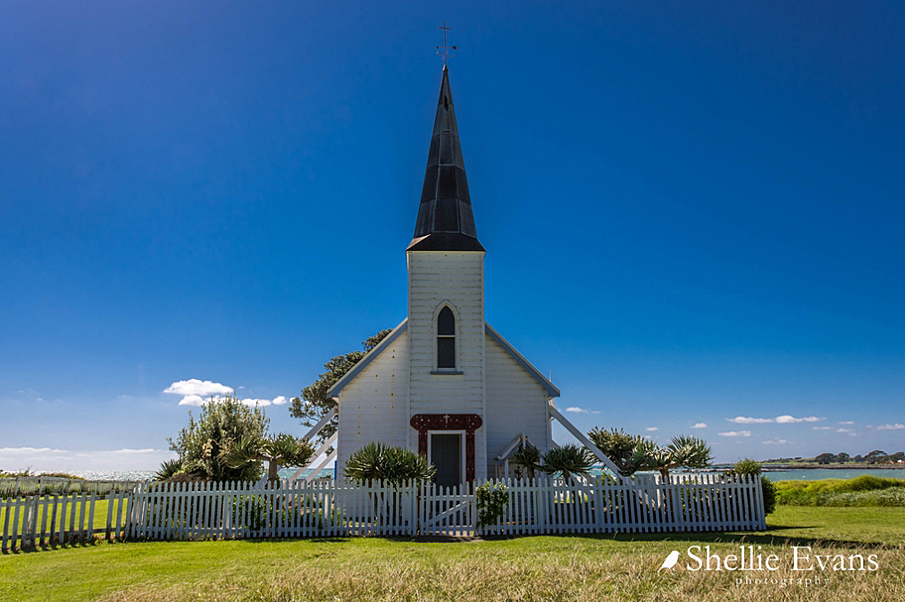
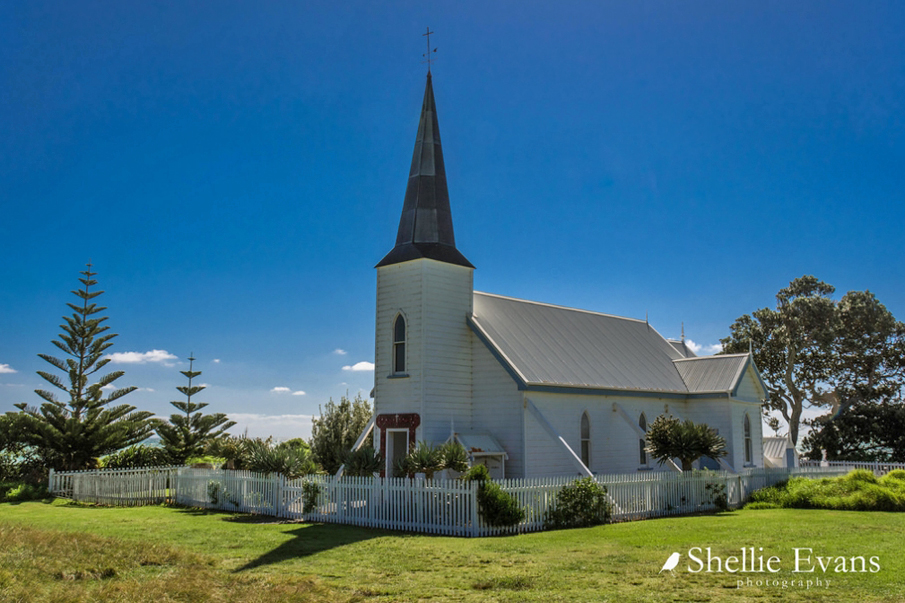
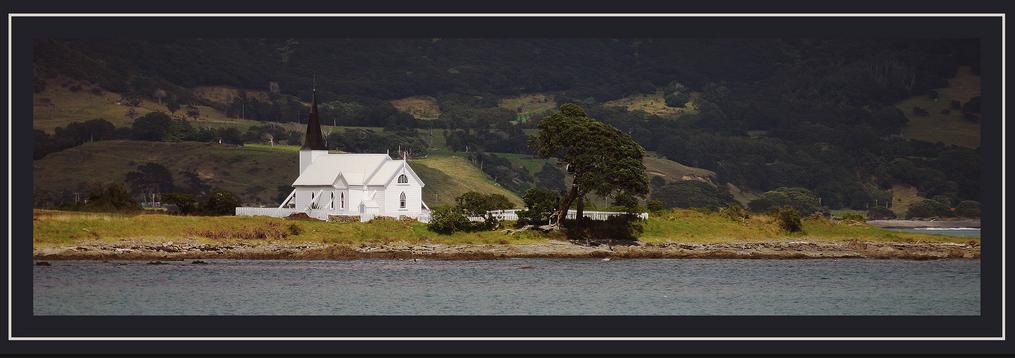
ARCHITECTURAL QUALITY: This church is of particular interest because its designer had no training as an architect but he produced a finely proportioned building with simple yet attractive detailing in the Gothic tradition. The centrally placed tower over the entrance with its broach spire is particularly striking and coupled with its superb siting make this a significant rural ecclesiastical design. TOWNSCAPE/LANDMARK VALUE: Superbly sited on a small prominentary, Christ Church can be seen from some distance as a lone building close to two Norfolk Island pines and surrounded by a picket fence. It is a landmark that is both striking and picturesque.
Why is this place significant?
Historic Significance
Historical Significance or Value This church makes a valuable contribution to the legacy of Maori Christian churches in New Zealand. Duncan Stirling and the church he designed are appropriate symbols of the strong relationship between the Maori and Christian religion.
Physical Significance
ARCHITECTURAL QUALITY: This church is of particular interest because its designer had no training as an architect but he produced a finely proportioned building with simple yet attractive detailing in the Gothic tradition. The centrally placed tower over the entrance with its broach spire is particularly striking and coupled with its superb siting make this a significant rural ecclesiastical design. TOWNSCAPE/LANDMARK VALUE: Superbly sited on a small prominentary, Christ Church can be seen from some distance as a lone building close to two Norfolk Island pines and surrounded by a picket fence. It is a landmark that is both striking and picturesque.
Construction Professional
Name
Stirling, Duncan
Type
Architect
Biography
Having received his education in Riverton, Stirling went to Dunedin to work for the Williams Construction Company learning building and carpentry. He was then employed on the East Coast by Sydney Williams. He built the woolsheds at Kuhirerere Station and Pakihiroa Station for Williams, and soon established a good reputation as a carpenter. He went on to build many residences around Tolaga Bay. He also built a church in Tolaga Bay which led to similar contracts in Tokomaru Bay, Tuatui, Mangahanea, Te Horo, Torere, Tikitiki and Te Araroa. One of his most attractive church buildings is Christ Church, Raukokore (1894-95). Stirling also built the old Kemp homestead at Ruatoria and the Ngai Tai meeting house "Te Roroku" which stood at Torere.
Construction Details
Start Year
1916
startYearCirca
Type
Addition
Description
Floor added
Start Year
1968
Type
Modification
Description
Buttresses and steel rod collar tie added
Start Year
1895
Type
Original Construction
Construction Materials
Continuous concrete foundations. Wooden piles of puriri or totara. Timber framing with rough-sawn rusticated weatherboards. Trussed roof clad with diagonal asbestos slates. Raking buttresses.
Notable Features
The broach spire The cloth banners The communion rail
Construction Professional
Name
Stirling, Duncan
Type
Architect
Biography
Having received his education in Riverton, Stirling went to Dunedin to work for the Williams Construction Company learning building and carpentry. He was then employed on the East Coast by Sydney Williams. He built the woolsheds at Kuhirerere Station and Pakihiroa Station for Williams, and soon established a good reputation as a carpenter. He went on to build many residences around Tolaga Bay. He also built a church in Tolaga Bay which led to similar contracts in Tokomaru Bay, Tuatui, Mangahanea, Te Horo, Torere, Tikitiki and Te Araroa. One of his most attractive church buildings is Christ Church, Raukokore (1894-95). Stirling also built the old Kemp homestead at Ruatoria and the Ngai Tai meeting house "Te Roroku" which stood at Torere.
Construction Details
Start Year
1916
startYearCirca
Type
Addition
Description
Floor added
Start Year
1968
Type
Modification
Description
Buttresses and steel rod collar tie added
Start Year
1895
Type
Original Construction
Construction Materials
Continuous concrete foundations. Wooden piles of puriri or totara. Timber framing with rough-sawn rusticated weatherboards. Trussed roof clad with diagonal asbestos slates. Raking buttresses.
Notable Features
The broach spire The cloth banners The communion rail
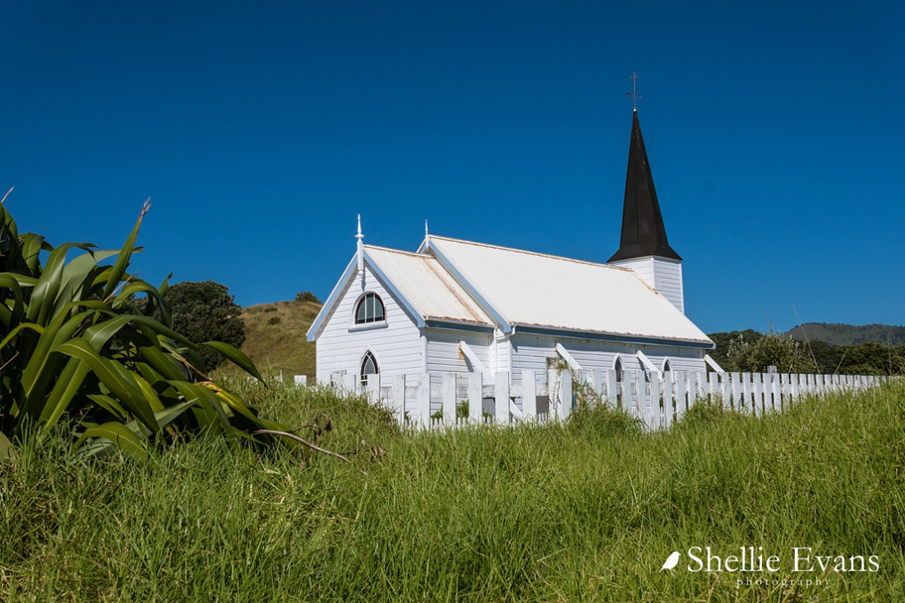
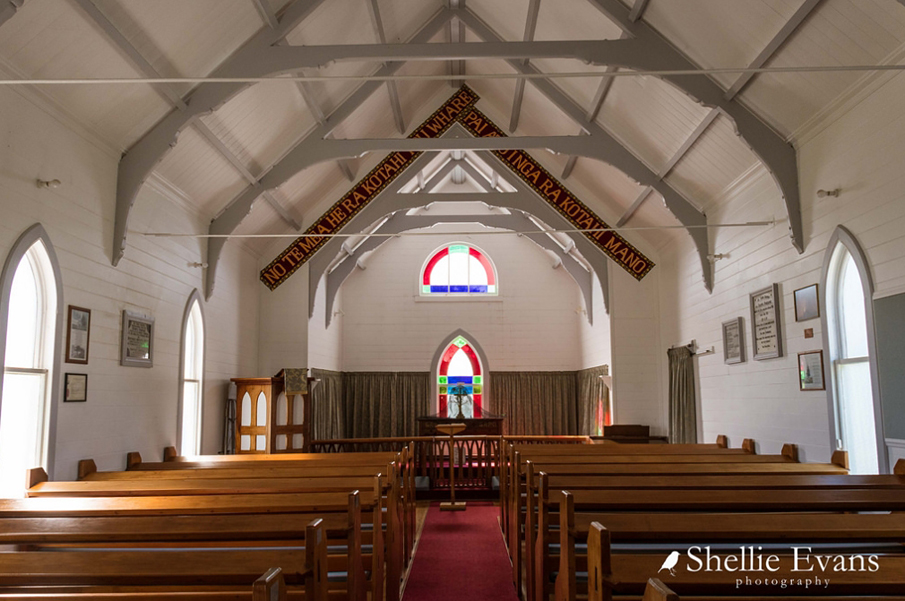
ARCHITECT/ENGINEER OR DESIGNER: Duncan STIRLING ( Architect) Hiram and Valentine SAVAGE (Builders) ARCHITECTURAL DESCRIPTION This is a simple Gothic church. The entrance porch is in the base of the central square tower. The tower ends above the ridge line and is capped with a broach spire. Single, frosted, lancet windows are arranged on each side of the church and in the tower. In the chancel behind the altar is a lancet window with brightly stained glass and above it an unusual semi-circular window with clear glass. The exposed site has necessitated raking buttresses. The interior has attractive timber trusses with curved knee braces to the bottom cord. There are steel tie rods below the cord. The interior lining is horizontal boarding. The communion rail has an unusual balustrade while the entrance to the chancel has sloping banners with Maori text. MODIFICATIONS: c1916 Floor added 1968 Buttresses and steel rod collar tie added
ARCHITECT/ENGINEER OR DESIGNER: Duncan STIRLING ( Architect) Hiram and Valentine SAVAGE (Builders) ARCHITECTURAL DESCRIPTION This is a simple Gothic church. The entrance porch is in the base of the central square tower. The tower ends above the ridge line and is capped with a broach spire. Single, frosted, lancet windows are arranged on each side of the church and in the tower. In the chancel behind the altar is a lancet window with brightly stained glass and above it an unusual semi-circular window with clear glass. The exposed site has necessitated raking buttresses. The interior has attractive timber trusses with curved knee braces to the bottom cord. There are steel tie rods below the cord. The interior lining is horizontal boarding. The communion rail has an unusual balustrade while the entrance to the chancel has sloping banners with Maori text. MODIFICATIONS: c1916 Floor added 1968 Buttresses and steel rod collar tie added
Historical and Associated Iwi / Hapū / Whānau
Information Sources
Stirling, 1980
E Stirling and A Salmond, Eruera : the teachings of a Maori elder, Wellington, 1980
Wilson, 1984
J Wilson (compiler), AA Book of New Zealand Historic Places, Lansdowner Press, Auckland 1984
Other Information
This historic place was registered under the Historic Places Act 1980. This report includes the text from the original Building Classification Committee report considered by the NZHPT Board at the time of registration. Please note that entry on the New Zealand Heritage List/Rarangi Korero identifies only the heritage values of the property concerned, and should not be construed as advice on the state of the property, or as a comment of its soundness or safety, including in regard to earthquake risk, safety in the event of fire, or insanitary conditions.
Historical and Associated Iwi / Hapū / Whānau
Information Sources
Stirling, 1980
E Stirling and A Salmond, Eruera : the teachings of a Maori elder, Wellington, 1980
Wilson, 1984
J Wilson (compiler), AA Book of New Zealand Historic Places, Lansdowner Press, Auckland 1984
Other Information
This historic place was registered under the Historic Places Act 1980. This report includes the text from the original Building Classification Committee report considered by the NZHPT Board at the time of registration. Please note that entry on the New Zealand Heritage List/Rarangi Korero identifies only the heritage values of the property concerned, and should not be construed as advice on the state of the property, or as a comment of its soundness or safety, including in regard to earthquake risk, safety in the event of fire, or insanitary conditions.
Current Usages
Uses: Religion
Specific Usage: Church
Former Usages
General Usage: Religion
Specific Usage: Church
Themes
Of Significance to Maori
Current Usages
Uses: Religion
Specific Usage: Church
Former Usages
General Usage: Religion
Specific Usage: Church
Themes
Of Significance to Maori
Location
Get the latest heritage news, features and events delivered
straight to your inbox.
