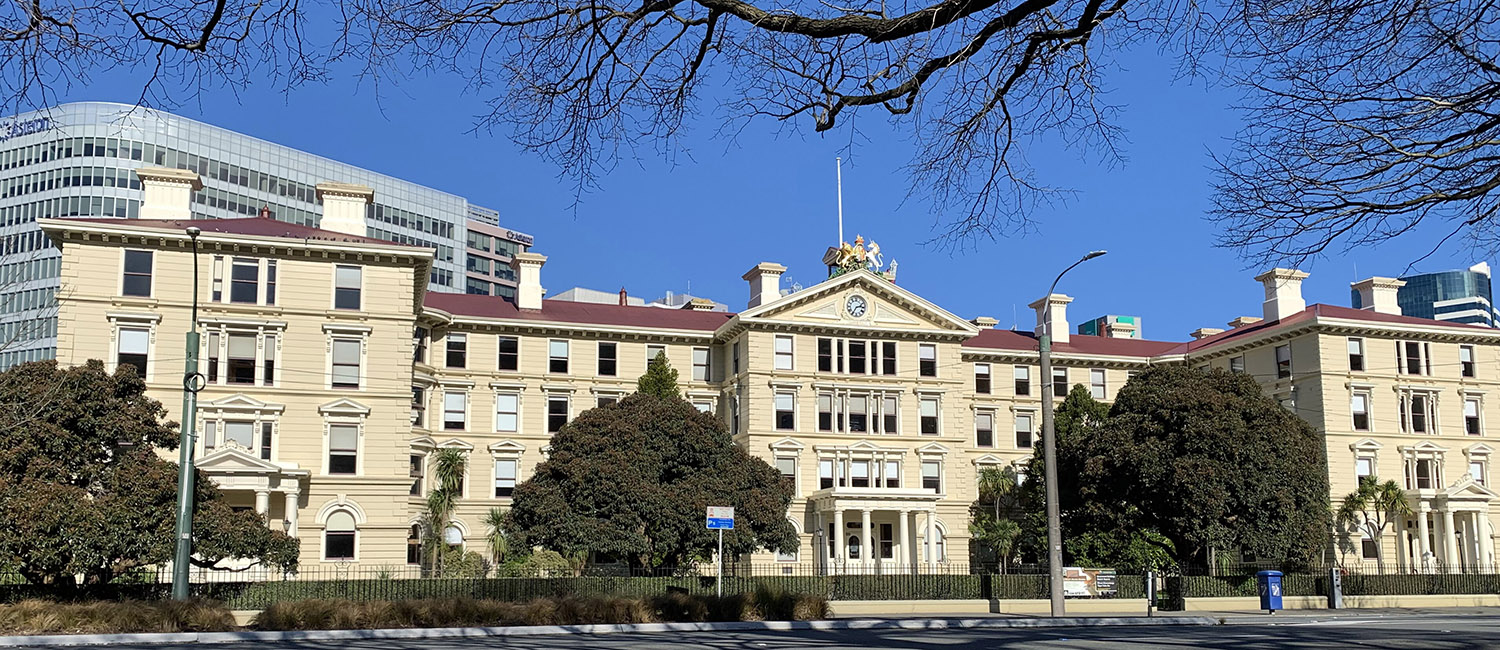
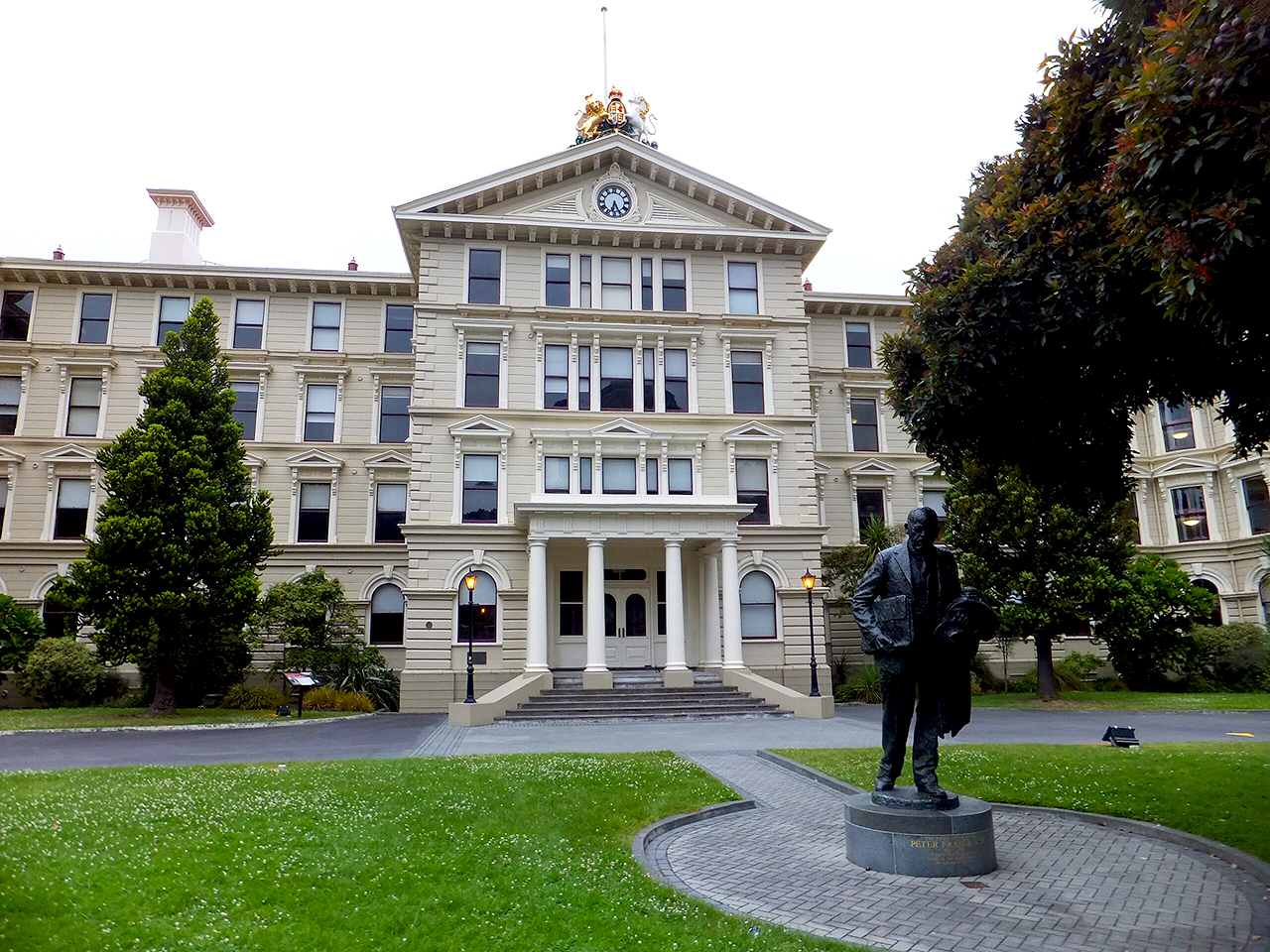
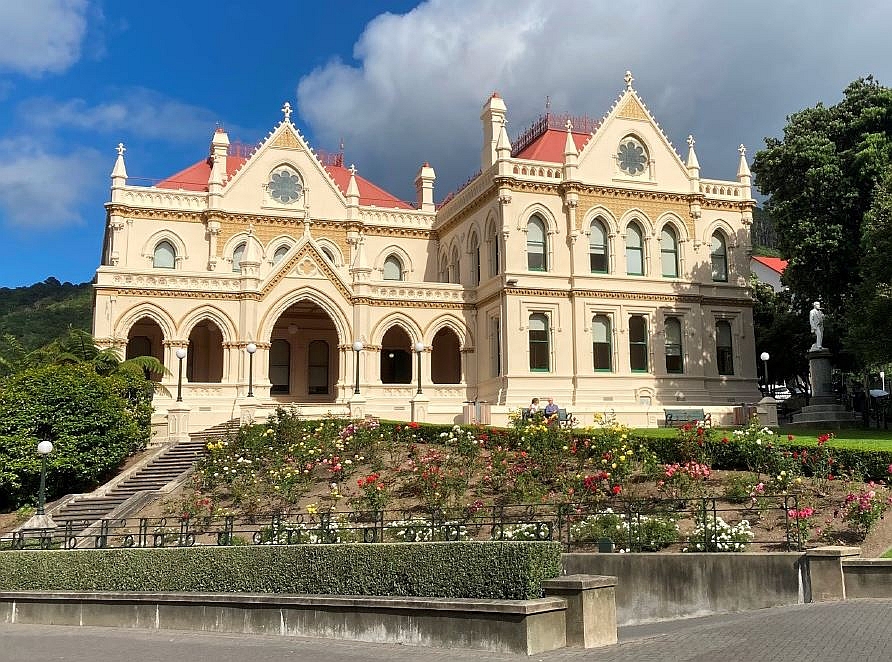
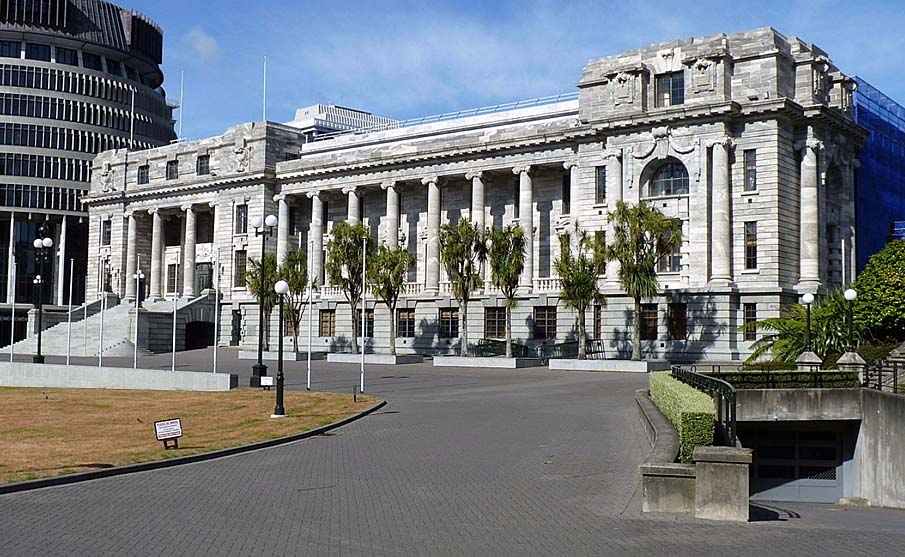
Located at the north end of Lambton Quay, Wellington, Government Building (Former) is one of New Zealand's most significant historic buildings. The iconic wooden structure with its grandiose façade is an integral feature of Wellington’s cityscape and is nationally and internationally recognised for its physical, historic, and cultural heritage values. Completed in 1877 it has significant historic associations with the New Zealand Government and the public service in Wellington, and with figures prominent in New Zealand’s political history. It is unique in New Zealand and rare internationally for its remarkable use of timber construction for a large-scale government building and is considered an exceptionally fine example of the Italianate Palazzo style for an office building. Its rarity is due to its authenticity, despite the number of alterations it has undergone, and for the extensive retention of original Kauri.
The renowned Polynesian navigator Kupe first explored the Wellington area during his voyage to Aotearoa from Hawaiki, the ancestral homeland of Māori. It is generally accepted that the first people to permanently occupy the Wellington area were the Whātonga people of Hawke’s Bay. Tara, son of Whātonga, travelled south from the Mahia peninsula and established a settlement at what came to be known as Te Whanganui-a-Tara, the great harbour of Tara. He founded the Ngai Tara iwi, which over time became known as Ngāti Ira. Several migrations from Taranaki occurred between 1824 and 1834, with Taranaki hapū settling around the coastline of Te Whanganui-a-Tara and into Wairarapa. In 1824 Ngāti Mutunga that established Pipitea Pā on the shores of the harbour, with extensive cultivations surrounding it and overlooking the foreshore which was rich in the pipi beds that gave Pipitea its name.
In 1839 the New Zealand Company purchased the Port Nicholson Block, including the land on which Pipitea Pā stood, promising that in addition to retaining their pā sites one tenth of the purchased land would be reserved in trust for the chiefs who signed the purchase deed. In practice, this promise was not honoured, and although the land on which Government Building (Former) now sits was originally below sea level, and not part of Pipitea Pā, the reclamation of land destroyed the traditional Māori kai moana beds.
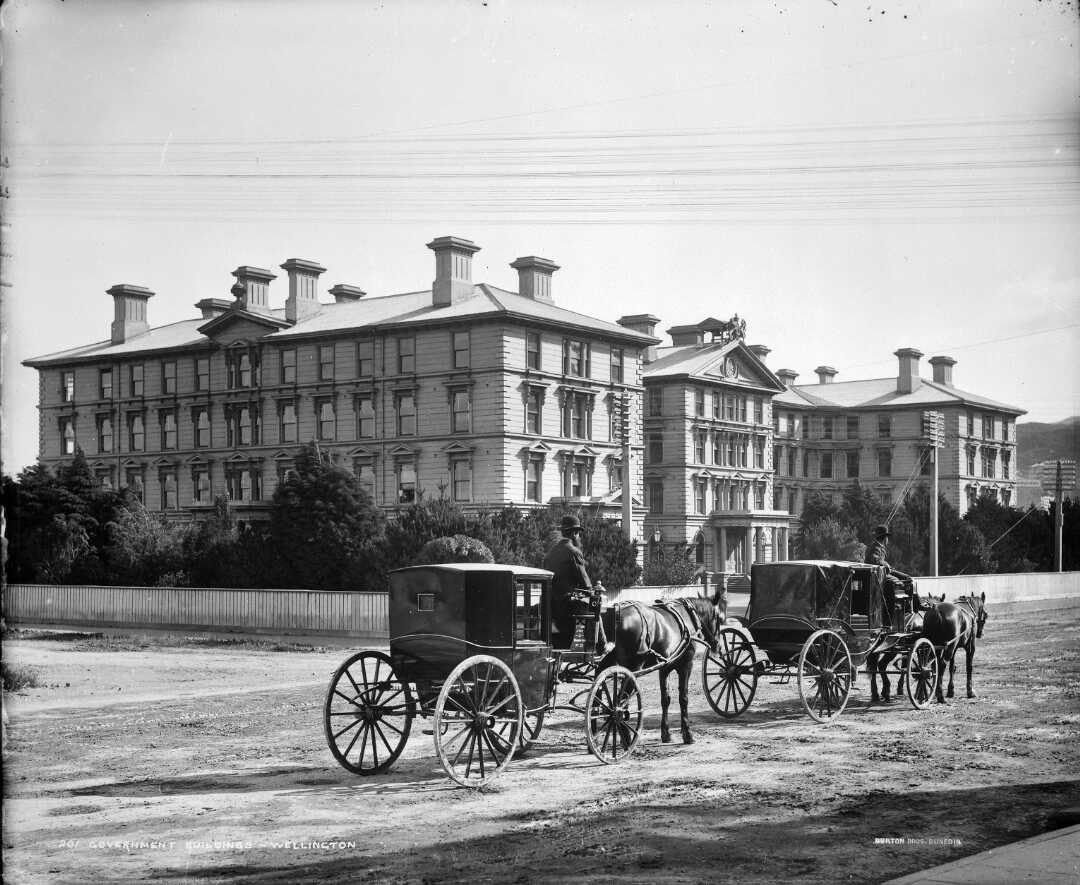
The Wairarapa earthquake of 1855 had caused uplift along the harbour prompting ongoing and sizeable land reclamation along the Wellington waterfront from the 1850s. The burgeoning public service had been swelled by the relocation to Wellington as the seat of government in 1865, and the impending abolition of provincial government. This influx of workers, and the high cost of office rent in the central business district, prompted the Fox ministry to propose a purpose-built government building in the early 1870s. Colonial architect, William Clayton, conceived a design in the Italian Renaissance revival style much-favoured for colonial government buildings at the time. Land along Lambton Quay was reclaimed in 1873 and tenders called for the construction of Clayton’s ambitious design. Although his design was for a concrete building, local contractors Scoular and Archibald won the bid for the less-expensive timber construction in Kauri and Tasmanian hardwood, with pilings in Totara, designed to mimic the look of stone. Construction began in 1874 and took twenty-two months to fully complete. When it opened in 1876, the building housed almost all Wellington-based civil servants and ministers of the Crown.
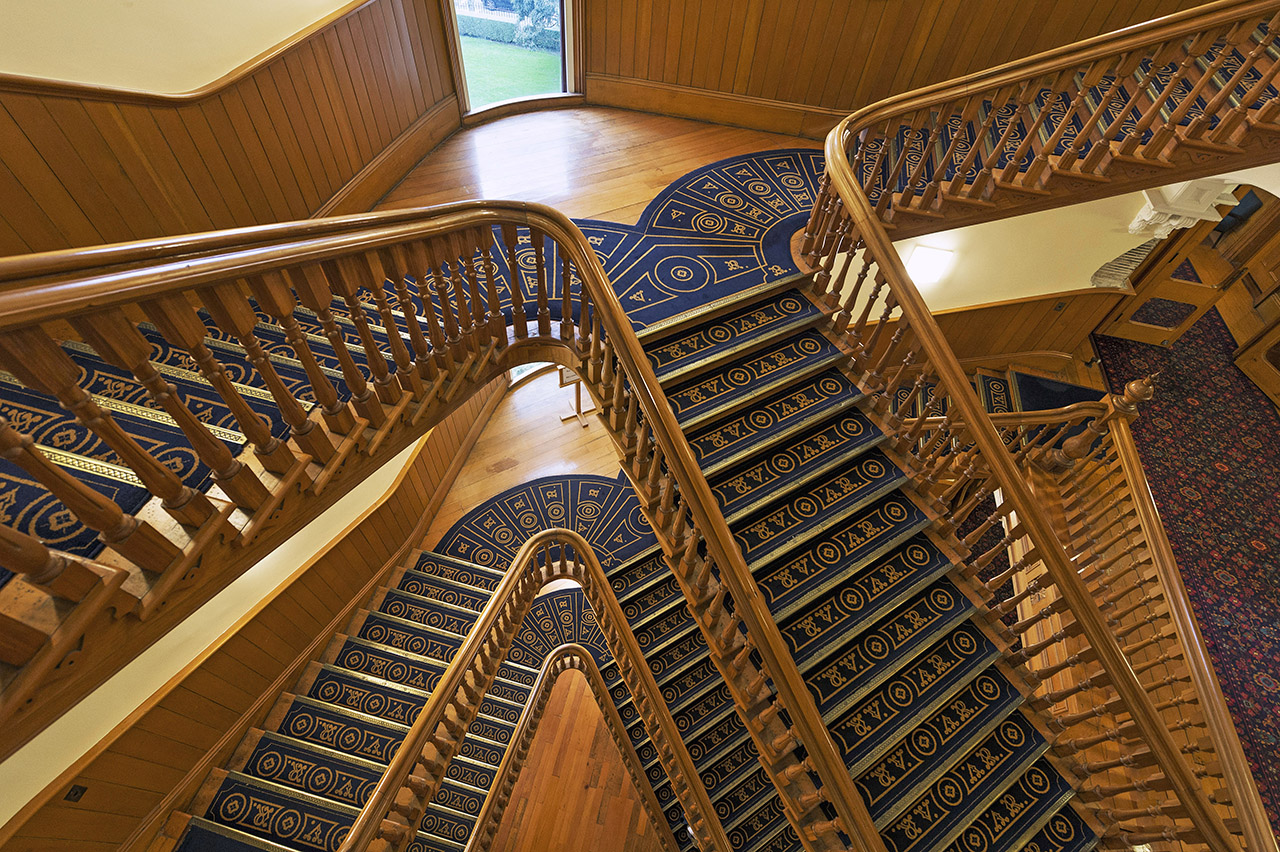
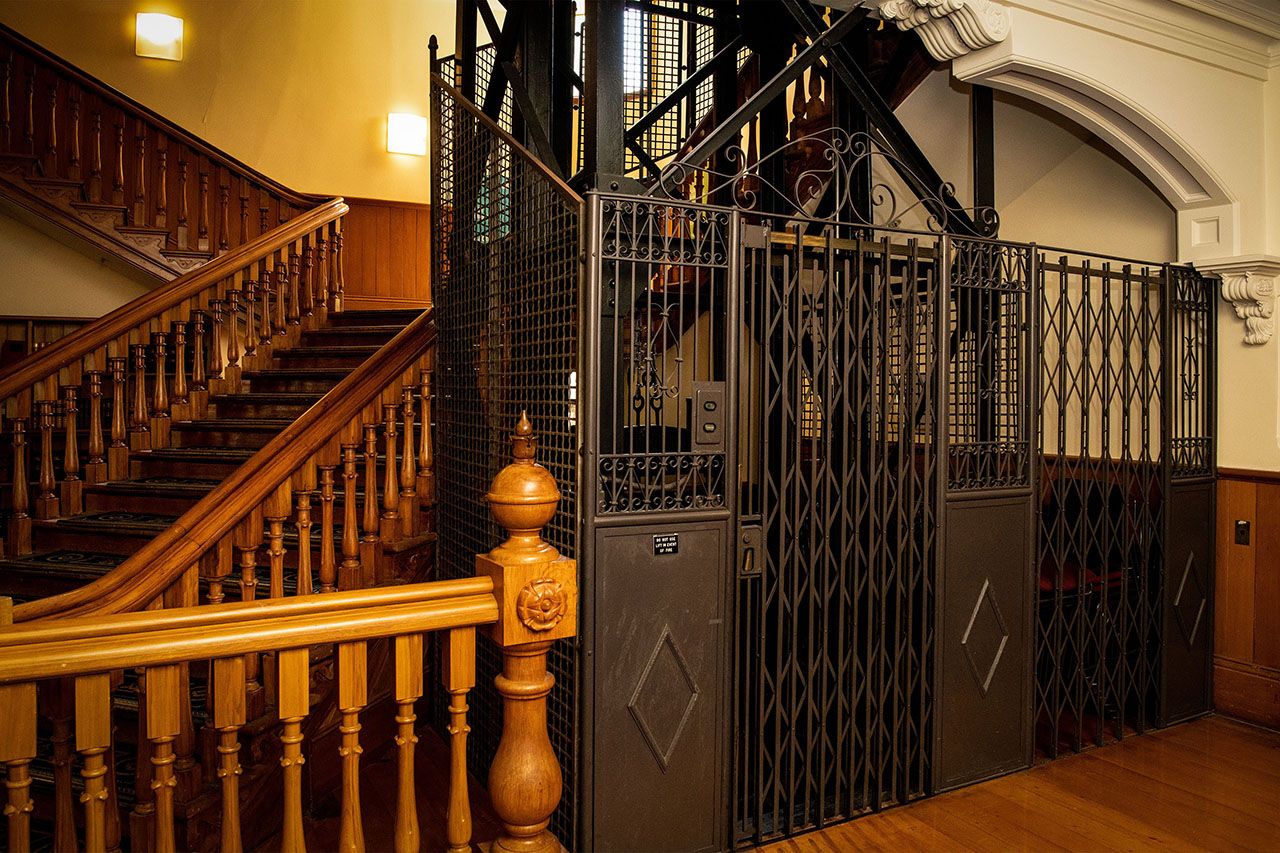
Timber-framed and clad in Kauri weatherboard the huge building was H-shaped in plan, four stories in height, and symmetrical around its main axis. At its completion there were 143 rooms, 342 windows, and 22 chimneys serving 193 fireplaces. The building also boasted four brick strongrooms, eighteen flights of stairs, and two cutting-edge water-powered hydraulic lifts. During the first century of its history the interior of the building was greatly altered, with internal partitions and paint obscuring its original appearance. Additions and renovations were also made to the exterior. The building was extended twice, in 1897 and 1907, however over time, individual government departments outgrew the space and gradually began to vacate until the Education Department became the sole occupant in 1975. By 1990 the building was empty.
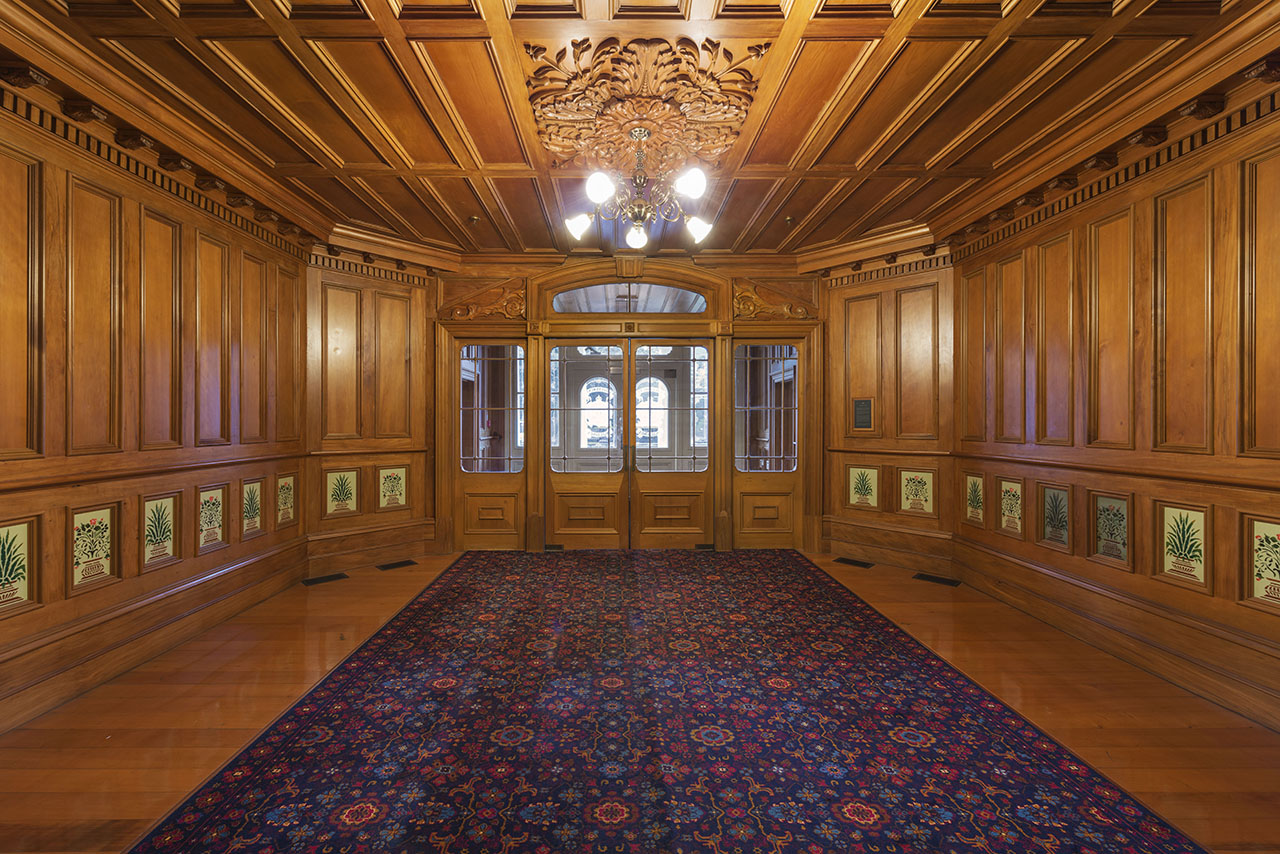
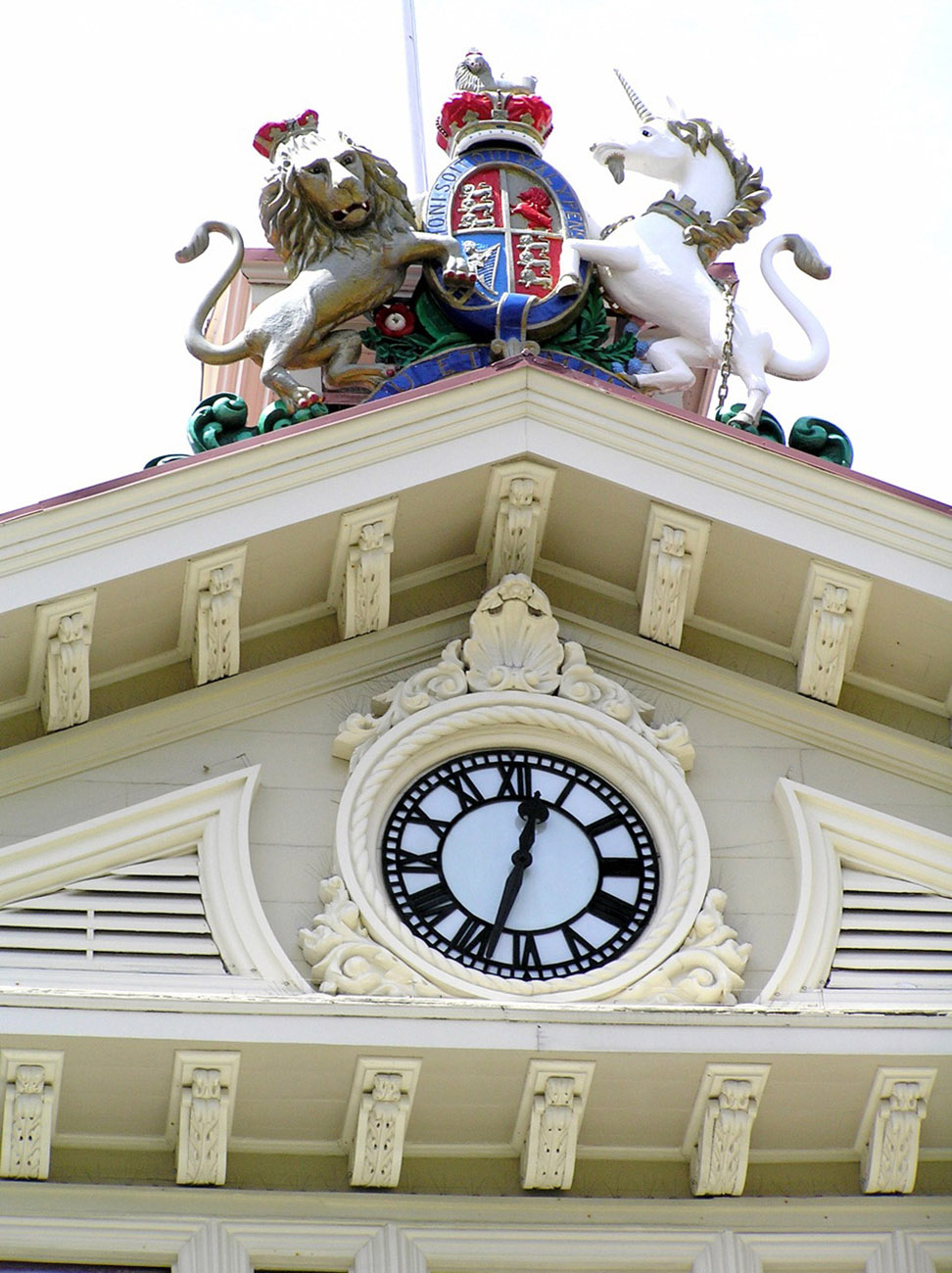
In 1994 a government restoration and conservation program began under the management of the Department of Conservation. The painstaking restoration cost $25 million and was completed early in 1996. Today the building resembles its 1907 appearance, with many original features replicated during the restoration, including chimneys and fireplaces (purely decorative), plaster and timber mouldings, porticos, gates and fences. The original Totara piles were replaced with concrete, and the whole building was strengthened and comprehensively levelled. The Law Faculty of Victoria University of Wellington signed a 50-year tenancy in 1996 and became the building’s new occupants. Now owned by Heritage New Zealand Pouhere Taonga, part of the ground floor and the former Cabinet Room are open to visitors.
The renowned Polynesian navigator Kupe first explored the Wellington area during his voyage to Aotearoa from Hawaiki, the ancestral homeland of Māori. It is generally accepted that the first people to permanently occupy the Wellington area were the Whātonga people of Hawke’s Bay. Tara, son of Whātonga, travelled south from the Mahia peninsula and established a settlement at what came to be known as Te Whanganui-a-Tara, the great harbour of Tara. He founded the Ngai Tara iwi, which over time became known as Ngāti Ira. Several migrations from Taranaki occurred between 1824 and 1834, with Taranaki hapū settling around the coastline of Te Whanganui-a-Tara and into Wairarapa. In 1824 Ngāti Mutunga that established Pipitea Pā on the shores of the harbour, with extensive cultivations surrounding it and overlooking the foreshore which was rich in the pipi beds that gave Pipitea its name.
In 1839 the New Zealand Company purchased the Port Nicholson Block, including the land on which Pipitea Pā stood, promising that in addition to retaining their pā sites one tenth of the purchased land would be reserved in trust for the chiefs who signed the purchase deed. In practice, this promise was not honoured, and although the land on which Government Building (Former) now sits was originally below sea level, and not part of Pipitea Pā, the reclamation of land destroyed the traditional Māori kai moana beds.
The Wairarapa earthquake of 1855 had caused uplift along the harbour prompting ongoing and sizeable land reclamation along the Wellington waterfront from the 1850s. The burgeoning public service had been swelled by the relocation to Wellington as the seat of government in 1865, and the impending abolition of provincial government. This influx of workers, and the high cost of office rent in the central business district, prompted the Fox ministry to propose a purpose-built government building in the early 1870s. Colonial architect, William Clayton, conceived a design in the Italian Renaissance revival style much-favoured for colonial government buildings at the time. Land along Lambton Quay was reclaimed in 1873 and tenders called for the construction of Clayton’s ambitious design. Although his design was for a concrete building, local contractors Scoular and Archibald won the bid for the less-expensive timber construction in Kauri and Tasmanian hardwood, with pilings in Totara, designed to mimic the look of stone. Construction began in 1874 and took twenty-two months to fully complete. When it opened in 1876, the building housed almost all Wellington-based civil servants and ministers of the Crown.
Timber-framed and clad in Kauri weatherboard the huge building was H-shaped in plan, four stories in height, and symmetrical around its main axis. At its completion there were 143 rooms, 342 windows, and 22 chimneys serving 193 fireplaces. The building also boasted four brick strongrooms, eighteen flights of stairs, and two cutting-edge water-powered hydraulic lifts. During the first century of its history the interior of the building was greatly altered, with internal partitions and paint obscuring its original appearance. Additions and renovations were also made to the exterior. The building was extended twice, in 1897 and 1907, however over time, individual government departments outgrew the space and gradually began to vacate until the Education Department became the sole occupant in 1975. By 1990 the building was empty.
In 1994 a government restoration and conservation program began under the management of the Department of Conservation. The painstaking restoration cost $25 million and was completed early in 1996. Today the building resembles its 1907 appearance, with many original features replicated during the restoration, including chimneys and fireplaces (purely decorative), plaster and timber mouldings, porticos, gates and fences. The original Totara piles were replaced with concrete, and the whole building was strengthened and comprehensively levelled. The Law Faculty of Victoria University of Wellington signed a 50-year tenancy in 1996 and became the building’s new occupants. Now owned by Heritage New Zealand Pouhere Taonga, part of the ground floor and the former Cabinet Room are open to visitors.