DonateMembershipVisit Heritage
  • Tūrangawaewae
    Places
  • Tira Māori
    Māori Heritage
  • Poutairangahia
    Archaeology
  • Rauemi
    Resources
  • Mō Tātou
    About Us
  • New Zealand Heritage List
  • Nominate and submit
  • Explore the List
  • National Historic Landmarks
  • Plaques
  • Rainbow List Project
  • Lost heritage
  • Visit Heritage
  • Our properties
  • Turnbull House Project
  • Collections
  • Shop
  • Tohu Whenua
  • Tira Māori
  • Conserving Māori heritage
  • Marae built heritage
  • Māori heritage on the List
  • Hinemihi—Te Hokinga Mai
  • What is archaeology?
  • Is there a site on my property?
  • What are my legal requirements?
  • Affecting an archaeological site
  • Declaring an archaeological site
  • Archaeology FAQs
  • Archaeology Digital Library
  • Archaeology guidelines and templates
  • Resources
  • Funding
  • Publications
  • Sustainable management guides
  • Disaster recovery
  • Podcasts & digital resources
  • Education Hub
  • Conservation plans
  • About
  • Board
  • Māori Heritage Council
  • Senior Staff
  • Offices
  • Contact us
  • Careers
  • Covenants
  • Fast-track
  • Corporate documents
  • Currently consulting on
  • Our submissions
  • News
  • Covid-19 response
Quick links
Rārangi Kōrero | The List
Explore the List
National Historic Landmarks
Ngā Manawhenua o Aotearoa me ōna Kōrero Tūturu
Quick links
Tapuwae
A Vision for Places of Māori Heritage
Funding for Māori Heritage
Resources
Quick links
Archaeological Authority Portal
Applying for an archaeological authority
Archaeology FAQs
Browse the most frequently asked questions about archaeological authorities and the archaeological process.
Quick links
Quick links
News
News Keep up to date with Heritage New Zealand Pouhere Taonga
Membership
Membership Find out more and sign up today
DonateMembershipVisit Heritage
  • Tūrangawaewae
    Places
  • Tira Māori
    Māori Heritage
  • Poutairangahia
    Archaeology
  • Rauemi
    Resources
  • Mō Tātou
    About Us
  • New Zealand Heritage List
  • Nominate and submit
  • Explore the List
  • National Historic Landmarks
  • Plaques
  • Rainbow List Project
  • Lost heritage
  • Visit Heritage
  • Our properties
  • Turnbull House Project
  • Collections
  • Shop
  • Tohu Whenua
  • Tira Māori
  • Conserving Māori heritage
  • Marae built heritage
  • Māori heritage on the List
  • Hinemihi—Te Hokinga Mai
  • What is archaeology?
  • Is there a site on my property?
  • What are my legal requirements?
  • Affecting an archaeological site
  • Declaring an archaeological site
  • Archaeology FAQs
  • Archaeology Digital Library
  • Archaeology guidelines and templates
  • Resources
  • Funding
  • Publications
  • Sustainable management guides
  • Disaster recovery
  • Podcasts & digital resources
  • Education Hub
  • Conservation plans
  • About
  • Board
  • Māori Heritage Council
  • Senior Staff
  • Offices
  • Contact us
  • Careers
  • Covenants
  • Fast-track
  • Corporate documents
  • Currently consulting on
  • Our submissions
  • News
  • Covid-19 response
Quick links
Rārangi Kōrero | The List
Explore the List
National Historic Landmarks
Ngā Manawhenua o Aotearoa me ōna Kōrero Tūturu
Quick links
Tapuwae
A Vision for Places of Māori Heritage
Funding for Māori Heritage
Resources
Quick links
Archaeological Authority Portal
Applying for an archaeological authority
Archaeology FAQs
Browse the most frequently asked questions about archaeological authorities and the archaeological process.
Quick links
Quick links
News
News Keep up to date with Heritage New Zealand Pouhere Taonga
Membership
Membership Find out more and sign up today
  • Places
  • Nominate and submit
  • National Historic Landmarks
  • Places
  • Nominate and submit
  • National Historic Landmarks
  • Tira Māori
  • Conserving Māori heritage
  • Marae built heritage
  • Tira Māori
  • Conserving Māori heritage
  • Marae built heritage
  • Archaeological authorities
  • Archaeology Digital Library
  • Archaeological authorities
  • Archaeology Digital Library
  • All resources
  • Publications
  • Funding
  • All resources
  • Publications
  • Funding
  • FAQs
  • FAQs
Follow us on:
Places
  • Places
  • Nominate and submit
  • National Historic Landmarks
Tira Māori
  • Tira Māori
  • Conserving Māori heritage
  • Marae built heritage
Archaeology
  • Archaeological authorities
  • Archaeology Digital Library
Resources
  • All resources
  • Publications
  • Funding
FAQs
  • FAQs
Follow us on
HomePrivacyTerms and conditionsAbout this site
© Heritage New Zealand Pouhere Taonga 2026.
 
Acker's Cottage

Leask Bay Road, Harrold Bay, RAKIURA / STEWART ISLAND

Public

Historic Place Category 1

List No. 396

Quick links:
List GalleryLocationDetails
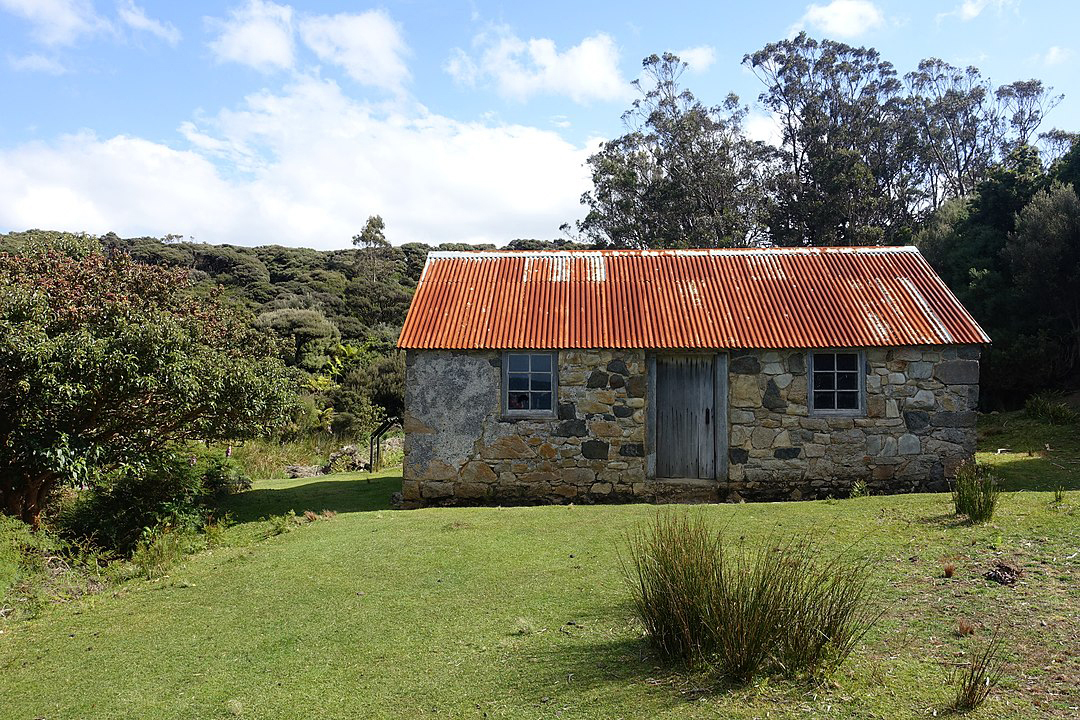
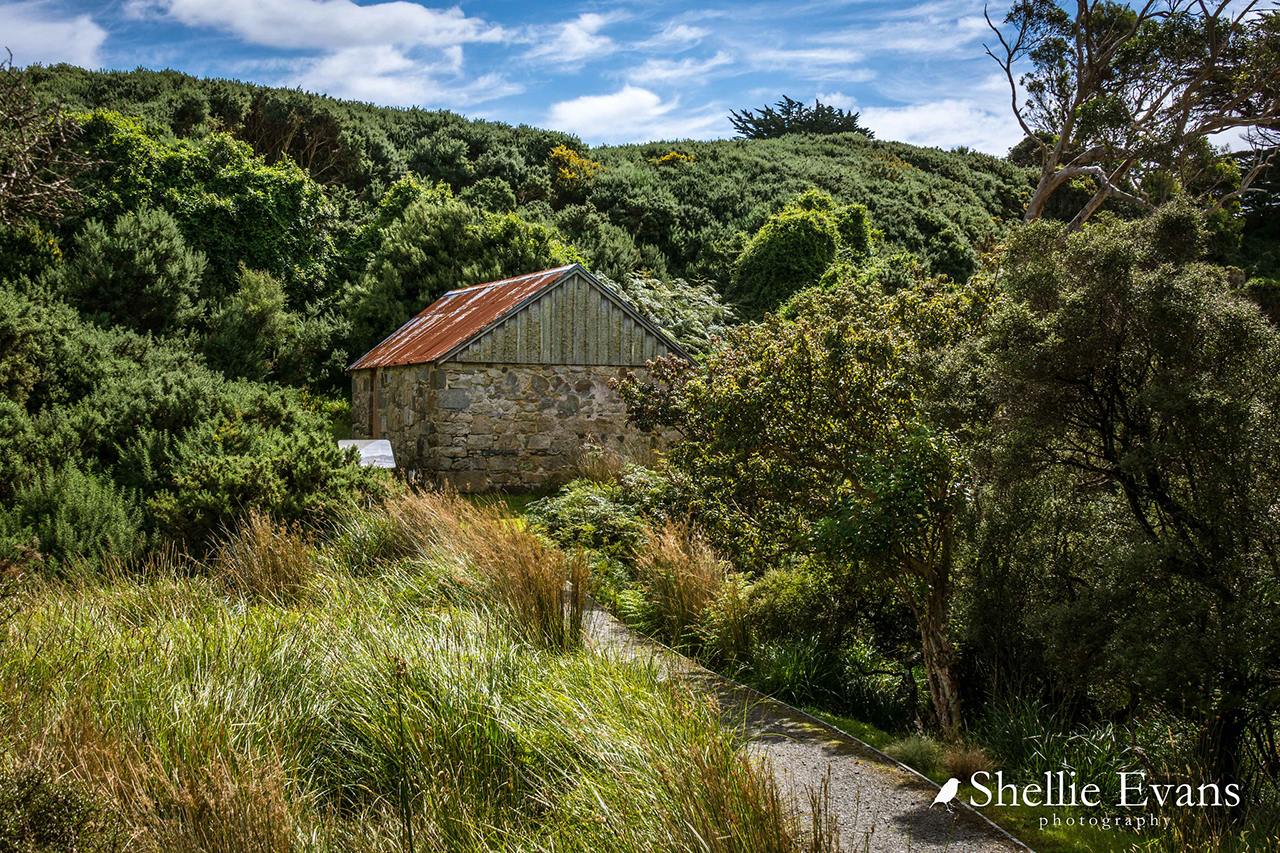
The earliest stone house on Rakiura and one of the oldest buildings in the South Island, this small single gabled cottage was built by Captain Lewis Acker (1815?-1884) in 1834-5 and is situated on a grassy bank in the picturesque Harrold Bay on Acker’s Point, Stewart Island / Rakiura. Today the building is unoccupied and maintained as a visitor site; it has historic and architectural significance.

Kōrero tuko ihu (oral traditions) tell us Māui pulled up a stone as an anchor for his canoe which he named Te Puka o Te Waka o Māui. This land became known as Rakiura, often translated as ‘glowing skies’ through the story of Te Rakitāmau who blushed fiercely when his request to marry the daughter of a Kāti Māmoe chief was refused. A number of permanent and temporary settlements were established on the island and were occupied by Waitaha, Ngāti Mamoe and Ngāi Tahu in succession. Through conflict and alliance, they have merged in the whakapapa of Ngāi Tahu Whānui. In 1834, Captain Lewis Acker, an American whaler, purchased 600 acres from Chief Tuhawaiki. Acker gave his name to Acker's Point where he cleared land for cultivation around the stone cottage he built there in 1834-35, possibly in imitation of his home in New York State.

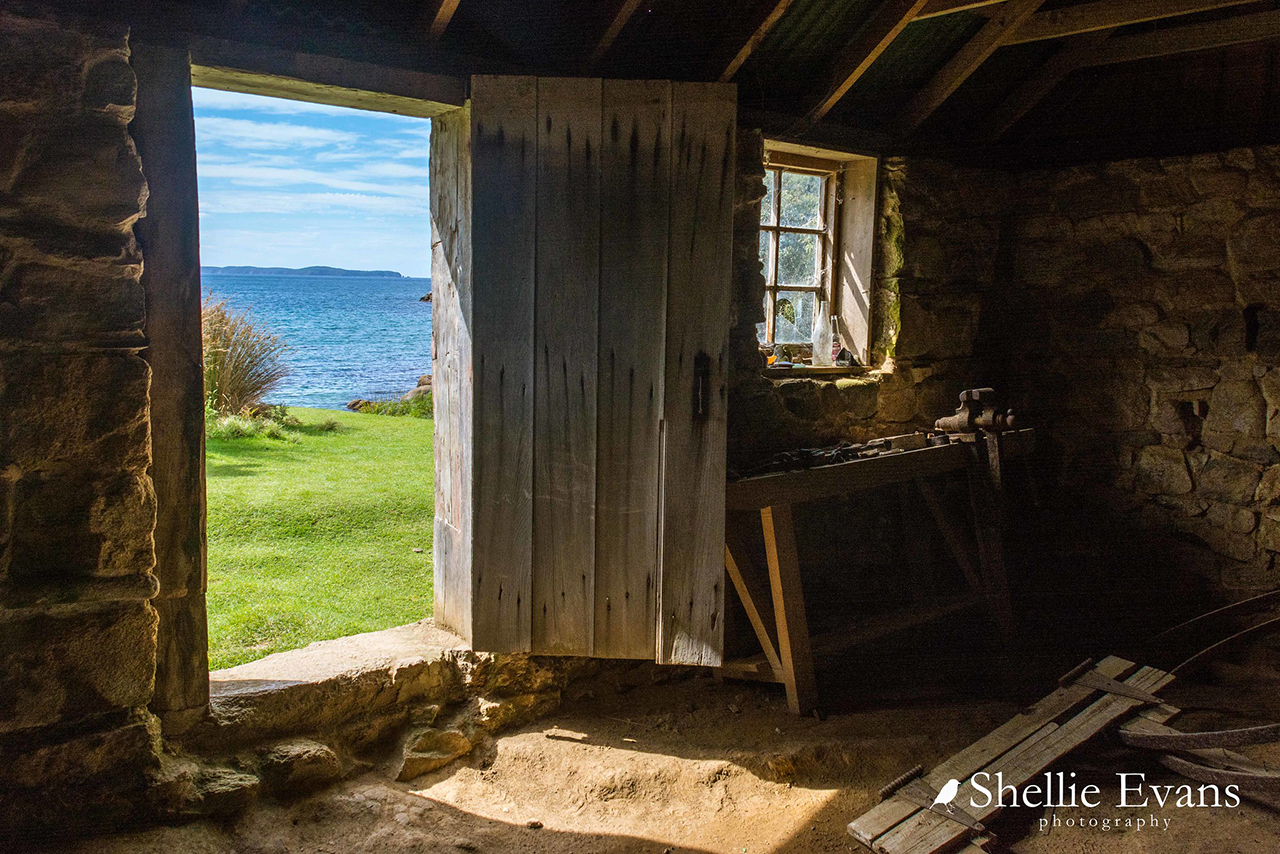
The cottage is a simple rectangular building built mainly from local granite with gable ends and two windows flanking a central door in the north elevation. Acker set the stones in what appears to be a sandy clay-based lime mortar. The north elevation has a significant area of render made with crushed shells. The interior of the building measures 6.9m x 3.5m and had an ingenious tier of five bunks for the Acker’s nine children; short near the floor and long near the roof. Archaeologists report the roof was likely to have been a thick brown slate, later replaced by iron. Restoration undertaken in the late 1980s revealed the door frames were made of adze cut timber.

Acker made his name as a boat-builder, farmer and coastal-trader. He married Mari Pī (Mary Pui), the daughter of Kaniua and Hinepipiwai who had fled Kaiapoi from Te Rauparaha, in 1844. The Acker family resided in the cottage until around 1856 when Acker became the first pilot at New River Head and also at Bluff. Acker lost his claim to the land when Rakiura/Stewart Island was purchased by the Crown in 1864 and moved to Ōtātara, Invercargill where he farmed until his death. Following the Acker family’s departure, Captain James Harrold (1813-1898) and his wife Agnes moved into the area. Harrold Bay is named for them. The Harrolds used Acker’s cottage as a smithy, storerooms, brewery, and later as a boat-building workshop. They went on to establish the nearby Traveller’s Rest (List No. 2563) in the 1870s. At some stage the western wall of the cottage was partially demolished, potentially to provide a largely doorway for boat building; the stones were used to construct the interior paving for heating pitch (c 1890). The smithy followed this and was situated at the eastern end of the cottage though there is no evidence of either a domestic or industrial fireplace. The cottage was later owned by Newton Julius Jensen (1870-1921) and Mary Elizabeth Leask (1871-1949) from 1912. The timbers of the current structure are relatively modern which suggests at least minor re-structuring of the roof. The current covering has frequently been replaced after storms. Acker’s Cottage was extensively restored in late 1988 with the works funded by Heritage New Zealand. It is clearly signposted on the walking track from the end of Leask Bay Road.
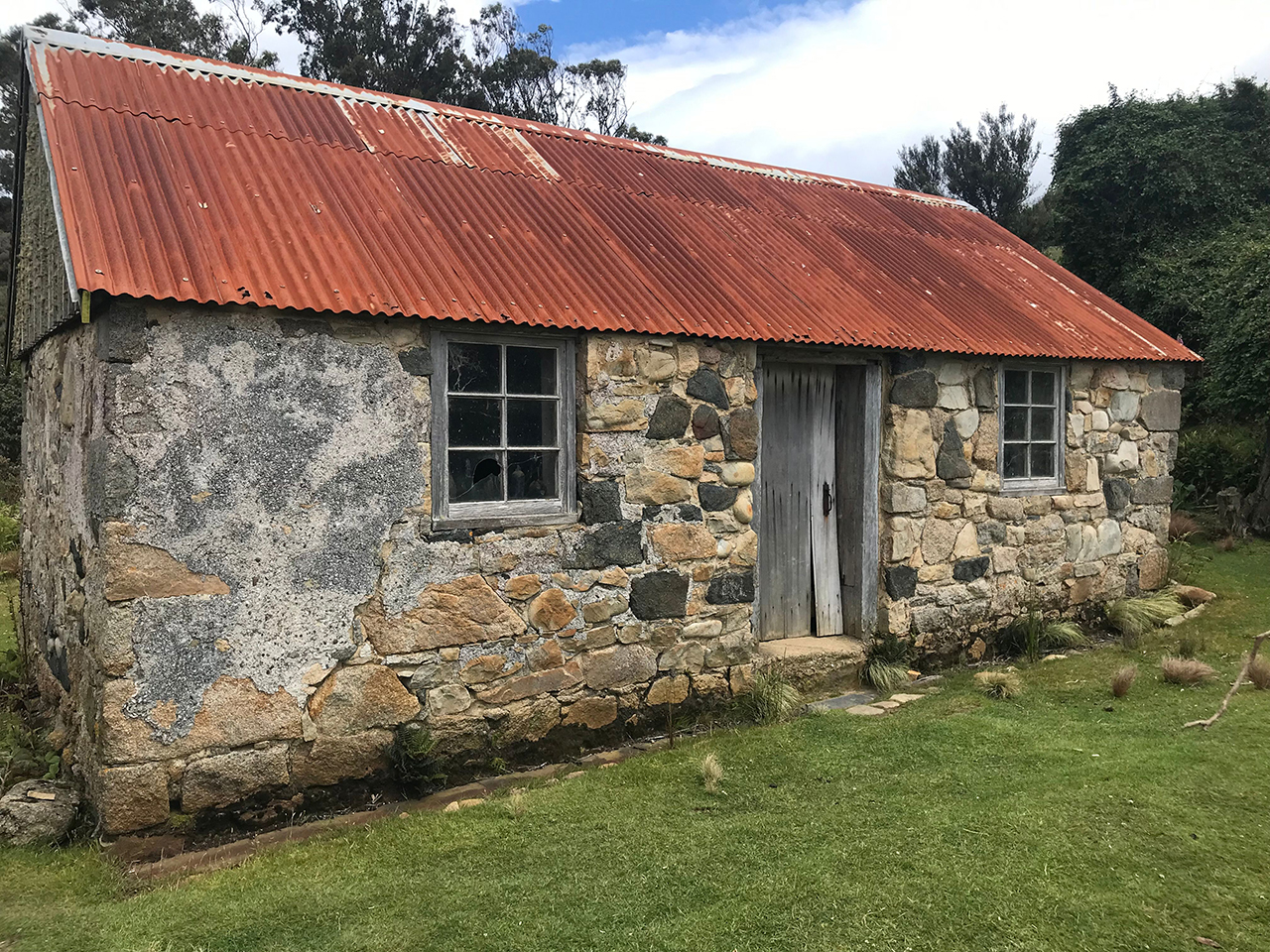
Acker's Cottage, Harrold Bay, Rakiura/Stewart Island. CC BY Licence | Sharna Bailey | 02/02/2024 | Sharna Bailey
Acker's Cottage, Harrold Bay, Rakiura/Stewart Island. Image courtesy of commons.wikimedia.org | Schwede66 | 24/12/2018 | Schwede66 - Wikimedia Commons
Acker's Cottage, Harrold Bay, Rakiura/Stewart Island. Image courtesy of www.flickr.com | Shellie Evans – flyingkiwigirl | 03/03/2016 | Shellie Evans
Acker's Cottage, Harrold Bay, Rakiura/Stewart Island. Interior. Image courtesy of www.flickr.com | Shellie Evans – flyingkiwigirl | 03/03/2016 | Shellie Evans
Acker's Cottage, Harrold Bay, Rakiura/Stewart Island. CC BY Licence | Sharna Bailey | 02/02/2024 | Sharna Bailey
Acker's Cottage, Harrold Bay, Rakiura/Stewart Island. Image courtesy of commons.wikimedia.org | Schwede66 | 24/12/2018 | Schwede66 - Wikimedia Commons
Acker's Cottage, Harrold Bay, Rakiura/Stewart Island. Image courtesy of www.flickr.com | Shellie Evans – flyingkiwigirl | 03/03/2016 | Shellie Evans
Acker's Cottage, Harrold Bay, Rakiura/Stewart Island. Interior. Image courtesy of www.flickr.com | Shellie Evans – flyingkiwigirl | 03/03/2016 | Shellie Evans

List Entry Information

Overview

Status
Listed

List Entry Status
Historic Place Category 1

Access
Able to Visit

List Number
396

Date Entered
26th November 1987

Date of Effect
26th November 1987

City/District Council
Southland District

Region
Southland Region

Extent of List Entry

Extent includes part of the land described as Lot 2 Deposited Plan 549944 (RT 946822), part of the land described as Legal Road, Southland Land District, and the building known as Acker's Cottage thereon, and its fixtures and fittings.

Legal description

Lot 2 Deposited Plan 549944 (RT 946822), Southland Land District

Location Description

Southland District Council records indicate that Acker's Cottage is likely to straddle the legal boundary between the road reserve (unformed) and Sec 36 Blk I Paterson SD. Southland District Council also records the 'Parent Property' as 67 Leask Bay Road. Acker's Cottage does not have its own street number. Sec 36 Blk I Paterson SD (RT SL12A/21), Legal Road, Southland Land District

Detailed List Entry
Significance

Historic Significance

Historical Significance or Value Lewis Acker was the harpooner on a whaler and came from Charleston, New York State. His parents had a stone house and he wanted his house to be stone also. The granite boulders of Stewart Island did not suit him and he found a chalky slabby rock at Oreti Beach which he quarried and carried across Foveaux Strait as ballast in his boat. The design is not a standard butt and ben with the door in the middle of a long wall. Instead the door deems to have been in the middle of an end wall and the chimney at the other end. The Reverend Wohlers baptised four of Acker's children in 1856. Acker gave his name to Acker's Point where he cleared land for cultivation around his cottage. The cottage was subsequently owned by Captain Harrold and then Newton Julius Jensen.

Physical Significance

ARCHITECTURAL SIGNIFICANCE A very early vernacular building. SPECIAL FEATURES One of the earliest stone houses in the South Island.

Construction Professional

Name

Lew Simpson

Type

Architect

Biography

No biography is currently available for this construction professional

Name

Terry McDowell

Type

Builder

Biography

No biography is currently available for this construction professional

Name

Acker, Lewis

Type

Builder

Biography

Lewis Acker was an early whaler and not significant as an architect.

Construction Details

Start Year

1834

Type

Original Construction

Type

Modification

Description

Roof replaced with corrugated iron

Period

Unknown

Start Year

1988

Type

Reconstruction

Description

Major restoration work undertaken

Construction Materials

Materials used were a chalky slabby stone from Oreti for the walls. Acker set the stones in clay and pointed them with mortar made from crushed shells. The interior had an ingenious tier of five bunks for the children, short near the floor and long near the roof. At present the roof is corrugated iron but it is thought that Acker may have originally used large slate.

Physical Description

ARCHITECTURAL DESCRIPTION (Style) A simple barn shaped building with a door in one short end, a stone chimney at the other end and three windows in the front wall. MODIFICATIONS The roof and part of one wall had been replaced with corrugated iron. The chimney no longer projects above the roof line and the whole building is dilapidated. It is about to be restored.

Reference

Public NZAA Number

E48/8

Completion Date

24th November 2020

Report Written By

Sarah Gallagher

Information Sources

Porter, 1983

Frances Porter (ed), Historic Buildings of Dunedin, South Island, Methuen, Auckland, 1983.

Peat, 2010

Neville Peat., Rakiura Heritage: A Stewart Island History and Guide to Historic Sites, Department of Conservation, Invercargill, 2010.

Williams, 1986

Lynette Williams., Report to the New Zealand Historic Places Trust on the Archaeological Investigation of Ackers Cottage, Stewart Island, April 1986 https://dl.heritage.org.nz/greenstone3/library/sites/heritage-nz/collect/pdf-reports/index/assoc/Williams/2.dir/Williams2.pdf

Howard, 1940

Basil Howard., Rakiura: A History of Stewart Island, A.H. & A.W. Reed, Dunedin, 1940.

Report Written By

A fully referenced upgrade report is available on request from the Otago and Southland Area Office of Heritage New Zealand. This historic place was registered under the Historic Places Act 1980. This report includes the text from the original Building Classification Committee report considered by the NZHPT Board at the time of registration. Please note that entry on the New Zealand Heritage List/Rarangi Korero identifies only the heritage values of the property concerned, and should not be construed as advice on the state of the property, or as a comment of its soundness or safety, including in regard to earthquake risk, safety in the event of fire, or insanitary conditions.

Further Information

Current Usages

Uses: Civic Facilities

Specific Usage: Historic Property

Former Usages

General Usage:: Accommodation

Specific Usage: House

General Usage:: Accommodation

Specific Usage: Shed/store - Residential out-building

General Usage:: Manufacturing

Specific Usage: Boat Building

General Usage:: Manufacturing

Specific Usage: Brewery

General Usage:: Trade

Specific Usage: Blacksmith

Themes

Web Links

Overview

Status

Listed

List Entry Status

Historic Place Category 1

Access

Able to Visit

List Number

396

Date Entered

26th November 1987

Date of Effect

26th November 1987

City/District Council

Southland District

Region

Southland Region

Extent of List Entry

Extent includes part of the land described as Lot 2 Deposited Plan 549944 (RT 946822), part of the land described as Legal Road, Southland Land District, and the building known as Acker's Cottage thereon, and its fixtures and fittings.

Legal description

Lot 2 Deposited Plan 549944 (RT 946822), Southland Land District

Location Description

Southland District Council records indicate that Acker's Cottage is likely to straddle the legal boundary between the road reserve (unformed) and Sec 36 Blk I Paterson SD. Southland District Council also records the 'Parent Property' as 67 Leask Bay Road. Acker's Cottage does not have its own street number. Sec 36 Blk I Paterson SD (RT SL12A/21), Legal Road, Southland Land District

Status

Listed

List Entry Status

Historic Place Category 1

Access

Able to Visit

List Number

396

Date Entered

26th November 1987

Date of Effect

26th November 1987

City/District Council

Southland District

Region

Southland Region

Extent of List Entry

Extent includes part of the land described as Lot 2 Deposited Plan 549944 (RT 946822), part of the land described as Legal Road, Southland Land District, and the building known as Acker's Cottage thereon, and its fixtures and fittings.

Legal description

Lot 2 Deposited Plan 549944 (RT 946822), Southland Land District

Location Description

Southland District Council records indicate that Acker's Cottage is likely to straddle the legal boundary between the road reserve (unformed) and Sec 36 Blk I Paterson SD. Southland District Council also records the 'Parent Property' as 67 Leask Bay Road. Acker's Cottage does not have its own street number. Sec 36 Blk I Paterson SD (RT SL12A/21), Legal Road, Southland Land District

Significance

Why is this place significant?

Historic Significance

Historical Significance or Value Lewis Acker was the harpooner on a whaler and came from Charleston, New York State. His parents had a stone house and he wanted his house to be stone also. The granite boulders of Stewart Island did not suit him and he found a chalky slabby rock at Oreti Beach which he quarried and carried across Foveaux Strait as ballast in his boat. The design is not a standard butt and ben with the door in the middle of a long wall. Instead the door deems to have been in the middle of an end wall and the chimney at the other end. The Reverend Wohlers baptised four of Acker's children in 1856. Acker gave his name to Acker's Point where he cleared land for cultivation around his cottage. The cottage was subsequently owned by Captain Harrold and then Newton Julius Jensen.

Physical Significance

ARCHITECTURAL SIGNIFICANCE A very early vernacular building. SPECIAL FEATURES One of the earliest stone houses in the South Island.

Why is this place significant?

Historic Significance

Historical Significance or Value Lewis Acker was the harpooner on a whaler and came from Charleston, New York State. His parents had a stone house and he wanted his house to be stone also. The granite boulders of Stewart Island did not suit him and he found a chalky slabby rock at Oreti Beach which he quarried and carried across Foveaux Strait as ballast in his boat. The design is not a standard butt and ben with the door in the middle of a long wall. Instead the door deems to have been in the middle of an end wall and the chimney at the other end. The Reverend Wohlers baptised four of Acker's children in 1856. Acker gave his name to Acker's Point where he cleared land for cultivation around his cottage. The cottage was subsequently owned by Captain Harrold and then Newton Julius Jensen.

Physical Significance

ARCHITECTURAL SIGNIFICANCE A very early vernacular building. SPECIAL FEATURES One of the earliest stone houses in the South Island.

Construction Information

Construction Professional

Name

Lew Simpson

Type

Architect

Biography

No biography is currently available for this construction professional

Name

Terry McDowell

Type

Builder

Biography

No biography is currently available for this construction professional

Name

Acker, Lewis

Type

Builder

Biography

Lewis Acker was an early whaler and not significant as an architect.

Construction Details

Start Year

1834

Type

Original Construction

Type

Modification

Description

Roof replaced with corrugated iron

Period

Unknown

Start Year

1988

Type

Reconstruction

Description

Major restoration work undertaken

Construction Materials

Materials used were a chalky slabby stone from Oreti for the walls. Acker set the stones in clay and pointed them with mortar made from crushed shells. The interior had an ingenious tier of five bunks for the children, short near the floor and long near the roof. At present the roof is corrugated iron but it is thought that Acker may have originally used large slate.

Construction Professional

Name

Lew Simpson

Type

Architect

Biography

No biography is currently available for this construction professional

Name

Terry McDowell

Type

Builder

Biography

No biography is currently available for this construction professional

Name

Acker, Lewis

Type

Builder

Biography

Lewis Acker was an early whaler and not significant as an architect.

Construction Details

Start Year

1834

Type

Original Construction

Type

Modification

Description

Roof replaced with corrugated iron

Period

Unknown

Start Year

1988

Type

Reconstruction

Description

Major restoration work undertaken

Construction Materials

Materials used were a chalky slabby stone from Oreti for the walls. Acker set the stones in clay and pointed them with mortar made from crushed shells. The interior had an ingenious tier of five bunks for the children, short near the floor and long near the roof. At present the roof is corrugated iron but it is thought that Acker may have originally used large slate.

Physical Description

ARCHITECTURAL DESCRIPTION (Style) A simple barn shaped building with a door in one short end, a stone chimney at the other end and three windows in the front wall. MODIFICATIONS The roof and part of one wall had been replaced with corrugated iron. The chimney no longer projects above the roof line and the whole building is dilapidated. It is about to be restored.

ARCHITECTURAL DESCRIPTION (Style) A simple barn shaped building with a door in one short end, a stone chimney at the other end and three windows in the front wall. MODIFICATIONS The roof and part of one wall had been replaced with corrugated iron. The chimney no longer projects above the roof line and the whole building is dilapidated. It is about to be restored.

Reference

Historical and Associated Iwi / Hapū / Whānau

Public NZAA Number

E48/8

Completion Date

24th November 2020

Report Written By

Sarah Gallagher

Information Sources

Porter, 1983

Frances Porter (ed), Historic Buildings of Dunedin, South Island, Methuen, Auckland, 1983.

Peat, 2010

Neville Peat., Rakiura Heritage: A Stewart Island History and Guide to Historic Sites, Department of Conservation, Invercargill, 2010.

Williams, 1986

Lynette Williams., Report to the New Zealand Historic Places Trust on the Archaeological Investigation of Ackers Cottage, Stewart Island, April 1986 https://dl.heritage.org.nz/greenstone3/library/sites/heritage-nz/collect/pdf-reports/index/assoc/Williams/2.dir/Williams2.pdf

Howard, 1940

Basil Howard., Rakiura: A History of Stewart Island, A.H. & A.W. Reed, Dunedin, 1940.

Other Information

A fully referenced upgrade report is available on request from the Otago and Southland Area Office of Heritage New Zealand. This historic place was registered under the Historic Places Act 1980. This report includes the text from the original Building Classification Committee report considered by the NZHPT Board at the time of registration. Please note that entry on the New Zealand Heritage List/Rarangi Korero identifies only the heritage values of the property concerned, and should not be construed as advice on the state of the property, or as a comment of its soundness or safety, including in regard to earthquake risk, safety in the event of fire, or insanitary conditions.

Historical and Associated Iwi / Hapū / Whānau

Public NZAA Number

E48/8

Completion Date

24th November 2020

Report Written By

Sarah Gallagher

Information Sources

Porter, 1983

Frances Porter (ed), Historic Buildings of Dunedin, South Island, Methuen, Auckland, 1983.

Peat, 2010

Neville Peat., Rakiura Heritage: A Stewart Island History and Guide to Historic Sites, Department of Conservation, Invercargill, 2010.

Williams, 1986

Lynette Williams., Report to the New Zealand Historic Places Trust on the Archaeological Investigation of Ackers Cottage, Stewart Island, April 1986 https://dl.heritage.org.nz/greenstone3/library/sites/heritage-nz/collect/pdf-reports/index/assoc/Williams/2.dir/Williams2.pdf

Howard, 1940

Basil Howard., Rakiura: A History of Stewart Island, A.H. & A.W. Reed, Dunedin, 1940.

Other Information

A fully referenced upgrade report is available on request from the Otago and Southland Area Office of Heritage New Zealand. This historic place was registered under the Historic Places Act 1980. This report includes the text from the original Building Classification Committee report considered by the NZHPT Board at the time of registration. Please note that entry on the New Zealand Heritage List/Rarangi Korero identifies only the heritage values of the property concerned, and should not be construed as advice on the state of the property, or as a comment of its soundness or safety, including in regard to earthquake risk, safety in the event of fire, or insanitary conditions.

Further Information

Current Usages

Uses: Civic Facilities

Specific Usage: Historic Property

Former Usages

General Usage: Accommodation

Specific Usage: House

General Usage: Accommodation

Specific Usage: Shed/store - Residential out-building

General Usage: Manufacturing

Specific Usage: Boat Building

General Usage: Manufacturing

Specific Usage: Brewery

General Usage: Trade

Specific Usage: Blacksmith

Current Usages

Uses: Civic Facilities

Specific Usage: Historic Property

Former Usages

General Usage: Accommodation

Specific Usage: House

General Usage: Accommodation

Specific Usage: Shed/store - Residential out-building

General Usage: Manufacturing

Specific Usage: Boat Building

General Usage: Manufacturing

Specific Usage: Brewery

General Usage: Trade

Specific Usage: Blacksmith

Location

Loading
Related listings
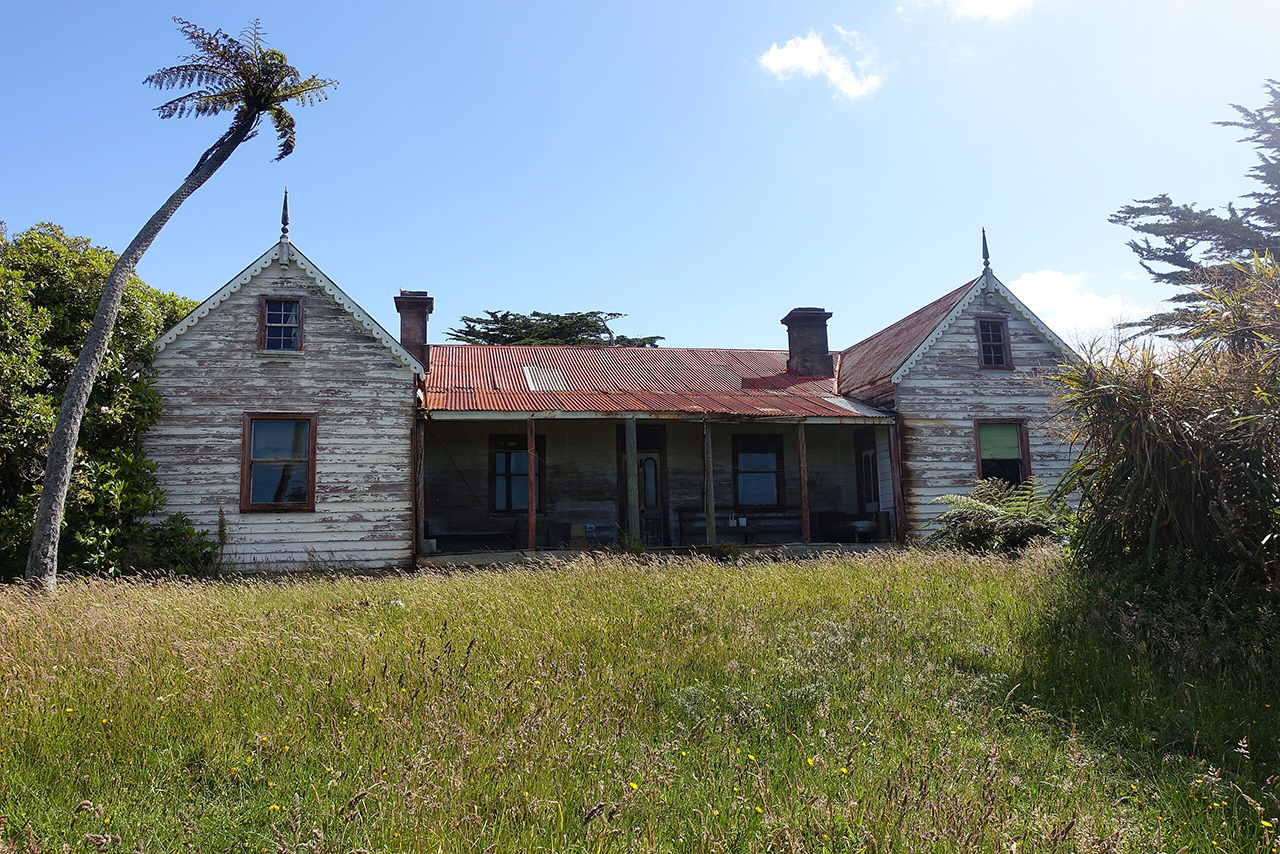
Travellers Rest, Stewart Island / Rakiura. CC BY-SA 4.0 Image courtesy of commons.wikimedia.org
Travellers Rest
Travellers Rest, Stewart Island / Rakiura. CC BY-SA 4.0 Image courtesy of commons.wikimedia.org
Travellers Rest
Stay up to date with Heritage this month