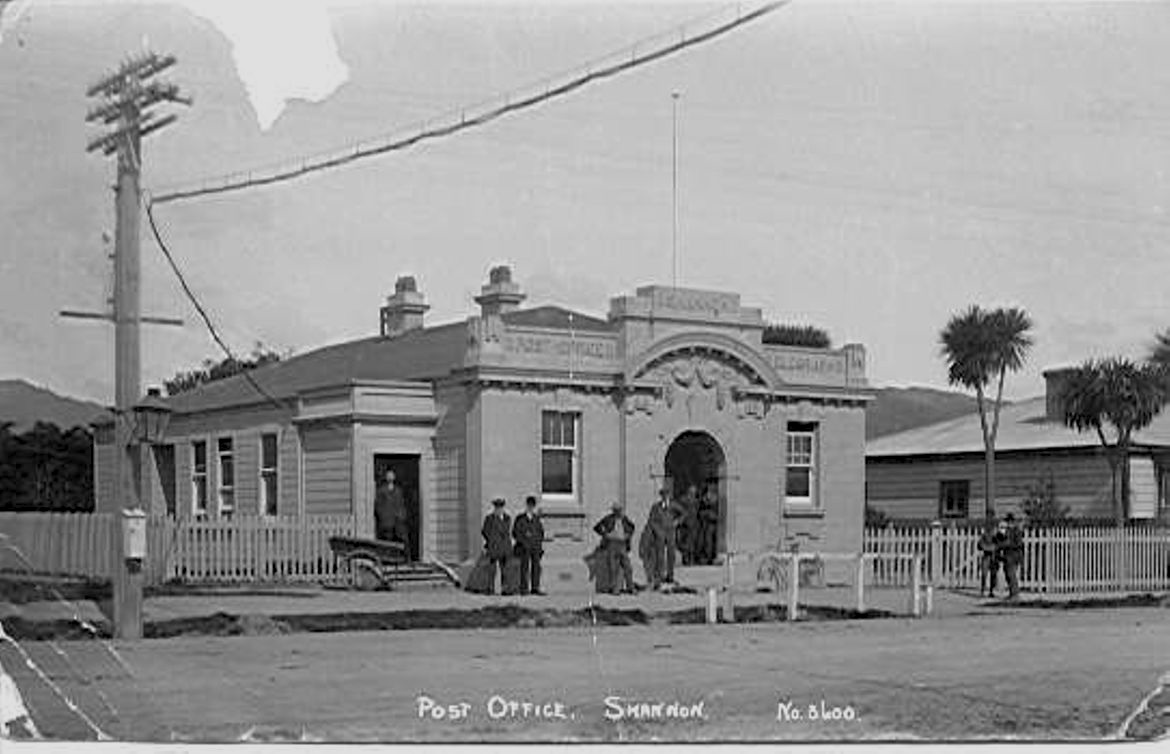
Built in 1911, Shannon’s former Post Office, on the corner of Stout Street and Plimmer Terrace, continued to operate as the area’s postal and telecommunications office until 1992. The Post Office is of historical, social and architectural significance. The building represents the Edwardian baroque architecture of Government Architect John Campbell’s (1857-1942) post offices built by the Public Works Department during the national post office building boom in the early twentieth century. Its history is interwoven with that of the town’s and it was an important centre of communication for the Shannon community for over 80 years.
The growth of Shannon from its founding in 1887 depended on the provision of good postal and telecommunication facilities. The first post office opened in 1887 and was run by part time postmaster George Grey, a shopkeeper who ran the post office from his store. A second permanent post office combined with residence was erected in 1898 at the expense of Octavius Louis Harrison, the postmaster until 1909. Throughout the first decade of the twentieth century Shannon experienced a great population growth due to increasing railway traffic as the main trunk line came closer. It is recorded that in 1900, 25,300 letters were sent from Shannon’s post office, rising to 103,820 in 1910. The surge led to the urgent need of a new postal and telecommunication office, as the existing post office was described as being in an insanitary condition. Shannon’s third post office was opened on the 29 November 1911 by Sir Joseph Ward (1856-1930), New Zealand’s seventeenth Premier, with new postmaster J.T. Martin.
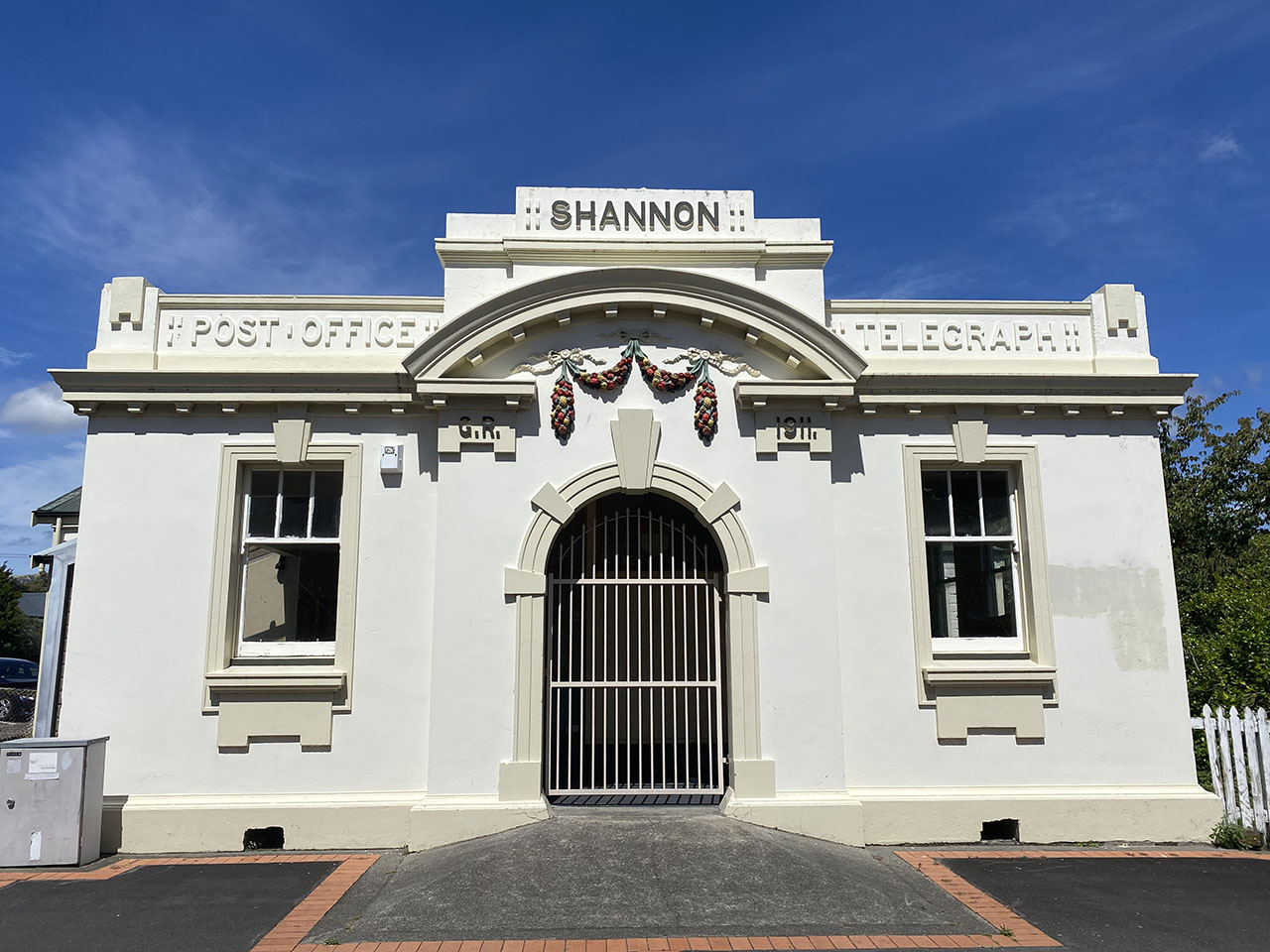
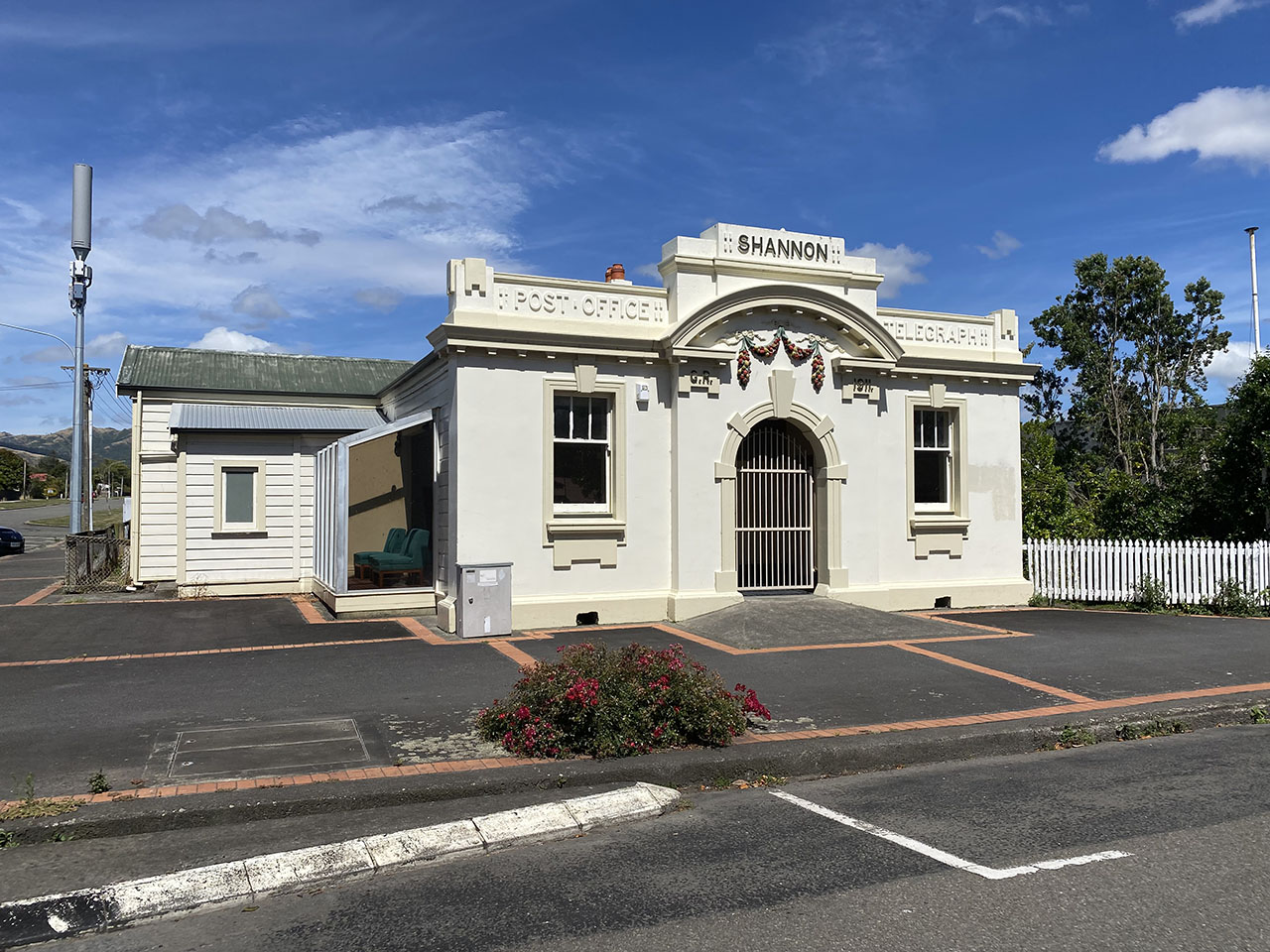
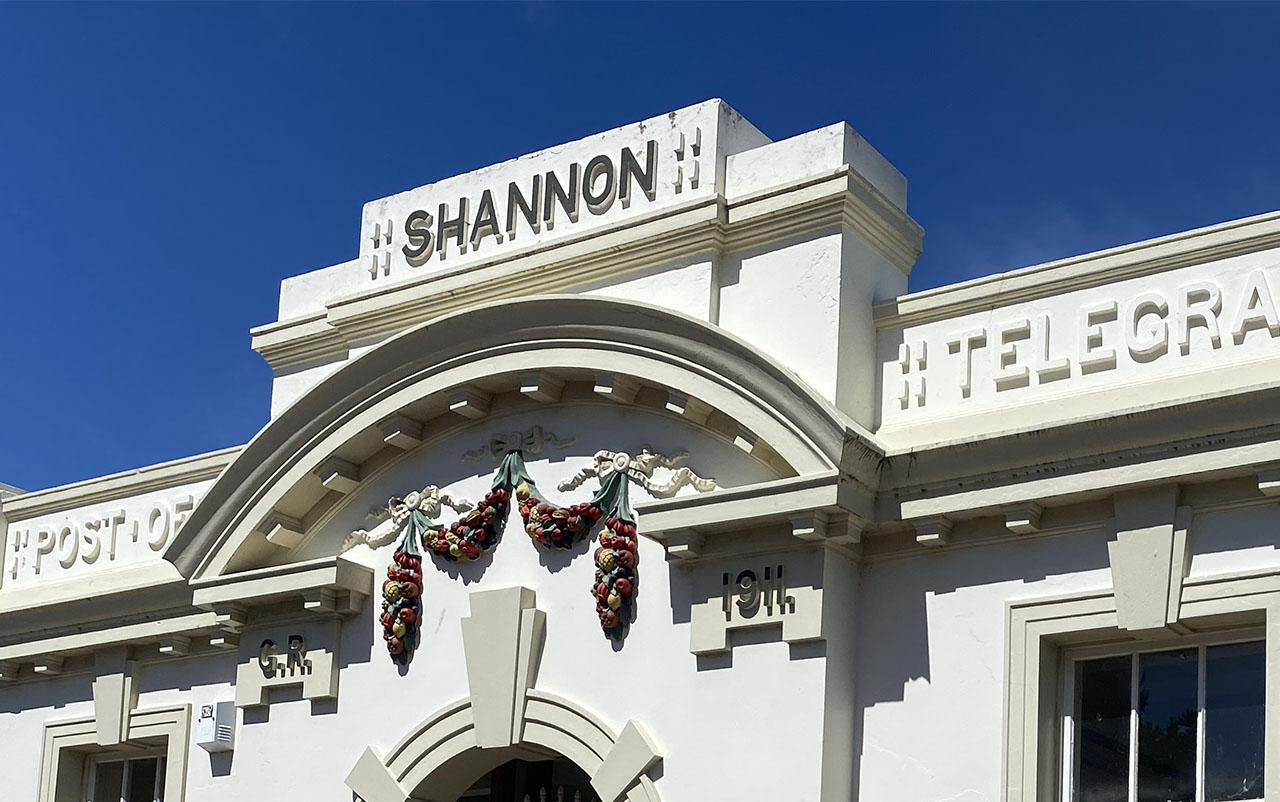
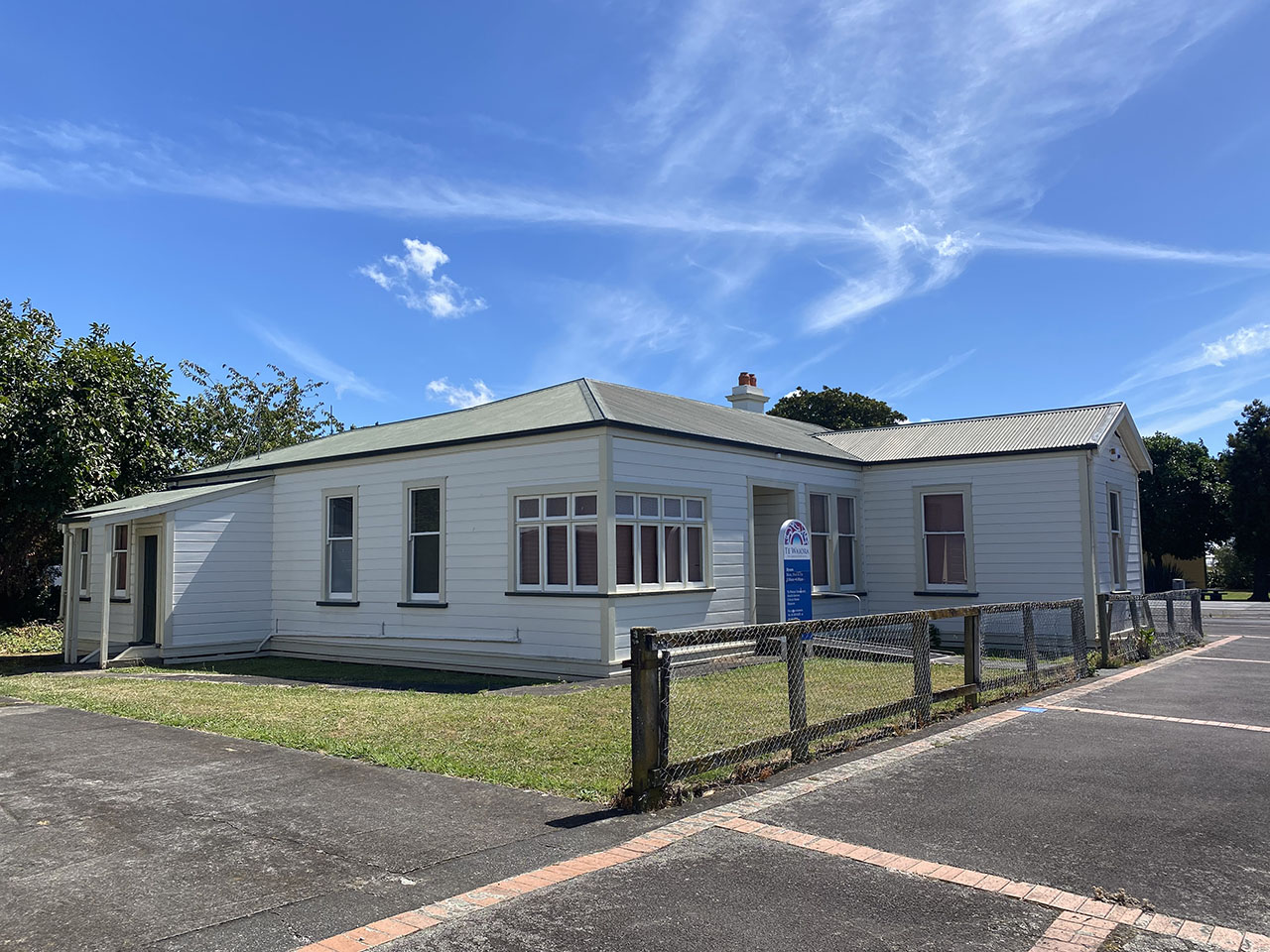
The post office was designed by the Public Works Department under Government Architect John Campbell’s aegis and built by W. Pringle, as part of the national post office boom during the early nineteenth century. Campbell’s post offices were designed in the same range of architectural styles that he used for other government buildings, with predominance in Edwardian baroque. The building was built to the standard style 1QW: a single storey post office and postmaster’s residence made from rimu, matai, and totara, with an iron roof topped by a flagpole. Shannon’s variation had a three-bay masonry façade fronting the main entrance; this was decorated with plaster mouldings of garlands of fruit and foliage. A roman arch with exaggerated keystones led onto a porch at the post office’s entrance; the arch was flanked by two sash windows. The office portion of the building comprised a public office, a telephone bureau room, a mail room, a telephone room, a postmaster’s room, a strong-room, a lobby for private boxes, and a store room. The postmaster’s residence had a private entrance on the side and comprised a sitting room, four bedrooms, a bathroom, a kitchen, a scullery, and a pantry.
The Post Office has been renovated throughout its years of operation. In 1986, alterations included a skylight and conservatory-like extension on the northern elevation, as well as several changes to the interior and maintenance to the exterior. The post office closed and was sold in 1992 after the land had been subdivided to provide a separate land title for the telephone exchange building at the rear of the site. The building is currently (2016) used as Shannon’s health centre, occupied by Te Waiora Community Health Services Clinic.
The growth of Shannon from its founding in 1887 depended on the provision of good postal and telecommunication facilities. The first post office opened in 1887 and was run by part time postmaster George Grey, a shopkeeper who ran the post office from his store. A second permanent post office combined with residence was erected in 1898 at the expense of Octavius Louis Harrison, the postmaster until 1909. Throughout the first decade of the twentieth century Shannon experienced a great population growth due to increasing railway traffic as the main trunk line came closer. It is recorded that in 1900, 25,300 letters were sent from Shannon’s post office, rising to 103,820 in 1910. The surge led to the urgent need of a new postal and telecommunication office, as the existing post office was described as being in an insanitary condition. Shannon’s third post office was opened on the 29 November 1911 by Sir Joseph Ward (1856-1930), New Zealand’s seventeenth Premier, with new postmaster J.T. Martin.
The post office was designed by the Public Works Department under Government Architect John Campbell’s aegis and built by W. Pringle, as part of the national post office boom during the early nineteenth century. Campbell’s post offices were designed in the same range of architectural styles that he used for other government buildings, with predominance in Edwardian baroque. The building was built to the standard style 1QW: a single storey post office and postmaster’s residence made from rimu, matai, and totara, with an iron roof topped by a flagpole. Shannon’s variation had a three-bay masonry façade fronting the main entrance; this was decorated with plaster mouldings of garlands of fruit and foliage. A roman arch with exaggerated keystones led onto a porch at the post office’s entrance; the arch was flanked by two sash windows. The office portion of the building comprised a public office, a telephone bureau room, a mail room, a telephone room, a postmaster’s room, a strong-room, a lobby for private boxes, and a store room. The postmaster’s residence had a private entrance on the side and comprised a sitting room, four bedrooms, a bathroom, a kitchen, a scullery, and a pantry.
The Post Office has been renovated throughout its years of operation. In 1986, alterations included a skylight and conservatory-like extension on the northern elevation, as well as several changes to the interior and maintenance to the exterior. The post office closed and was sold in 1992 after the land had been subdivided to provide a separate land title for the telephone exchange building at the rear of the site. The building is currently (2016) used as Shannon’s health centre, occupied by Te Waiora Community Health Services Clinic.