List Entry Information
Status
Listed
List Entry Status
Historic Place Category 1
Access
Private/No Public Access
List Number
4369
Date Entered
26th November 1987
Date of Effect
26th November 1987
City/District Council
Central Otago District
Region
Otago Region
Legal description
Sec 18 Blk II Naseby Town
Status
Listed
List Entry Status
Historic Place Category 1
Access
Private/No Public Access
List Number
4369
Date Entered
26th November 1987
Date of Effect
26th November 1987
City/District Council
Central Otago District
Region
Otago Region
Legal description
Sec 18 Blk II Naseby Town
Why is this place significant?
Historic Significance
Historical Significance or Value The Naseby goldfield was discovered in 1863 and this building was erected only two years later as a Union church. By 1870-1873 there were sufficient ministers and supporters of each faith to have their own separate churches and the Union church fund and the building were transferred to an Athenaeum committee in 1870. In 1873 the citizens of Naseby voted 200 pounds to buying books for the Athenaeum. Though miners worked long hours, reading books from lending libraries seems to have been a popular alternative leisure activity to drinking in public houses, and nearly every small mining settlement had its athenaeum. Some, such as the one at Moonlight, remained long after most of the miners had gone.
Physical Significance
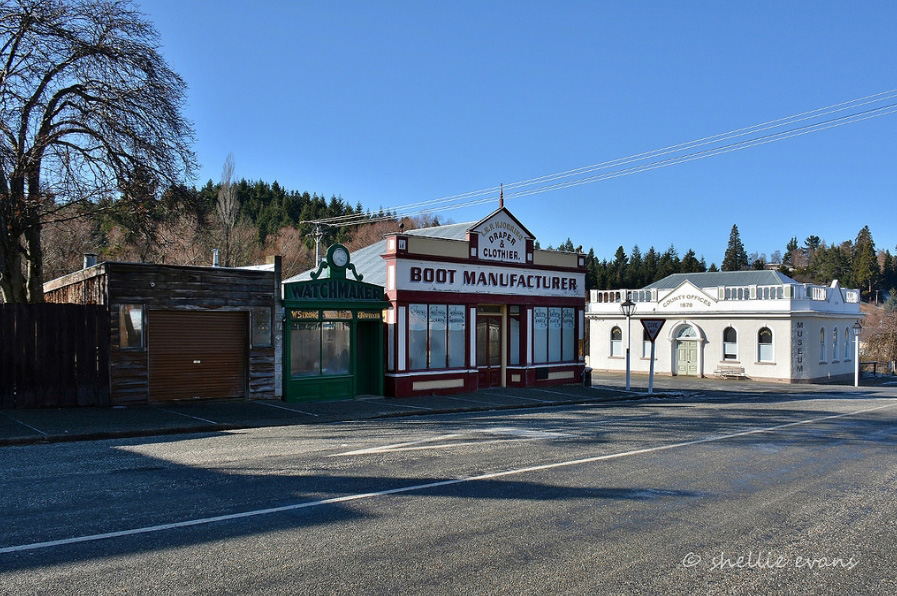
ARCHITECTURAL SIGNIFICANCE: One of the simplest of early church building showing early use of vertical corrugated iron walls. TOWNSCAPE/LANDMARK SIGNIFICANCE: An early building in a streetscape with several other nineteenth century buildings.
Why is this place significant?
Historic Significance
Historical Significance or Value The Naseby goldfield was discovered in 1863 and this building was erected only two years later as a Union church. By 1870-1873 there were sufficient ministers and supporters of each faith to have their own separate churches and the Union church fund and the building were transferred to an Athenaeum committee in 1870. In 1873 the citizens of Naseby voted 200 pounds to buying books for the Athenaeum. Though miners worked long hours, reading books from lending libraries seems to have been a popular alternative leisure activity to drinking in public houses, and nearly every small mining settlement had its athenaeum. Some, such as the one at Moonlight, remained long after most of the miners had gone.
Physical Significance
ARCHITECTURAL SIGNIFICANCE: One of the simplest of early church building showing early use of vertical corrugated iron walls. TOWNSCAPE/LANDMARK SIGNIFICANCE: An early building in a streetscape with several other nineteenth century buildings.
Construction Professional
Name
George, E.
Type
Designer
Biography
No biography is currently available for this construction professional
Name
Campbell, John
Type
Builder
Biography
(Union Church Naseby)
Construction Details
Start Year
1865
Type
Original Construction
Construction Materials
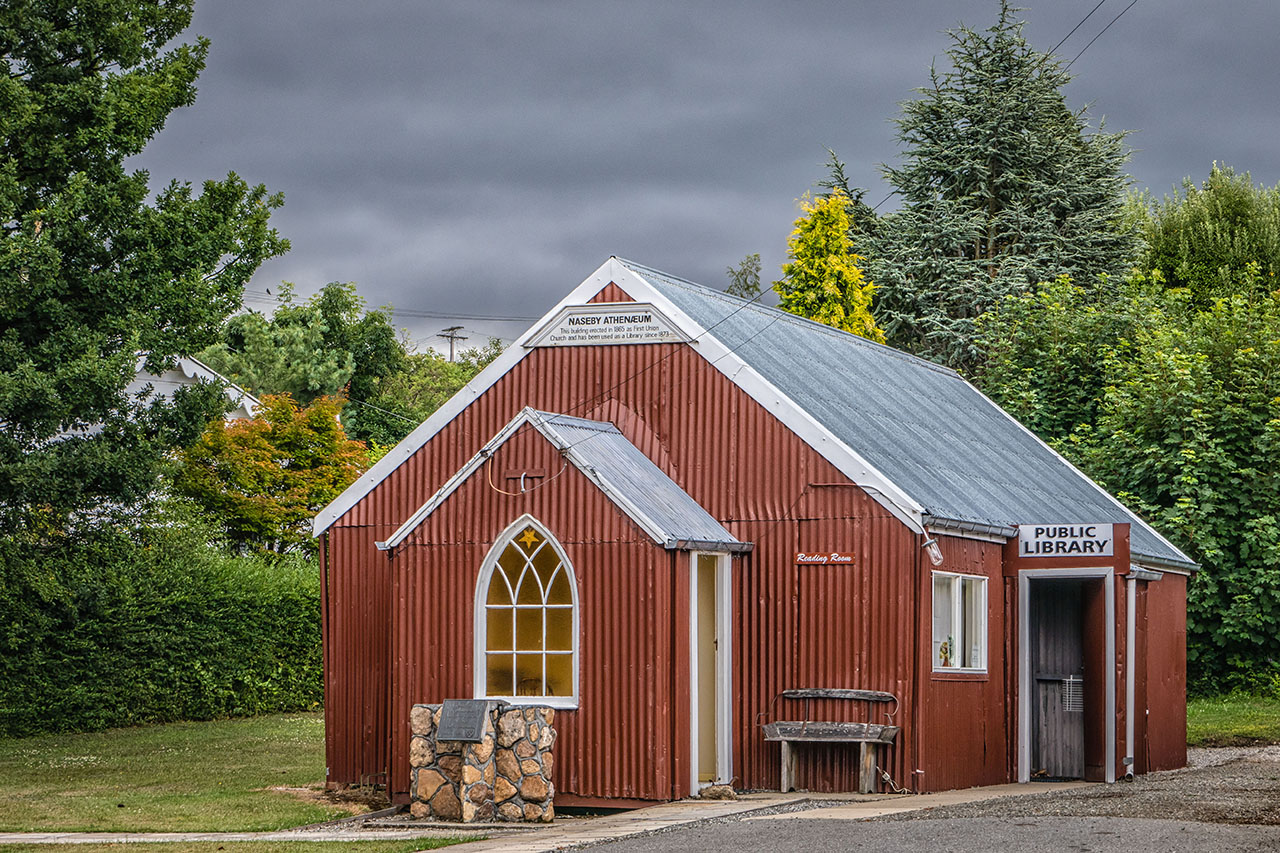
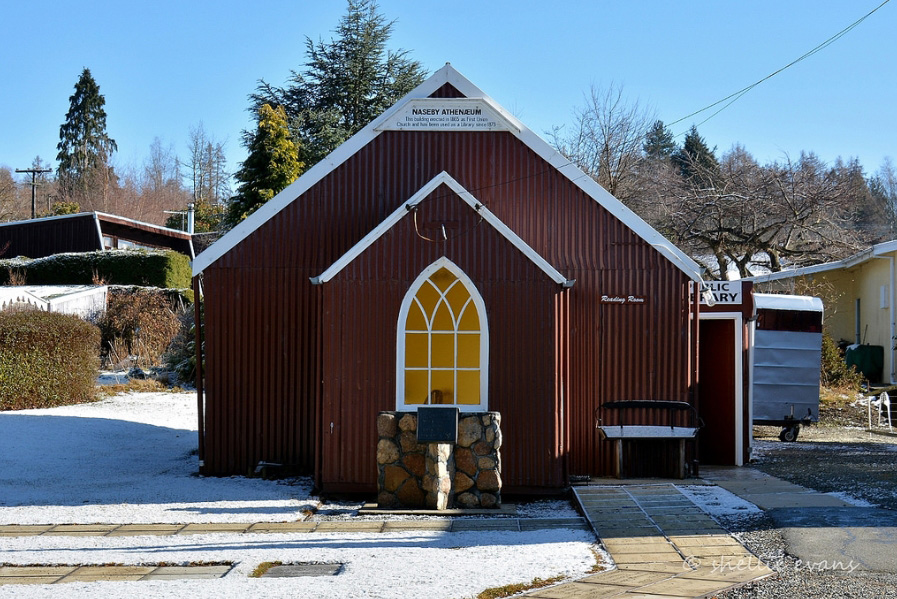
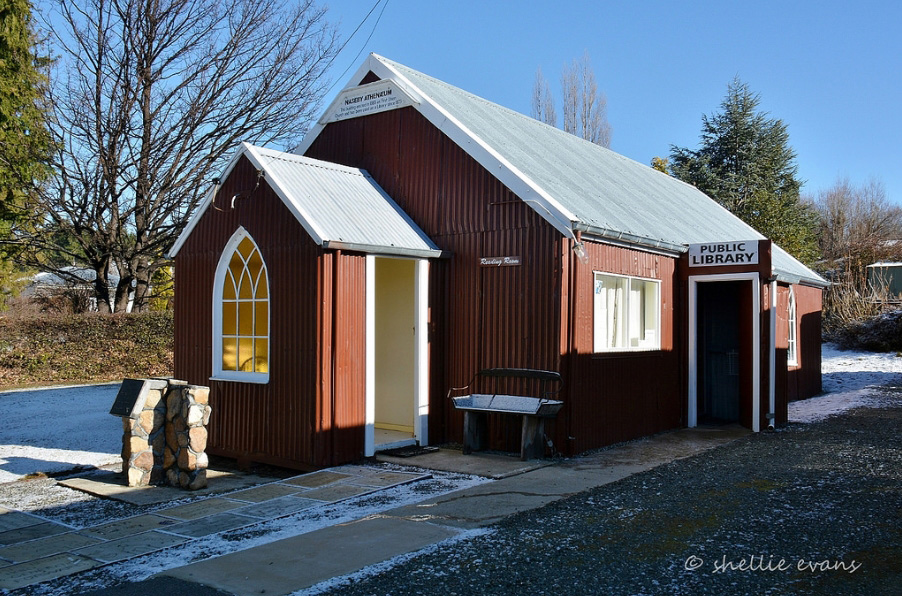
The church is a very simple, single gable building of rectangular plan (about 6.5 x 14m) with a porch symmetrically arranged on the front wall to repeat the pattern of the roof gable. There is a window in the front wall of the porch with a nice gothic arch and a tracery of small panes repeating the arch. There are five similar windows in the side walls. The windows make it look like a church still.
Notable Features
One of the few athenaeum buildings which looks like a church since it still retains six of its seven gothic patterned windows.
Construction Professional
Name
George, E.
Type
Designer
Biography
No biography is currently available for this construction professional
Name
Campbell, John
Type
Builder
Biography
(Union Church Naseby)
Construction Details
Start Year
1865
Type
Original Construction
Construction Materials
The church is a very simple, single gable building of rectangular plan (about 6.5 x 14m) with a porch symmetrically arranged on the front wall to repeat the pattern of the roof gable. There is a window in the front wall of the porch with a nice gothic arch and a tracery of small panes repeating the arch. There are five similar windows in the side walls. The windows make it look like a church still.
Notable Features
One of the few athenaeum buildings which looks like a church since it still retains six of its seven gothic patterned windows.
ARCHITECTURAL DESCRIPTION (Style): Style is simple barn-shape with a front porch repeating the shape of the front gable. MODIFICATIONS: One of the gothic side windows has been replaced with a modern rectangular casement window, the two outside doors have been modernised and the interior lined out with plywood and modern shelving. The roofing iron has been replaced. A small porch has been added.
ARCHITECTURAL DESCRIPTION (Style): Style is simple barn-shape with a front porch repeating the shape of the front gable. MODIFICATIONS: One of the gothic side windows has been replaced with a modern rectangular casement window, the two outside doors have been modernised and the interior lined out with plywood and modern shelving. The roofing iron has been replaced. A small porch has been added.
Historical and Associated Iwi / Hapū / Whānau
Information Sources
Cowan, 1948
Janet. C. Cowan, Down the Years in the Maniototo: A Survey of the Early History of Maniototo County and Naseby Borough, Otago Centennial Historical Publications, Whitcombe and Tombs, Dunedin, 1948
Don, 1936
A. Don, Memories of the Golden Road. Reed, Dunedin, 1936
Other Information
This historic place was registered under the Historic Places Act 1980. This report includes the text from the original Building Classification Committee report considered by the NZHPT Board at the time of registration. Please note that entry on the New Zealand Heritage List/Rarangi Korero identifies only the heritage values of the property concerned, and should not be construed as advice on the state of the property, or as a comment of its soundness or safety, including in regard to earthquake risk, safety in the event of fire, or insanitary conditions.
Historical and Associated Iwi / Hapū / Whānau
Information Sources
Cowan, 1948
Janet. C. Cowan, Down the Years in the Maniototo: A Survey of the Early History of Maniototo County and Naseby Borough, Otago Centennial Historical Publications, Whitcombe and Tombs, Dunedin, 1948
Don, 1936
A. Don, Memories of the Golden Road. Reed, Dunedin, 1936
Other Information
This historic place was registered under the Historic Places Act 1980. This report includes the text from the original Building Classification Committee report considered by the NZHPT Board at the time of registration. Please note that entry on the New Zealand Heritage List/Rarangi Korero identifies only the heritage values of the property concerned, and should not be construed as advice on the state of the property, or as a comment of its soundness or safety, including in regard to earthquake risk, safety in the event of fire, or insanitary conditions.
Former Usages
General Usage: Civic Facilities
Specific Usage: Library
General Usage: Religion
Specific Usage: Church
Former Usages
General Usage: Civic Facilities
Specific Usage: Library
General Usage: Religion
Specific Usage: Church