Quick links


Quick links
Quick links
Quick links
Quick links
Quick links
Mountain Road, Epsom, AUCKLAND
Private
Historic Place Category 1
List No. 4472
List Entry Information
Status
Listed
List Entry Status
Historic Place Category 1
Access
Private/No Public Access
List Number
4472
Date Entered
28th June 1990
Date of Effect
28th June 1990
City/District Council
Auckland Council
Region
Auckland Council
Legal description
Pt Allot 106 Sec 6 SBRS of Auckland (RT 185707), North Auckland Land District
Status
Listed
List Entry Status
Historic Place Category 1
Access
Private/No Public Access
List Number
4472
Date Entered
28th June 1990
Date of Effect
28th June 1990
City/District Council
Auckland Council
Region
Auckland Council
Legal description
Pt Allot 106 Sec 6 SBRS of Auckland (RT 185707), North Auckland Land District
Why is this place significant?
Historic Significance
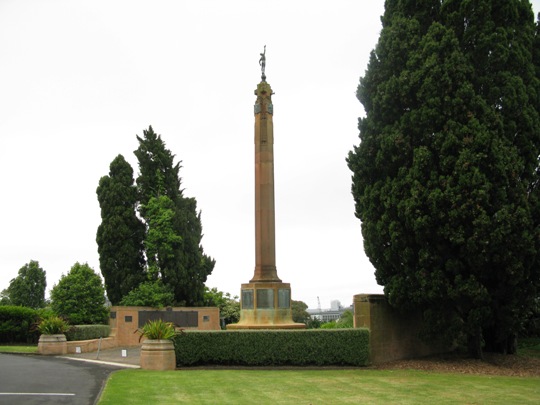
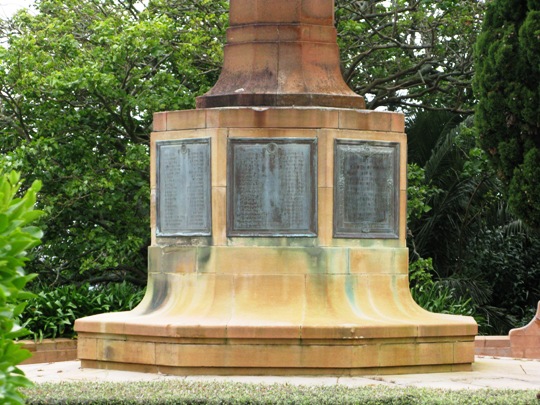
Historical Significance or Value The Auckland Grammar School War Memorial commemorates those Old Boys of the School who fell in two World Wars, and whose names are inscribed on bronze tablets attached to the base of the memorial.
Physical Significance
ARCHITECTURAL QUALITY: The Auckland Grammar School War Memorial combines the exemplary design skills of William Gummer, in partnership with William Prouse, and Richard Gross' fine sculpting. Highly symbolic, its vertical emphasis and outstretched figure are quite distinctive. It is an elegant design and a fitting monument to the school's fallen of the two World Wars. TOWNSCAPE/LANDMARK VALUE: The memorial is prominent within the school grounds and clearly visible from Mountain Road.
Why is this place significant?
Historic Significance
Historical Significance or Value The Auckland Grammar School War Memorial commemorates those Old Boys of the School who fell in two World Wars, and whose names are inscribed on bronze tablets attached to the base of the memorial.
Physical Significance
ARCHITECTURAL QUALITY: The Auckland Grammar School War Memorial combines the exemplary design skills of William Gummer, in partnership with William Prouse, and Richard Gross' fine sculpting. Highly symbolic, its vertical emphasis and outstretched figure are quite distinctive. It is an elegant design and a fitting monument to the school's fallen of the two World Wars. TOWNSCAPE/LANDMARK VALUE: The memorial is prominent within the school grounds and clearly visible from Mountain Road.
Construction Professional
Name
Prouse, William John
Type
Architect
Biography
Prouse (1878-1956) came from a timber merchants' family. Although receiving no formal architectural training, Prouse practised in Wellington for 46 years. He was one of the first to use steel frame construction in New Zealand. With John Hoggard he established the partnership of Hoggard and Prouse about 1907. They were joined by William Henry Gummer in 1913 and the three were admitted to the New Zealand Institute of Architects in 1914, Prouse as an Associate, Hoggard and Gummer as Fellows. The firm was responsible for many public buildings throughout New Zealand including Brittains Building (1909), the State Fire Insurance Building (1919), the Majestic Theatre (1928), all in Wellington, and the Masonic Hotel, Napier (1932).
Name
Gummer, William Henry
Type
Architect
Biography
Gummer (1884-1966) was articled to W.A. Holman, an Auckland architect, and qualified as an Associate of the Royal Institute of British Architects in 1910. From 1908 to 1913 he travelled in the United Kingdom, Europe and the United States. During this time he worked for Edwin Lutyens, a leading English architect of the time, and for Daniel Burnham in Chicago. Burnham was a major American architect and one of the founders of the influential Chicago School of Architecture. Gummer joined the firm of Hoggard and Prouse of Auckland and Wellington in 1913. Significant commissions undertaken during this period included the New Zealand Insurance (later known as the Guardian Trust) Building, Auckland (1914-18). In 1923 Gummer, one of the most outstanding architects working in New Zealand in the first half of the twentieth century, joined with Charles Reginald Ford (1880-1972) to create an architectural partnership of national significance. The practice was responsible for the design of the Dilworth Building (1926), Auckland, the Dominion Museum (1936) and the State Insurance Building (1940), both Wellington. Gummer and Ford were awarded Gold Medals by the New Zealand Institute of Architects for their designs of the Auckland Railway Station and Remuera Library. Gummer was also responsible for the Bridge of Remembrance, Christchurch and the Cenotaph in Dunedin (1927), and the stylistically and structurally advanced Tauroa (1916), Craggy Range (1919), Arden (1926) and Te Mata (1935) homesteads at Havelock North. Elected a Fellow of the New Zealand Institute of Architects in 1914, he was president of the Institute from 1933-4 and was later elected a life member.
Name
Gross, Richard Oliver
Type
Sculptor
Biography
Gross was born in England and immigrated to New Zealand in 1914 having been trained in sculpture at the London Camberwell School of Art under Albert Toft. Toft was a regular exhibitor at the Royal Academy of Arts from 1885. Gross' works include the Auckland Domain gates' statues, Wellington Citizen's Peace Memorial, the Savage Memorial at Orakei, the carved lion head fountain on the Carillon at Wellington and the stone lion in the Auckland Domain Wintergardens. At one time Gross was the only New Zealand sculptor casting in bronze at his own foundry. Gross was president of the Auckland Society of Arts for ten years, chairman of the McKelvie Trust Board and chairman of the Associated Art Societies of New Zealand.
Construction Details
Start Year
1953
Type
Addition
Description
The court and flanking walls were erected in memory of the Old Boys who fell in World War II.
Start Year
1922
Type
Original Construction
Construction Materials
Reinforced concrete foundation; New South Wales sandstone column; bronze sculpture.
Construction Professional
Name
Prouse, William John
Type
Architect
Biography
Prouse (1878-1956) came from a timber merchants' family. Although receiving no formal architectural training, Prouse practised in Wellington for 46 years. He was one of the first to use steel frame construction in New Zealand. With John Hoggard he established the partnership of Hoggard and Prouse about 1907. They were joined by William Henry Gummer in 1913 and the three were admitted to the New Zealand Institute of Architects in 1914, Prouse as an Associate, Hoggard and Gummer as Fellows. The firm was responsible for many public buildings throughout New Zealand including Brittains Building (1909), the State Fire Insurance Building (1919), the Majestic Theatre (1928), all in Wellington, and the Masonic Hotel, Napier (1932).
Name
Gummer, William Henry
Type
Architect
Biography
Gummer (1884-1966) was articled to W.A. Holman, an Auckland architect, and qualified as an Associate of the Royal Institute of British Architects in 1910. From 1908 to 1913 he travelled in the United Kingdom, Europe and the United States. During this time he worked for Edwin Lutyens, a leading English architect of the time, and for Daniel Burnham in Chicago. Burnham was a major American architect and one of the founders of the influential Chicago School of Architecture. Gummer joined the firm of Hoggard and Prouse of Auckland and Wellington in 1913. Significant commissions undertaken during this period included the New Zealand Insurance (later known as the Guardian Trust) Building, Auckland (1914-18). In 1923 Gummer, one of the most outstanding architects working in New Zealand in the first half of the twentieth century, joined with Charles Reginald Ford (1880-1972) to create an architectural partnership of national significance. The practice was responsible for the design of the Dilworth Building (1926), Auckland, the Dominion Museum (1936) and the State Insurance Building (1940), both Wellington. Gummer and Ford were awarded Gold Medals by the New Zealand Institute of Architects for their designs of the Auckland Railway Station and Remuera Library. Gummer was also responsible for the Bridge of Remembrance, Christchurch and the Cenotaph in Dunedin (1927), and the stylistically and structurally advanced Tauroa (1916), Craggy Range (1919), Arden (1926) and Te Mata (1935) homesteads at Havelock North. Elected a Fellow of the New Zealand Institute of Architects in 1914, he was president of the Institute from 1933-4 and was later elected a life member.
Name
Gross, Richard Oliver
Type
Sculptor
Biography
Gross was born in England and immigrated to New Zealand in 1914 having been trained in sculpture at the London Camberwell School of Art under Albert Toft. Toft was a regular exhibitor at the Royal Academy of Arts from 1885. Gross' works include the Auckland Domain gates' statues, Wellington Citizen's Peace Memorial, the Savage Memorial at Orakei, the carved lion head fountain on the Carillon at Wellington and the stone lion in the Auckland Domain Wintergardens. At one time Gross was the only New Zealand sculptor casting in bronze at his own foundry. Gross was president of the Auckland Society of Arts for ten years, chairman of the McKelvie Trust Board and chairman of the Associated Art Societies of New Zealand.
Construction Details
Start Year
1953
Type
Addition
Description
The court and flanking walls were erected in memory of the Old Boys who fell in World War II.
Start Year
1922
Type
Original Construction
Construction Materials
Reinforced concrete foundation; New South Wales sandstone column; bronze sculpture.
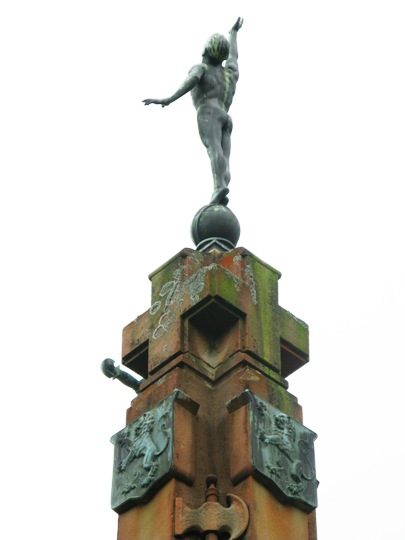
ARCHITECTURAL DESCRIPTION: The Auckland Grammar School War Memorial consists of an octagonal base and an octagonal obelisk surmounted with a bronze figure. Attached to each face of the octagonal base is a cast bronze tablet with an inscription of names of Old Boys who fell in World War I. The slightly tapering stone column of the memorial reaches a height of about 15 metres (50 feet) and the eight faces of the octagonal shaft symbolise the eight cardinal virtues. Near the apex of the column are a number of Roman fasces symbolising the authority of the State over the individual, a medieval cross symbolising sacrifice and a medieval sword pointing downwards, a symbol of peace. The Art Nouveau style bronze figure surmounting the column is that of a boy with one arm outstretched skyward, a symbol of aspiration and inspiration. MODIFICATIONS: 1953 - The court and flanking walls were erected in memory of the Old Boys who fell in World War II.
ARCHITECTURAL DESCRIPTION: The Auckland Grammar School War Memorial consists of an octagonal base and an octagonal obelisk surmounted with a bronze figure. Attached to each face of the octagonal base is a cast bronze tablet with an inscription of names of Old Boys who fell in World War I. The slightly tapering stone column of the memorial reaches a height of about 15 metres (50 feet) and the eight faces of the octagonal shaft symbolise the eight cardinal virtues. Near the apex of the column are a number of Roman fasces symbolising the authority of the State over the individual, a medieval cross symbolising sacrifice and a medieval sword pointing downwards, a symbol of peace. The Art Nouveau style bronze figure surmounting the column is that of a boy with one arm outstretched skyward, a symbol of aspiration and inspiration. MODIFICATIONS: 1953 - The court and flanking walls were erected in memory of the Old Boys who fell in World War II.
Historical and Associated Iwi / Hapū / Whānau
Information Sources
Auckland Weekly News
Auckland Weekly News
McLintock, 1966
An Encyclopedia of New Zealand, Government Printer, Wellington, 1966
New Zealand Herald
New Zealand Herald, 12 July 1932, p. 6; 28 September 1933, p. 6.
New Zealand Historic Places Trust (NZHPT)
New Zealand Historic Places Trust
Shanahan, 1983
Kieran J Shanahan, The Work of William H. Gummer, Architect, Thesis, University of Auckland, Auckland, 1983
Auckland Grammar School
Auckland Grammar School Chronicle
Tritenbach, 1984
Paul Tritenbach, Auckland's Historic Schools, Auckland's Historic Schools' Press, Auckland, 1984
Other Information
This historic place was registered under the Historic Places Act 1980. This report includes the text from the original Building Classification Committee report considered by the NZHPT Board at the time of registration. Please note that entry on the New Zealand Heritage List/Rarangi Korero identifies only the heritage values of the property concerned, and should not be construed as advice on the state of the property, or as a comment of its soundness or safety, including in regard to earthquake risk, safety in the event of fire, or insanitary conditions.
Historical and Associated Iwi / Hapū / Whānau
Information Sources
Auckland Weekly News
Auckland Weekly News
McLintock, 1966
An Encyclopedia of New Zealand, Government Printer, Wellington, 1966
New Zealand Herald
New Zealand Herald, 12 July 1932, p. 6; 28 September 1933, p. 6.
New Zealand Historic Places Trust (NZHPT)
New Zealand Historic Places Trust
Shanahan, 1983
Kieran J Shanahan, The Work of William H. Gummer, Architect, Thesis, University of Auckland, Auckland, 1983
Auckland Grammar School
Auckland Grammar School Chronicle
Tritenbach, 1984
Paul Tritenbach, Auckland's Historic Schools, Auckland's Historic Schools' Press, Auckland, 1984
Other Information
This historic place was registered under the Historic Places Act 1980. This report includes the text from the original Building Classification Committee report considered by the NZHPT Board at the time of registration. Please note that entry on the New Zealand Heritage List/Rarangi Korero identifies only the heritage values of the property concerned, and should not be construed as advice on the state of the property, or as a comment of its soundness or safety, including in regard to earthquake risk, safety in the event of fire, or insanitary conditions.
Current Usages
Uses: Commemoration
Specific Usage: Memorial - World War One
Uses: Commemoration
Specific Usage: Memorial building (hall, museum, church, school, library etc)
Former Usages
General Usage: Commemoration
Specific Usage: Memorial - World War One
General Usage: Commemoration
Specific Usage: Memorial building (hall, museum, church, school, library etc)
Themes
War Memorial
Web Links
description: The Memorials Register, New Zealand History Online, Ministry for Culture and Heritage.
Current Usages
Uses: Commemoration
Specific Usage: Memorial - World War One
Uses: Commemoration
Specific Usage: Memorial building (hall, museum, church, school, library etc)
Former Usages
General Usage: Commemoration
Specific Usage: Memorial - World War One
General Usage: Commemoration
Specific Usage: Memorial building (hall, museum, church, school, library etc)
Themes
War Memorial
Web Links
description: The Memorials Register, New Zealand History Online, Ministry for Culture and Heritage.
Location
Get the latest heritage news, features and events delivered
straight to your inbox.
