

Fergusson Building was the second of three buildings erected in 1929 on the block known at the time as "Civic Square". Several unsuccessful attempts had been made during the previous ten years to plan for a civic centre on the site but nothing eventuated and towards the end of 1927 the site was subdivided and offered for lease by auction.
The Fergusson Building was commissioned by a company of the same name which was established in 1928 by the real estate firm of Samuel Vaile and Sons and two professional men, G.L. Taylor and A. St.C. Brown. Almost identical in outward appearance to its adjoining neighbour Civic House, Fergusson Building was also designed by Sinclair O'Connor. The contract for the Fergusson Building was not let until two months after that for Civic House. By mid-December Fergusson Building was reported to be in its finishing stages.
Taylor was the only shareholder to occupy space in the building, conducting his dental practice on the second floor until 1955. In 1947 the building was renamed the "Atwaters Building" but reverted to the name "Fergusson Building" in 1973. In 1956 it was purchased by the City Council to provide additional office space until the present Greys Avenue Administration Building (1966) was completed. Over the years it has accommodated a variety of government offices, commercial and retail outlets.
List Entry Information
Status
Listed
List Entry Status
Historic Place Category 2
Access
Private/No Public Access
List Number
4573
Date Entered
23rd April 1992
Date of Effect
23rd April 1992
City/District Council
Auckland Council
Region
Auckland Council
Legal description
Lots 1 9 10 Pt Lot 8 DP 21520
Status
Listed
List Entry Status
Historic Place Category 2
Access
Private/No Public Access
List Number
4573
Date Entered
23rd April 1992
Date of Effect
23rd April 1992
City/District Council
Auckland Council
Region
Auckland Council
Legal description
Lots 1 9 10 Pt Lot 8 DP 21520
Why is this place significant?
Historic Significance
Historical Significance or Value The Fergusson Building has strong historical links with neighbouring Civic House and the Civic Theatre. These three contemporary buildings have come to be seen as a harmonious entity by many Aucklanders. The Fergusson Building has now been occupied by commercial enterprises for 60 years.
Physical Significance
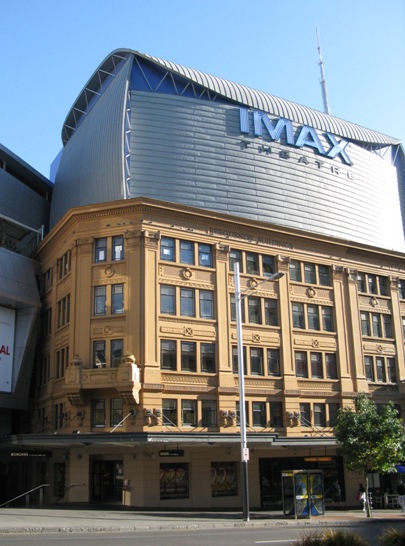
ARCHITECTURAL QUALITY: The Fergusson Building and the neighbouring Civic House were both designed in a Stripped Classical style by Sinclair O'Connor, and built in 1929. Their identical street facades form a continuous street frontage, however the Fergusson Building has more prominence because of its location on a corner site. A simply executed and refined pair of buildings, they also have a visual link with the nearby Civic Theatre. TOWNSCAPE/LANDMARK VALUE: The Fergusson Building is one of three commercial buildings occupying this small block to the north of Aotea Square and the Civic Centre. All were built in 1929 and are compatible in scale, style and materials. The Fergusson Building and Civic House have the appearance of being a single building but for the use of different colouring on the Queen Street facades and although small by the standards of commercial buildings today they have considerable townscape presence.
Why is this place significant?
Historic Significance
Historical Significance or Value The Fergusson Building has strong historical links with neighbouring Civic House and the Civic Theatre. These three contemporary buildings have come to be seen as a harmonious entity by many Aucklanders. The Fergusson Building has now been occupied by commercial enterprises for 60 years.
Physical Significance
ARCHITECTURAL QUALITY: The Fergusson Building and the neighbouring Civic House were both designed in a Stripped Classical style by Sinclair O'Connor, and built in 1929. Their identical street facades form a continuous street frontage, however the Fergusson Building has more prominence because of its location on a corner site. A simply executed and refined pair of buildings, they also have a visual link with the nearby Civic Theatre. TOWNSCAPE/LANDMARK VALUE: The Fergusson Building is one of three commercial buildings occupying this small block to the north of Aotea Square and the Civic Centre. All were built in 1929 and are compatible in scale, style and materials. The Fergusson Building and Civic House have the appearance of being a single building but for the use of different colouring on the Queen Street facades and although small by the standards of commercial buildings today they have considerable townscape presence.
Construction Professional
Name
O'Connor, Arthur Sinclair
Type
Architect
Biography
Arthur Sinclair O'Connor (c.1884-1943) was born in Fremantle, Australia, and came to New Zealand about 1908. It is not known where he received his architectural training. The first record of his work in New Zealand was a joint competition entry with Alva Bartley in 1911 for the new parliament building in Wellington. From 1935 until his sudden death in 1943 at the age of 59, O'Connor conducted his practice from Civic House. O'Connor designed many inner city apartments including Radnor, Waterloo Quadrant (1914); Middle Courtville, Parliament Street (1914); Corner Courtville, Waterloo Quadrant and Parliament Street (1919); "Espano", overlooking Myers Park (1931); Westminster Court (originally large Courtville), Parliament Street (1934) and Brooklyn Apartments, Eden Crescent (1936). Examples of his commercial works are the Keans Building (1927), Civic House (1929) and the Fergusson Building (1929), all on Queen Street, the Stormont Building, Kingsland (1929), and the Regent (now the Lido) Theatre, Epsom (1923). He was also the architect for the Orange Coronation Hall, Newton Road (1922) and the Church of England, Otahuhu (1931).
Construction Details
Start Year
1929
Type
Original Construction
Start Year
1943
Type
Modification
Description
Internal alterations to accommodate the Armed Forces office.
Type
Modification
Description
Shop front leadlight windows replaced by aluminium windows.
Construction Materials
Reinforced concrete with cavity brick external walls and plastered brick partitions. Concrete slab floors and concrete roof covered with asphalt.
Notable Features
Facade identical to Civic House.
Construction Professional
Name
O'Connor, Arthur Sinclair
Type
Architect
Biography
Arthur Sinclair O'Connor (c.1884-1943) was born in Fremantle, Australia, and came to New Zealand about 1908. It is not known where he received his architectural training. The first record of his work in New Zealand was a joint competition entry with Alva Bartley in 1911 for the new parliament building in Wellington. From 1935 until his sudden death in 1943 at the age of 59, O'Connor conducted his practice from Civic House. O'Connor designed many inner city apartments including Radnor, Waterloo Quadrant (1914); Middle Courtville, Parliament Street (1914); Corner Courtville, Waterloo Quadrant and Parliament Street (1919); "Espano", overlooking Myers Park (1931); Westminster Court (originally large Courtville), Parliament Street (1934) and Brooklyn Apartments, Eden Crescent (1936). Examples of his commercial works are the Keans Building (1927), Civic House (1929) and the Fergusson Building (1929), all on Queen Street, the Stormont Building, Kingsland (1929), and the Regent (now the Lido) Theatre, Epsom (1923). He was also the architect for the Orange Coronation Hall, Newton Road (1922) and the Church of England, Otahuhu (1931).
Construction Details
Start Year
1929
Type
Original Construction
Start Year
1943
Type
Modification
Description
Internal alterations to accommodate the Armed Forces office.
Type
Modification
Description
Shop front leadlight windows replaced by aluminium windows.
Construction Materials
Reinforced concrete with cavity brick external walls and plastered brick partitions. Concrete slab floors and concrete roof covered with asphalt.
Notable Features
Facade identical to Civic House.
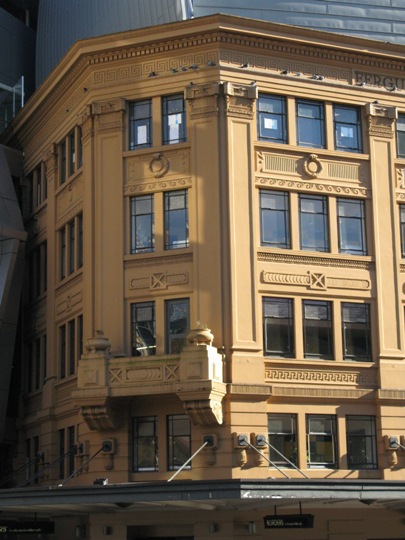
ARCHITECT/ENGINEER/DESIGNER: Arthur Sinclair O'CONNOR (c.1884-1943) BUILDER:N. Cole ARCHITECTURAL DESCRIPTION: The almost identical facades of the Fergusson Building and Civic House (1929) form a continuous frontage along Queen Street and use Classical elements in a refined manner typical of Stripped Classical architecture. Likewise, the Myers Street facade of the Fergusson Building is to the same design. The ground floor of the building follows the slope of Queen Street and has extensive glazing beneath a suspended verandah with a coffered ceiling. The first floor has rusticated protrusions which act as pedestals for the pilasters above. The pilasters are continuous from the second to the fourth floor and articulate the repetitive three window bay design. The spandrel panels at second, third and fourth floor levels have a variety of decorative key patterns. Wreaths adorn the fourth floor. Above this the entablature has a frieze with a key pattern and a cornice with dentils. The diagonal corner section of the Fergusson Building has decorative treatment similar to that of the two street facades but has only a two window bay. Interior planning and finishing are simple and have undergone changes over the years. MODIFICATIONS: 1943 Internal alterations to accommodate the Armed Forces office. Date Unknown Shop front leadlight windows replaced by aluminium windows.
ARCHITECT/ENGINEER/DESIGNER: Arthur Sinclair O'CONNOR (c.1884-1943) BUILDER:N. Cole ARCHITECTURAL DESCRIPTION: The almost identical facades of the Fergusson Building and Civic House (1929) form a continuous frontage along Queen Street and use Classical elements in a refined manner typical of Stripped Classical architecture. Likewise, the Myers Street facade of the Fergusson Building is to the same design. The ground floor of the building follows the slope of Queen Street and has extensive glazing beneath a suspended verandah with a coffered ceiling. The first floor has rusticated protrusions which act as pedestals for the pilasters above. The pilasters are continuous from the second to the fourth floor and articulate the repetitive three window bay design. The spandrel panels at second, third and fourth floor levels have a variety of decorative key patterns. Wreaths adorn the fourth floor. Above this the entablature has a frieze with a key pattern and a cornice with dentils. The diagonal corner section of the Fergusson Building has decorative treatment similar to that of the two street facades but has only a two window bay. Interior planning and finishing are simple and have undergone changes over the years. MODIFICATIONS: 1943 Internal alterations to accommodate the Armed Forces office. Date Unknown Shop front leadlight windows replaced by aluminium windows.
Historical and Associated Iwi / Hapū / Whānau
Information Sources
Bush, 1971
G .W. A. Bush, 'Decently and In Order: The Government of the City of Auckland 1840-1971', Auckland, 1971
Cleave's Auckland Provincial Directory
Cleave's Auckland Provincial Directory, Auckland
Leighton's Auckland Provincial Directory
Leighton's Auckland Provincial Directory
New Zealand Herald
New Zealand Herald, 12 July 1932, p. 6; 28 September 1933, p. 6.
New Zealand Building Record
New Zealand Building Record
Plans
Architectural Drawings/Plans
Service, 1977
Alastair Service, Edwardian Architecture. A Handbook to Building Design in Britain 1890 - 1914, London, 1977
University of Auckland
University of Auckland
Births Deaths and Marriages
Registrar of Births Deaths and Marriages
Artley, 1975
A Artley. (ed), The Golden Age of Shop Design, Britain, 1975
Auckland Companies Office
Auckland Companies Office
Other Information
This historic place was registered under the Historic Places Act 1980. This report includes the text from the original Building Classification Committee report considered by the NZHPT Board at the time of registration. Please note that entry on the New Zealand Heritage List/Rarangi Korero identifies only the heritage values of the property concerned, and should not be construed as advice on the state of the property, or as a comment of its soundness or safety, including in regard to earthquake risk, safety in the event of fire, or insanitary conditions.
Historical and Associated Iwi / Hapū / Whānau
Information Sources
Bush, 1971
G .W. A. Bush, 'Decently and In Order: The Government of the City of Auckland 1840-1971', Auckland, 1971
Cleave's Auckland Provincial Directory
Cleave's Auckland Provincial Directory, Auckland
Leighton's Auckland Provincial Directory
Leighton's Auckland Provincial Directory
New Zealand Herald
New Zealand Herald, 12 July 1932, p. 6; 28 September 1933, p. 6.
New Zealand Building Record
New Zealand Building Record
Plans
Architectural Drawings/Plans
Service, 1977
Alastair Service, Edwardian Architecture. A Handbook to Building Design in Britain 1890 - 1914, London, 1977
University of Auckland
University of Auckland
Births Deaths and Marriages
Registrar of Births Deaths and Marriages
Artley, 1975
A Artley. (ed), The Golden Age of Shop Design, Britain, 1975
Auckland Companies Office
Auckland Companies Office
Other Information
This historic place was registered under the Historic Places Act 1980. This report includes the text from the original Building Classification Committee report considered by the NZHPT Board at the time of registration. Please note that entry on the New Zealand Heritage List/Rarangi Korero identifies only the heritage values of the property concerned, and should not be construed as advice on the state of the property, or as a comment of its soundness or safety, including in regard to earthquake risk, safety in the event of fire, or insanitary conditions.
Former Usages
General Usage: Trade
Specific Usage: Office building/Offices
Former Usages
General Usage: Trade
Specific Usage: Office building/Offices
