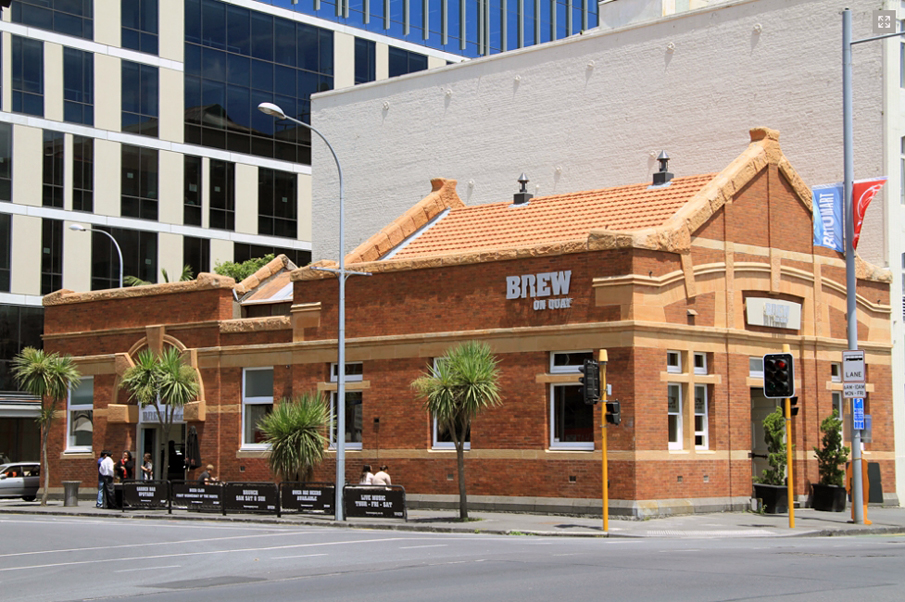
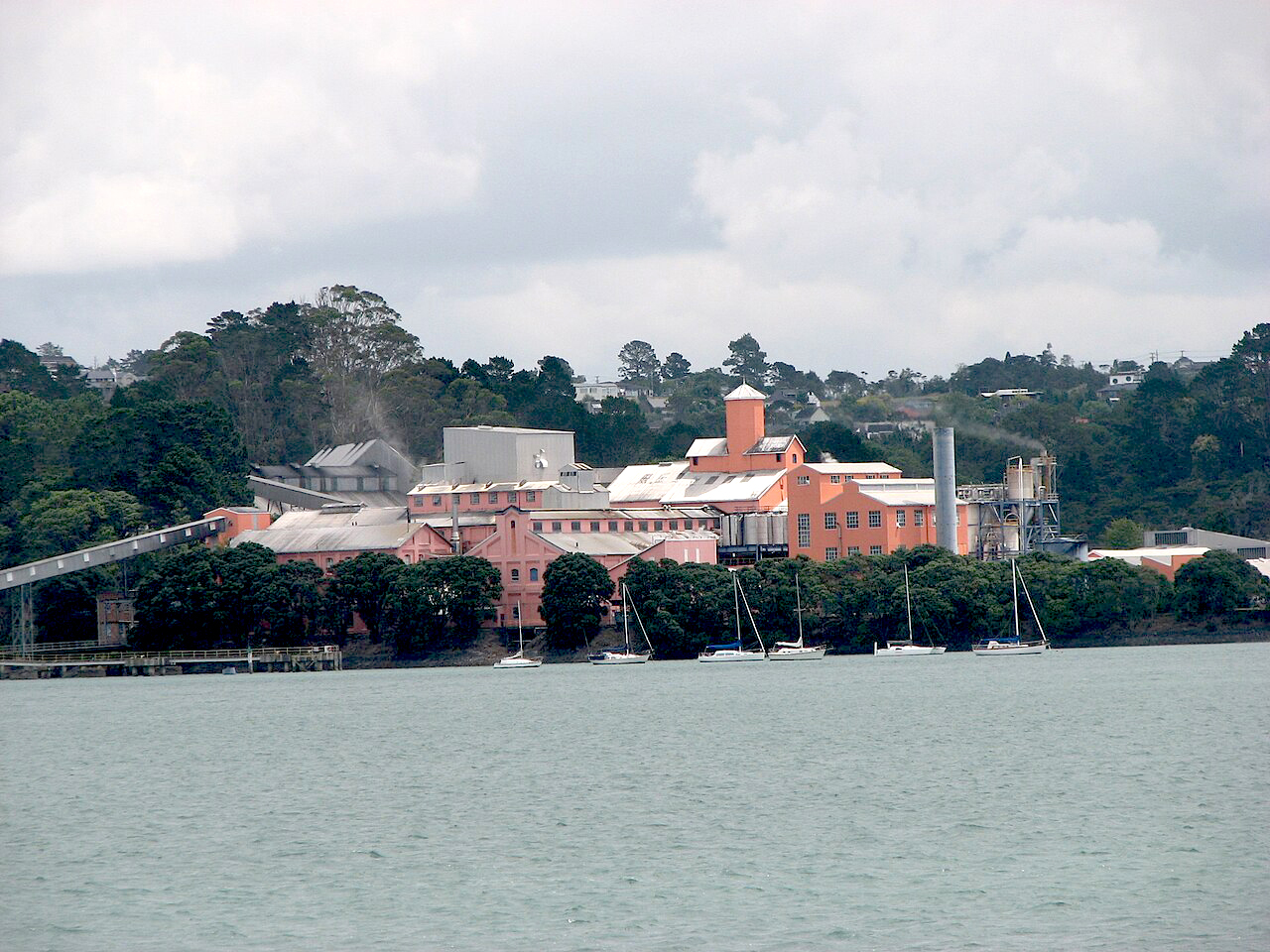
This building is an important remnant of Auckland's industrial and commercial history, and of the town's role as the only producer of refined sugar in New Zealand. Surviving in a remarkably intact condition, the single-storey structure was erected as the head office of the New Zealand branch of the Colonial Sugar Refining (CSR) Company in 1903, on newly reclaimed land between the docks and railway line. The Australian-based company had established their only industrial works in the country, now known as the Chelsea Sugar Refinery, on the other side of the Waitemata Harbour in 1884. The refinery processed cane sugar from Fiji and elsewhere, producing finished products such as refined sugar, treacle and molasses. Many of these goods were transported across the harbour to Auckland, and stored in the CSR Company Building for further distribution.
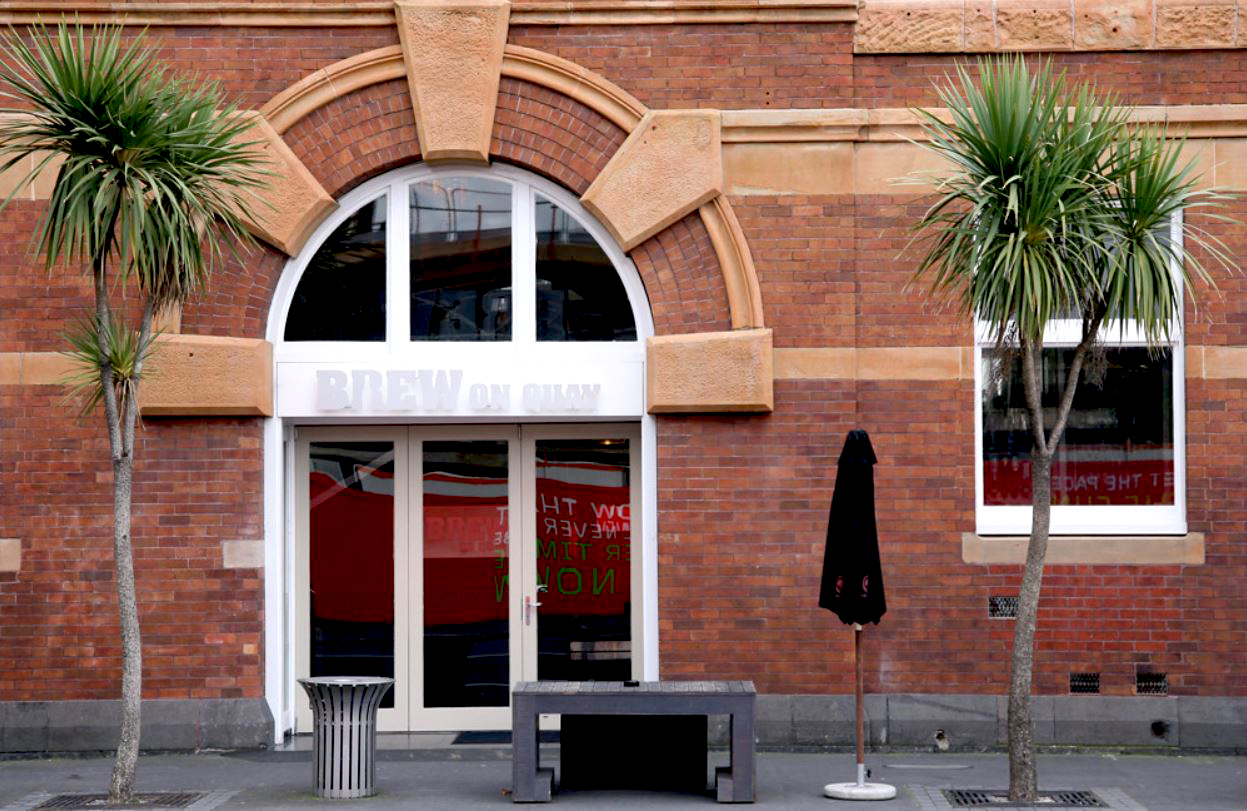
The building was designed by the architect Charles Arnold in conjunction with the CSR Company headquarters in Sydney, and was constructed largely of brick. The Australian origins of the parent company are reflected in the use of Sydney sandstone for ornamental detail. The layout initially included rooms for a manager and accountant at the front, while a sugar store and enclosed yard were located to the rear. Sugar was brought across from the refinery three times a day in lighters for temporary safekeeping in the compound, before being distributed via a cart entrance in its eastern wall. Virtually all of its original internal features still survive, including unusual elements such as an ornately carved front counter. The building's function became redundant with the construction of the Auckland Harbour Bridge in the late 1950s, when road distribution was carried out directly from the refinery. Vacated by the CSR Company in 1960, the office was subsequently occupied by the wharf police, who installed cells. The police vacated the building in the 1990s, and it has since been in occasional use as a commercial office.
The Wharf Police, or CSR Company, building is significant for its links with the colonial sugar industry, and is the only known early twentieth-century office with such connections in New Zealand. The sugar industry had a major impact on nineteenth-century settlement in the Pacific, and formed an important part of colonial trade. The building reflects New Zealand's developing role as a processor of raw materials from other countries, and its connection with Australian industries. The structure is important as part of a wider historic land- and waterscape, with the CSR Company refinery and grounds surviving as industrial sites across the Waitemata Harbour. The building interior is extremely significant for its well-preserved nature, offering insights into the organisation and appearance of the early twentieth century workplace. Its use as a wharf police station is of value to the history of law and order, reflecting the continuing use and importance of Auckland as a commercial port.
The building was designed by the architect Charles Arnold in conjunction with the CSR Company headquarters in Sydney, and was constructed largely of brick. The Australian origins of the parent company are reflected in the use of Sydney sandstone for ornamental detail. The layout initially included rooms for a manager and accountant at the front, while a sugar store and enclosed yard were located to the rear. Sugar was brought across from the refinery three times a day in lighters for temporary safekeeping in the compound, before being distributed via a cart entrance in its eastern wall. Virtually all of its original internal features still survive, including unusual elements such as an ornately carved front counter. The building's function became redundant with the construction of the Auckland Harbour Bridge in the late 1950s, when road distribution was carried out directly from the refinery. Vacated by the CSR Company in 1960, the office was subsequently occupied by the wharf police, who installed cells. The police vacated the building in the 1990s, and it has since been in occasional use as a commercial office.
The Wharf Police, or CSR Company, building is significant for its links with the colonial sugar industry, and is the only known early twentieth-century office with such connections in New Zealand. The sugar industry had a major impact on nineteenth-century settlement in the Pacific, and formed an important part of colonial trade. The building reflects New Zealand's developing role as a processor of raw materials from other countries, and its connection with Australian industries. The structure is important as part of a wider historic land- and waterscape, with the CSR Company refinery and grounds surviving as industrial sites across the Waitemata Harbour. The building interior is extremely significant for its well-preserved nature, offering insights into the organisation and appearance of the early twentieth century workplace. Its use as a wharf police station is of value to the history of law and order, reflecting the continuing use and importance of Auckland as a commercial port.