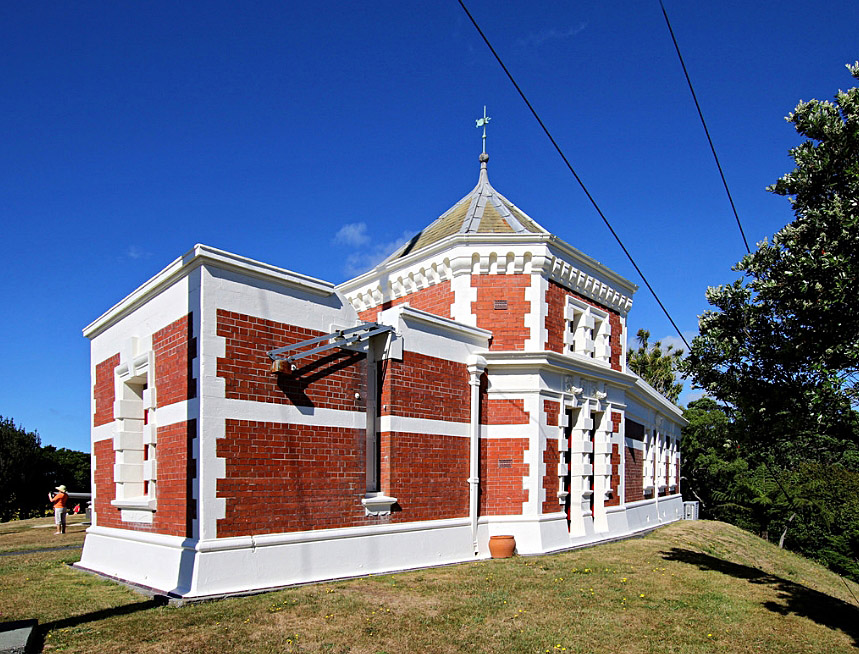
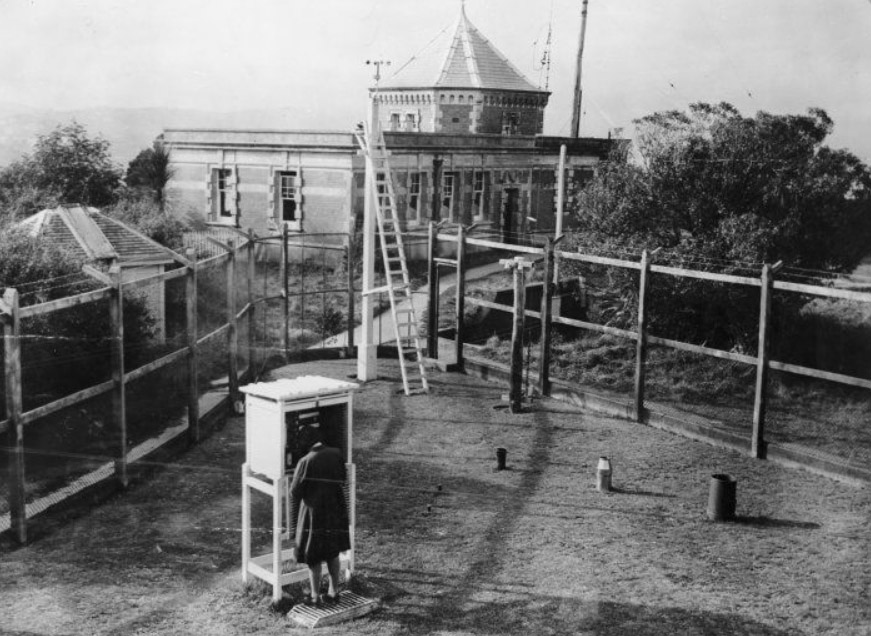
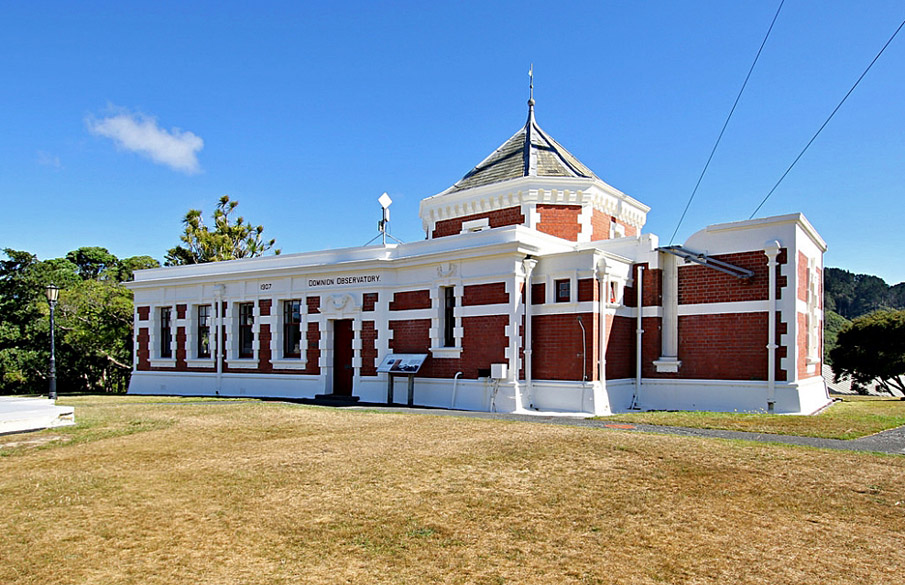
The building was erected as the observatory for the Government Time Service. The Time Service itself had been erected in 1868 when a standard time was established for all New Zealand. The first observatory was located in Bolton Street cemetery reserve and the new building erected on the present site at the behest of Sir James Hector after whom it is named. Hector who was Director of the Time Service 1869 - 1903 is known as the 'Father' of New Zealand science. During his career he had been Director of the Colonial Museum, Colonial Laboratory, Colonial Botanic Gardens and Metrological Survey as well as the Colonial Observatory. Below the building lies the remains of an old defence fortification known as the Garden Battery. The battery was one of a number constructed at the time of the Russian scare of 1884-86. Since the 1920s the building has been used as the centre for recording seismological activities, a very important function in an earthquake prone country.
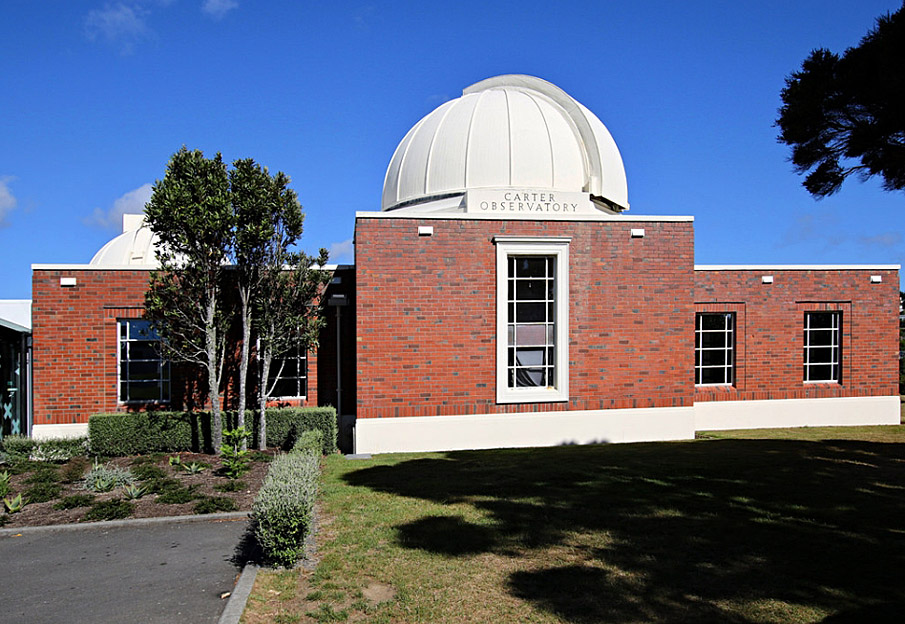
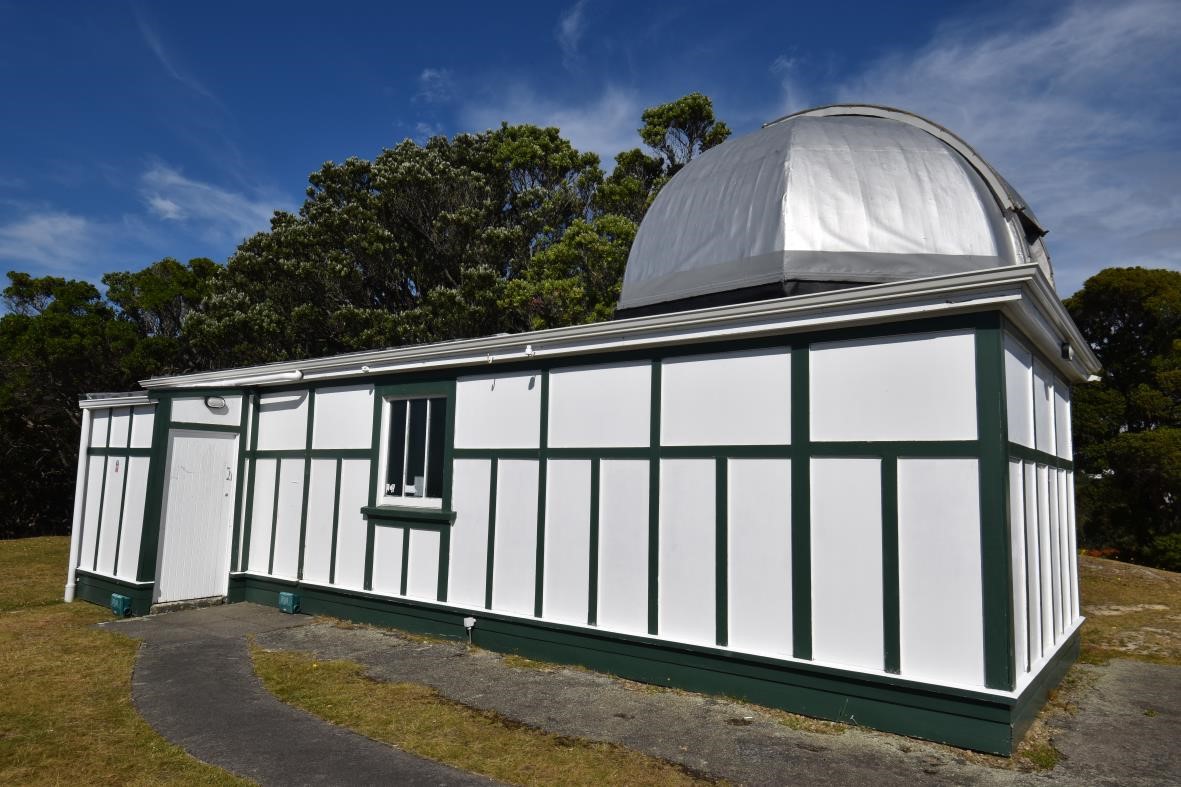
The Dominion Observatory building forms part of a precinct along with the Carter Observatory (built 1940), Thomas King Observatory, Gardens Battery and an old Scout Hall which is thought to have been used as a barracks for gunners manning the batterys. The precinct is visually interesting. It is set adjacent to the Botanic Gardens, on reserve land, and is surrounded by attractive lawns and trees. The small low lying buildings blend in well with their setting and their appearance is enhanced. In addition to its attractive surrounds, the precinct is also notable for its commanding position, offering superb views overlooking the central city and harbour.
The building originally consisted of a transit room, an octagonal clock room and an office above it, forming the tower. The office wing consisting of four offices was added to the western side of the building in 1926.
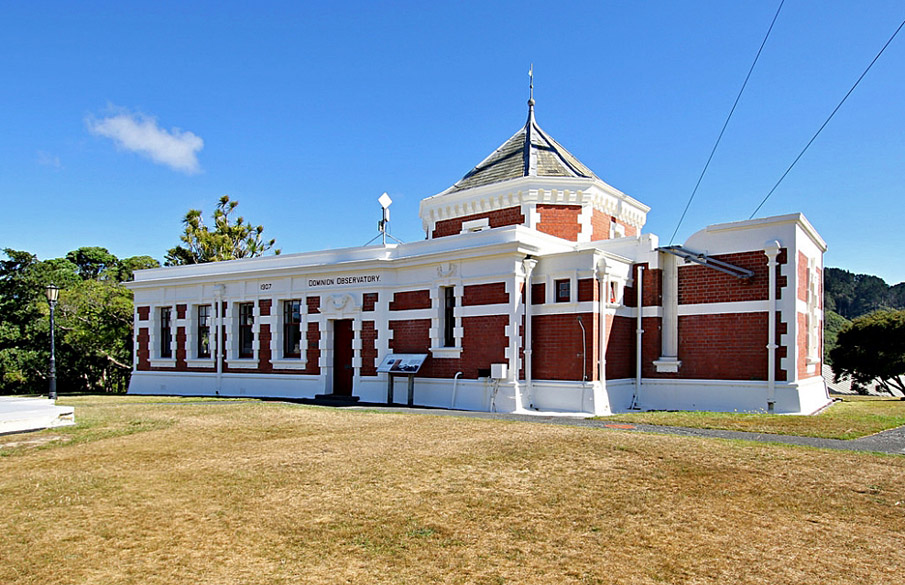
A dignified Edwardian design with English Baroque exterior detailing and prominent wide tower with cap. A good example of the smaller type of building designed for a specific purpose by the Government Architect.


List Entry Information
Status
Listed
List Entry Status
Historic Place Category 1
Access
Private/No Public Access
List Number
4700
Date Entered
25th September 1986
Date of Effect
25th September 1986
City/District Council
Wellington City
Region
Wellington Region
Legal description
Sec 1223 Town of Wellington (NZ Gazette 1998, p.68)
Status
Listed
List Entry Status
Historic Place Category 1
Access
Private/No Public Access
List Number
4700
Date Entered
25th September 1986
Date of Effect
25th September 1986
City/District Council
Wellington City
Region
Wellington Region
Legal description
Sec 1223 Town of Wellington (NZ Gazette 1998, p.68)
Why is this place significant?
Historic Significance
Historical Significance or Value The building was erected as the observatory for the Government Time Service. The Time Service itself had been erected in 1868 when a standard time was established for all New Zealand. The first observatory was located in Bolton Street cemetery reserve and the new building erected on the present site at the behest of Sir James Hector after whom it is named. Hector who was Director of the Time Service 1869 - 1903 is known as the 'Father' of New Zealand science. During his career he had been Director of the Colonial Museum, Colonial Laboratory, Colonial Botanic Gardens and Metrological Survey as well as the Colonial Observatory. Below the building lies the remains of an old defence fortification known as the Garden Battery. The battery was one of a number constructed at the time of the Russian scare of 1884-86. Since the 1920s the building has been used as the centre for recording seismological activities, a very important function in an earthquake prone country.
Physical Significance
ARCHITECTURAL DESCRITPION (Style) The building is designed in a simplified Edwardian Baroque style. It has windows decorated with Gibbs surrounds and elongated keystones. ARCHITECTURAL SIGNIFICANCE A dignified Edwardian design with English Baroque exterior detailing and prominent wide tower with cap. A good example of the smaller type of building designed for a specific purpose by the Government Architect. MODIFICATIONS The building originally consisted of a transit room, an octagonal clock room and an office above it, forming the tower. The office wing consisting of four offices was added to the western side of the building in 1926. TOWNSCAPE/LANDMARK SIGNIFICANCE The Dominion Observatory building forms part of a precinct along with the Carter Observatory (built 1940), Thomas King Observatory, Gardens Battery and an old Scout Hall which is thought to have been used as a barracks for gunners manning the batterys. The precinct is visually interesting. It is set adjacent to the Botanic Gardens, on reserve land, and is surrounded by attractive lawns and trees. The small low lying buildings blend in well with their setting and their appearance is enhanced. In addition to its attractive surrounds, the precinct is also notable for its commanding position, offering superb views overlooking the central city and harbour.
Why is this place significant?
Historic Significance
Historical Significance or Value The building was erected as the observatory for the Government Time Service. The Time Service itself had been erected in 1868 when a standard time was established for all New Zealand. The first observatory was located in Bolton Street cemetery reserve and the new building erected on the present site at the behest of Sir James Hector after whom it is named. Hector who was Director of the Time Service 1869 - 1903 is known as the 'Father' of New Zealand science. During his career he had been Director of the Colonial Museum, Colonial Laboratory, Colonial Botanic Gardens and Metrological Survey as well as the Colonial Observatory. Below the building lies the remains of an old defence fortification known as the Garden Battery. The battery was one of a number constructed at the time of the Russian scare of 1884-86. Since the 1920s the building has been used as the centre for recording seismological activities, a very important function in an earthquake prone country.
Physical Significance
ARCHITECTURAL DESCRITPION (Style) The building is designed in a simplified Edwardian Baroque style. It has windows decorated with Gibbs surrounds and elongated keystones. ARCHITECTURAL SIGNIFICANCE A dignified Edwardian design with English Baroque exterior detailing and prominent wide tower with cap. A good example of the smaller type of building designed for a specific purpose by the Government Architect. MODIFICATIONS The building originally consisted of a transit room, an octagonal clock room and an office above it, forming the tower. The office wing consisting of four offices was added to the western side of the building in 1926. TOWNSCAPE/LANDMARK SIGNIFICANCE The Dominion Observatory building forms part of a precinct along with the Carter Observatory (built 1940), Thomas King Observatory, Gardens Battery and an old Scout Hall which is thought to have been used as a barracks for gunners manning the batterys. The precinct is visually interesting. It is set adjacent to the Botanic Gardens, on reserve land, and is surrounded by attractive lawns and trees. The small low lying buildings blend in well with their setting and their appearance is enhanced. In addition to its attractive surrounds, the precinct is also notable for its commanding position, offering superb views overlooking the central city and harbour.
Construction Professional
Name
Campbell, John
Type
Architect
Biography
John Campbell (1857-1942) served his articles under John Gordon (c1835-1912) in Glasgow. He arrived in Dunedin in 1882 and after a brief period as a draughtsman with Mason and Wales joined the Dunedin branch of the Public Works Department in 1883. His first known work, an unbuilt design for the Dunedin Railway Station, reveals an early interest in Baroque architecture. In November 1888 Campbell was transferred to Wellington where in 1889 he took up the position of draughtsman in charge of the Public Buildings Division of the Public Works Department. He remained in charge of the design of government buildings throughout New Zealand until his retirement in 1922, becoming in 1909 the first person to hold the position of Government Architect. Government architecture designed under his aegis evidences a change in style from Queen Anne to Edwardian Baroque. His best-known Queen Anne design is the Dunedin Police Station (1895-8), modelled on Richard Norman Shaw's New Scotland Yard (1887-90). Among his most exuberant Edwardian Baroque buildings is the Public Trust Office, Wellington (1905-09). Although Campbell designed the Dunedin Law Courts (1899-1902) in the Gothic style with a Scottish Baronial inflection, he established Edwardian Baroque as the government style for police stations, courthouses and post offices throughout New Zealand. In 1911 Campbell won the nation-wide architectural competition for the design of Parliament Buildings, Wellington. Although only partially completed, Parliament House is the crowning achievement of Campbell's career.
Construction Details
Start Year
1907
Type
Original Construction
Start Year
1926
Type
Addition
Description
Extension to the west side of the building
Construction Materials
Brick Building
Construction Professional
Name
Campbell, John
Type
Architect
Biography
John Campbell (1857-1942) served his articles under John Gordon (c1835-1912) in Glasgow. He arrived in Dunedin in 1882 and after a brief period as a draughtsman with Mason and Wales joined the Dunedin branch of the Public Works Department in 1883. His first known work, an unbuilt design for the Dunedin Railway Station, reveals an early interest in Baroque architecture. In November 1888 Campbell was transferred to Wellington where in 1889 he took up the position of draughtsman in charge of the Public Buildings Division of the Public Works Department. He remained in charge of the design of government buildings throughout New Zealand until his retirement in 1922, becoming in 1909 the first person to hold the position of Government Architect. Government architecture designed under his aegis evidences a change in style from Queen Anne to Edwardian Baroque. His best-known Queen Anne design is the Dunedin Police Station (1895-8), modelled on Richard Norman Shaw's New Scotland Yard (1887-90). Among his most exuberant Edwardian Baroque buildings is the Public Trust Office, Wellington (1905-09). Although Campbell designed the Dunedin Law Courts (1899-1902) in the Gothic style with a Scottish Baronial inflection, he established Edwardian Baroque as the government style for police stations, courthouses and post offices throughout New Zealand. In 1911 Campbell won the nation-wide architectural competition for the design of Parliament Buildings, Wellington. Although only partially completed, Parliament House is the crowning achievement of Campbell's career.
Construction Details
Start Year
1907
Type
Original Construction
Start Year
1926
Type
Addition
Description
Extension to the west side of the building
Construction Materials
Brick Building
The building is designed in a simplified Edwardian Baroque style. It has windows decorated with Gibbs surrounds and elongated keystones. A dignified Edwardian design with English Baroque exterior detailing and prominent wide tower with cap. A good example of the smaller type of building designed for a specific purpose by the Government Architect.
Historical and Associated Iwi / Hapū / Whānau
Other Information
A fully referenced registration report is available from the NZHPT Central region office Please note that entry on the New Zealand Heritage List/Rarangi Korero identifies only the heritage values of the property concerned, and should not be construed as advice on the state of the property, or as a comment of its soundness or safety, including in regard to earthquake risk, safety in the event of fire, or insanitary conditions. This historic place was registered under the Historic Places Act 1980. This report includes the text from the original Building Classification Committee report considered by the NZHPT Board at the time of registration.
Historical and Associated Iwi / Hapū / Whānau
Other Information
A fully referenced registration report is available from the NZHPT Central region office Please note that entry on the New Zealand Heritage List/Rarangi Korero identifies only the heritage values of the property concerned, and should not be construed as advice on the state of the property, or as a comment of its soundness or safety, including in regard to earthquake risk, safety in the event of fire, or insanitary conditions. This historic place was registered under the Historic Places Act 1980. This report includes the text from the original Building Classification Committee report considered by the NZHPT Board at the time of registration.
Former Usages
General Usage: Research
Specific Usage: Observatory
General Usage: Research
Specific Usage: Scientific building/ laboratory
Former Usages
General Usage: Research
Specific Usage: Observatory
General Usage: Research
Specific Usage: Scientific building/ laboratory
Stay up to date with Heritage this month