

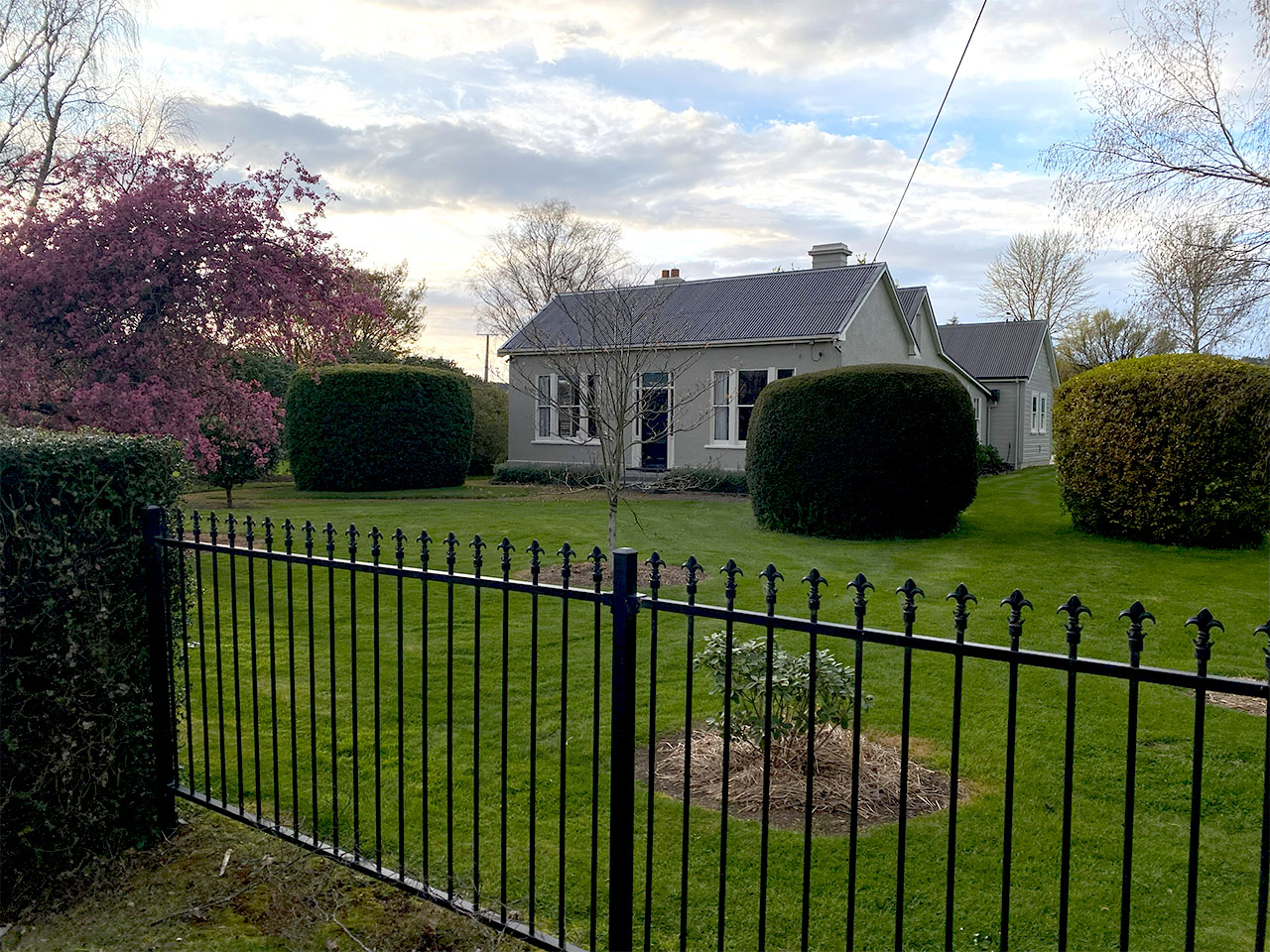
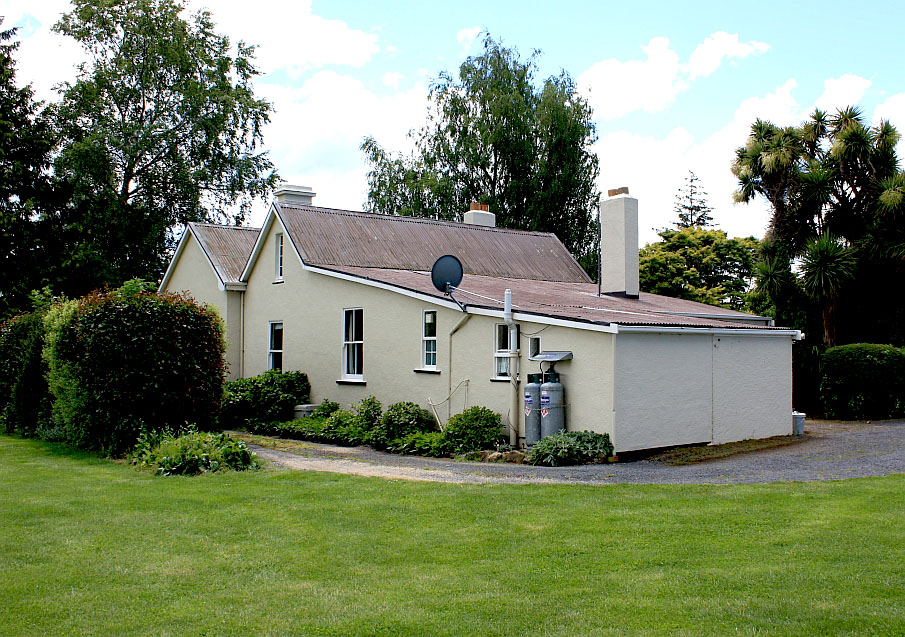
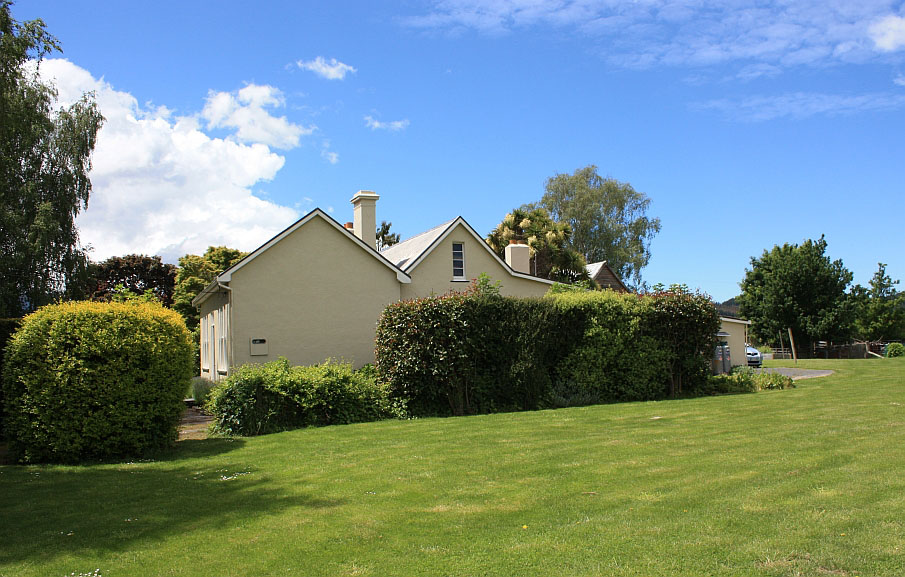
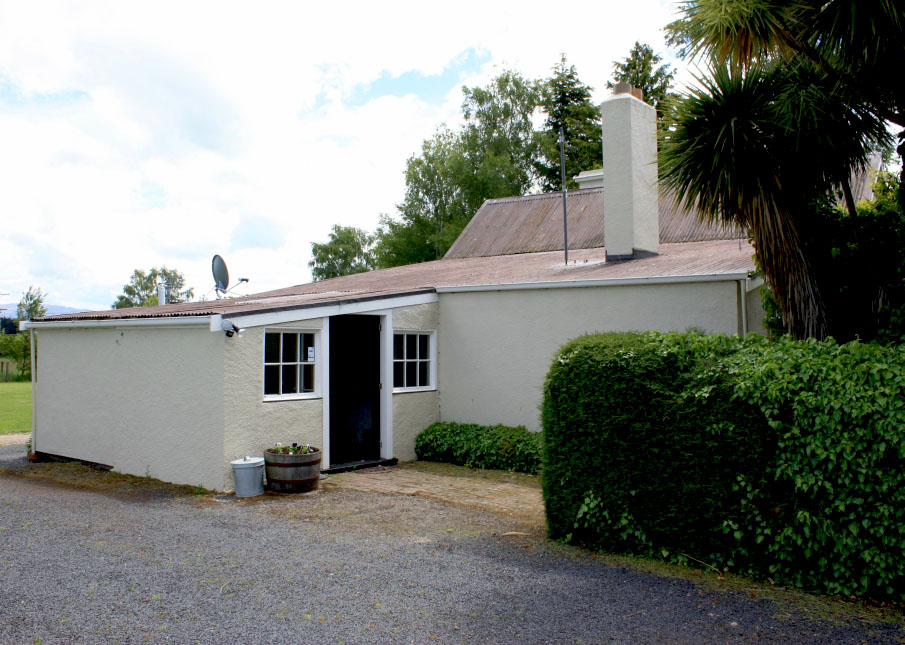
Janefield consists of two gables with a lean-to at the rear. It is thought that the back gable (now the middle section of the cottage) and lean-to were built first with the front gable added at a later stage, although this is a matter of some debate. The front façade is symmetrical in arrangement with two sash windows flanking a central door. On the ground floor there was a parlour at the front, four bedrooms and a dining/living room connected to a scullery. Two small attic bedrooms are tucked in the roof of the second gable. The cottage was constructed of timber which was roughcast at a later stage, presumably to protect the timber. The foundations are wood, brick and concrete and the roof is corrugated iron.
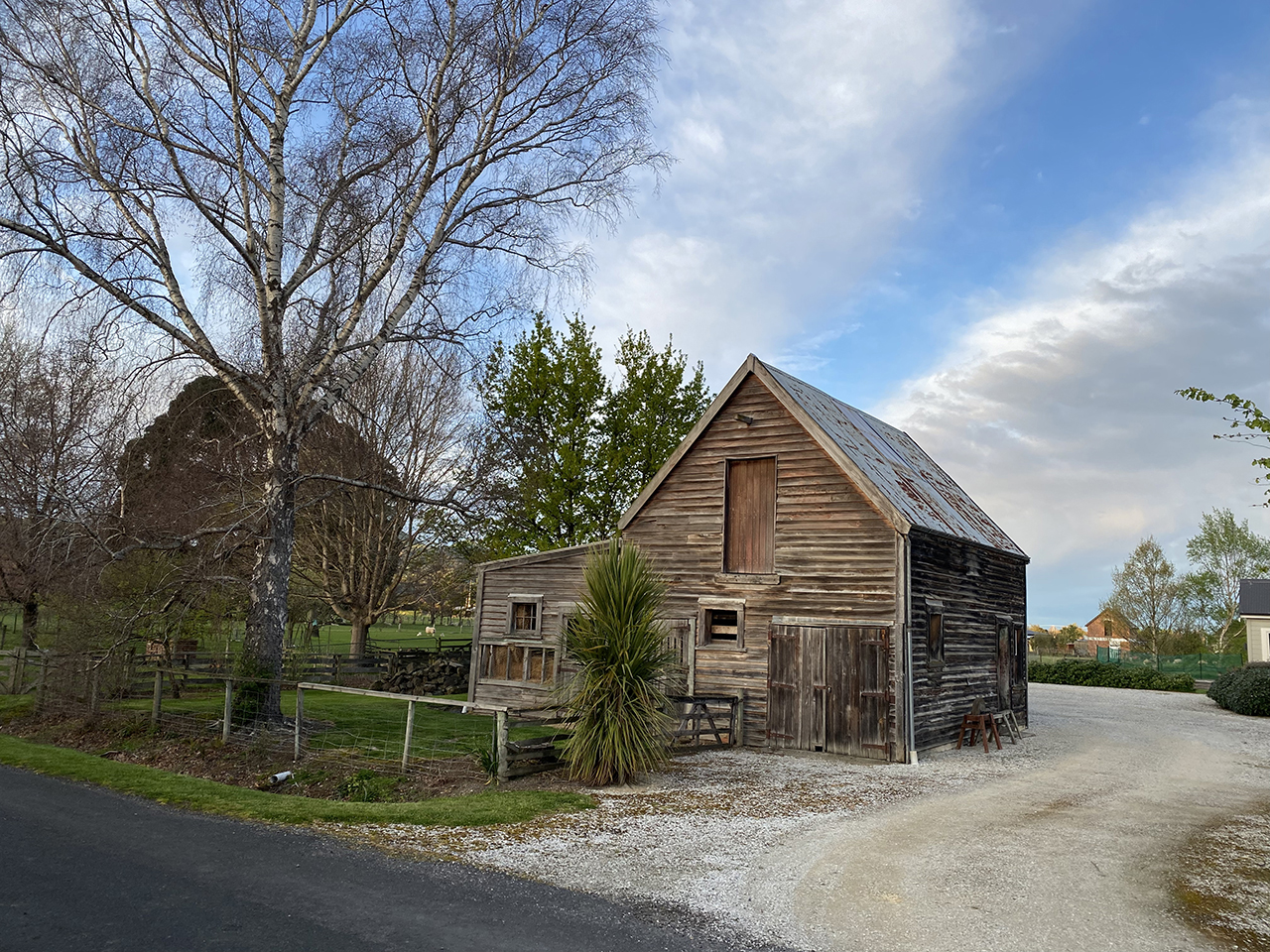
Oughton's eldest son, James (?-1902), took over Janefield when the family returned to Otago and continued to farm there until 1899 when he offered the farm to the government under the 1892 Land for Settlement Act. At the time the cottage sat on a property of 147 acres (59.5 hectares) with 'plantations and fruit trees' and consisted of eight rooms, with a scullery and numerous outbuildings. The barn, also registered by the New Zealand Historic Places Trust Pouhere Taonga, is the only survivor of the outbuildings. The government accepted James' offer, purchasing Janefield for £4,888.34. It described the land as rich and level, and subdivided it into sections of between three to ten acres, which were offered to the public in September 1899. The 'Janefield Settlement' as the place became known provided smallholdings for predominantly working men, many of whom worked at the neighbouring Mosgiel Woollen Mill or on the railways. Although troubled by noxious weeds the land gradually became settled and by 1907 19 houses had been built and 89 people lived in the settlement. Oughton's former cottage was initially leased, but when the leasee defaulted in 1902 the house and surrounding ten acre section (around four hectares) was leased to the Department of Agriculture who used it to house the local stock inspectors. One of these, Hector McLeod, purchased the cottage in 1912. His descendants still own it.
Janefield has been only slightly modified over the years, with the living room being opened into one of the small bedrooms to create a large dining/living room and the front parlour being converted into a bedroom. Two Victorian wooden fireplaces said to be similar to the original ones were installed during the 1980s.
Janefield is significant as the earliest cottage still extant on the Taieri Plains and is associated with one of the first Pakeha to settle in the area. Its subsequent history is tied up with the Liberal Government's policy of land reform, which impacted on both large and small runs.
List Entry Information
Status
Listed
List Entry Status
Historic Place Category 1
Access
Private/No Public Access
List Number
4736
Date Entered
27th July 1988
Date of Effect
27th July 1988
City/District Council
Dunedin City
Region
Otago Region
Extent of List Entry
Extent includes the land described as Sec 16 Blk I East Taieri Survey District (RT OT3A/1136), Otago Land District and the building known Janefield thereon, and its fittings and fixtures.
Legal description
Sec 16 Blk I East Taieri Survey District (RT OT3A/1136), Otago Land District
Status
Listed
List Entry Status
Historic Place Category 1
Access
Private/No Public Access
List Number
4736
Date Entered
27th July 1988
Date of Effect
27th July 1988
City/District Council
Dunedin City
Region
Otago Region
Extent of List Entry
Extent includes the land described as Sec 16 Blk I East Taieri Survey District (RT OT3A/1136), Otago Land District and the building known Janefield thereon, and its fittings and fixtures.
Legal description
Sec 16 Blk I East Taieri Survey District (RT OT3A/1136), Otago Land District
Why is this place significant?
Historic Significance
Historical Significance or Value This is considered to be the oldest house on the Taieri Plain still standing and lived in. David Oughton built it in 1851 for his first wife, Jane, after which it is named. When she died after the birth of her second child, Oughton returned to Scotland, married again and returned to build Boghead (Duddingston) at East Taieri. His first son, James, continued to farm Janesfield until the land was subdivided in 1889. The government retained the house for the local stock inspector, one of whom, Hector McLeod, bought it. His daughter, Mrs Lewis, still lives in it.
Physical Significance
Architectural Significance: This is a good example of the typical simple cottage of the moderately well-to-do pioneer family. Townscape/Landmark Significance: The house is hidden by trees from Factory Road but it is well known locally as the oldest house in the area. The district round about is known as Janesfield.
Why is this place significant?
Historic Significance
Historical Significance or Value This is considered to be the oldest house on the Taieri Plain still standing and lived in. David Oughton built it in 1851 for his first wife, Jane, after which it is named. When she died after the birth of her second child, Oughton returned to Scotland, married again and returned to build Boghead (Duddingston) at East Taieri. His first son, James, continued to farm Janesfield until the land was subdivided in 1889. The government retained the house for the local stock inspector, one of whom, Hector McLeod, bought it. His daughter, Mrs Lewis, still lives in it.
Physical Significance
Architectural Significance: This is a good example of the typical simple cottage of the moderately well-to-do pioneer family. Townscape/Landmark Significance: The house is hidden by trees from Factory Road but it is well known locally as the oldest house in the area. The district round about is known as Janesfield.
Construction Professional
Name
Oughton, David
Type
Builder
Biography
David Oughton was one of the first farmers to take up land on the Taieri Plain. He built and presumably designed the Janefield cottage North Taieri.
Construction Details
Start Year
1851
startYearCirca
Type
Original Construction
Start Year
1980
startYearCirca
Finish Year
1990
finishYearCirca
Type
Modification
Construction Materials
A plain cottage, built in wood which has been rough cast. The roof is corrugated iron and the foundations wooden , brick and concrete. It has two gables and a long lean-to at the back. As well as the parlour and living room on the ground floor there were four bedrooms and a lean-to scullery. The back gable has sufficient height to allow for two small bedrooms in the attic.
Notable Features
Its age and good condition
Construction Professional
Name
Oughton, David
Type
Builder
Biography
David Oughton was one of the first farmers to take up land on the Taieri Plain. He built and presumably designed the Janefield cottage North Taieri.
Construction Details
Start Year
1851
startYearCirca
Type
Original Construction
Start Year
1980
startYearCirca
Finish Year
1990
finishYearCirca
Type
Modification
Construction Materials
A plain cottage, built in wood which has been rough cast. The roof is corrugated iron and the foundations wooden , brick and concrete. It has two gables and a long lean-to at the back. As well as the parlour and living room on the ground floor there were four bedrooms and a lean-to scullery. The back gable has sufficient height to allow for two small bedrooms in the attic.
Notable Features
Its age and good condition
Architect/Engineer/Designer: Presumably designed by the pioneer farmer David Oughton who built it. David Oughton was one of the first farmers to take up land on the Taieri Plain. Architectural Description (Style): This type of simple cottage with a symmetrical front - a window on each side of the front door - owes more to Georgian architectural styles than to the Gothic and Classic Revivals of the Victorian period. Modifications: The back gable and lean-to were built first and the front gable and its two rooms added the following year. This would account for the different pitch of the two gables. This house has been little modified externally, and internally it has been carefully restored. The major change is the opening up of the dining-living room and a small bedroom into one large room. The previous front parlour has become a bedroom. The carved wooden fireplace in the living room is similar to the original one which Mrs Lewis remembers.
Architect/Engineer/Designer: Presumably designed by the pioneer farmer David Oughton who built it. David Oughton was one of the first farmers to take up land on the Taieri Plain. Architectural Description (Style): This type of simple cottage with a symmetrical front - a window on each side of the front door - owes more to Georgian architectural styles than to the Gothic and Classic Revivals of the Victorian period. Modifications: The back gable and lean-to were built first and the front gable and its two rooms added the following year. This would account for the different pitch of the two gables. This house has been little modified externally, and internally it has been carefully restored. The major change is the opening up of the dining-living room and a small bedroom into one large room. The previous front parlour has become a bedroom. The carved wooden fireplace in the living room is similar to the original one which Mrs Lewis remembers.
Historical and Associated Iwi / Hapū / Whānau
Completion Date
3rd June 2003
Report Written By
Melanie Lovell-Smith
Information Sources
Appendices to the Journals of the House of Representatives (AJHR)
Appendices to the Journals of the House of Representatives
Galer, 1981
L. Galer, Houses and Homes, Allied Press, Dunedin, 1981
Lemon, 1972
Daphne Lemon, More Taieri Buildings with drawings by Audrey Bascand, Dunedin, 1972
Salmond, 1986
Jeremy Salmond, Old New Zealand Houses 1800-1940, Auckland, 1986, Reed Methuen
Other Information
This historic place was registered under the Historic Places Act 1980. This report includes the text from the original Building Classification Committee report considered by the NZHPT Board at the time of registration. Please note that entry on the New Zealand Heritage List/Rarangi Korero identifies only the heritage values of the property concerned, and should not be construed as advice on the state of the property, or as a comment of its soundness or safety, including in regard to earthquake risk, safety in the event of fire, or insanitary conditions.
Historical and Associated Iwi / Hapū / Whānau
Completion Date
3rd June 2003
Report Written By
Melanie Lovell-Smith
Information Sources
Appendices to the Journals of the House of Representatives (AJHR)
Appendices to the Journals of the House of Representatives
Galer, 1981
L. Galer, Houses and Homes, Allied Press, Dunedin, 1981
Lemon, 1972
Daphne Lemon, More Taieri Buildings with drawings by Audrey Bascand, Dunedin, 1972
Salmond, 1986
Jeremy Salmond, Old New Zealand Houses 1800-1940, Auckland, 1986, Reed Methuen
Other Information
This historic place was registered under the Historic Places Act 1980. This report includes the text from the original Building Classification Committee report considered by the NZHPT Board at the time of registration. Please note that entry on the New Zealand Heritage List/Rarangi Korero identifies only the heritage values of the property concerned, and should not be construed as advice on the state of the property, or as a comment of its soundness or safety, including in regard to earthquake risk, safety in the event of fire, or insanitary conditions.
Current Usages
Uses: Accommodation
Specific Usage: House
Former Usages
General Usage: Accommodation
Specific Usage: House
Web Links
description: Farm’s rich family history recognised, Rural Life, 25 June 2020
url: https://www.odt.co.nz/rural-life/focus-on-farming/farm%E2%80%99s-rich-family-history-recognised
Current Usages
Uses: Accommodation
Specific Usage: House
Former Usages
General Usage: Accommodation
Specific Usage: House
Web Links
description: Farm’s rich family history recognised, Rural Life, 25 June 2020
url: https://www.odt.co.nz/rural-life/focus-on-farming/farm%E2%80%99s-rich-family-history-recognised
Location
Sign up to hear more
Get the latest heritage news, features and events delivered
straight to your inbox.
