

The Greymouth to Hokitika section of the Greymouth to Ross railway line opened on 18 December 1893. However, as other bridges on the line, such as the road/rail bridge over the Arahura River, were built in the late 1880s, it is possible that the Paroa bridge may have been erected several years prior to the line's opening.
List Entry Information
Status
Listed
List Entry Status
Historic Place Category 1
Access
Private/No Public Access
List Number
5018
Date Entered
30th August 1990
Date of Effect
30th August 1990
City/District Council
Grey District
Region
West Coast Region
Extent of List Entry
Extent includes part of the land described as Railway Land as shown on SO 5045, Westland Land District and the structure known as Railway Beam Bridge thereon. Refer to the extent map tabled at the Heritage List/ Rārangi Kōrero Committee meeting on 30 July 2020.
Legal description
Railway Land as shown on SO 5045, Westland Land District.
Status
Listed
List Entry Status
Historic Place Category 1
Access
Private/No Public Access
List Number
5018
Date Entered
30th August 1990
Date of Effect
30th August 1990
City/District Council
Grey District
Region
West Coast Region
Extent of List Entry
Extent includes part of the land described as Railway Land as shown on SO 5045, Westland Land District and the structure known as Railway Beam Bridge thereon. Refer to the extent map tabled at the Heritage List/ Rārangi Kōrero Committee meeting on 30 July 2020.
Legal description
Railway Land as shown on SO 5045, Westland Land District.
Why is this place significant?
Historic Significance
Historical Significance or Value The built-beam bridge in Paroa stands as a reminder of the crucial role played by the railways in encouraging settlement on the West Coast and in developing the region's coal, timber and tourist industries.
Physical Significance
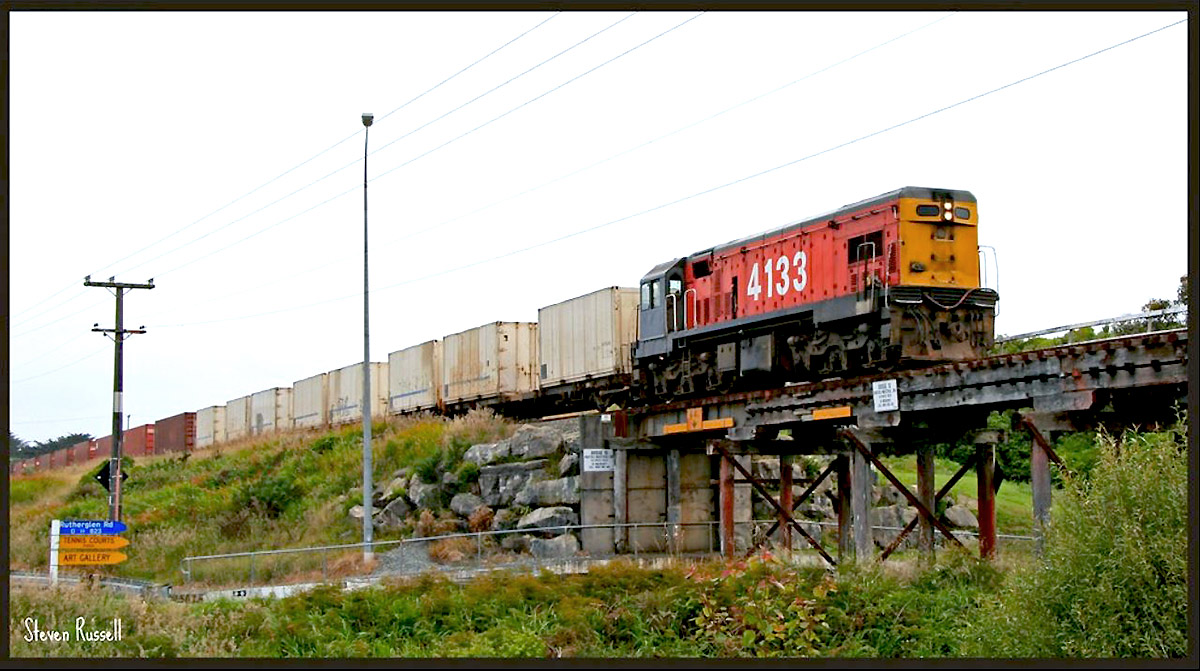
ARCHITECTURAL QUALITY: Railway construction was a major preoccupation of the Public Works Department between 1870 and c.1920. The bridge at Paroa is an example of the standardised bridge design which was developed by William Hales' Engineering Department to facilitate the rapid construction of rail bridges throughout the country. Of greater significance, however, is the fact that this bridge and another on the same line 8.25 kilometres south of Greymouth, may be the only built beam bridges still in service on New Zealand's rail network. The built beam may be used to increase the length of span that can be bridged with beams, or alternatively to upgrade an existing bridge to handle heavier loads, and it is made up of two beams which are tied together so as to act as a structural entity which is stronger than if the beams had been used separately. Experiment shows that a deepened or keyed beam, when securely keyed and bolted up, has about 80 percent of the strength and rigidity of a solid beam of the same dimensions and the continued use of the Paroa bridge demonstrates that efficacy of this kind of construction. TOWNSCAPE/LANDMARK VALUE: This small bridge is not a prominent landmark in Paroa although it is very accessible.
Why is this place significant?
Historic Significance
Historical Significance or Value The built-beam bridge in Paroa stands as a reminder of the crucial role played by the railways in encouraging settlement on the West Coast and in developing the region's coal, timber and tourist industries.
Physical Significance
ARCHITECTURAL QUALITY: Railway construction was a major preoccupation of the Public Works Department between 1870 and c.1920. The bridge at Paroa is an example of the standardised bridge design which was developed by William Hales' Engineering Department to facilitate the rapid construction of rail bridges throughout the country. Of greater significance, however, is the fact that this bridge and another on the same line 8.25 kilometres south of Greymouth, may be the only built beam bridges still in service on New Zealand's rail network. The built beam may be used to increase the length of span that can be bridged with beams, or alternatively to upgrade an existing bridge to handle heavier loads, and it is made up of two beams which are tied together so as to act as a structural entity which is stronger than if the beams had been used separately. Experiment shows that a deepened or keyed beam, when securely keyed and bolted up, has about 80 percent of the strength and rigidity of a solid beam of the same dimensions and the continued use of the Paroa bridge demonstrates that efficacy of this kind of construction. TOWNSCAPE/LANDMARK VALUE: This small bridge is not a prominent landmark in Paroa although it is very accessible.
Construction Professional
Name
Hales, William (1830-1909)
Type
Engineer
Biography
William Hales (1830-1909) was born in New Brunswick and studied engineering in Liverpool before immigrating to Australia in 1853. After working there as a contractor for three years, Hales settled in New Zealand and subsequently joined the civil service as an engineer in 1861. In the forty-five years of government service which followed, William Hales held a variety of posts and was responsible for the design of lighthouses, bridges, wharves and roads throughout the country. Having served ten years as the Auckland District Engineer, Hales was promoted to the position of Acting Engineer-in-Chief of New Zealand in January 1891. He was confirmed as Engineer-in-Chief in the following year and held this office until his retirement in 1906 at the age of seventy-six. During a long and productive career William Hales played a major role in the development of New Zealand's public works and he was a key figure within the Public Works Department at a time when it had become the biggest construction agency in the country.
Construction Details
Type
Modification
Description
The fourth span at the northern end, which was of simple beam construction, has been filled in to become part of the bridge abutment at that end of the bridge.
Construction Materials
Steel rails; Australian hardwood or ironbark.
Notable Features
The built beam construction.
Construction Professional
Name
Hales, William (1830-1909)
Type
Engineer
Biography
William Hales (1830-1909) was born in New Brunswick and studied engineering in Liverpool before immigrating to Australia in 1853. After working there as a contractor for three years, Hales settled in New Zealand and subsequently joined the civil service as an engineer in 1861. In the forty-five years of government service which followed, William Hales held a variety of posts and was responsible for the design of lighthouses, bridges, wharves and roads throughout the country. Having served ten years as the Auckland District Engineer, Hales was promoted to the position of Acting Engineer-in-Chief of New Zealand in January 1891. He was confirmed as Engineer-in-Chief in the following year and held this office until his retirement in 1906 at the age of seventy-six. During a long and productive career William Hales played a major role in the development of New Zealand's public works and he was a key figure within the Public Works Department at a time when it had become the biggest construction agency in the country.
Construction Details
Type
Modification
Description
The fourth span at the northern end, which was of simple beam construction, has been filled in to become part of the bridge abutment at that end of the bridge.
Construction Materials
Steel rails; Australian hardwood or ironbark.
Notable Features
The built beam construction.
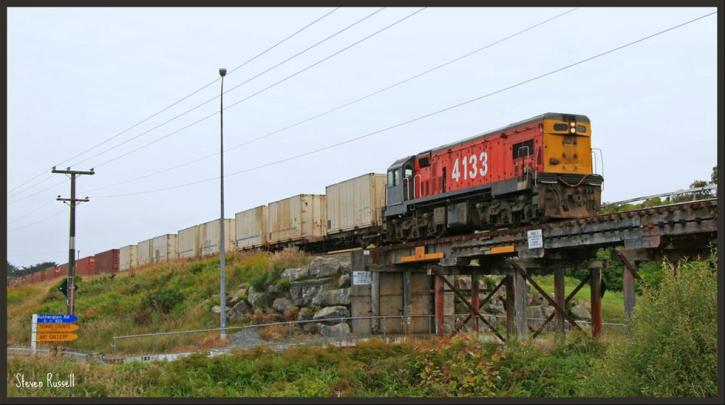
ARCHITECTURAL DESCRIPTION: Bridge Number 8 on the Greymouth to Ross railway line is 6.5 kilometres south of Greymouth and runs parallel to State Highway Six over Clough Road in Paroa. The bridge is three spans in length and rests upon four timber pile supports, two of which are set close to the bridge abutments. The two northernmost pile groups are diagonally braced with steel straps and also by posts bolted to the external members of each pile group. The southernmost span of the bridge is a simple beam whereas the two major spans are built beams. The latter are also known as compound or keyed beams because they are made up of two beams separated by joggle blocks or keys and tied together by spreader bolts. The bridge abutments are retained behind horizontal boarding which is bolted to vertical steel bars and the railway tracks rest upon sleepers which are laid over the top of the beams. The built beams are united by secondary transverse members which have diagonal bracing and the entire structure is bolted together. MODIFICATIONS: The fourth span at the northern end, which was of simple beam construction, has been filled in to become part of the bridge abutment at that end of the bridge.
ARCHITECTURAL DESCRIPTION: Bridge Number 8 on the Greymouth to Ross railway line is 6.5 kilometres south of Greymouth and runs parallel to State Highway Six over Clough Road in Paroa. The bridge is three spans in length and rests upon four timber pile supports, two of which are set close to the bridge abutments. The two northernmost pile groups are diagonally braced with steel straps and also by posts bolted to the external members of each pile group. The southernmost span of the bridge is a simple beam whereas the two major spans are built beams. The latter are also known as compound or keyed beams because they are made up of two beams separated by joggle blocks or keys and tied together by spreader bolts. The bridge abutments are retained behind horizontal boarding which is bolted to vertical steel bars and the railway tracks rest upon sleepers which are laid over the top of the beams. The built beams are united by secondary transverse members which have diagonal bracing and the entire structure is bolted together. MODIFICATIONS: The fourth span at the northern end, which was of simple beam construction, has been filled in to become part of the bridge abutment at that end of the bridge.
Historical and Associated Iwi / Hapū / Whānau
Information Sources
Furkert, 1953
Frederick William Furkert, Early New Zealand Engineers, Wellington, 1953
New Zealand Historic Places Trust (NZHPT)
New Zealand Historic Places Trust
Noonan, 1975
Rosslyn J. Noonan, By Design: A Brief History of the Public Works Department Ministry of Works 1870-1970, Wellington, 1975
Brooks, 1976
H Brooks, Illustrated Encyclopedic Dictionary of Building and Construction Terms, Prentice-Hall Inc., Englewood Cliffs, New Jersey, 1976
Ednie, nd
J Ednie (ed.) Carpentry and Joinery, Vol. III, The Gresham Publishing Co. Ltd, London, no date.
Other Information
This historic place was registered under the Historic Places Act 1980. This report includes the text from the original Building Classification Committee report considered by the NZHPT Board at the time of registration. Please note that entry on the New Zealand Heritage List/Rarangi Korero identifies only the heritage values of the property concerned, and should not be construed as advice on the state of the property, or as a comment of its soundness or safety, including in regard to earthquake risk, safety in the event of fire, or insanitary conditions.
Historical and Associated Iwi / Hapū / Whānau
Information Sources
Furkert, 1953
Frederick William Furkert, Early New Zealand Engineers, Wellington, 1953
New Zealand Historic Places Trust (NZHPT)
New Zealand Historic Places Trust
Noonan, 1975
Rosslyn J. Noonan, By Design: A Brief History of the Public Works Department Ministry of Works 1870-1970, Wellington, 1975
Brooks, 1976
H Brooks, Illustrated Encyclopedic Dictionary of Building and Construction Terms, Prentice-Hall Inc., Englewood Cliffs, New Jersey, 1976
Ednie, nd
J Ednie (ed.) Carpentry and Joinery, Vol. III, The Gresham Publishing Co. Ltd, London, no date.
Other Information
This historic place was registered under the Historic Places Act 1980. This report includes the text from the original Building Classification Committee report considered by the NZHPT Board at the time of registration. Please note that entry on the New Zealand Heritage List/Rarangi Korero identifies only the heritage values of the property concerned, and should not be construed as advice on the state of the property, or as a comment of its soundness or safety, including in regard to earthquake risk, safety in the event of fire, or insanitary conditions.
Former Usages
General Usage: Transport
Specific Usage: Bridge/ Viaduct
Former Usages
General Usage: Transport
Specific Usage: Bridge/ Viaduct
Location
Sign up to hear more
Get the latest heritage news, features and events delivered
straight to your inbox.
