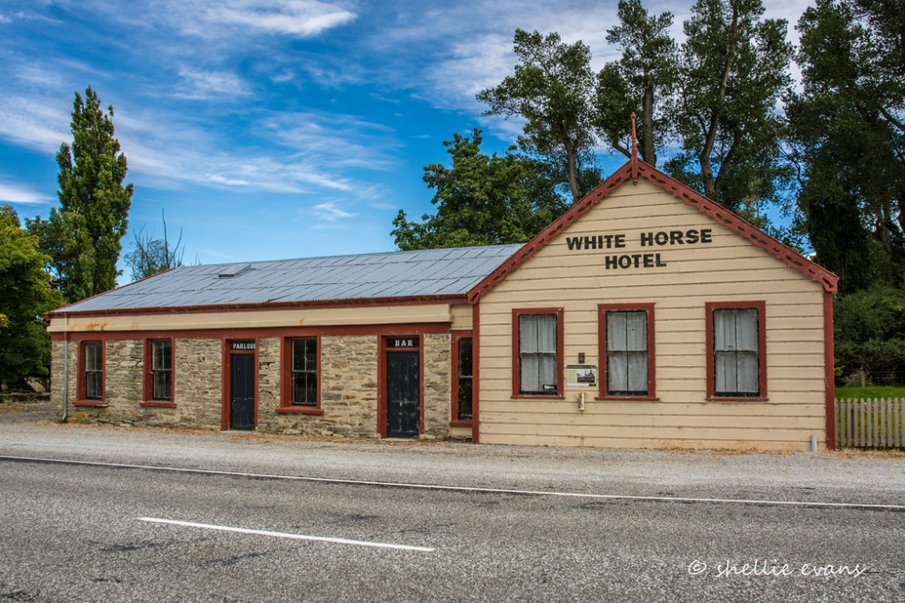
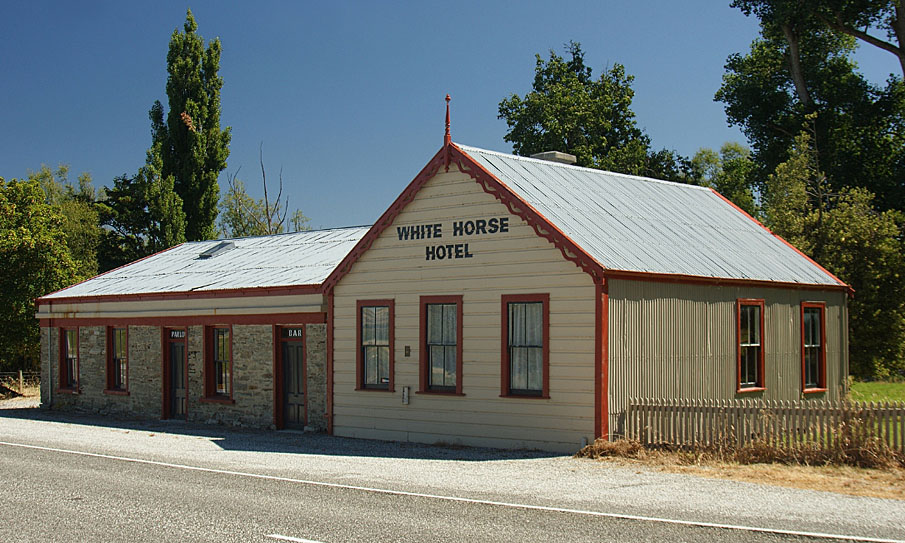
From its opening in 1864 until it closed in 1925, the White Horse Hotel (Former) formed the nucleus of the small Central Otago farming settlement of Becks and provided a place of rest for travellers. The former hotel has historical, architectural and social significance as the focus of this small community, and as a good example of a nineteenth century accommodation house.
The main road between Naseby and Clyde traversed Roughridge into the Manuherikia Valley, crossing the Manuherikia River close to its confluence with Dunstan Creek. In 1864, John Beck established the hotel near the crossing point. At the White Horse Hotel, passengers dined while the horses were changed. By 1866, the crossing place at the Manuherikia River was being referred to as Beck’s.
Hotel keeping was a family affair. Beck married Louisa Jasper in 1865, and together they ran the hotel and farmed an agricultural lease until John’s death in 1871. After John’s death, the hotel is most closely associated with Louisa and her sister Ann Milward. Ann’s husband James Milward was granted title to the land. James died in 1881, and Ann briefly owned the land until it was transferred to Louisa McMorran in 1881. In 1874, Louisa Beck had married Robert McMorran, so the link to the hotel’s early days continued with Louisa taking over her late husband’s business. Ann may have stayed on with her sister as she is reported as having the license in 1882. Ann died in April 1885. After McMorran died in 1881, Louisa again remarried, this time to Shotover farmer William Fisher.
William and Louisa Fisher ran the hotel until 1909. A post office was set up in the hotel in 1878, with telephone facilities added in 1896. The 1905 Cyclopedia of New Zealand records that the hotel had ten bedrooms, two sitting rooms and a ‘commodious dining room’ that could accommodate sixteen guests. The hotel buildings (constructed of stone, wood and iron) included an eight-stall stable with loose boxes. In 1905, Louisa Fisher commissioned St Bathans builder Thomas Wilkinson to construct ‘a substantial wood and iron building to be used for the purposes of a public hall.’
Louisa Fisher put the White Horse Hotel up for sale in February 1909. Robert Mee bought the 779 acres (315 hectares) of freehold, with the hall, a dwelling house of 16 rooms, a four-stalled stable, 3 looseboxes, woolshed, chaffhouse, men’s hut, sheepyards and stockyards and a water right. Mee ran the hotel until 1925, when he built new premises (also known as the White Horse Hotel) across the road. The old hotel closed and the building was used as a residence and a shop until around 1958. The old White Horse Hotel fell into a state of disrepair until March 1990, when a group of locals formed the Old White Horse Hotel Historical Society. The then owner Kevin Kane donated the building to the society, and the society set about raising money to make the building weathertight, with plans to restore it as funds are available. Work completed includes restoration of the exterior stonework, reroofing and some interior work. In 2014, the first White Horse Hotel building remains a roadside attraction in the small Becks settlement.
The main road between Naseby and Clyde traversed Roughridge into the Manuherikia Valley, crossing the Manuherikia River close to its confluence with Dunstan Creek. In 1864, John Beck established the hotel near the crossing point. At the White Horse Hotel, passengers dined while the horses were changed. By 1866, the crossing place at the Manuherikia River was being referred to as Beck’s.
Hotel keeping was a family affair. Beck married Louisa Jasper in 1865, and together they ran the hotel and farmed an agricultural lease until John’s death in 1871. After John’s death, the hotel is most closely associated with Louisa and her sister Ann Milward. Ann’s husband James Milward was granted title to the land. James died in 1881, and Ann briefly owned the land until it was transferred to Louisa McMorran in 1881. In 1874, Louisa Beck had married Robert McMorran, so the link to the hotel’s early days continued with Louisa taking over her late husband’s business. Ann may have stayed on with her sister as she is reported as having the license in 1882. Ann died in April 1885. After McMorran died in 1881, Louisa again remarried, this time to Shotover farmer William Fisher.
William and Louisa Fisher ran the hotel until 1909. A post office was set up in the hotel in 1878, with telephone facilities added in 1896. The 1905 Cyclopedia of New Zealand records that the hotel had ten bedrooms, two sitting rooms and a ‘commodious dining room’ that could accommodate sixteen guests. The hotel buildings (constructed of stone, wood and iron) included an eight-stall stable with loose boxes. In 1905, Louisa Fisher commissioned St Bathans builder Thomas Wilkinson to construct ‘a substantial wood and iron building to be used for the purposes of a public hall.’
Louisa Fisher put the White Horse Hotel up for sale in February 1909. Robert Mee bought the 779 acres (315 hectares) of freehold, with the hall, a dwelling house of 16 rooms, a four-stalled stable, 3 looseboxes, woolshed, chaffhouse, men’s hut, sheepyards and stockyards and a water right. Mee ran the hotel until 1925, when he built new premises (also known as the White Horse Hotel) across the road. The old hotel closed and the building was used as a residence and a shop until around 1958. The old White Horse Hotel fell into a state of disrepair until March 1990, when a group of locals formed the Old White Horse Hotel Historical Society. The then owner Kevin Kane donated the building to the society, and the society set about raising money to make the building weathertight, with plans to restore it as funds are available. Work completed includes restoration of the exterior stonework, reroofing and some interior work. In 2014, the first White Horse Hotel building remains a roadside attraction in the small Becks settlement.