

List Entry Information
Status
Listed
List Entry Status
Historic Place Category 2
Access
Able to Visit
List Number
5253
Date Entered
23rd September 2005
Date of Effect
23rd September 2005
City/District Council
Dunedin City
Region
Otago Region
Extent of List Entry
Registration includes the land on which the bridge structures sit, and the bridge spanning the Water of the Leith (see plan in registration report).
Legal description
No Certificate of Title. St David Street between Leith and Cumberland Streets was stoppped in April 1999. That land is held by the University of Otago in Certificate of Title OT18C/978 (Sec 1 SO 24879) and OT18C/979 (Sec 2 SO 24879). The bridge runs between these two sections.
Location Description
Bridge crosses the Water of the Leith
Status
Listed
List Entry Status
Historic Place Category 2
Access
Able to Visit
List Number
5253
Date Entered
23rd September 2005
Date of Effect
23rd September 2005
City/District Council
Dunedin City
Region
Otago Region
Extent of List Entry
Registration includes the land on which the bridge structures sit, and the bridge spanning the Water of the Leith (see plan in registration report).
Legal description
No Certificate of Title. St David Street between Leith and Cumberland Streets was stoppped in April 1999. That land is held by the University of Otago in Certificate of Title OT18C/978 (Sec 1 SO 24879) and OT18C/979 (Sec 2 SO 24879). The bridge runs between these two sections.
Location Description
Bridge crosses the Water of the Leith
Why is this place significant?
Cultural Significance
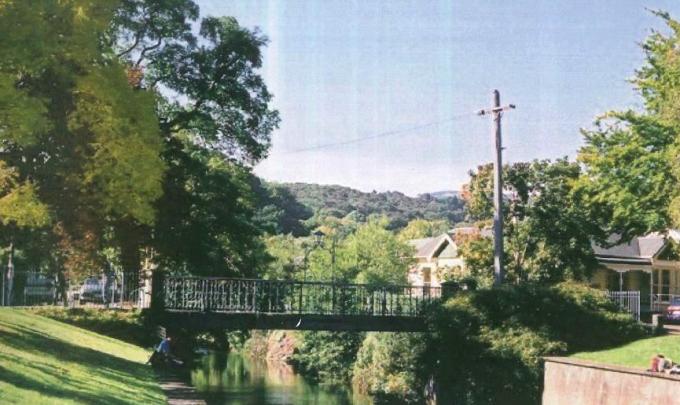
The bridge has social significance in that it recalls traditional patterns and experiences of life in Dunedin - where the pace of life was slower and traversing the campus on foot (via the bridge) was a common experience to generations of students. It is a natural stopping and conversation point with good views of the Clock Tower Building, the Professorial Houses and the modern university campus.
Historic Significance
Historical Significance or Value The St David Street Bridge has historical significance as it has served the community for over one hundred years. It replaced an earlier footbridge, marking a pedestrian point on this part of the Water of the Leith for over 125 years. It is the only crossing of the Leith between Dundas and Union Streets and was an important connection between the original University buildings and the residential area of North Dunedin. It has had extensive use by University students over this long period. It is a noted vantage point for events such as the Leith Bike Race and other water-based events during Capping and Orientation.
Physical Significance
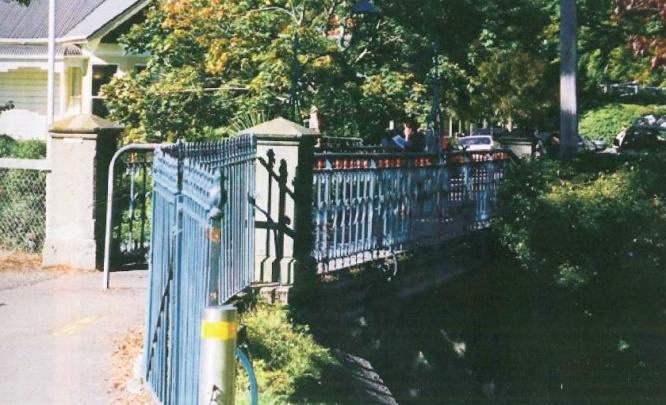
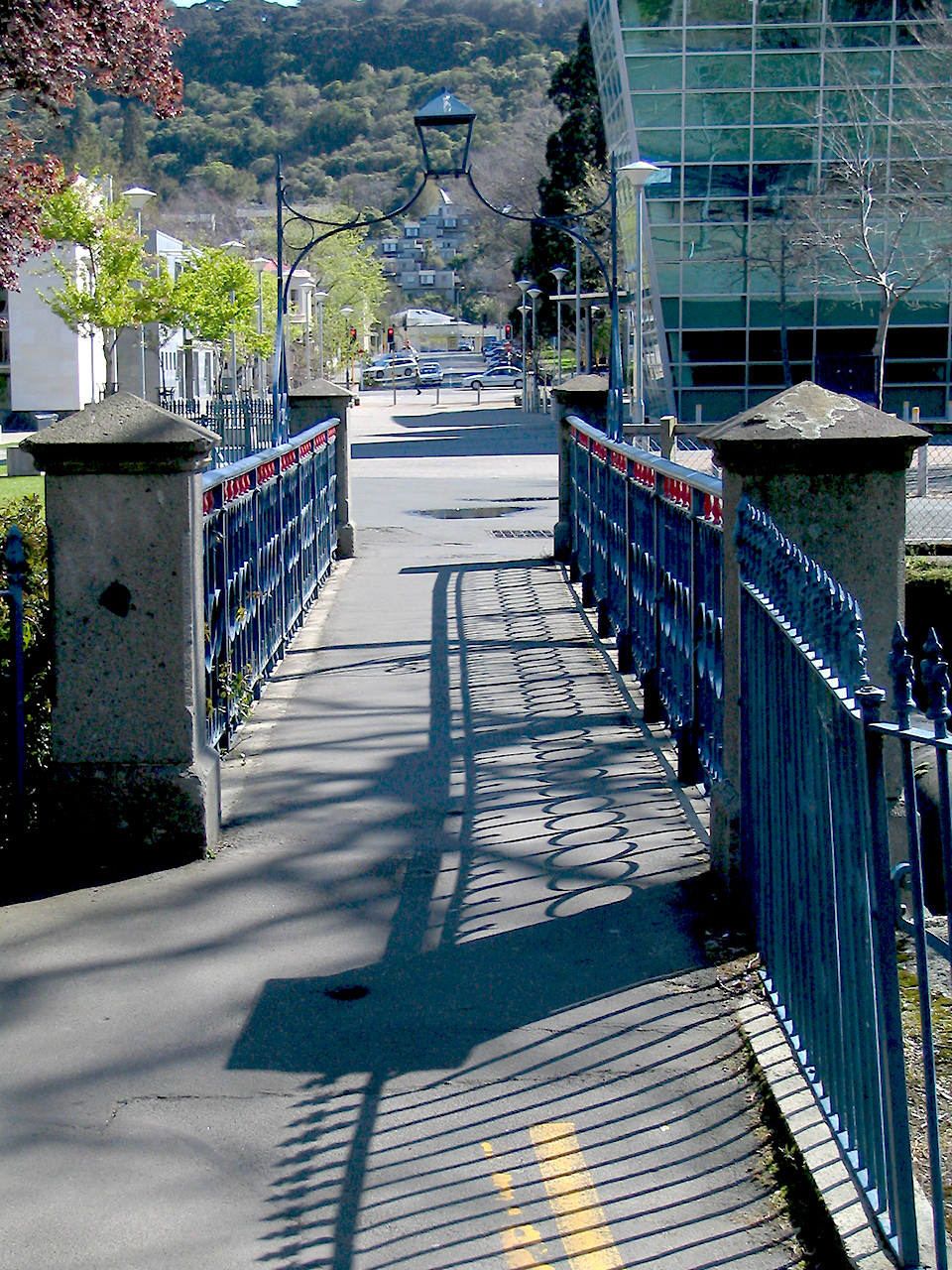
The St David Street Bridge has technological and architectural significance as an example of early twentieth century engineering technology and design. Its design is elegant and well proportioned, with strong symmetry and careful detailing. It is an important element in the landscape of the University with strong visual links with the Professorial Houses and the Clock Tower buildings.
Why is this place Category 1 / Category 2?
Detail Of Assessed Criteria
(e) The St David Street Bridge is an example of early twentieth century technology applied to bridge construction. Its construction makes use of a limited number of materials, and produces an elegant and economical structure. (g) The bridge is part of the wider landscape of the University, being part of the precinct around the significant Clock Tower Building and the professorial houses which adjoin St David Street. (k) The St David Street Bridge is held in high esteem by members of the community, as evidenced by the vocal advocacy over a long period over any plans to replace or move the bridge.
Why is this place significant?
Cultural Significance
The bridge has social significance in that it recalls traditional patterns and experiences of life in Dunedin - where the pace of life was slower and traversing the campus on foot (via the bridge) was a common experience to generations of students. It is a natural stopping and conversation point with good views of the Clock Tower Building, the Professorial Houses and the modern university campus.
Historic Significance
Historical Significance or Value The St David Street Bridge has historical significance as it has served the community for over one hundred years. It replaced an earlier footbridge, marking a pedestrian point on this part of the Water of the Leith for over 125 years. It is the only crossing of the Leith between Dundas and Union Streets and was an important connection between the original University buildings and the residential area of North Dunedin. It has had extensive use by University students over this long period. It is a noted vantage point for events such as the Leith Bike Race and other water-based events during Capping and Orientation.
Physical Significance
The St David Street Bridge has technological and architectural significance as an example of early twentieth century engineering technology and design. Its design is elegant and well proportioned, with strong symmetry and careful detailing. It is an important element in the landscape of the University with strong visual links with the Professorial Houses and the Clock Tower buildings.
Why is this place Category 1 / Category 2?
Detail Of Assessed Criteria
(e) The St David Street Bridge is an example of early twentieth century technology applied to bridge construction. Its construction makes use of a limited number of materials, and produces an elegant and economical structure. (g) The bridge is part of the wider landscape of the University, being part of the precinct around the significant Clock Tower Building and the professorial houses which adjoin St David Street. (k) The St David Street Bridge is held in high esteem by members of the community, as evidenced by the vocal advocacy over a long period over any plans to replace or move the bridge.
Construction Professional
Name
Rogers, John
Type
Engineer
Biography
No biography is currently available for this construction professional
Name
William Duncan & Son
Type
Builder
Biography
No biography is currently available for this construction professional
Construction Details
Start Year
1902
Type
Original Construction
Start Year
1975
Type
Other
Description
Restoration and maintenance
Construction Materials
Stone columns, concrete piers and abutments, steel beams, cast steel handrails
Construction Professional
Name
Rogers, John
Type
Engineer
Biography
No biography is currently available for this construction professional
Name
William Duncan & Son
Type
Builder
Biography
No biography is currently available for this construction professional
Construction Details
Start Year
1902
Type
Original Construction
Start Year
1975
Type
Other
Description
Restoration and maintenance
Construction Materials
Stone columns, concrete piers and abutments, steel beams, cast steel handrails
The St David Street Footbridge over the Water of Leith adjacent to the University of Otago has been a local landmark, and has served the community for over one hundred years. The pedestrian bridge was designed in the City Engineers Office and is notable for its elegant detailing. The bridge has survived several deluges on the flood prone Leith, and stands today as a much-admired landmark within the University precinct. The contract for the construction of the bridge was let in November 1902, and signed off in 1903. Both the contractor William Duncan & Son and John Rogers, the City Engineer signed the contract. John Rogers, who had previously held a similar position in Brisbane, was appointed as City Engineer in February 1901 at a salary of £800. His tenure was short. Following the controversy over the Waipori power scheme Rogers resigned. The new bridge replaced an earlier footbridge. The earlier footbridge dated from pre-1877, as a newspaper report from that year notes the presence of a bridge, and an 1881 survey plan shows the location of that bridge (DP 303). There were reports in 1910 and 1914 about minor damage to the bridge following flooding. There was serious flooding in the Leith in 1923 and again in 1929. A report written for the Dunedin City Council after the 1929 flood noted serious damage done to bridges on the lower reaches of the Waters of the Leith. The report noted the need for a new bridge at St David Street, but no replacement appears to have been made. Restoration and maintenance was carried out on the St David Street Footbridge in 1975. Ownership of the bridge was transferred from the Dunedin City Council to the University of Otago in September 1999 as part of a stopped road transfer. In the 1990s and early 2000s there were plans to replace the footbridge with a vehicle bridge. After a long period of controversy, negotiation and discussion these plans were not followed through. The St David Street Footbridge is a distinctive local landmark, and is a significant element in the historic University precinct. In a world increasingly dominated by the car, the pedestrian bridge is a reminder of the pace of the past, and allows a leisurely appreciation of both the bridge itself and the historic landscape surrounding it.
The St David Street Footbridge over the Water of Leith adjacent to the University of Otago has been a local landmark, and has served the community for over one hundred years. The pedestrian bridge was designed in the City Engineers Office and is notable for its elegant detailing. The bridge has survived several deluges on the flood prone Leith, and stands today as a much-admired landmark within the University precinct. The contract for the construction of the bridge was let in November 1902, and signed off in 1903. Both the contractor William Duncan & Son and John Rogers, the City Engineer signed the contract. John Rogers, who had previously held a similar position in Brisbane, was appointed as City Engineer in February 1901 at a salary of £800. His tenure was short. Following the controversy over the Waipori power scheme Rogers resigned. The new bridge replaced an earlier footbridge. The earlier footbridge dated from pre-1877, as a newspaper report from that year notes the presence of a bridge, and an 1881 survey plan shows the location of that bridge (DP 303). There were reports in 1910 and 1914 about minor damage to the bridge following flooding. There was serious flooding in the Leith in 1923 and again in 1929. A report written for the Dunedin City Council after the 1929 flood noted serious damage done to bridges on the lower reaches of the Waters of the Leith. The report noted the need for a new bridge at St David Street, but no replacement appears to have been made. Restoration and maintenance was carried out on the St David Street Footbridge in 1975. Ownership of the bridge was transferred from the Dunedin City Council to the University of Otago in September 1999 as part of a stopped road transfer. In the 1990s and early 2000s there were plans to replace the footbridge with a vehicle bridge. After a long period of controversy, negotiation and discussion these plans were not followed through. The St David Street Footbridge is a distinctive local landmark, and is a significant element in the historic University precinct. In a world increasingly dominated by the car, the pedestrian bridge is a reminder of the pace of the past, and allows a leisurely appreciation of both the bridge itself and the historic landscape surrounding it.
The St David Street Footbridge spans the Water of the Leith next to the University of Otago, and is a notable feature in the University precinct. It is 13m long and 1.8m wide. The bridge has four Port Chalmers Breccia stone columns, with plinths and caps, approximately 1.4m high, each situated at the end of the bridge balustrade sides. The decking is concrete and asphalt, with reinforced steel beams. The decorative wrought steel work on the handrails and the fascia are notable features. The hand rail is cast steel. Decorative Lamp gallows span the centre of the bridge. The Footbridge predates the flood control work completed on the Water of the Leith. Originally the abutments and wing walls for the bridge were masonry (as noted on the original plan). These original abutment were incorporated into the concrete flood channel walls when the flood control work was completed in the 1930s. The bridge now spans the concrete walls of the channel. In 1975 the pressed zinc fascia was replaced with fibreglass moulded on the original pattern. The cast iron work was repainted, or replaced where the corrosion was too severe. The steel framing was cleaned and repainted. The lantern was replaced.
The St David Street Footbridge spans the Water of the Leith next to the University of Otago, and is a notable feature in the University precinct. It is 13m long and 1.8m wide. The bridge has four Port Chalmers Breccia stone columns, with plinths and caps, approximately 1.4m high, each situated at the end of the bridge balustrade sides. The decking is concrete and asphalt, with reinforced steel beams. The decorative wrought steel work on the handrails and the fascia are notable features. The hand rail is cast steel. Decorative Lamp gallows span the centre of the bridge. The Footbridge predates the flood control work completed on the Water of the Leith. Originally the abutments and wing walls for the bridge were masonry (as noted on the original plan). These original abutment were incorporated into the concrete flood channel walls when the flood control work was completed in the 1930s. The bridge now spans the concrete walls of the channel. In 1975 the pressed zinc fascia was replaced with fibreglass moulded on the original pattern. The cast iron work was repainted, or replaced where the corrosion was too severe. The steel framing was cleaned and repainted. The lantern was replaced.
Historical and Associated Iwi / Hapū / Whānau
Completion Date
13th December 2005
Report Written By
Heather Bauchop
Information Sources
McDonald, 1965
K C McDonald, City of Dunedin: A Century of Civic Enterprise, Dunedin City Corporation, Dunedin, 1965
McLean, 1931
FW McLean, J McGregor Wilkie and JG Alexander, Water of Leith and Lindsays Creek, January 1931 [Hocken Library]
New Zealand Historic Places Trust (NZHPT)
New Zealand Historic Places Trust
Oakley, 2002
Gray Oakley, 'St David Street Footbridge (over Waters of the Leith) Cultural Heritage Assessment)', Report commissioned by the University of Otago, November 2002
Salmond, 2003
Jeremy Salmond, 'St David Street Bridge Dunedin Commentary on Heritage Issues' Report commissioned by Otago/Southland Area Office, NZHPT, November 2003
Other Information
A fully referenced version of this report is available from the NZHPT Southern Region Office. Please note that entry on the New Zealand Heritage List/Rarangi Korero identifies only the heritage values of the property concerned, and should not be construed as advice on the state of the property, or as a comment of its soundness or safety, including in regard to earthquake risk, safety in the event of fire, or insanitary conditions.
Historical and Associated Iwi / Hapū / Whānau
Completion Date
13th December 2005
Report Written By
Heather Bauchop
Information Sources
McDonald, 1965
K C McDonald, City of Dunedin: A Century of Civic Enterprise, Dunedin City Corporation, Dunedin, 1965
McLean, 1931
FW McLean, J McGregor Wilkie and JG Alexander, Water of Leith and Lindsays Creek, January 1931 [Hocken Library]
New Zealand Historic Places Trust (NZHPT)
New Zealand Historic Places Trust
Oakley, 2002
Gray Oakley, 'St David Street Footbridge (over Waters of the Leith) Cultural Heritage Assessment)', Report commissioned by the University of Otago, November 2002
Salmond, 2003
Jeremy Salmond, 'St David Street Bridge Dunedin Commentary on Heritage Issues' Report commissioned by Otago/Southland Area Office, NZHPT, November 2003
Other Information
A fully referenced version of this report is available from the NZHPT Southern Region Office. Please note that entry on the New Zealand Heritage List/Rarangi Korero identifies only the heritage values of the property concerned, and should not be construed as advice on the state of the property, or as a comment of its soundness or safety, including in regard to earthquake risk, safety in the event of fire, or insanitary conditions.
Current Usages
Uses: Transport
Specific Usage: Bridge/ Viaduct
Former Usages
General Usage: Transport
Specific Usage: Bridge/ Viaduct
Current Usages
Uses: Transport
Specific Usage: Bridge/ Viaduct
Former Usages
General Usage: Transport
Specific Usage: Bridge/ Viaduct
Location
Sign up to hear more
Get the latest heritage news, features and events delivered
straight to your inbox.
