DonateMembershipVisit Heritage
  • Tūrangawaewae
    Places
  • Tira Māori
    Māori Heritage
  • Poutairangahia
    Archaeology
  • Rauemi
    Resources
  • Mō Tātou
    About Us
  • New Zealand Heritage List
  • Nominate and submit
  • Explore the List
  • National Historic Landmarks
  • Plaques
  • Rainbow List Project
  • Lost heritage
  • Visit Heritage
  • Our properties
  • Turnbull House Project
  • Collections
  • Shop
  • Tohu Whenua
  • Tira Māori
  • Conserving Māori heritage
  • Marae built heritage
  • Māori heritage on the List
  • Hinemihi—Te Hokinga Mai
  • What is archaeology?
  • Is there a site on my property?
  • What are my legal requirements?
  • Affecting an archaeological site
  • Declaring an archaeological site
  • Archaeology FAQs
  • Archaeology Digital Library
  • Archaeology guidelines and templates
  • Resources
  • Funding
  • Publications
  • Sustainable management guides
  • Disaster recovery
  • Podcasts & digital resources
  • Education Hub
  • Conservation plans
  • About
  • Board
  • Māori Heritage Council
  • Senior Staff
  • Offices
  • Contact us
  • Careers
  • Covenants
  • Fast-track
  • Corporate documents
  • Currently consulting on
  • Our submissions
  • News
  • Covid-19 response
Quick links
Rārangi Kōrero | The List
Explore the List
National Historic Landmarks
Ngā Manawhenua o Aotearoa me ōna Kōrero Tūturu
Quick links
Tapuwae
A Vision for Places of Māori Heritage
Funding for Māori Heritage
Resources
Quick links
Archaeological Authority Portal
Applying for an archaeological authority
Archaeology FAQs
Browse the most frequently asked questions about archaeological authorities and the archaeological process.
Quick links
Quick links
News
News Keep up to date with Heritage New Zealand Pouhere Taonga
Membership
Membership Find out more and sign up today
DonateMembershipVisit Heritage
  • Tūrangawaewae
    Places
  • Tira Māori
    Māori Heritage
  • Poutairangahia
    Archaeology
  • Rauemi
    Resources
  • Mō Tātou
    About Us
  • New Zealand Heritage List
  • Nominate and submit
  • Explore the List
  • National Historic Landmarks
  • Plaques
  • Rainbow List Project
  • Lost heritage
  • Visit Heritage
  • Our properties
  • Turnbull House Project
  • Collections
  • Shop
  • Tohu Whenua
  • Tira Māori
  • Conserving Māori heritage
  • Marae built heritage
  • Māori heritage on the List
  • Hinemihi—Te Hokinga Mai
  • What is archaeology?
  • Is there a site on my property?
  • What are my legal requirements?
  • Affecting an archaeological site
  • Declaring an archaeological site
  • Archaeology FAQs
  • Archaeology Digital Library
  • Archaeology guidelines and templates
  • Resources
  • Funding
  • Publications
  • Sustainable management guides
  • Disaster recovery
  • Podcasts & digital resources
  • Education Hub
  • Conservation plans
  • About
  • Board
  • Māori Heritage Council
  • Senior Staff
  • Offices
  • Contact us
  • Careers
  • Covenants
  • Fast-track
  • Corporate documents
  • Currently consulting on
  • Our submissions
  • News
  • Covid-19 response
Quick links
Rārangi Kōrero | The List
Explore the List
National Historic Landmarks
Ngā Manawhenua o Aotearoa me ōna Kōrero Tūturu
Quick links
Tapuwae
A Vision for Places of Māori Heritage
Funding for Māori Heritage
Resources
Quick links
Archaeological Authority Portal
Applying for an archaeological authority
Archaeology FAQs
Browse the most frequently asked questions about archaeological authorities and the archaeological process.
Quick links
Quick links
News
News Keep up to date with Heritage New Zealand Pouhere Taonga
Membership
Membership Find out more and sign up today
  • Places
  • Nominate and submit
  • National Historic Landmarks
  • Places
  • Nominate and submit
  • National Historic Landmarks
  • Tira Māori
  • Conserving Māori heritage
  • Marae built heritage
  • Tira Māori
  • Conserving Māori heritage
  • Marae built heritage
  • Archaeological authorities
  • Archaeology Digital Library
  • Archaeological authorities
  • Archaeology Digital Library
  • All resources
  • Publications
  • Funding
  • All resources
  • Publications
  • Funding
  • FAQs
  • FAQs
Follow us on:
Places
  • Places
  • Nominate and submit
  • National Historic Landmarks
Tira Māori
  • Tira Māori
  • Conserving Māori heritage
  • Marae built heritage
Archaeology
  • Archaeological authorities
  • Archaeology Digital Library
Resources
  • All resources
  • Publications
  • Funding
FAQs
  • FAQs
Follow us on
HomePrivacyTerms and conditionsAbout this site
© Heritage New Zealand Pouhere Taonga 2026.
 
Donaghy's Rope Walk

64 Bradshaw Street, South Dunedin, DUNEDIN

Private

Historic Place Category 1

List No. 7167

Quick links:
List GalleryLocationDetails
Long and narrow, stretching the length of a suburban block, Donaghy’s Rope Walk in South Dunedin is thought to be the only surviving rope walk in New Zealand, and is historically and architecturally significant as it recalls the technology and buildings associated with the art of rope making in the nineteenth and twentieth centuries. Originally constructed in 1878 (and replaced in 1920) the rope walk was part of the Otago Steam Rope and Twine Works (later Donaghy Industries) which manufactured rope, twine and cordage for both the New Zealand and export markets.

Rope making was one of the pioneering industries established in New Zealand in the 1840s. Rope was essential for sailing ships, industry, ports, households and agriculture. The New Zealand industry grew from the European tradition. In Europe, ropes were made in structures called rope walks. Rope walks were long buildings where strands of fibre the full length of the rope were spread out and laid up (twisted together) Rope making machinery was hand operated until the nineteenth century when steam power was introduced – steam was used at Donaghy’s. The rope and cordage industry in New Zealand was a vital if unsung trade.

The physical requirements of rope making gave the rope walk its specialised architectural form. The length of the walk determined the length of rope that could be made without splicing. Donaghy’s Rope Walk is approximately 300 metres long (reported as 950 feet or 289 metres in 1878) and less than four metres wide, although the overall length of the site to Hillside Road is around 390 metres. According to Donaghy’s records, the rope walk was replaced in 1920 (and perhaps extended). The rope walk has concrete foundations and an asphalt floor. The south end of the building is brick and elsewhere the superstructure is timber framed and clad with vertical board and batten, and also stuccoed at a later date. The wooden roof structure is exposed internally and clad with corrugated asbestos sheeting.

Donaghy’s went on to become the sole supplier of rope and cordage to the New Zealand market after a series of amalgamations and takeovers (taking over Waiuku and Foxton twine works and Wellington Cordage Co among other competitors). The rope walk at Dunedin is said to be the only one remaining in New Zealand. The rope walk ceased commercial production in 2012.

In 2014, Donaghy’s continues to manufacture rope made from both natural and synthetic fibres in its Dunedin factory although the rope walk no longer operates.
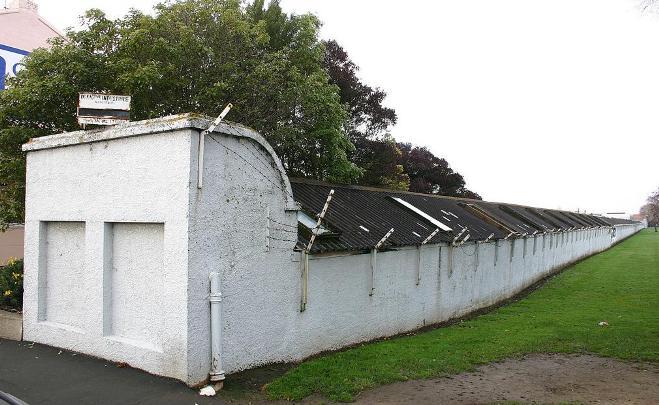
Donaghy's Rope Walk. Image courtesy of www.flickr.com | Derek Smith - travelling-light | 19/07/2004 | Derek Smith - travelling-light
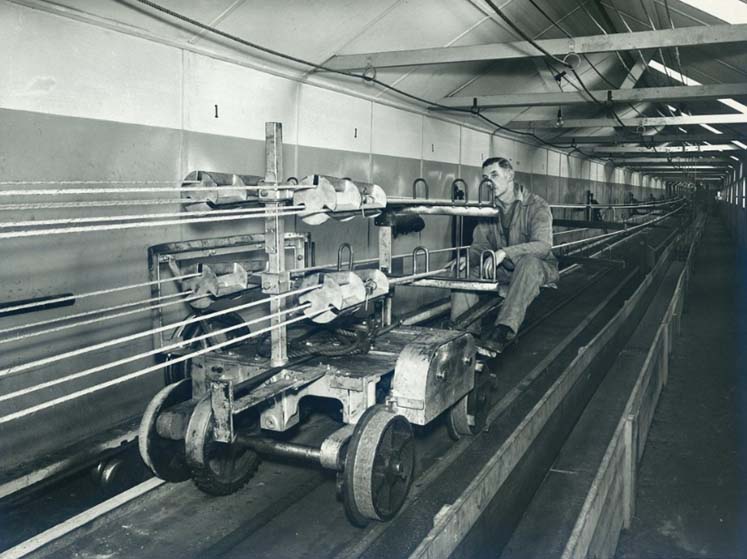
Donaghy's Rope Walk. A worker in the rope walk c1960s. Donaghys Industries Limited, Hocken Collections, Uare Taoka o Hākena, University of Otago. MS-3560/0633 | Campbell Studios in Dunedin | University of Otago

Donaghy's Rope Walk. Image courtesy of www.flickr.com | Derek Smith - travelling-light | 19/07/2004 | Derek Smith - travelling-light
Donaghy's Rope Walk. A worker in the rope walk c1960s. Donaghys Industries Limited, Hocken Collections, Uare Taoka o Hākena, University of Otago. MS-3560/0633 | Campbell Studios in Dunedin | University of Otago

List Entry Information

Overview

Status
Listed

List Entry Status
Historic Place Category 1

Access
Private/No Public Access

List Number
7167

Date Entered
21st April 1994

Date of Effect
21st April 1994

City/District Council
Dunedin City

Region
Otago Region

Extent of List Entry

Extent includes part of the land described as Pt Allot 12 Blk V and Sec 26 Blk VII Town SD (RTs OT57/252 and OT57/253) and the building known as Donaghy's Rope Walk thereon.

Legal description

Pt Allot 12 Blk V and Sec 26 Blk VII Town SD (RTs OT57/252 and OT57/253), Otago Land District

Detailed List Entry
Significance

Historic Significance

Historical Significance or Value Donaghy's Rope Walk is of great historical significance as a result of its association with the rope making industry. It is the only known rope walk of its kind to have survived in New Zealand, if not in the Southern Hemisphere (Ian McDougall). While not a pillar of the colonial economy, the rope making industry nevertheless had a place within New Zealand's industrial heritage and M Donaghy and Co was pre-eminent amongst rope making manufacturers. The company dominated the industry this century.

Physical Significance

ARCHITECTURAL QUALITY: Donaghy's Rope Walk is of very great architectural quality as a result of the contribution it makes to industrial archaeology. It would appear to be the only surviving rope walk of its kind in New Zealand. Much of the early plant is intact and the building therefore demonstrates the application of Victorian rope making technology. With technological progress, long lengths of rope can now be manufactured in smaller factory spaces. The survival of early plant adds integrity to the building known as Donaghy's Rope Walk. TOWNSCAPE/LANDMARK VALUE: The site of Donaghy's Rope Walk borders Bathgate Park in South Dunedin and with its unusual 380x10 metre dimensions the building has some landmark status.

Construction Professional

Name

Walden, Edward Walter

Type

Architect

Biography

Walden was born (b.1870) in Dunedin and educated at Otago Boys' High School. He began his architectural career articled to James Hislop. He became a partner in the Dunedin firm of Hislop and Walden, and when Hislop died in 1902, he took over the firm. Walden was responsible for the first abattoirs erected in New Zealand, Hallenstein's Building on the Octagon, a church at Anderson's Bay and Levin and Company's Building, Dunedin. His son Eric practised architecture at Nelson.

Construction Details

Start Year

1878

Type

Original Construction

Start Year

1920

Type

Addition

Description

Replacement of rope walk and extension by 120-130 metres

Construction Materials

The building has concrete foundations and an asphalt floor. The south end of the building is brick masonry and elsewhere the superstructure is timber framed and clad with vertical board and batten. The wooden roof structure is exposed and clad with corrugated asbestos sheeting.

Notable Features

Extant plant equipment of the rope walk

Reference

Public NZAA Number

I44/1043

Completion Date

26th February 2014

Report Written By

Heather Bauchop

Information Sources

Land Information New Zealand (LINZ)

Land Information New Zealand

New Zealand Historic Places Trust (NZHPT)

New Zealand Historic Places Trust

Thornton, 1982

Geoffrey G. Thornton, New Zealand's Industrial Heritage, A.H. & A.W. Reed, Wellington, 1982

Lucas, 1979

K G Lucas, A New Twist, A Centennial of Donaghy's Industries Ltd, Donaghy's Industries Ltd, Dunedin, 1979

Hocken Collections

'Early History of Otago Steam Ropeworks...', notes compiled by H.J. Simcock (1944) AG-202/1711, Donaghys Industries Limited: Records (ARC-0042)

Report Written By

This place was identified as significant under previous legislation with different information requirements. It remains significant under the current legislation. There is opportunity under our legislation and policies to add to this information. Further information about this place may be available from the Otago/Southland Office of Heritage New Zealand Pouhere Taonga. A fully referenced upgrade report is available on request from the Southern Regional Office of NZHPT. A copy of the original report is available from the NZHPT Southern region office. Please note that entry on the New Zealand Heritage List/Rarangi Korero identifies only the heritage values of the property concerned, and should not be construed as advice on the state of the property, or as a comment of its soundness or safety, including in regard to earthquake risk, safety in the event of fire, or insanitary conditions.

Further Information

Current Usages

Uses: Manufacturing

Specific Usage: Ropewalk

Former Usages

General Usage:: Manufacturing

Specific Usage: Ropewalk

Themes

Web Links

Overview

Status

Listed

List Entry Status

Historic Place Category 1

Access

Private/No Public Access

List Number

7167

Date Entered

21st April 1994

Date of Effect

21st April 1994

City/District Council

Dunedin City

Region

Otago Region

Extent of List Entry

Extent includes part of the land described as Pt Allot 12 Blk V and Sec 26 Blk VII Town SD (RTs OT57/252 and OT57/253) and the building known as Donaghy's Rope Walk thereon.

Legal description

Pt Allot 12 Blk V and Sec 26 Blk VII Town SD (RTs OT57/252 and OT57/253), Otago Land District

Status

Listed

List Entry Status

Historic Place Category 1

Access

Private/No Public Access

List Number

7167

Date Entered

21st April 1994

Date of Effect

21st April 1994

City/District Council

Dunedin City

Region

Otago Region

Extent of List Entry

Extent includes part of the land described as Pt Allot 12 Blk V and Sec 26 Blk VII Town SD (RTs OT57/252 and OT57/253) and the building known as Donaghy's Rope Walk thereon.

Legal description

Pt Allot 12 Blk V and Sec 26 Blk VII Town SD (RTs OT57/252 and OT57/253), Otago Land District

Significance

Why is this place significant?

Historic Significance

Historical Significance or Value Donaghy's Rope Walk is of great historical significance as a result of its association with the rope making industry. It is the only known rope walk of its kind to have survived in New Zealand, if not in the Southern Hemisphere (Ian McDougall). While not a pillar of the colonial economy, the rope making industry nevertheless had a place within New Zealand's industrial heritage and M Donaghy and Co was pre-eminent amongst rope making manufacturers. The company dominated the industry this century.

Physical Significance

ARCHITECTURAL QUALITY: Donaghy's Rope Walk is of very great architectural quality as a result of the contribution it makes to industrial archaeology. It would appear to be the only surviving rope walk of its kind in New Zealand. Much of the early plant is intact and the building therefore demonstrates the application of Victorian rope making technology. With technological progress, long lengths of rope can now be manufactured in smaller factory spaces. The survival of early plant adds integrity to the building known as Donaghy's Rope Walk. TOWNSCAPE/LANDMARK VALUE: The site of Donaghy's Rope Walk borders Bathgate Park in South Dunedin and with its unusual 380x10 metre dimensions the building has some landmark status.

Why is this place significant?

Historic Significance

Historical Significance or Value Donaghy's Rope Walk is of great historical significance as a result of its association with the rope making industry. It is the only known rope walk of its kind to have survived in New Zealand, if not in the Southern Hemisphere (Ian McDougall). While not a pillar of the colonial economy, the rope making industry nevertheless had a place within New Zealand's industrial heritage and M Donaghy and Co was pre-eminent amongst rope making manufacturers. The company dominated the industry this century.

Physical Significance

ARCHITECTURAL QUALITY: Donaghy's Rope Walk is of very great architectural quality as a result of the contribution it makes to industrial archaeology. It would appear to be the only surviving rope walk of its kind in New Zealand. Much of the early plant is intact and the building therefore demonstrates the application of Victorian rope making technology. With technological progress, long lengths of rope can now be manufactured in smaller factory spaces. The survival of early plant adds integrity to the building known as Donaghy's Rope Walk. TOWNSCAPE/LANDMARK VALUE: The site of Donaghy's Rope Walk borders Bathgate Park in South Dunedin and with its unusual 380x10 metre dimensions the building has some landmark status.

Construction Information

Construction Professional

Name

Walden, Edward Walter

Type

Architect

Biography

Walden was born (b.1870) in Dunedin and educated at Otago Boys' High School. He began his architectural career articled to James Hislop. He became a partner in the Dunedin firm of Hislop and Walden, and when Hislop died in 1902, he took over the firm. Walden was responsible for the first abattoirs erected in New Zealand, Hallenstein's Building on the Octagon, a church at Anderson's Bay and Levin and Company's Building, Dunedin. His son Eric practised architecture at Nelson.

Construction Details

Start Year

1878

Type

Original Construction

Start Year

1920

Type

Addition

Description

Replacement of rope walk and extension by 120-130 metres

Construction Materials

The building has concrete foundations and an asphalt floor. The south end of the building is brick masonry and elsewhere the superstructure is timber framed and clad with vertical board and batten. The wooden roof structure is exposed and clad with corrugated asbestos sheeting.

Notable Features

Extant plant equipment of the rope walk

Construction Professional

Name

Walden, Edward Walter

Type

Architect

Biography

Walden was born (b.1870) in Dunedin and educated at Otago Boys' High School. He began his architectural career articled to James Hislop. He became a partner in the Dunedin firm of Hislop and Walden, and when Hislop died in 1902, he took over the firm. Walden was responsible for the first abattoirs erected in New Zealand, Hallenstein's Building on the Octagon, a church at Anderson's Bay and Levin and Company's Building, Dunedin. His son Eric practised architecture at Nelson.

Construction Details

Start Year

1878

Type

Original Construction

Start Year

1920

Type

Addition

Description

Replacement of rope walk and extension by 120-130 metres

Construction Materials

The building has concrete foundations and an asphalt floor. The south end of the building is brick masonry and elsewhere the superstructure is timber framed and clad with vertical board and batten. The wooden roof structure is exposed and clad with corrugated asbestos sheeting.

Notable Features

Extant plant equipment of the rope walk

Reference

Historical and Associated Iwi / Hapū / Whānau

Public NZAA Number

I44/1043

Completion Date

26th February 2014

Report Written By

Heather Bauchop

Information Sources

Land Information New Zealand (LINZ)

Land Information New Zealand

New Zealand Historic Places Trust (NZHPT)

New Zealand Historic Places Trust

Thornton, 1982

Geoffrey G. Thornton, New Zealand's Industrial Heritage, A.H. & A.W. Reed, Wellington, 1982

Lucas, 1979

K G Lucas, A New Twist, A Centennial of Donaghy's Industries Ltd, Donaghy's Industries Ltd, Dunedin, 1979

Hocken Collections

'Early History of Otago Steam Ropeworks...', notes compiled by H.J. Simcock (1944) AG-202/1711, Donaghys Industries Limited: Records (ARC-0042)

Other Information

This place was identified as significant under previous legislation with different information requirements. It remains significant under the current legislation. There is opportunity under our legislation and policies to add to this information. Further information about this place may be available from the Otago/Southland Office of Heritage New Zealand Pouhere Taonga. A fully referenced upgrade report is available on request from the Southern Regional Office of NZHPT. A copy of the original report is available from the NZHPT Southern region office. Please note that entry on the New Zealand Heritage List/Rarangi Korero identifies only the heritage values of the property concerned, and should not be construed as advice on the state of the property, or as a comment of its soundness or safety, including in regard to earthquake risk, safety in the event of fire, or insanitary conditions.

Historical and Associated Iwi / Hapū / Whānau

Public NZAA Number

I44/1043

Completion Date

26th February 2014

Report Written By

Heather Bauchop

Information Sources

Land Information New Zealand (LINZ)

Land Information New Zealand

New Zealand Historic Places Trust (NZHPT)

New Zealand Historic Places Trust

Thornton, 1982

Geoffrey G. Thornton, New Zealand's Industrial Heritage, A.H. & A.W. Reed, Wellington, 1982

Lucas, 1979

K G Lucas, A New Twist, A Centennial of Donaghy's Industries Ltd, Donaghy's Industries Ltd, Dunedin, 1979

Hocken Collections

'Early History of Otago Steam Ropeworks...', notes compiled by H.J. Simcock (1944) AG-202/1711, Donaghys Industries Limited: Records (ARC-0042)

Other Information

This place was identified as significant under previous legislation with different information requirements. It remains significant under the current legislation. There is opportunity under our legislation and policies to add to this information. Further information about this place may be available from the Otago/Southland Office of Heritage New Zealand Pouhere Taonga. A fully referenced upgrade report is available on request from the Southern Regional Office of NZHPT. A copy of the original report is available from the NZHPT Southern region office. Please note that entry on the New Zealand Heritage List/Rarangi Korero identifies only the heritage values of the property concerned, and should not be construed as advice on the state of the property, or as a comment of its soundness or safety, including in regard to earthquake risk, safety in the event of fire, or insanitary conditions.

Further Information

Current Usages

Uses: Manufacturing

Specific Usage: Ropewalk

Former Usages

General Usage: Manufacturing

Specific Usage: Ropewalk

Current Usages

Uses: Manufacturing

Specific Usage: Ropewalk

Former Usages

General Usage: Manufacturing

Specific Usage: Ropewalk

Location

Loading
Stay up to date with Heritage this month