

List Entry Information
Status
Listed
List Entry Status
Historic Place Category 2
Access
Private/No Public Access
List Number
7215
Date Entered
16th December 1994
Date of Effect
16th December 1994
City/District Council
Wellington City
Region
Wellington Region
Legal description
part sec 2, Harbour District, City of Wellington
Status
Listed
List Entry Status
Historic Place Category 2
Access
Private/No Public Access
List Number
7215
Date Entered
16th December 1994
Date of Effect
16th December 1994
City/District Council
Wellington City
Region
Wellington Region
Legal description
part sec 2, Harbour District, City of Wellington
Why is this place significant?
Historic Significance
Historical Significance or Value The magazine was originally constructed for use as a civilian installation, but was later used as a joint/civilian/military structure.
Physical Significance
Archaeological: The site of the Kaiwharawhara magazine has been occupied by the magazine itself for over 100 years, since 1880. Architectural: The magazine has significance as belonging to a type of military/civilian structure which was once common through the country, but of which relatively few examples now remain. The magazine and wall have interest as the only complete remaining examples left in Wellington of structures erected in the nineteenth century out of local stone.
Why is this place Category 1 / Category 2?
Detail Of Assessed Criteria
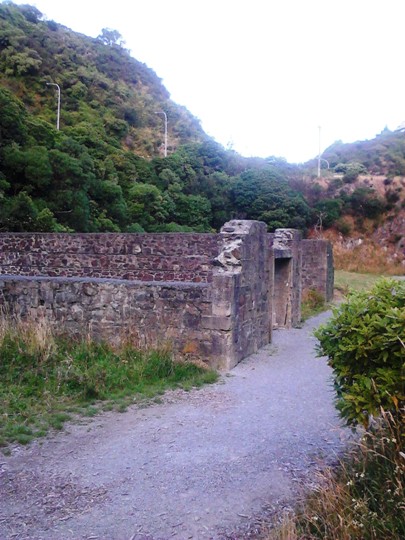
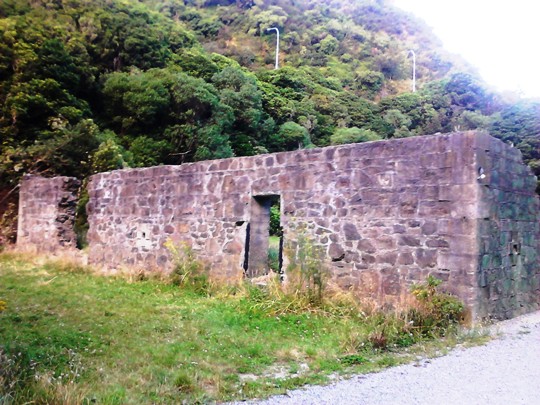
a) the extent to which the place reflects important or representative aspects of New Zealand history: Powder magazines were a common feature of New Zealand settlements in the later part of the last century, as railway and port developments used a great deal of gunpowder in their operations. The external defence of the colony did not assume great importance until the main Russian scare of the 1880s. For most of the century the colony relied on the Royal Navy for its defence. However, as other navies increased their strength in the Pacific, there was seen a need to augment naval forces with coastal batteries and other fixed defences at the major ports. Many former civilian magazines, such as the one at Kaiwharawhara then took on a military role. The magazines were important support services for the gun batteries. g) the technical accomplishment or value, or design of the place: Originally the Kaiwharawhara Magazine installation consisted of two stone magazines, two corrugated iron sheds, a keeper's house, stables and coach house. All that now remains is one of the two stone magazines which is largely complete, half of the front wall and one compete side wall which is all that remains of the other of the stone magazines, and the stone lining of the dirt track approaching the location. The Kaiwharawhara Magazine, as with other magazines built in the country, was based on a design for magazines by the seventeenth century French military engineer, Vauban. The known examples of magazines in this country show degrees of adaptation, sometimes considerable, from Vauban's original design. Kaiwharawhara magazine has the standard rectangular plan with thick walls, a ridges roof and some form of ventilation. However this magazine has the unusual feature of having window openings. j) the importance of identifying rare types of historic places: The Kaiwharawhara magazine is one of only a few known remaining examples of powder magazines in the country, a type of structure which was once relatively common. The magazine is also of local interest in being one of only two remaining registered places in Wellington built in the nineteenth century from local stone. k) the extent to which the place forms part of a wider historical and cultural complex or historical and cultural landscape: The magazine is located between the site of the old Kaiwharawhara jetty and the physical remains of Fort Buckley, which was built on the hilltop south of the river mouth and the magazine. The jetty and the fort had a special functional relationship with the magazine. Originally the magazine would have formed a wider landscape with the jetty, which was used to transport the powder and materials, and Fort Buckley, which the magazine was serving. Conclusion: The Kaiwharawhara magazine and stone wall is recommended for registration as a Category II historic place as a place of historical and cultural heritage significance and value. The magazine has historical significance in reflecting an important aspect of New Zealand history, national defence. It is an example of a civilian/military structure which was once common in New Zealand, but of which now relatively few examples remains. It has interest in its construction material, local stone.
Why is this place significant?
Historic Significance
Historical Significance or Value The magazine was originally constructed for use as a civilian installation, but was later used as a joint/civilian/military structure.
Physical Significance
Archaeological: The site of the Kaiwharawhara magazine has been occupied by the magazine itself for over 100 years, since 1880. Architectural: The magazine has significance as belonging to a type of military/civilian structure which was once common through the country, but of which relatively few examples now remain. The magazine and wall have interest as the only complete remaining examples left in Wellington of structures erected in the nineteenth century out of local stone.
Why is this place Category 1 / Category 2?
Detail Of Assessed Criteria
a) the extent to which the place reflects important or representative aspects of New Zealand history: Powder magazines were a common feature of New Zealand settlements in the later part of the last century, as railway and port developments used a great deal of gunpowder in their operations. The external defence of the colony did not assume great importance until the main Russian scare of the 1880s. For most of the century the colony relied on the Royal Navy for its defence. However, as other navies increased their strength in the Pacific, there was seen a need to augment naval forces with coastal batteries and other fixed defences at the major ports. Many former civilian magazines, such as the one at Kaiwharawhara then took on a military role. The magazines were important support services for the gun batteries. g) the technical accomplishment or value, or design of the place: Originally the Kaiwharawhara Magazine installation consisted of two stone magazines, two corrugated iron sheds, a keeper's house, stables and coach house. All that now remains is one of the two stone magazines which is largely complete, half of the front wall and one compete side wall which is all that remains of the other of the stone magazines, and the stone lining of the dirt track approaching the location. The Kaiwharawhara Magazine, as with other magazines built in the country, was based on a design for magazines by the seventeenth century French military engineer, Vauban. The known examples of magazines in this country show degrees of adaptation, sometimes considerable, from Vauban's original design. Kaiwharawhara magazine has the standard rectangular plan with thick walls, a ridges roof and some form of ventilation. However this magazine has the unusual feature of having window openings. j) the importance of identifying rare types of historic places: The Kaiwharawhara magazine is one of only a few known remaining examples of powder magazines in the country, a type of structure which was once relatively common. The magazine is also of local interest in being one of only two remaining registered places in Wellington built in the nineteenth century from local stone. k) the extent to which the place forms part of a wider historical and cultural complex or historical and cultural landscape: The magazine is located between the site of the old Kaiwharawhara jetty and the physical remains of Fort Buckley, which was built on the hilltop south of the river mouth and the magazine. The jetty and the fort had a special functional relationship with the magazine. Originally the magazine would have formed a wider landscape with the jetty, which was used to transport the powder and materials, and Fort Buckley, which the magazine was serving. Conclusion: The Kaiwharawhara magazine and stone wall is recommended for registration as a Category II historic place as a place of historical and cultural heritage significance and value. The magazine has historical significance in reflecting an important aspect of New Zealand history, national defence. It is an example of a civilian/military structure which was once common in New Zealand, but of which now relatively few examples remains. It has interest in its construction material, local stone.
Construction Details
Start Year
1879
Type
Original Construction
Construction Details
Start Year
1879
Type
Original Construction
Historical and Associated Iwi / Hapū / Whānau
Public NZAA Number
R27/198
Information Sources
Archaeology in New Zealand
Archaeology in New Zealand
Onslow Historian
Onslow Historian
Hogg, 1985
I Hogg, The Illustrated History of Ammunition. New Burlington Books, London, 1985.
Hogg, 1978
I Hogg and J Batchelor, Naval Gun. Blandford Press, Dorset, 1978.
Other Information
A copy of the original report is available from the NZHPT Central region office Please note that entry on the New Zealand Heritage List/Rarangi Korero identifies only the heritage values of the property concerned, and should not be construed as advice on the state of the property, or as a comment of its soundness or safety, including in regard to earthquake risk, safety in the event of fire, or insanitary conditions.
Historical and Associated Iwi / Hapū / Whānau
Public NZAA Number
R27/198
Information Sources
Archaeology in New Zealand
Archaeology in New Zealand
Onslow Historian
Onslow Historian
Hogg, 1985
I Hogg, The Illustrated History of Ammunition. New Burlington Books, London, 1985.
Hogg, 1978
I Hogg and J Batchelor, Naval Gun. Blandford Press, Dorset, 1978.
Other Information
A copy of the original report is available from the NZHPT Central region office Please note that entry on the New Zealand Heritage List/Rarangi Korero identifies only the heritage values of the property concerned, and should not be construed as advice on the state of the property, or as a comment of its soundness or safety, including in regard to earthquake risk, safety in the event of fire, or insanitary conditions.
Former Usages
General Usage: Civic Facilities
Specific Usage: Wall/Fence
Former Usages
General Usage: Civic Facilities
Specific Usage: Wall/Fence
Location
Sign up to hear more
Get the latest heritage news, features and events delivered
straight to your inbox.
