DonateSupporterVisit Heritage
  • Tūrangawaewae
    Places
  • Tira Māori
    Māori Heritage
  • Poutairangahia
    Archaeology
  • Rauemi
    Resources
  • Mō Tātou
    About Us
  • New Zealand Heritage List
  • Nominate and submit
  • Explore the List
  • National Historic Landmarks
  • Plaques
  • Rainbow List Project
  • Lost heritage
  • Visit Heritage
  • Our properties
  • Turnbull House Project
  • Collections
  • Shop
  • Tohu Whenua
  • Tira Māori
  • Conserving Māori heritage
  • Marae built heritage
  • Māori heritage on the List
  • Hinemihi—Te Hokinga Mai
  • What is archaeology?
  • Is there a site on my property?
  • What are my legal requirements?
  • Affecting an archaeological site
  • Declaring an archaeological site
  • Archaeology FAQs
  • Archaeology Digital Library
  • Archaeology guidelines and templates
  • Resources
  • Funding
  • Publications
  • Sustainable management guides
  • Disaster recovery
  • Podcasts & digital resources
  • Education Hub
  • Conservation plans
  • About
  • Board
  • Māori Heritage Council
  • Senior Staff
  • Offices
  • Contact us
  • Careers
  • Covenants
  • Fast-track
  • Corporate documents
  • Currently consulting on
  • Our submissions
  • News
  • Covid-19 response
Quick links
Rārangi Kōrero | The List
Explore the List
National Historic Landmarks
Ngā Manawhenua o Aotearoa me ōna Kōrero Tūturu
Quick links
Tapuwae
A Vision for Places of Māori Heritage
Funding for Māori Heritage
Resources
Quick links
Archaeological Authority Portal
Applying for an archaeological authority
Archaeology FAQs
Browse the most frequently asked questions about archaeological authorities and the archaeological process.
Quick links
Quick links
Contact us
Offices
DonateSupporterVisit Heritage
  • Tūrangawaewae
    Places
  • Tira Māori
    Māori Heritage
  • Poutairangahia
    Archaeology
  • Rauemi
    Resources
  • Mō Tātou
    About Us
  • New Zealand Heritage List
  • Nominate and submit
  • Explore the List
  • National Historic Landmarks
  • Plaques
  • Rainbow List Project
  • Lost heritage
  • Visit Heritage
  • Our properties
  • Turnbull House Project
  • Collections
  • Shop
  • Tohu Whenua
  • Tira Māori
  • Conserving Māori heritage
  • Marae built heritage
  • Māori heritage on the List
  • Hinemihi—Te Hokinga Mai
  • What is archaeology?
  • Is there a site on my property?
  • What are my legal requirements?
  • Affecting an archaeological site
  • Declaring an archaeological site
  • Archaeology FAQs
  • Archaeology Digital Library
  • Archaeology guidelines and templates
  • Resources
  • Funding
  • Publications
  • Sustainable management guides
  • Disaster recovery
  • Podcasts & digital resources
  • Education Hub
  • Conservation plans
  • About
  • Board
  • Māori Heritage Council
  • Senior Staff
  • Offices
  • Contact us
  • Careers
  • Covenants
  • Fast-track
  • Corporate documents
  • Currently consulting on
  • Our submissions
  • News
  • Covid-19 response
Quick links
Rārangi Kōrero | The List
Explore the List
National Historic Landmarks
Ngā Manawhenua o Aotearoa me ōna Kōrero Tūturu
Quick links
Tapuwae
A Vision for Places of Māori Heritage
Funding for Māori Heritage
Resources
Quick links
Archaeological Authority Portal
Applying for an archaeological authority
Archaeology FAQs
Browse the most frequently asked questions about archaeological authorities and the archaeological process.
Quick links
Quick links
Contact us
Offices
  • Places
  • Nominate and submit
  • National Historic Landmarks
  • Places
  • Nominate and submit
  • National Historic Landmarks
  • Tira Māori
  • Conserving Māori heritage
  • Marae built heritage
  • Tira Māori
  • Conserving Māori heritage
  • Marae built heritage
  • Archaeological authorities
  • Archaeology Digital Library
  • Archaeological authorities
  • Archaeology Digital Library
  • All resources
  • Publications
  • Funding
  • All resources
  • Publications
  • Funding
  • FAQs
  • FAQs
Follow us on:
Places
  • Places
  • Nominate and submit
  • National Historic Landmarks
Tira Māori
  • Tira Māori
  • Conserving Māori heritage
  • Marae built heritage
Archaeology
  • Archaeological authorities
  • Archaeology Digital Library
Resources
  • All resources
  • Publications
  • Funding
FAQs
  • FAQs
Follow us on
HomePrivacyTerms and conditionsAbout this site
© Heritage New Zealand Pouhere Taonga 2026.
 
Strachan's Cave

Kaukatea Valley Road, Okoia, WHANGANUI

Private

Historic Place Category 1

List No. 7308

Quick links:
List GalleryLocationDetails
This historic place was registered under the Historic Places Act 1993. The following text is the original citation considered by the NZHPT Board at the time of registration. Information in square brackets indicates modifications made after the paper was considered by the NZHPT Board.

Built in the 1850s Strachan's Cave is a rare surviving example of a privately built refuge, and represents the level to which race relations had fallen in Victorian New Zealand. The cave was built by the Strachan family who immigrated to New Zealand in 1851. For the first two years David and Elizabeth Strachan, and their children stayed in the Wanganui town, before taking up their property known as 'Lornty' in 1853. Here they built a house and cleared the land for a sheep farm. Troubled by the state of affairs between Pakeha settlers and Maori, compounded by their relative isolation from the main Pakeha population at Wanganui, the Strachan's excavated a nearby hillside, creating a cave to retreat to in times of threat.

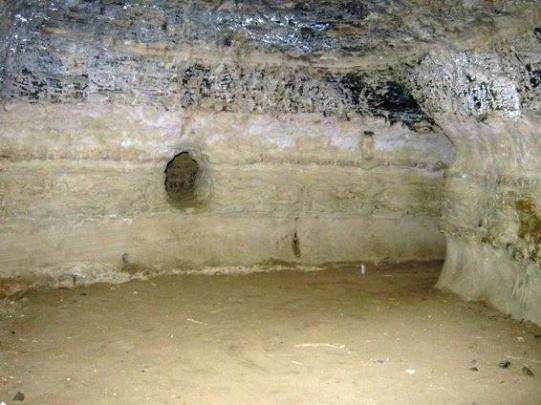
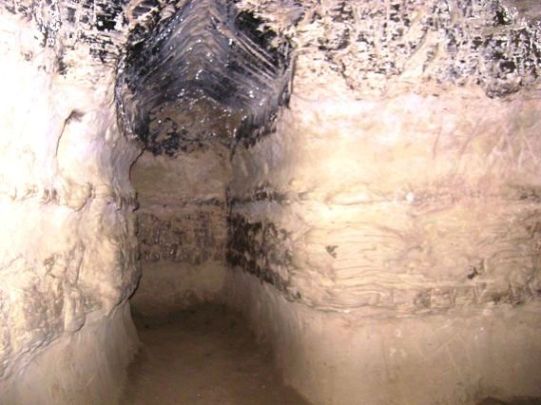
Strachan's cave consists of an entrance passage, two 'rooms', and a long narrow passage at the back. The entrance has two gunports guarding the passage, whilst the long narrow passage at the back is also guarded by a third gunport facing directly into the second room. Although the family had many scares, especially during the conflicts of the 1860s, they were never attacked.

Until the mid-1980s the cave remained hidden behind bush and scrub [though it was known about and visited by locals].
Strachan's Cave | Papakura Radio Club inc
null | Papakura Radio Club inc
Strachan's Cave | Papakura Radio Club inc
null | Papakura Radio Club inc

List Entry Information

Overview

Status
Listed

List Entry Status
Historic Place Category 1

Access
Private/No Public Access

List Number
7308

Date Entered
19th April 1996

Date of Effect
19th April 1996

City/District Council
Whanganui District

Region
Horizons (Manawatū-Whanganui) Region

Legal description

part of Lot 2 DP 48212 Blk II Ikitara SD

Detailed List Entry
Significance

Historic Significance

Historical Significance or Value Strachan's Cave is historically significant as it is a reflection of Pakeha settler fears and attitudes, and the state of race relations at that time. It is an example of a structure made in response to a particular situation, which lasted for a comparatively brief time. The cave may also be seen as a demonstration of the isolation in which many Pakeha families lived for years.

Physical Significance

The cave is located in a hillside consisting of soft to medium hard rock with a clay overlay. The fairly sophisticated layout to the cave demonstrates a clear plan for the requirements for defence, with several chambers and gun ports. The construction of the cave by hand is a remarkable achievement and presumably would have been completed fairly quickly, given the perceived threat. Strachan's cave was excavated circa 1858. Archaeological techniques could provide limited information about the cave, its construction and its use. Analysis could be undertaken of the walls to examine the means of construction, and it is possible that cultural material might be located beneath the floor which would indicated the use of the cave.

Detail Of Assessed Criteria

(a) The extent to which the place reflect important or representative aspects of NZ history Strachan's cave is a rare surviving example of a privately built refuge personifying the level to which race relations had fallen in Victorian New Zealand. It is a realisation of the extent to which early Pakeha settlers went to protect themselves when they felt threatened. (c) The potential of the place to provide knowledge of NZ history The cave can provide information on and demonstrate the attitude of the early Pakeha settlers during time of perceived threat. It demonstrates the innovative solution one family undertook to ensure their safety. (g) The technical accomplishment or value, or design of the place The cave is a complex structure, with several chambers and gun ports. It was built with a clear understanding for the needs of defence. Its construction by hand is a remarkable achievement. (j) The importance of identifying rare types of historic places The cave has a degree of rarity. Its rarity comes not from its function as a dwelling unit - the archaeological record has people living in caves in several locations in the country, but through its technological and cultural significance in being designed, constructed and utilised by one family for a relatively short period of time, and for one specific purpose, being defence

Construction Details

Start Year

1860

Type

Original Construction

Reference

Report Written By

Please note that entry on the New Zealand Heritage List/Rarangi Korero identifies only the heritage values of the property concerned, and should not be construed as advice on the state of the property, or as a comment of its soundness or safety, including in regard to earthquake risk, safety in the event of fire, or insanitary conditions.

Further Information

Current Usages

Former Usages

Themes

Web Links

Overview

Status

Listed

List Entry Status

Historic Place Category 1

Access

Private/No Public Access

List Number

7308

Date Entered

19th April 1996

Date of Effect

19th April 1996

City/District Council

Whanganui District

Region

Horizons (Manawatū-Whanganui) Region

Legal description

part of Lot 2 DP 48212 Blk II Ikitara SD

Status

Listed

List Entry Status

Historic Place Category 1

Access

Private/No Public Access

List Number

7308

Date Entered

19th April 1996

Date of Effect

19th April 1996

City/District Council

Whanganui District

Region

Horizons (Manawatū-Whanganui) Region

Legal description

part of Lot 2 DP 48212 Blk II Ikitara SD

Significance

Why is this place significant?

Historic Significance

Historical Significance or Value Strachan's Cave is historically significant as it is a reflection of Pakeha settler fears and attitudes, and the state of race relations at that time. It is an example of a structure made in response to a particular situation, which lasted for a comparatively brief time. The cave may also be seen as a demonstration of the isolation in which many Pakeha families lived for years.

Physical Significance

The cave is located in a hillside consisting of soft to medium hard rock with a clay overlay. The fairly sophisticated layout to the cave demonstrates a clear plan for the requirements for defence, with several chambers and gun ports. The construction of the cave by hand is a remarkable achievement and presumably would have been completed fairly quickly, given the perceived threat. Strachan's cave was excavated circa 1858. Archaeological techniques could provide limited information about the cave, its construction and its use. Analysis could be undertaken of the walls to examine the means of construction, and it is possible that cultural material might be located beneath the floor which would indicated the use of the cave.

Why is this place Category 1 / Category 2?

Detail Of Assessed Criteria

(a) The extent to which the place reflect important or representative aspects of NZ history Strachan's cave is a rare surviving example of a privately built refuge personifying the level to which race relations had fallen in Victorian New Zealand. It is a realisation of the extent to which early Pakeha settlers went to protect themselves when they felt threatened. (c) The potential of the place to provide knowledge of NZ history The cave can provide information on and demonstrate the attitude of the early Pakeha settlers during time of perceived threat. It demonstrates the innovative solution one family undertook to ensure their safety. (g) The technical accomplishment or value, or design of the place The cave is a complex structure, with several chambers and gun ports. It was built with a clear understanding for the needs of defence. Its construction by hand is a remarkable achievement. (j) The importance of identifying rare types of historic places The cave has a degree of rarity. Its rarity comes not from its function as a dwelling unit - the archaeological record has people living in caves in several locations in the country, but through its technological and cultural significance in being designed, constructed and utilised by one family for a relatively short period of time, and for one specific purpose, being defence

Why is this place significant?

Historic Significance

Historical Significance or Value Strachan's Cave is historically significant as it is a reflection of Pakeha settler fears and attitudes, and the state of race relations at that time. It is an example of a structure made in response to a particular situation, which lasted for a comparatively brief time. The cave may also be seen as a demonstration of the isolation in which many Pakeha families lived for years.

Physical Significance

The cave is located in a hillside consisting of soft to medium hard rock with a clay overlay. The fairly sophisticated layout to the cave demonstrates a clear plan for the requirements for defence, with several chambers and gun ports. The construction of the cave by hand is a remarkable achievement and presumably would have been completed fairly quickly, given the perceived threat. Strachan's cave was excavated circa 1858. Archaeological techniques could provide limited information about the cave, its construction and its use. Analysis could be undertaken of the walls to examine the means of construction, and it is possible that cultural material might be located beneath the floor which would indicated the use of the cave.

Why is this place Category 1 / Category 2?

Detail Of Assessed Criteria

(a) The extent to which the place reflect important or representative aspects of NZ history Strachan's cave is a rare surviving example of a privately built refuge personifying the level to which race relations had fallen in Victorian New Zealand. It is a realisation of the extent to which early Pakeha settlers went to protect themselves when they felt threatened. (c) The potential of the place to provide knowledge of NZ history The cave can provide information on and demonstrate the attitude of the early Pakeha settlers during time of perceived threat. It demonstrates the innovative solution one family undertook to ensure their safety. (g) The technical accomplishment or value, or design of the place The cave is a complex structure, with several chambers and gun ports. It was built with a clear understanding for the needs of defence. Its construction by hand is a remarkable achievement. (j) The importance of identifying rare types of historic places The cave has a degree of rarity. Its rarity comes not from its function as a dwelling unit - the archaeological record has people living in caves in several locations in the country, but through its technological and cultural significance in being designed, constructed and utilised by one family for a relatively short period of time, and for one specific purpose, being defence

Construction Information

Construction Details

Start Year

1860

startYearCirca

Type

Original Construction

Construction Details

Start Year

1860

startYearCirca

Type

Original Construction

Reference

Historical and Associated Iwi / Hapū / Whānau

Other Information

Please note that entry on the New Zealand Heritage List/Rarangi Korero identifies only the heritage values of the property concerned, and should not be construed as advice on the state of the property, or as a comment of its soundness or safety, including in regard to earthquake risk, safety in the event of fire, or insanitary conditions.

Historical and Associated Iwi / Hapū / Whānau

Other Information

Please note that entry on the New Zealand Heritage List/Rarangi Korero identifies only the heritage values of the property concerned, and should not be construed as advice on the state of the property, or as a comment of its soundness or safety, including in regard to earthquake risk, safety in the event of fire, or insanitary conditions.

Location

Loading
Sign up to hear more

Get the latest heritage news, features and events delivered
straight to your inbox.

Subscribe