

List Entry Information
Status
Listed
List Entry Status
Historic Place Category 2
Access
Private/No Public Access
List Number
7315
Date Entered
19th April 1996
Date of Effect
19th April 1996
City/District Council
Dunedin City
Region
Otago Region
Legal description
Sec 28 Blk VI Portobello
Status
Listed
List Entry Status
Historic Place Category 2
Access
Private/No Public Access
List Number
7315
Date Entered
19th April 1996
Date of Effect
19th April 1996
City/District Council
Dunedin City
Region
Otago Region
Legal description
Sec 28 Blk VI Portobello
Why is this place significant?
Historic Significance
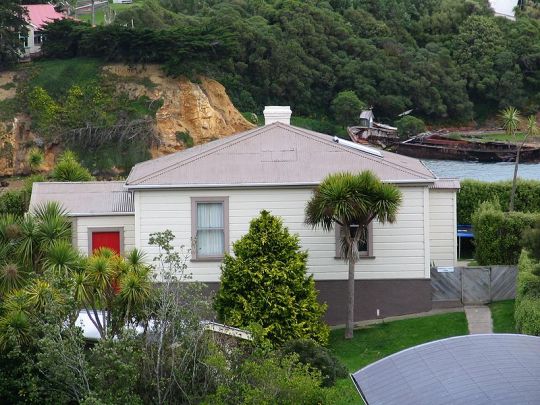
Historical Significance or Value This historic place was registered under the Historic Places Act 1993. The following text is from the original Recommendation for Registration considered by the NZHPT Board at the time of registration. The Resident Technician's Cottage was built in 1904 as the residence of the first curator of the Portobello Marine Fish-Hatchery and Biological Station. That institution was founded by the Otago Philosophical Institute and the Otago Acclimatisation Station to undertake research into fish species and to acclimatise northern hemisphere fish and crustacea for release into New Zealand waters. The first curator, Thomas Anderton, a former mariner, lived in the cottage until his death in 1916. The hatchery went into decline during the Depression and was finally taken over by from the Marine Department by the University of Otago in 1951. Long before then the emphasis in its work programmes had moved from acclimatisation to marine research. The fish hatchery became the Portobello Marine Laboratory in 1974 and occupied new premises in 1987. This four roomed cottage is the last remaining building from the original station.
Physical Significance
This historic place was registered under the Historic Places Act 1993. The following text is from the original Recommendation for Registration considered by the NZHPT Board at the time of registration. Architectural: The Resident Technician's cottage is basically a four roomed Edwardian bungalow. Although built for the Marine Department, the place was probably designed and built by the Public Works Department and is a good example of standard government staff accommodation around the turn of the century.
Why is this place Category 1 / Category 2?
Detail Of Assessed Criteria
This historic place was registered under the Historic Places Act 1993. The following text is from the original Recommendation for Registration considered by the NZHPT Board at the time of registration. The following comments are made in relation to the criteria identified under S.23(2) of the Historic Places Act 1993. a) The extent to which the place reflects important or representative aspects of New Zealand history: The founding of the Portobello Fish Hatchery happened at a time when acclimatisation societies and the Marine Department were expanding their interests in marine research. In the first years of the new century, Charles Lake Ayson, the department's fishery expert, chartered steam trawlers such as the Doto, which made exploratory cruises around the country's fishing grounds. In addition to helping with Portobello, the Marine Department also operated a fish hatchery (for salmon) at Hakataramea. As an acclimatisation centre, the Portobello Fish Hatchery was a failure. Instead, New Zealand's first marine research station developed its expertise in marine biological research. It has continued to do so under University of Otago ownership, commissioning a major research and administration complex in 1987. An article in the Otago Daily Times (26 August, 1987) stated that: The Portobello Marine Laboratory has a long-established national and international reputation and is the senior marine science institution in the country. It also has the unique location of global significance, being the most southerly marine laboratory anywhere outside Antarctica . . . Portobello is the only marine laboratory in the world to provide ready access and facilities for the study of cool temperate environments and biological communities. b) The association of the place with events, persons or ideas of importance in New Zealand history: The significance of the Resident Technician's Cottage lies with its association with the marine laboratory and the people associated with that institution. The first board of management for the hatchery included many distinguished names including several heads of department and notably George Thomson who was a scholar, author of note and politician. The first board of management also included J. Blair Mason who was one of the Otago Harbour Board's more important marine engineers. Mason oversaw the reconstruction of the Upper Harbour Wharf complex early this century and deepened Victoria Channel to enable larger ships to bypass Port Chalmers in favour of the city wharves. At the Otago Harbour Board he acted as board secretary and treasurer in addition to his engineering work which included design, modification and supervision of everything from floating plants through to wharf buildings. The cottage may have also been designed by Mason. The marine laboratory is linked to the Otago Institute, the Otago Acclimatisation Society, the Marine Department and the University of Otago. The fish hatchery is associated with two important themes in New Zealand, the acclimatisation of fish species to New Zealand, and scientific research. Conclusion: The Resident Technician's Cottage, Hatchery Rd, Portobello, is recommended for registration as a Category II as a place of historical and cultural heritage significance and value. The cottage is the last surviving intact building from the original 1904 Portobello Marine Research Station which is of national importance as the country's first such institute and its longest surviving one. The institution's first board of management is linked to many distinguished names and the institution has close associations with the Otago Acclimatisation Society, the Otago Philosophical Institute, the Marine Department and the University of Otago.
Why is this place significant?
Historic Significance
Historical Significance or Value This historic place was registered under the Historic Places Act 1993. The following text is from the original Recommendation for Registration considered by the NZHPT Board at the time of registration. The Resident Technician's Cottage was built in 1904 as the residence of the first curator of the Portobello Marine Fish-Hatchery and Biological Station. That institution was founded by the Otago Philosophical Institute and the Otago Acclimatisation Station to undertake research into fish species and to acclimatise northern hemisphere fish and crustacea for release into New Zealand waters. The first curator, Thomas Anderton, a former mariner, lived in the cottage until his death in 1916. The hatchery went into decline during the Depression and was finally taken over by from the Marine Department by the University of Otago in 1951. Long before then the emphasis in its work programmes had moved from acclimatisation to marine research. The fish hatchery became the Portobello Marine Laboratory in 1974 and occupied new premises in 1987. This four roomed cottage is the last remaining building from the original station.
Physical Significance
This historic place was registered under the Historic Places Act 1993. The following text is from the original Recommendation for Registration considered by the NZHPT Board at the time of registration. Architectural: The Resident Technician's cottage is basically a four roomed Edwardian bungalow. Although built for the Marine Department, the place was probably designed and built by the Public Works Department and is a good example of standard government staff accommodation around the turn of the century.
Why is this place Category 1 / Category 2?
Detail Of Assessed Criteria
This historic place was registered under the Historic Places Act 1993. The following text is from the original Recommendation for Registration considered by the NZHPT Board at the time of registration. The following comments are made in relation to the criteria identified under S.23(2) of the Historic Places Act 1993. a) The extent to which the place reflects important or representative aspects of New Zealand history: The founding of the Portobello Fish Hatchery happened at a time when acclimatisation societies and the Marine Department were expanding their interests in marine research. In the first years of the new century, Charles Lake Ayson, the department's fishery expert, chartered steam trawlers such as the Doto, which made exploratory cruises around the country's fishing grounds. In addition to helping with Portobello, the Marine Department also operated a fish hatchery (for salmon) at Hakataramea. As an acclimatisation centre, the Portobello Fish Hatchery was a failure. Instead, New Zealand's first marine research station developed its expertise in marine biological research. It has continued to do so under University of Otago ownership, commissioning a major research and administration complex in 1987. An article in the Otago Daily Times (26 August, 1987) stated that: The Portobello Marine Laboratory has a long-established national and international reputation and is the senior marine science institution in the country. It also has the unique location of global significance, being the most southerly marine laboratory anywhere outside Antarctica . . . Portobello is the only marine laboratory in the world to provide ready access and facilities for the study of cool temperate environments and biological communities. b) The association of the place with events, persons or ideas of importance in New Zealand history: The significance of the Resident Technician's Cottage lies with its association with the marine laboratory and the people associated with that institution. The first board of management for the hatchery included many distinguished names including several heads of department and notably George Thomson who was a scholar, author of note and politician. The first board of management also included J. Blair Mason who was one of the Otago Harbour Board's more important marine engineers. Mason oversaw the reconstruction of the Upper Harbour Wharf complex early this century and deepened Victoria Channel to enable larger ships to bypass Port Chalmers in favour of the city wharves. At the Otago Harbour Board he acted as board secretary and treasurer in addition to his engineering work which included design, modification and supervision of everything from floating plants through to wharf buildings. The cottage may have also been designed by Mason. The marine laboratory is linked to the Otago Institute, the Otago Acclimatisation Society, the Marine Department and the University of Otago. The fish hatchery is associated with two important themes in New Zealand, the acclimatisation of fish species to New Zealand, and scientific research. Conclusion: The Resident Technician's Cottage, Hatchery Rd, Portobello, is recommended for registration as a Category II as a place of historical and cultural heritage significance and value. The cottage is the last surviving intact building from the original 1904 Portobello Marine Research Station which is of national importance as the country's first such institute and its longest surviving one. The institution's first board of management is linked to many distinguished names and the institution has close associations with the Otago Acclimatisation Society, the Otago Philosophical Institute, the Marine Department and the University of Otago.
Construction Details
Start Year
1904
Type
Original Construction
Construction Details
Start Year
1904
Type
Original Construction
Historical and Associated Iwi / Hapū / Whānau
Information Sources
Furkert, 1953
Frederick William Furkert, Early New Zealand Engineers, Wellington, 1953
McLean, 1985
Gavin McLean, Otago Harbour: Currents of Controversy, Otago Harbour Board Dunedin, 1985
Otago Daily Times
Otago Daily Times, 1 Jun 1915, p.10.
Thomson, 1921
George M Thomsom & Thomas Anderton, History of Portobello Marine Fish-Hatchery and Biological Station, Wellington, 1921
Morrell, 1969
W P Morrell, The University of Otago: A Centennial History, Otago University Press, Dunedin, 1969
McDowall, 1994
R M McDowall, Gamekeepers for the Nation: the Story of New Zealand's Acclimatisation Societies 1861-1990, Christchurch, 1994
Other Information
A copy of the original report is available from the NZHPT Southern Region office Please note that entry on the New Zealand Heritage List/Rarangi Korero identifies only the heritage values of the property concerned, and should not be construed as advice on the state of the property, or as a comment of its soundness or safety, including in regard to earthquake risk, safety in the event of fire, or insanitary conditions.
Historical and Associated Iwi / Hapū / Whānau
Information Sources
Furkert, 1953
Frederick William Furkert, Early New Zealand Engineers, Wellington, 1953
McLean, 1985
Gavin McLean, Otago Harbour: Currents of Controversy, Otago Harbour Board Dunedin, 1985
Otago Daily Times
Otago Daily Times, 1 Jun 1915, p.10.
Thomson, 1921
George M Thomsom & Thomas Anderton, History of Portobello Marine Fish-Hatchery and Biological Station, Wellington, 1921
Morrell, 1969
W P Morrell, The University of Otago: A Centennial History, Otago University Press, Dunedin, 1969
McDowall, 1994
R M McDowall, Gamekeepers for the Nation: the Story of New Zealand's Acclimatisation Societies 1861-1990, Christchurch, 1994
Other Information
A copy of the original report is available from the NZHPT Southern Region office Please note that entry on the New Zealand Heritage List/Rarangi Korero identifies only the heritage values of the property concerned, and should not be construed as advice on the state of the property, or as a comment of its soundness or safety, including in regard to earthquake risk, safety in the event of fire, or insanitary conditions.
Current Usages
Uses: Accommodation
Specific Usage: House
Former Usages
General Usage: Accommodation
Specific Usage: House
Current Usages
Uses: Accommodation
Specific Usage: House
Former Usages
General Usage: Accommodation
Specific Usage: House
Location
Sign up to hear more
Get the latest heritage news, features and events delivered
straight to your inbox.
