

List Entry Information
Status
Listed
List Entry Status
Historic Place Category 2
Access
Private/No Public Access
List Number
7321
Date Entered
6th September 1996
Date of Effect
6th September 1996
City/District Council
Christchurch City
Region
Canterbury Region
Legal description
parts of Rural Secs 9329 & 11036 Blk VI of Okains SD
Status
Listed
List Entry Status
Historic Place Category 2
Access
Private/No Public Access
List Number
7321
Date Entered
6th September 1996
Date of Effect
6th September 1996
City/District Council
Christchurch City
Region
Canterbury Region
Legal description
parts of Rural Secs 9329 & 11036 Blk VI of Okains SD
Why is this place significant?
Cultural Significance
This historic place was registered under the Historic Places Act 1993. The following text is from the original Recommendation for Classification report considered by the NZHPT Board at the time of registration. Cultural: Libraries playa major part in the cultural life of small relatively isolated, communities such as Le Bons Bay. Although the library service ceased in 1992, this building continues to function as an educational /information base for the community. Social: The library, along with the school and community hall, is a focus for the Le Bons Bay community, serving as an information centre, as well as being used by people involved in genealogical research, sales of craft etc.
Historic Significance
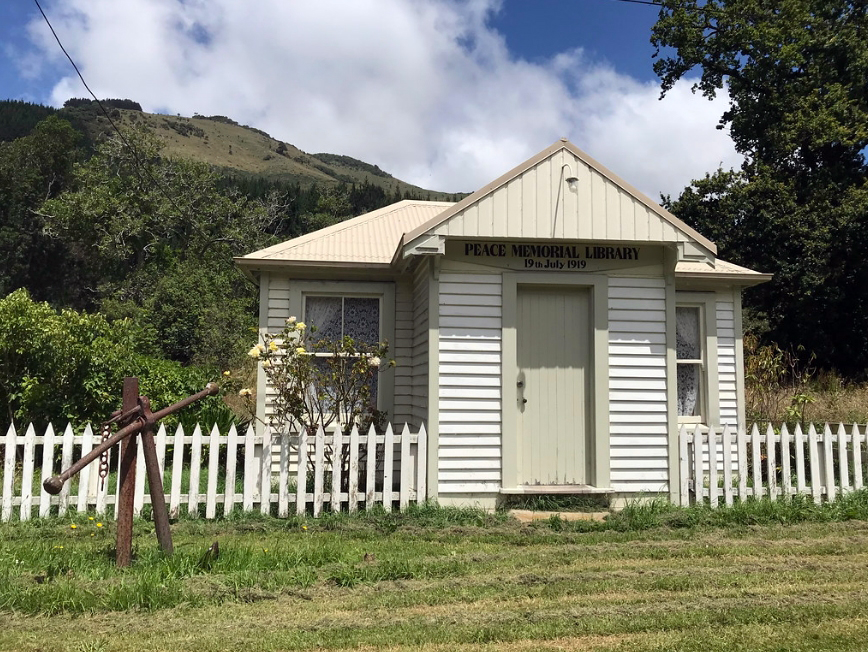
Historical Significance or Value This historic place was registered under the Historic Places Act 1993. The following text is from the original Recommendation for Classification report considered by the NZHPT Board at the time of registration. Historical: The Le Bons Bay Peace Memorial Library was built as a 'utilitarian' war memorial in 1919, commemorating the local casualties of the Great War. Although phased out from the National Library Service network in 1992, it continues to fulfil this local information/memorial role as an archive information centre run by community members.
Physical Significance
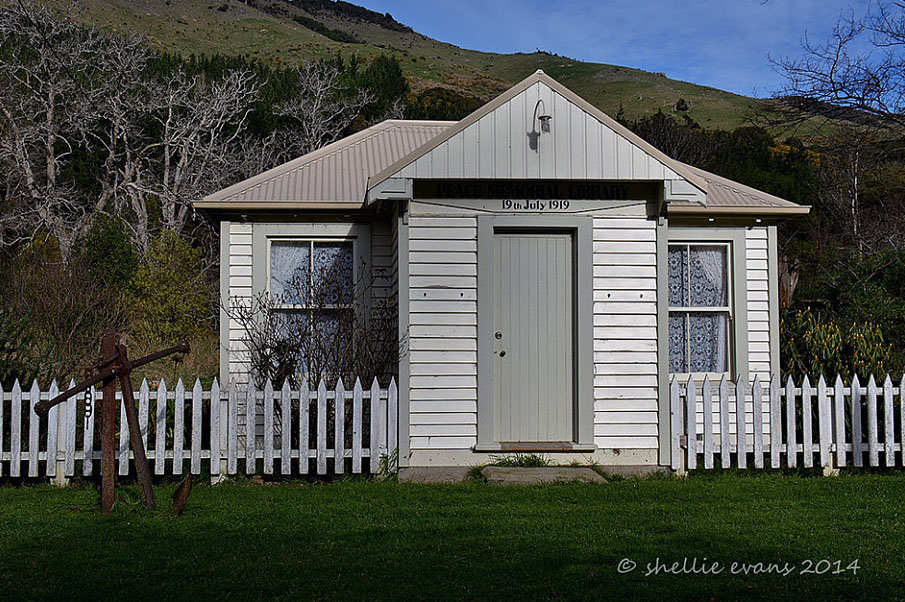
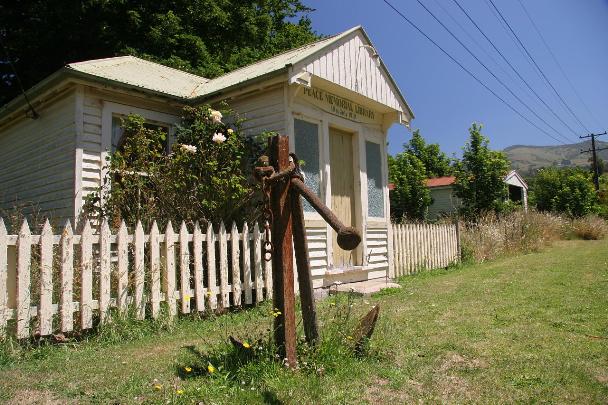
This historic place was registered under the Historic Places Act 1993. The following text is from the original Recommendation for Classification report considered by the NZHPT Board at the time of registration. Aesthetic: The Peace Memorial Library in Le Bons Bay has a simple charm and practical layout. The building has considerable streetscape significance as it stands on the only road through the small settlement. Architectural: This small rural library was built as a peace memorial in 1919. The library is almost artless in its design and simplicity of planning - a single room with an entry porch. There are two Rolls of Honour inside.
Why is this place Category 1 / Category 2?
Detail Of Assessed Criteria
This historic place was registered under the Historic Places Act 1993. The following text is from the original Recommendation for Classification report considered by the NZHPT Board at the time of registration. a) The extent which the place reflects importance or representative aspects of New Zealand history: As Chris Maclean and Jock Phillips's book 'The Sorrow and the Pride' attests, war memorials are significant features of the New Zealand landscape and their design and construction say much about contemporary attitudes to war. The Le Bons Bay Peace Memorial Library is an example of the 'utilitarian' type often favoured by smaller communities but opposed by community leaders such as Minister of Defence, Sir James Allen, who still advocated the view advanced after the Boer War, that memorials should be inspirational rather than utilitarian. (b) The association of the place with events, persons, or ideals of importance in New Zealand history: The ideal of commemorating the dead is ancient, dating back to ancient Polynesian and European traditions in the naming of natural features. As Maclean and Phillips have demonstrated, memorials were first erected after the New Zealand wars. At first limited to marker stones and inspirations statuary, they later encompassed utilitarian structures such as halls, libraries and swimming pools. The Le Bons Bay Peace Memorial Library is an example of the last group. (c) The potential of the place to provide knowledge of New Zealand history: The Le Bons Bay Peace Memorial Library has a long and unbroken history of community service through the provision of public information, not only in written form, but through its built fabric (name and rolls of honour etc). Its new role as an information centre, local library and community archive strengthens that potential. (e) The community association with, or public esteem for the place: The Le Bons Bay Community Fund is aware of the buildings special origins and feel it is worthy of preservation. Locals are involved in the restoration of the library and further work is planned. (h) The symbolic or commemorative value of the place: The library, although a functional building, was conceived from the start as a Peace Memorial with a Roll of Honour for the war dead. This commemorative function has outlasted its function as a library. (j) The importance of identifying rare types of historic places: The library has rarity value as a library war memorial and comparative rarity as a war memorial building. Of the 109 registered memorial structures only 11 also serve as public buildings or utilities (excluding clock towers, gates etc). Conclusion: The Le Bons Bay Peace Memorial Library, is recommended for registration as a Category II as a place of historical and cultural heritage significance and value. This simple building is sited on the only road leading through the small settlement of Le Bons Bay and therefore has considerable streetscape significance. Although the library service ceased in 1992 it continues to function as focal point for the community. The library also has rarity value as a utilitarian war memorial building.
Why is this place significant?
Cultural Significance
This historic place was registered under the Historic Places Act 1993. The following text is from the original Recommendation for Classification report considered by the NZHPT Board at the time of registration. Cultural: Libraries playa major part in the cultural life of small relatively isolated, communities such as Le Bons Bay. Although the library service ceased in 1992, this building continues to function as an educational /information base for the community. Social: The library, along with the school and community hall, is a focus for the Le Bons Bay community, serving as an information centre, as well as being used by people involved in genealogical research, sales of craft etc.
Historic Significance
Historical Significance or Value This historic place was registered under the Historic Places Act 1993. The following text is from the original Recommendation for Classification report considered by the NZHPT Board at the time of registration. Historical: The Le Bons Bay Peace Memorial Library was built as a 'utilitarian' war memorial in 1919, commemorating the local casualties of the Great War. Although phased out from the National Library Service network in 1992, it continues to fulfil this local information/memorial role as an archive information centre run by community members.
Physical Significance
This historic place was registered under the Historic Places Act 1993. The following text is from the original Recommendation for Classification report considered by the NZHPT Board at the time of registration. Aesthetic: The Peace Memorial Library in Le Bons Bay has a simple charm and practical layout. The building has considerable streetscape significance as it stands on the only road through the small settlement. Architectural: This small rural library was built as a peace memorial in 1919. The library is almost artless in its design and simplicity of planning - a single room with an entry porch. There are two Rolls of Honour inside.
Why is this place Category 1 / Category 2?
Detail Of Assessed Criteria
This historic place was registered under the Historic Places Act 1993. The following text is from the original Recommendation for Classification report considered by the NZHPT Board at the time of registration. a) The extent which the place reflects importance or representative aspects of New Zealand history: As Chris Maclean and Jock Phillips's book 'The Sorrow and the Pride' attests, war memorials are significant features of the New Zealand landscape and their design and construction say much about contemporary attitudes to war. The Le Bons Bay Peace Memorial Library is an example of the 'utilitarian' type often favoured by smaller communities but opposed by community leaders such as Minister of Defence, Sir James Allen, who still advocated the view advanced after the Boer War, that memorials should be inspirational rather than utilitarian. (b) The association of the place with events, persons, or ideals of importance in New Zealand history: The ideal of commemorating the dead is ancient, dating back to ancient Polynesian and European traditions in the naming of natural features. As Maclean and Phillips have demonstrated, memorials were first erected after the New Zealand wars. At first limited to marker stones and inspirations statuary, they later encompassed utilitarian structures such as halls, libraries and swimming pools. The Le Bons Bay Peace Memorial Library is an example of the last group. (c) The potential of the place to provide knowledge of New Zealand history: The Le Bons Bay Peace Memorial Library has a long and unbroken history of community service through the provision of public information, not only in written form, but through its built fabric (name and rolls of honour etc). Its new role as an information centre, local library and community archive strengthens that potential. (e) The community association with, or public esteem for the place: The Le Bons Bay Community Fund is aware of the buildings special origins and feel it is worthy of preservation. Locals are involved in the restoration of the library and further work is planned. (h) The symbolic or commemorative value of the place: The library, although a functional building, was conceived from the start as a Peace Memorial with a Roll of Honour for the war dead. This commemorative function has outlasted its function as a library. (j) The importance of identifying rare types of historic places: The library has rarity value as a library war memorial and comparative rarity as a war memorial building. Of the 109 registered memorial structures only 11 also serve as public buildings or utilities (excluding clock towers, gates etc). Conclusion: The Le Bons Bay Peace Memorial Library, is recommended for registration as a Category II as a place of historical and cultural heritage significance and value. This simple building is sited on the only road leading through the small settlement of Le Bons Bay and therefore has considerable streetscape significance. Although the library service ceased in 1992 it continues to function as focal point for the community. The library also has rarity value as a utilitarian war memorial building.
Construction Details
Start Year
1919
Type
Original Construction
Construction Details
Start Year
1919
Type
Original Construction
Historical and Associated Iwi / Hapū / Whānau
Information Sources
MacLean, 1990
Chris MacLean and Jock Phillips, The Sorrow and the Pride: New Zealand War Memorials, Wellington, 1990
Ogilvie, 1990
G. Ogilvie, Banks Peninsula; the Cradle of Canterbury, GP Books, 1990
Other Information
A copy of the original report is available from the NZHPT Southern region office Please note that entry on the New Zealand Heritage List/Rarangi Korero identifies only the heritage values of the property concerned, and should not be construed as advice on the state of the property, or as a comment of its soundness or safety, including in regard to earthquake risk, safety in the event of fire, or insanitary conditions.
Historical and Associated Iwi / Hapū / Whānau
Information Sources
MacLean, 1990
Chris MacLean and Jock Phillips, The Sorrow and the Pride: New Zealand War Memorials, Wellington, 1990
Ogilvie, 1990
G. Ogilvie, Banks Peninsula; the Cradle of Canterbury, GP Books, 1990
Other Information
A copy of the original report is available from the NZHPT Southern region office Please note that entry on the New Zealand Heritage List/Rarangi Korero identifies only the heritage values of the property concerned, and should not be construed as advice on the state of the property, or as a comment of its soundness or safety, including in regard to earthquake risk, safety in the event of fire, or insanitary conditions.
Former Usages
General Usage: Civic Facilities
Specific Usage: Library
Former Usages
General Usage: Civic Facilities
Specific Usage: Library
