

Standing on the site of an out station for the vast Otekaieke Station, the first accommodation house built on the site opened in the early 1860s. German-born Christian Hille who worked as a shepherd on Otekaieke Station opened the Western Hotel which he ran in conjunction with a ferry service which provided a punt across the Waitaki River. The Western Hotel was a small timber building which provided minimal facilities for the public. In 1870 it was damaged by fire and rebuilt in stone. Hille ran the business until the 1880s, when the bridging of the Waitaki River at Kurow focused business and services at the township, and with the punt service no longer required led to a decline in traffic and ultimately closure. After this time the former hotel became a private home known as Westmere, part of Hille’s estate.
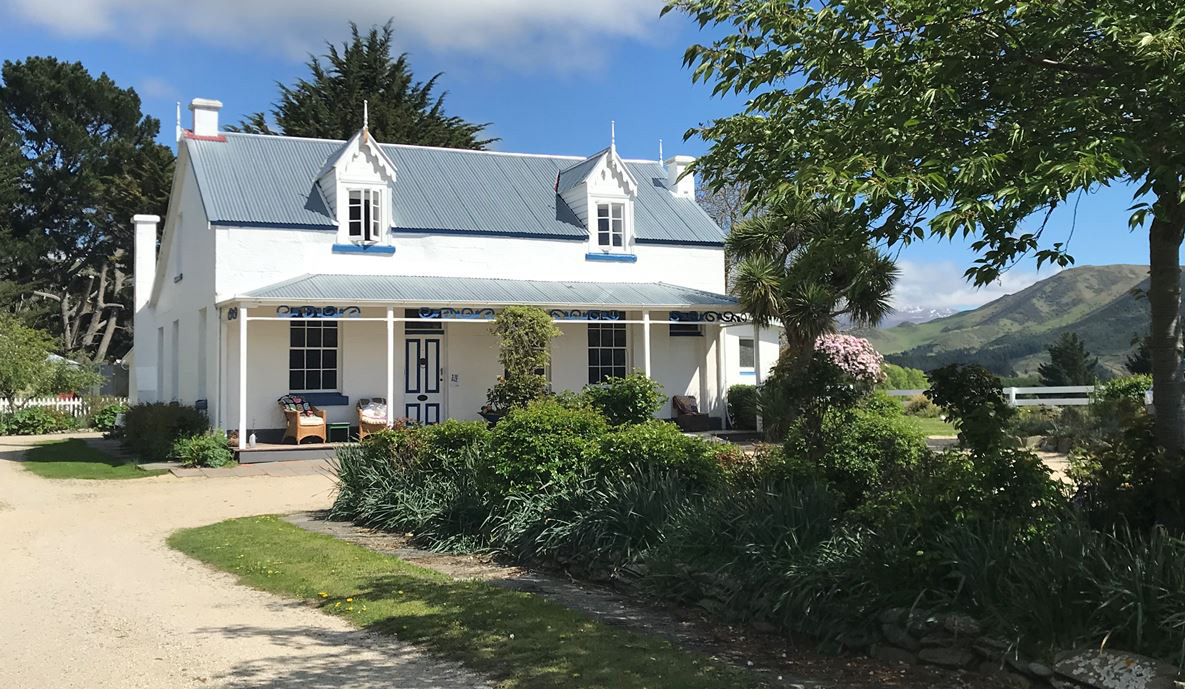
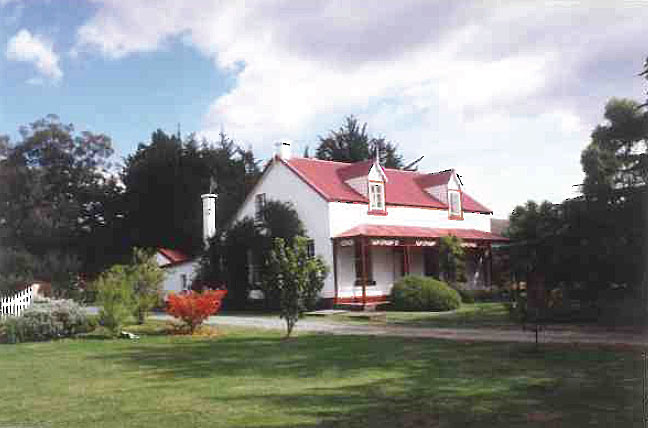
Set in a mature garden alongside the Kurow-Duntroon Highway, the Western Hotel (Former) is built from local limestone on limestone foundations. It is of ‘salt box gable’ form and is one and a half storeys high. It has two dormer windows on the upper floor. The roof is corrugated iron. A veranda runs along the front elevation with decorative fretwork alternating between the veranda posts. The windows are multipaned.
The Western Hotel (Former) has architectural significance as a gold rush era accommodation house and has notable detailing including the decorative features. It has social significance as a relic of the coaching days when such houses were vital stops on long coaching routes between distant communities and it is historically important as a chain of such places which operated up the length of the Waitaki Valley. It has a long association with the Hille family who were prominent settlers in the North Otago region.
In 2011 as the Western House Bed and Breakfast, it continues to provide accommodation for the travelling public.
List Entry Information
Status
Listed
List Entry Status
Historic Place Category 2
Access
Able to Visit
List Number
7325
Date Entered
6th September 1996
Date of Effect
6th September 1996
City/District Council
Waitaki District
Region
Canterbury Region
Extent of List Entry
The extent includes the land described as Lot 1 DP 15065 (RT OT5C/238), Otago Land District, and the building known as Western Hotel (Former) thereon and its fixtures and fittings.
Legal description
Lot 1 DP 15065 (RT OT5C/238), Otago Land District
Status
Listed
List Entry Status
Historic Place Category 2
Access
Able to Visit
List Number
7325
Date Entered
6th September 1996
Date of Effect
6th September 1996
City/District Council
Waitaki District
Region
Canterbury Region
Extent of List Entry
The extent includes the land described as Lot 1 DP 15065 (RT OT5C/238), Otago Land District, and the building known as Western Hotel (Former) thereon and its fixtures and fittings.
Legal description
Lot 1 DP 15065 (RT OT5C/238), Otago Land District
Why is this place significant?
Cultural Significance
This historic place was registered under the Historic Places Act 1993. The following text is from the original Recommendation for Registration considered by the NZHPT Board at the time of registration. Social: Even in its present modified form the house is a relic of the old coaching days and this depicts the distinctive characteristics of the coaching life. Such houses as this were vital stops on the long tedious coaching routes, particularly between comparatively distant communities.
Historic Significance
Historical Significance or Value This historic place was registered under the Historic Places Act 1993. The following text is from the original Recommendation for Registration considered by the NZHPT Board at the time of registration. The Western House was constructed in 1871 as an accommodation house to replace an earlier inn burnt down the year before. It was part of a chain of such places opened between Oamaru and the head of the Waitaki Valley during the 1860s. Under its various names, it has had a long association with the Hille family and its descendants and has been a private residence since 1882 when the license was transferred to the new Kurow Hotel.
Physical Significance
This historic place was registered under the Historic Places Act 1993. The following text is from the original Recommendation for Registration considered by the NZHPT Board at the time of registration. Architectural: This two storey "gold rush" accommodation house was built in 1871, replacing the Western Inn which was built on the site in 1861. The house has an exterior built of local limestone. There are various outbuildings and artefacts attached to the property. The main facade is nearly symmetrical, with a long gabled roof inset with two small dormers on either side, back and front. The dormers have decorative barges and are topped with finials. The main decorative feature is the carved fretwork under the eaves of the verandah.
Why is this place Category 1 / Category 2?
Detail Of Assessed Criteria
This historic place was registered under the Historic Places Act 1993. The following text is from the original Recommendation for Registration considered by the NZHPT Board at the time of registration. The following comments are made in relation to the criteria identified under S.23(2) of the Historic Places Act 1993. a) The extent to which the place reflects important or representative aspects of New Zealand history: The Western House typifies the small accommodation houses opened between Oamaru and the head of the Waitaki Valley during the 1860s. Such premises were vital in the early stages of European settlement of the South Island interior when roads or non-existent and daily travelling distances were consequently short. b) The association of the place with events, people, or ideas of importance in New Zealand history: The Western House typifies the rapid economic and technological changes that took place during the colonial era. Built in 1871 to service travellers using unmetalled roads, within a decade, its public accommodation role had been superseded by the provision of upgraded roads, bridges and the Oamaru-Kurow railway (1881). Persons of significance associated with the Western House are Christian Hille and William Dansey. Christian Hille was a person of some significance to the early European settlement of this part of North Otago. He was associated with the accommodation house from the 1870s to his death in 1895. William Heywood Dansey (1830-1909) for whom Hille first worked is commemorated by Dansey's Pass. Dansey took up the Otekaike Run. Robert Pinney records that Dansey is said to have been the first man in Oamaru to have drawn the old age pension. Conclusion: The Western House, Kurow, is recommended for registration as a Category II as a place of historical and cultural heritage significance and value. This two storey accommocation house, built in 1871, has an almost symmetrical limestone exterior, with a long gabled roof inset with dormers, carved fretwork under the verandah eaves, and the distinctive profiles of lean-to additions at the rear. The house is something of a relic of the old coaching days in Otago and has had a long association with the local Hille family and its descendants.
Why is this place significant?
Cultural Significance
This historic place was registered under the Historic Places Act 1993. The following text is from the original Recommendation for Registration considered by the NZHPT Board at the time of registration. Social: Even in its present modified form the house is a relic of the old coaching days and this depicts the distinctive characteristics of the coaching life. Such houses as this were vital stops on the long tedious coaching routes, particularly between comparatively distant communities.
Historic Significance
Historical Significance or Value This historic place was registered under the Historic Places Act 1993. The following text is from the original Recommendation for Registration considered by the NZHPT Board at the time of registration. The Western House was constructed in 1871 as an accommodation house to replace an earlier inn burnt down the year before. It was part of a chain of such places opened between Oamaru and the head of the Waitaki Valley during the 1860s. Under its various names, it has had a long association with the Hille family and its descendants and has been a private residence since 1882 when the license was transferred to the new Kurow Hotel.
Physical Significance
This historic place was registered under the Historic Places Act 1993. The following text is from the original Recommendation for Registration considered by the NZHPT Board at the time of registration. Architectural: This two storey "gold rush" accommodation house was built in 1871, replacing the Western Inn which was built on the site in 1861. The house has an exterior built of local limestone. There are various outbuildings and artefacts attached to the property. The main facade is nearly symmetrical, with a long gabled roof inset with two small dormers on either side, back and front. The dormers have decorative barges and are topped with finials. The main decorative feature is the carved fretwork under the eaves of the verandah.
Why is this place Category 1 / Category 2?
Detail Of Assessed Criteria
This historic place was registered under the Historic Places Act 1993. The following text is from the original Recommendation for Registration considered by the NZHPT Board at the time of registration. The following comments are made in relation to the criteria identified under S.23(2) of the Historic Places Act 1993. a) The extent to which the place reflects important or representative aspects of New Zealand history: The Western House typifies the small accommodation houses opened between Oamaru and the head of the Waitaki Valley during the 1860s. Such premises were vital in the early stages of European settlement of the South Island interior when roads or non-existent and daily travelling distances were consequently short. b) The association of the place with events, people, or ideas of importance in New Zealand history: The Western House typifies the rapid economic and technological changes that took place during the colonial era. Built in 1871 to service travellers using unmetalled roads, within a decade, its public accommodation role had been superseded by the provision of upgraded roads, bridges and the Oamaru-Kurow railway (1881). Persons of significance associated with the Western House are Christian Hille and William Dansey. Christian Hille was a person of some significance to the early European settlement of this part of North Otago. He was associated with the accommodation house from the 1870s to his death in 1895. William Heywood Dansey (1830-1909) for whom Hille first worked is commemorated by Dansey's Pass. Dansey took up the Otekaike Run. Robert Pinney records that Dansey is said to have been the first man in Oamaru to have drawn the old age pension. Conclusion: The Western House, Kurow, is recommended for registration as a Category II as a place of historical and cultural heritage significance and value. This two storey accommocation house, built in 1871, has an almost symmetrical limestone exterior, with a long gabled roof inset with dormers, carved fretwork under the verandah eaves, and the distinctive profiles of lean-to additions at the rear. The house is something of a relic of the old coaching days in Otago and has had a long association with the local Hille family and its descendants.
Construction Details
Start Year
1870
Type
Demolished - Fire
Description
1870-Fire destroys at least part of the Accommodation House
Start Year
1871
startYearCirca
Type
Original Construction
Description
Accommodation House rebuilt
Start Year
1900
startYearCirca
Type
Addition
Description
Chaff cutter and water wheel installed
Type
Modification
Description
Laundry and dairy added
Period
1920s
Start Year
2008
Type
Modification
Description
Ensuites added to bedrooms
Start Year
1861
Type
Original Construction
Description
Accommodation House constructed
Construction Details
Start Year
1870
Type
Demolished - Fire
Description
1870-Fire destroys at least part of the Accommodation House
Start Year
1871
startYearCirca
Type
Original Construction
Description
Accommodation House rebuilt
Start Year
1900
startYearCirca
Type
Addition
Description
Chaff cutter and water wheel installed
Type
Modification
Description
Laundry and dairy added
Period
1920s
Start Year
2008
Type
Modification
Description
Ensuites added to bedrooms
Start Year
1861
Type
Original Construction
Description
Accommodation House constructed
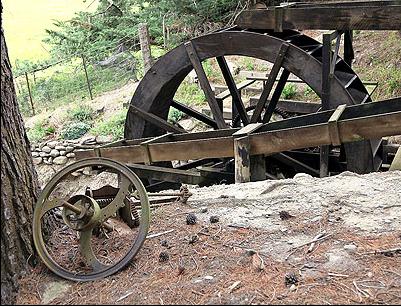
The following text is from an Upgrade Report 16 November 2011: In the late 1850s as pastoralists followed the Waitaki River inland along routes long established by Ngai Tahu new areas were opened up as vast runs. Around the area of what is now Kurow was Run 28, known as Otekaieke, which covered the area between Otekaieke and Kohurau (later named Kurow) Streams. It was first licensed in 1854, and in 1857 was owned by W.H. Dansey (after whom nearby Dansey’s Pass is named). By 1865 Robert Campbell had taken over Otekaieke. An 1861 survey plan shows the land on which the accommodation house was later built was an outstation on Dansey’s Run with two structures on the block. Christian Hille (d.1895) was an early boundary keeper and shepherd on the Otekaieke Run. German-born Hille had arrived in New Zealand in 1854 and landed in Dunedin before travelling overland to Oamaru. Hille worked for Dansey for four years before establishing an accommodation house, known as the Western Inn and later the Western Hotel. Deeds indicate that Hille acquired the land from Robert Campbell in 1865; though it is clear Hille occupied it earlier. Located close to the confluence of the Kurow and Waitaki Rivers Hille took up ferry keeping and opened a general store. Hille reportedly ran the Hotel for seven years (until around 1868) before leaving for a time, transferring the license to his brother in law Henry Schulter, and then returning. His was one of the early accommodation houses set up on this inland route - there were others at Otematata and Maerewhenua. Rev. E. Simeon Elwell described the first accommodation house as consisting of three ground floor rooms (a kitchen and bar, sitting room and side room) and two bedrooms, one for Christian and his wife and the other for travellers. The house was timber. In December 1870 a fire started in servant Elizabeth McIntosh’s bedroom. The alarm was raised and McIntosh escaped but efforts made to dowse the fire failed and the conflagration spread. According to newspaper reports the ‘centre portion’ of the building was ‘completely destroyed.’ Other parts were undamaged, and the associated stabling came through the fire unscathed. The hotel was rebuilt though no reports have been found describing the reconstruction. Later owners the McBeaths provide a description of the layout of the Hotel: five bedrooms on the upper floor (with others added as the family grew), a ground floor with kitchen, large dining and general room and a bar room, and some forty metres away the meat store and general food store. A barn and water wheel-driven chaff cutter stood nearby. An orchard and gardens were developed and water was brought via a race from the Kurow River. There were stables and a woolshed as well. The stone was quarried from Grant’s Road near Otiake Creek. The foundations were 380mm thick, and the exterior walls 300mm thick to ceiling height and 200mm above. The floors were Baltic pine. With the construction of a bridge across the Waitaki River to Hakataramea in 1881, the punt service was no longer required and passing traffic tended to pause at the Kurow township a little to the north west. The number of hotel guests declined and this lead to the closure of the Hotel, though the actual date of closure is uncertain, though the license was transferred to the Kurow Hotel (in Kurow itself) in 1882. After Christian Hille’s death, his 1,294 acre estate was taken over by his son William Gustave Hille at which time it became known as Westmere. In William Hille’s entry in the Cyclopedia of Otago and Southland, the Hotel is described as the ‘original homestead’ on the estate that had been used as a ‘public house.’ In 1900 William Hille built a water wheel to power a chaff cutter which provided fodder for New Zealand horses at the South African campaign and for the local trade. It also drove seed cleaning gear and a shearing machine. Though replaced by a combustion engine, it was re-commissioned during World War One when fuel was short. After 1922 it was largely unused. In 1910 the land on which the Hotel stands was transferred to Kurow farmer Alexander Hamilton Chapman, grandson of Christian Hille. A laundry and dairy were added in the 1920s. In the 1930s a bathroom and toilet were added. The property remained in the ownership of the extended Hille-Chapman family until the mid-1970s. Westmere remained a family home throughout the twentieth century. The water wheel was restored by the owners, with the support of the local community in 1990 with some funding from the 1990 Commission. In 2007 the property was purchased by the current owners who have opened it as a bed and breakfast, recalling its original roots it is known as Western House Bed and Breakfast.
The following text is from an Upgrade Report 16 November 2011: In the late 1850s as pastoralists followed the Waitaki River inland along routes long established by Ngai Tahu new areas were opened up as vast runs. Around the area of what is now Kurow was Run 28, known as Otekaieke, which covered the area between Otekaieke and Kohurau (later named Kurow) Streams. It was first licensed in 1854, and in 1857 was owned by W.H. Dansey (after whom nearby Dansey’s Pass is named). By 1865 Robert Campbell had taken over Otekaieke. An 1861 survey plan shows the land on which the accommodation house was later built was an outstation on Dansey’s Run with two structures on the block. Christian Hille (d.1895) was an early boundary keeper and shepherd on the Otekaieke Run. German-born Hille had arrived in New Zealand in 1854 and landed in Dunedin before travelling overland to Oamaru. Hille worked for Dansey for four years before establishing an accommodation house, known as the Western Inn and later the Western Hotel. Deeds indicate that Hille acquired the land from Robert Campbell in 1865; though it is clear Hille occupied it earlier. Located close to the confluence of the Kurow and Waitaki Rivers Hille took up ferry keeping and opened a general store. Hille reportedly ran the Hotel for seven years (until around 1868) before leaving for a time, transferring the license to his brother in law Henry Schulter, and then returning. His was one of the early accommodation houses set up on this inland route - there were others at Otematata and Maerewhenua. Rev. E. Simeon Elwell described the first accommodation house as consisting of three ground floor rooms (a kitchen and bar, sitting room and side room) and two bedrooms, one for Christian and his wife and the other for travellers. The house was timber. In December 1870 a fire started in servant Elizabeth McIntosh’s bedroom. The alarm was raised and McIntosh escaped but efforts made to dowse the fire failed and the conflagration spread. According to newspaper reports the ‘centre portion’ of the building was ‘completely destroyed.’ Other parts were undamaged, and the associated stabling came through the fire unscathed. The hotel was rebuilt though no reports have been found describing the reconstruction. Later owners the McBeaths provide a description of the layout of the Hotel: five bedrooms on the upper floor (with others added as the family grew), a ground floor with kitchen, large dining and general room and a bar room, and some forty metres away the meat store and general food store. A barn and water wheel-driven chaff cutter stood nearby. An orchard and gardens were developed and water was brought via a race from the Kurow River. There were stables and a woolshed as well. The stone was quarried from Grant’s Road near Otiake Creek. The foundations were 380mm thick, and the exterior walls 300mm thick to ceiling height and 200mm above. The floors were Baltic pine. With the construction of a bridge across the Waitaki River to Hakataramea in 1881, the punt service was no longer required and passing traffic tended to pause at the Kurow township a little to the north west. The number of hotel guests declined and this lead to the closure of the Hotel, though the actual date of closure is uncertain, though the license was transferred to the Kurow Hotel (in Kurow itself) in 1882. After Christian Hille’s death, his 1,294 acre estate was taken over by his son William Gustave Hille at which time it became known as Westmere. In William Hille’s entry in the Cyclopedia of Otago and Southland, the Hotel is described as the ‘original homestead’ on the estate that had been used as a ‘public house.’ In 1900 William Hille built a water wheel to power a chaff cutter which provided fodder for New Zealand horses at the South African campaign and for the local trade. It also drove seed cleaning gear and a shearing machine. Though replaced by a combustion engine, it was re-commissioned during World War One when fuel was short. After 1922 it was largely unused. In 1910 the land on which the Hotel stands was transferred to Kurow farmer Alexander Hamilton Chapman, grandson of Christian Hille. A laundry and dairy were added in the 1920s. In the 1930s a bathroom and toilet were added. The property remained in the ownership of the extended Hille-Chapman family until the mid-1970s. Westmere remained a family home throughout the twentieth century. The water wheel was restored by the owners, with the support of the local community in 1990 with some funding from the 1990 Commission. In 2007 the property was purchased by the current owners who have opened it as a bed and breakfast, recalling its original roots it is known as Western House Bed and Breakfast.
Historical and Associated Iwi / Hapū / Whānau
Completion Date
16th November 2011
Report Written By
Heather Bauchop
Information Sources
Cyclopedia of New Zealand, 1905
Cyclopedia Company, Industrial, descriptive, historical, biographical facts, figures, illustrations, Wellington, N.Z, 1897-1908, Vol. 4 Otago and Southland, Cyclopedia Company, Christchurch, 1905
McDonald, 1962
K C McDonald, 'White Stone Country', Oamaru, 1962
Pinney, 1981
R. Pinney, Early Northern Otago Runs, Auckland, 1981
Other Information
A fully referenced Upgrade Report is available from the Otago/Southland Area office of NZHPT. Please note that entry on the New Zealand Heritage List/Rarangi Korero identifies only the heritage values of the property concerned, and should not be construed as advice on the state of the property, or as a comment of its soundness or safety, including in regard to earthquake risk, safety in the event of fire, or insanitary conditions.
Historical and Associated Iwi / Hapū / Whānau
Completion Date
16th November 2011
Report Written By
Heather Bauchop
Information Sources
Cyclopedia of New Zealand, 1905
Cyclopedia Company, Industrial, descriptive, historical, biographical facts, figures, illustrations, Wellington, N.Z, 1897-1908, Vol. 4 Otago and Southland, Cyclopedia Company, Christchurch, 1905
McDonald, 1962
K C McDonald, 'White Stone Country', Oamaru, 1962
Pinney, 1981
R. Pinney, Early Northern Otago Runs, Auckland, 1981
Other Information
A fully referenced Upgrade Report is available from the Otago/Southland Area office of NZHPT. Please note that entry on the New Zealand Heritage List/Rarangi Korero identifies only the heritage values of the property concerned, and should not be construed as advice on the state of the property, or as a comment of its soundness or safety, including in regard to earthquake risk, safety in the event of fire, or insanitary conditions.
Current Usages
Uses: Accommodation
Specific Usage: Boarding/ Guest House
Uses: Accommodation
Specific Usage: House
Former Usages
General Usage: Accommodation
Specific Usage: Hotel
General Usage: Commemoration
Specific Usage: Accommodation House
Web Links
description: Western House B&B
Current Usages
Uses: Accommodation
Specific Usage: Boarding/ Guest House
Uses: Accommodation
Specific Usage: House
Former Usages
General Usage: Accommodation
Specific Usage: Hotel
General Usage: Commemoration
Specific Usage: Accommodation House
Web Links
description: Western House B&B
Location
Sign up to hear more
Get the latest heritage news, features and events delivered
straight to your inbox.
