

List Entry Information
Status
Listed
List Entry Status
Historic Place Category 2
Access
Private/No Public Access
List Number
7349
Date Entered
25th October 1996
Date of Effect
25th October 1996
City/District Council
Kaipara District
Region
Northland Region
Legal description
Part Oahu Block (RT NA766/87), North Auckland Land District
Location Description
Batley House is located at the end of Batley Road
Status
Listed
List Entry Status
Historic Place Category 2
Access
Private/No Public Access
List Number
7349
Date Entered
25th October 1996
Date of Effect
25th October 1996
City/District Council
Kaipara District
Region
Northland Region
Legal description
Part Oahu Block (RT NA766/87), North Auckland Land District
Location Description
Batley House is located at the end of Batley Road
Why is this place significant?
Historic Significance
Historical Significance or Value This historic place was registered under the Historic Places Act 1993. The following text is from the original Recommendation for Registration report considered by the NZHPT Board at the time of registration. Historical: The original section of Batley House was built for Joseph Masefield c.1865 to serve as a hotel. Masefield was a local entrepreneur, who carried out a variety of functions, the most important of which included running the hotel and the fish canning factory. It was then purchased by the Roadley Family circa 1918. Batley declined when rail and later road links were improved. This house is one of a few surviving structures to mark the history of the fishing and meat processing settlement which once numbered 200 people. Several fishing boat sheds and evidence of the fish canning factory site also exist.
Physical Significance
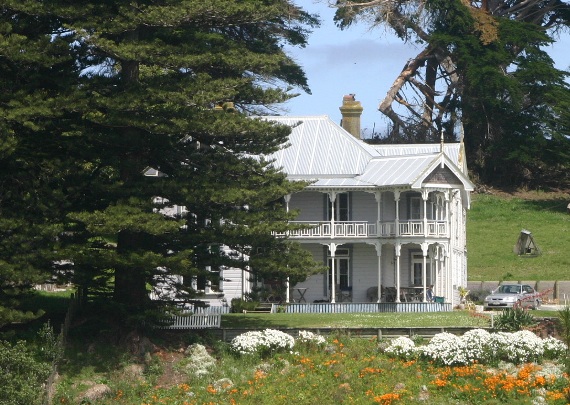
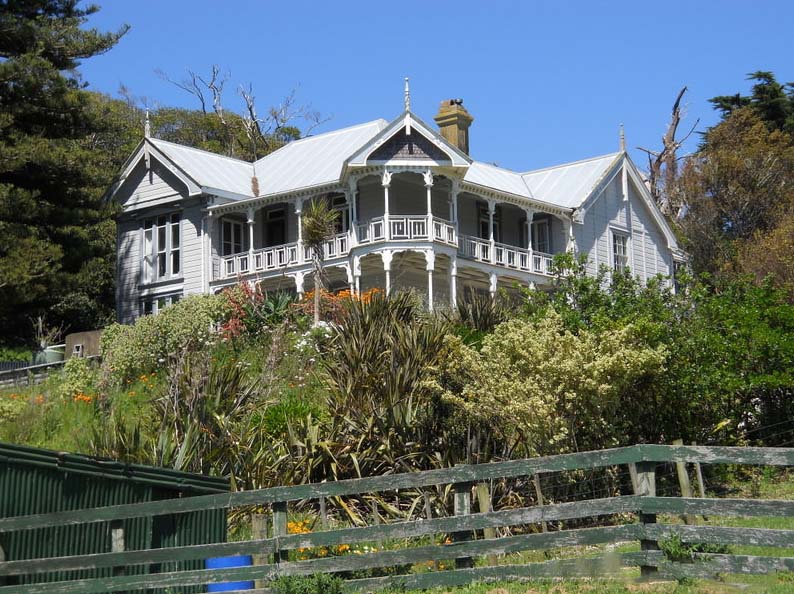
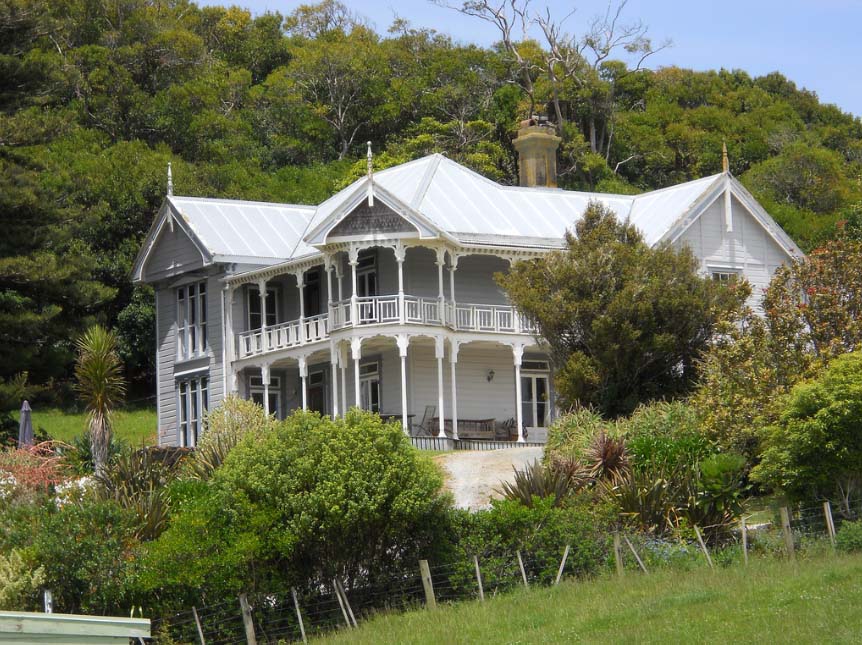
This historic place was registered under the Historic Places Act 1993. The following text is from the original Recommendation for Registration report considered by the NZHPT Board at the time of registration. Architectural: Batley House was originally built c.1865 as a Victorian Pyramid roof style villa with a centre bay and verandah on two/three sides. Around the turn of the century the place was substantially altered to become a two storeyed Victorian/Edwardian Corner Bay Villa of the period 1880-1915. These later alterations were representative of a conventional practice for increasing the size of colonial houses.
Why is this place Category 1 / Category 2?
Detail Of Assessed Criteria
This historic place was registered under the Historic Places Act 1993. The following text is from the original Recommendation for Registration report considered by the NZHPT Board at the time of registration. a) The extent to which the place reflects important or representative aspects of New Zealand history: Batley House is typical of the buildings erected by the inhabitants of the small communities that sprang up around the edges of the Kaipara last century, and whose raison d'être vanished when improved surface communications removed the need for water transport and permitted population concentration in larger townships. g) The technical accomplishment or value, or design of the place: Batley House was originally built as a simple bay house in the 1860s. At the time it was built, the house was as a steeply pitched hipped roof (pyramid) style house, with a centre bay at the front and a verandah on two/three sides. It was a single storey house with attic roof living space judging by the sash window visible in one of the roof hips. This type of feature was characteristic of the North Auckland style of house in the period 1860-1900, particularly with the steep pitched roof which was a notable feature of this region. Around the turn of the century the house was substantially altered to what it is today. The original design of the place was also high enough for it to be turned into a two storeyed bay villa. The design of the place as it now exists is therefore that of a Victorian/Edwardian Corner Angle Bay Villa. A plain gable ended extension has either been added to the rear of the building, or the original "T" of the plan has been modified to make the gable ends look Tudoresque in style with a half-timbered effect. The front; or original section of the place, has had two bays added - one a corner bay and one a flush side wall bay. The verandah has been repeated at the second storey or first floor level. By doing this the corner bay becomes, in effect, merely a roof over the first floor verandah which is faceted on the corner - an interesting and inventive effect which demonstrates the intriguing versatility of the Victorian/Edwardian carpenter style of building. k) The extent to which the place forms part of a wider historical and cultural complex or historical and cultural landscape: The Roadley residence is one of a few remaining structures from Batley, a small fishing and meat canning community built up last century on the shores of the Kaipara. Conclusion: Batley House, Batley, Northland, is recommended for registration as a Category II as a place of historical and cultural heritage significance and value. The Victorian Villa was built for Joseph Masefield c.l865 and later extended during the period 1880-1915. It is one of a few remaining structures to mark the history of the small nineteenth century fishing and meat canning community of Batley.
Why is this place significant?
Historic Significance
Historical Significance or Value This historic place was registered under the Historic Places Act 1993. The following text is from the original Recommendation for Registration report considered by the NZHPT Board at the time of registration. Historical: The original section of Batley House was built for Joseph Masefield c.1865 to serve as a hotel. Masefield was a local entrepreneur, who carried out a variety of functions, the most important of which included running the hotel and the fish canning factory. It was then purchased by the Roadley Family circa 1918. Batley declined when rail and later road links were improved. This house is one of a few surviving structures to mark the history of the fishing and meat processing settlement which once numbered 200 people. Several fishing boat sheds and evidence of the fish canning factory site also exist.
Physical Significance
This historic place was registered under the Historic Places Act 1993. The following text is from the original Recommendation for Registration report considered by the NZHPT Board at the time of registration. Architectural: Batley House was originally built c.1865 as a Victorian Pyramid roof style villa with a centre bay and verandah on two/three sides. Around the turn of the century the place was substantially altered to become a two storeyed Victorian/Edwardian Corner Bay Villa of the period 1880-1915. These later alterations were representative of a conventional practice for increasing the size of colonial houses.
Why is this place Category 1 / Category 2?
Detail Of Assessed Criteria
This historic place was registered under the Historic Places Act 1993. The following text is from the original Recommendation for Registration report considered by the NZHPT Board at the time of registration. a) The extent to which the place reflects important or representative aspects of New Zealand history: Batley House is typical of the buildings erected by the inhabitants of the small communities that sprang up around the edges of the Kaipara last century, and whose raison d'être vanished when improved surface communications removed the need for water transport and permitted population concentration in larger townships. g) The technical accomplishment or value, or design of the place: Batley House was originally built as a simple bay house in the 1860s. At the time it was built, the house was as a steeply pitched hipped roof (pyramid) style house, with a centre bay at the front and a verandah on two/three sides. It was a single storey house with attic roof living space judging by the sash window visible in one of the roof hips. This type of feature was characteristic of the North Auckland style of house in the period 1860-1900, particularly with the steep pitched roof which was a notable feature of this region. Around the turn of the century the house was substantially altered to what it is today. The original design of the place was also high enough for it to be turned into a two storeyed bay villa. The design of the place as it now exists is therefore that of a Victorian/Edwardian Corner Angle Bay Villa. A plain gable ended extension has either been added to the rear of the building, or the original "T" of the plan has been modified to make the gable ends look Tudoresque in style with a half-timbered effect. The front; or original section of the place, has had two bays added - one a corner bay and one a flush side wall bay. The verandah has been repeated at the second storey or first floor level. By doing this the corner bay becomes, in effect, merely a roof over the first floor verandah which is faceted on the corner - an interesting and inventive effect which demonstrates the intriguing versatility of the Victorian/Edwardian carpenter style of building. k) The extent to which the place forms part of a wider historical and cultural complex or historical and cultural landscape: The Roadley residence is one of a few remaining structures from Batley, a small fishing and meat canning community built up last century on the shores of the Kaipara. Conclusion: Batley House, Batley, Northland, is recommended for registration as a Category II as a place of historical and cultural heritage significance and value. The Victorian Villa was built for Joseph Masefield c.l865 and later extended during the period 1880-1915. It is one of a few remaining structures to mark the history of the small nineteenth century fishing and meat canning community of Batley.
Construction Details
Start Year
1880
Finish Year
1915
Type
Addition
Description
Various alterations and additions during this period
Start Year
1865
startYearCirca
Type
Original Construction
Description
Victorian Villa
Construction Details
Start Year
1880
Finish Year
1915
Type
Addition
Description
Various alterations and additions during this period
Start Year
1865
startYearCirca
Type
Original Construction
Description
Victorian Villa
Historical and Associated Iwi / Hapū / Whānau
Information Sources
Salmond, 1986
Jeremy Salmond, Old New Zealand Houses 1800-1940, Auckland, 1986, Reed Methuen
Other Information
A copy of the original report is available from the NZHPT Northern region office Please note that entry on the New Zealand Heritage List/Rarangi Korero identifies only the heritage values of the property concerned, and should not be construed as advice on the state of the property, or as a comment of its soundness or safety, including in regard to earthquake risk, safety in the event of fire, or insanitary conditions.
Historical and Associated Iwi / Hapū / Whānau
Information Sources
Salmond, 1986
Jeremy Salmond, Old New Zealand Houses 1800-1940, Auckland, 1986, Reed Methuen
Other Information
A copy of the original report is available from the NZHPT Northern region office Please note that entry on the New Zealand Heritage List/Rarangi Korero identifies only the heritage values of the property concerned, and should not be construed as advice on the state of the property, or as a comment of its soundness or safety, including in regard to earthquake risk, safety in the event of fire, or insanitary conditions.
Current Usages
Uses: Accommodation
Specific Usage: House
Former Usages
General Usage: Accommodation
Specific Usage: House
Current Usages
Uses: Accommodation
Specific Usage: House
Former Usages
General Usage: Accommodation
Specific Usage: House
