Quick links


Quick links
Quick links
Quick links
Quick links
Quick links
Ansett Tower (Former T & G Building)
16-22 Broadway, PALMERSTON NORTH
Private
Historic Place Category 2
List No. 7375
Quick links:
List GalleryLocationDetails
16-22 Broadway, PALMERSTON NORTH
Private
Historic Place Category 2
List No. 7375
List Entry Information
Status
Listed
List Entry Status
Historic Place Category 2
Access
Private/No Public Access
List Number
7375
Date Entered
13th February 1997
Date of Effect
13th February 1997
City/District Council
Palmerston North City
Region
Horizons (Manawatū-Whanganui) Region
Legal description
Sec 1 Lot 1 DP 11238, Township of Palmerston North
Status
Listed
List Entry Status
Historic Place Category 2
Access
Private/No Public Access
List Number
7375
Date Entered
13th February 1997
Date of Effect
13th February 1997
City/District Council
Palmerston North City
Region
Horizons (Manawatū-Whanganui) Region
Legal description
Sec 1 Lot 1 DP 11238, Township of Palmerston North
Why is this place significant?
Historic Significance
Historical Significance or Value This historic place was registered under the Historic Places Act 1993. The following text is from the original Historic Place Assessment Under Section 23 Criteria report considered by the NZHPT Board at the time of registration. Historical. Ansett Tower was built in 1938 for the T &G Mutual Life Society, an important Australasian insurer. Ever since that time the art deco building has had landscape significance for Palmerston North.
Physical Significance
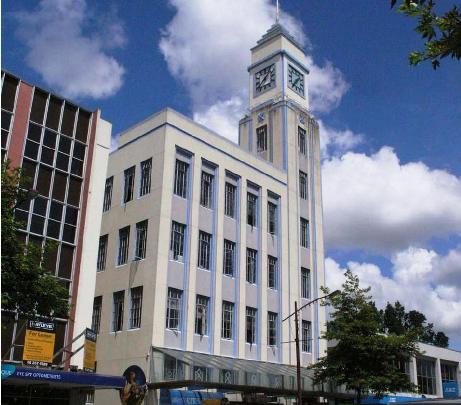
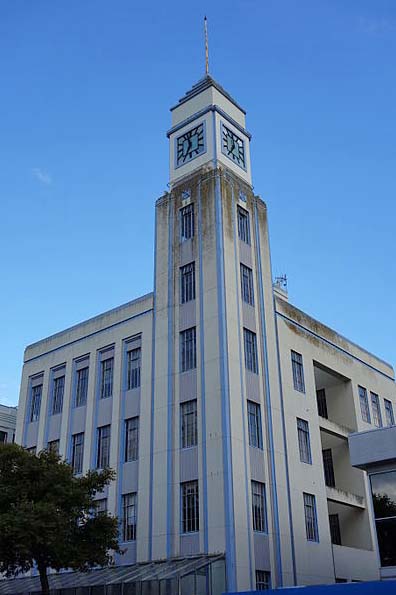
This historic place was registered under the Historic Places Act 1993. The following text is from the original Historic Place Assessment Under Section 23 Criteria report considered by the NZHPT Board at the time of registration. Architectural: Ansett Tower (former T & G Building) is an important landmark in the urban design of central Palmerston North. It has apparently been an admired city landmark since its construction. It was the tallest building in the city when it was built in 1938, and is still visible from the countryside around. This is a well-designed Art Deco building. Style indicators are: - ziggurat tower; - pronounced vertical elements on the facade; - articulated skyline; - shallow wall planes.
Why is this place Category 1 / Category 2?
Detail Of Assessed Criteria
This historic place was registered under the Historic Places Act 1993. The following text is from the original Historic Place Assessment Under Section 23 Criteria report considered by the NZHPT Board at the time of registration. (a) The extent to which the place reflects important or representative aspects of New Zealand history: It is difficult to judge the extent to which the building reflects important or representative aspects of New Zealand's history because of limited information on the ownership or use of the place. Originally known as the T&G Building, Ansett Tower was built in 1938 on a vacant site on Broadway, Palmerston North, for the Melbourne-based T&G company. The building was large and ostentatious and was clearly designed to enhance the company's presence in the expanding city of Palmerston North. Its importance as a symbol of that period of Palmerston North's economic growth is considerable; its national significance in relation to T&G or the insurance industry is uncertain. (g) The technical accomplishment or value, or design of the place: DATE: 1938 ARCHITECT: A & K Henderson (Melbourne) No information has been provided about the Australian architects. The supervising architects were the firm of Mitchell and Mitchell, a leading Wellington architectural practice. The brothers C.H. and AH. Mitchell supervised the erection of the T &G Building in Wellington (Category II ). STYLE CODE: 39 Inter War Art Deco DESIGN: Ansett Tower was built in 1938 as the T & G Building. It was designed by the Melbourne firm of A&K Henderson, in something of a "house style", which included the distinctive T & G motif and the ziggurat tower. This was the tallest building in Palmerston North when it was constructed and it was noted for the early inclusion of fully automatic lifts. This is a distinctive Art Deco building on something of a provincial scale (four stories, not including tower). There is a marked vertical emphasis to the facades, especially the main street facade. The vertical elements of the tower and the tall windows on the facades contribute to this effect. The articulated skyline and shallow wall planes are also typical of the style. The tower is the outstanding feature of the building and houses the main entry, main stairwell and liftwell. There have been some modifications to the building. In 1984, a verandah was built over on the ground floor, and in 1989, the street facade was further upgraded. On the ground floor there has been some upgrading of retail premises. Conservation Architect Ian Bowman states that the interior is "largely authentic". (m) Such additional criteria not inconsistent with those in paragraphs (a) to (k): The Prudential Assurance Building in Wellington (1934) is a good comparative example of contemporary Art Deco design. Like the Ansett Tower building, this was designed by a firm of Australian architects and features an array of Deco features, most notably a system of emphatic vertical fins and piers terminating in a stepped skyline. The Prudential Building is classified Category II. The Daily Telegraph Building in Napier (1932-33) is classified Category I. This building is designed in a handsome mixture of Art Deco and Stripped Classical styles. It is two storeys in height, with a central zigzag motif. The Ansett Tower Building is a well-conceived Art Deco building that can compare favourably with anything in this style on the register. Its handsome tower further marks the building out as an impressive element in its local townscape. It merits registration as a Category II building.
Why is this place significant?
Historic Significance
Historical Significance or Value This historic place was registered under the Historic Places Act 1993. The following text is from the original Historic Place Assessment Under Section 23 Criteria report considered by the NZHPT Board at the time of registration. Historical. Ansett Tower was built in 1938 for the T &G Mutual Life Society, an important Australasian insurer. Ever since that time the art deco building has had landscape significance for Palmerston North.
Physical Significance
This historic place was registered under the Historic Places Act 1993. The following text is from the original Historic Place Assessment Under Section 23 Criteria report considered by the NZHPT Board at the time of registration. Architectural: Ansett Tower (former T & G Building) is an important landmark in the urban design of central Palmerston North. It has apparently been an admired city landmark since its construction. It was the tallest building in the city when it was built in 1938, and is still visible from the countryside around. This is a well-designed Art Deco building. Style indicators are: - ziggurat tower; - pronounced vertical elements on the facade; - articulated skyline; - shallow wall planes.
Why is this place Category 1 / Category 2?
Detail Of Assessed Criteria
This historic place was registered under the Historic Places Act 1993. The following text is from the original Historic Place Assessment Under Section 23 Criteria report considered by the NZHPT Board at the time of registration. (a) The extent to which the place reflects important or representative aspects of New Zealand history: It is difficult to judge the extent to which the building reflects important or representative aspects of New Zealand's history because of limited information on the ownership or use of the place. Originally known as the T&G Building, Ansett Tower was built in 1938 on a vacant site on Broadway, Palmerston North, for the Melbourne-based T&G company. The building was large and ostentatious and was clearly designed to enhance the company's presence in the expanding city of Palmerston North. Its importance as a symbol of that period of Palmerston North's economic growth is considerable; its national significance in relation to T&G or the insurance industry is uncertain. (g) The technical accomplishment or value, or design of the place: DATE: 1938 ARCHITECT: A & K Henderson (Melbourne) No information has been provided about the Australian architects. The supervising architects were the firm of Mitchell and Mitchell, a leading Wellington architectural practice. The brothers C.H. and AH. Mitchell supervised the erection of the T &G Building in Wellington (Category II ). STYLE CODE: 39 Inter War Art Deco DESIGN: Ansett Tower was built in 1938 as the T & G Building. It was designed by the Melbourne firm of A&K Henderson, in something of a "house style", which included the distinctive T & G motif and the ziggurat tower. This was the tallest building in Palmerston North when it was constructed and it was noted for the early inclusion of fully automatic lifts. This is a distinctive Art Deco building on something of a provincial scale (four stories, not including tower). There is a marked vertical emphasis to the facades, especially the main street facade. The vertical elements of the tower and the tall windows on the facades contribute to this effect. The articulated skyline and shallow wall planes are also typical of the style. The tower is the outstanding feature of the building and houses the main entry, main stairwell and liftwell. There have been some modifications to the building. In 1984, a verandah was built over on the ground floor, and in 1989, the street facade was further upgraded. On the ground floor there has been some upgrading of retail premises. Conservation Architect Ian Bowman states that the interior is "largely authentic". (m) Such additional criteria not inconsistent with those in paragraphs (a) to (k): The Prudential Assurance Building in Wellington (1934) is a good comparative example of contemporary Art Deco design. Like the Ansett Tower building, this was designed by a firm of Australian architects and features an array of Deco features, most notably a system of emphatic vertical fins and piers terminating in a stepped skyline. The Prudential Building is classified Category II. The Daily Telegraph Building in Napier (1932-33) is classified Category I. This building is designed in a handsome mixture of Art Deco and Stripped Classical styles. It is two storeys in height, with a central zigzag motif. The Ansett Tower Building is a well-conceived Art Deco building that can compare favourably with anything in this style on the register. Its handsome tower further marks the building out as an impressive element in its local townscape. It merits registration as a Category II building.
Construction Professional
Name
Henderson, Anketell & K.
Type
Architectural Partnership
Biography
Anketell Matthew Henderson (1853-1922) and his son Kingsley Anketell Henderson, formed the partnership Anketell and K. Henderson in 1906. The partnership was based in Melbourne and at one time Collins Street had seven buildings designed by this practice. They specialised in banks, insurance company buildings, hospitals and universities. K.A. Henderson placed great emphasis on the commercial and functional aspects of city office planning, including maximum space to let and maximum levels of natural lighting. In New Zealand the firm was responsible for the design of the T & G Building, Wellington (1927-28). This design was closely related to other T and G buildings in Australia particularly the head office in Melbourne. After the death of K.A. Henderson in 1942 the firm continued until the 1960s.
Construction Details
Start Year
1938
Type
Original Construction
Construction Professional
Name
Henderson, Anketell & K.
Type
Architectural Partnership
Biography
Anketell Matthew Henderson (1853-1922) and his son Kingsley Anketell Henderson, formed the partnership Anketell and K. Henderson in 1906. The partnership was based in Melbourne and at one time Collins Street had seven buildings designed by this practice. They specialised in banks, insurance company buildings, hospitals and universities. K.A. Henderson placed great emphasis on the commercial and functional aspects of city office planning, including maximum space to let and maximum levels of natural lighting. In New Zealand the firm was responsible for the design of the T & G Building, Wellington (1927-28). This design was closely related to other T and G buildings in Australia particularly the head office in Melbourne. After the death of K.A. Henderson in 1942 the firm continued until the 1960s.
Construction Details
Start Year
1938
Type
Original Construction
Historical and Associated Iwi / Hapū / Whānau
Other Information
A copy of the original report is available from the NZHPT Central region office Please note that entry on the New Zealand Heritage List/Rarangi Korero identifies only the heritage values of the property concerned, and should not be construed as advice on the state of the property, or as a comment of its soundness or safety, including in regard to earthquake risk, safety in the event of fire, or insanitary conditions.
Historical and Associated Iwi / Hapū / Whānau
Other Information
A copy of the original report is available from the NZHPT Central region office Please note that entry on the New Zealand Heritage List/Rarangi Korero identifies only the heritage values of the property concerned, and should not be construed as advice on the state of the property, or as a comment of its soundness or safety, including in regard to earthquake risk, safety in the event of fire, or insanitary conditions.
Current Usages
Uses: Trade
Specific Usage: Office building/Offices
Former Usages
General Usage: Trade
Specific Usage: Office building/Offices
Current Usages
Uses: Trade
Specific Usage: Office building/Offices
Former Usages
General Usage: Trade
Specific Usage: Office building/Offices
Location
Get the latest heritage news, features and events delivered
straight to your inbox.
