

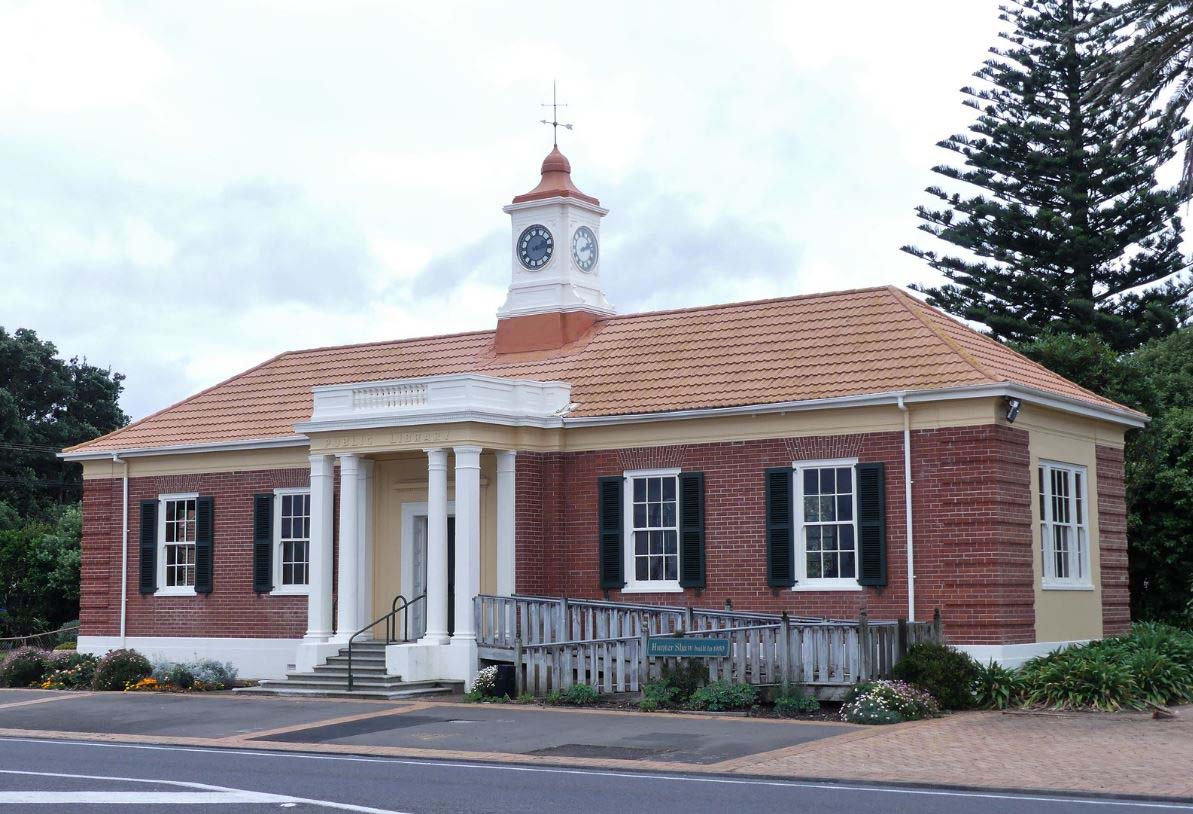
The estate of Mr J. Hunter Shaw was solely responsible for the library building and all its furnishings. Mr Hunter Shaw was Patea's greatest benefactor. Over 4,300 pounds from his estate was provided for the library building.
List Entry Information
Status
Listed
List Entry Status
Historic Place Category 2
Access
Private/No Public Access
List Number
7480
Date Entered
8th December 2000
Date of Effect
8th December 2000
City/District Council
South Taranaki District
Region
Taranaki Region
Extent of List Entry
Extent includes part of the land described as Pt Blk XXXVII Town of Patea (RT TNH2/1231; NZ Gazette 1930 pp. 1884-1885), Taranaki Land District, and the building known as Patea Public Library and Plunket Rooms s thereon, including the library, Plunket rooms and residential flat, as shown in the extent map tabled at the Rarangi Korero Committee meeting on 29 September 2016.
Legal description
Pt Blk XXXVII Town of Patea (RT TNH2/1231; NZ Gazette 1930 pp. 1884-1885), Taranaki Land District
Status
Listed
List Entry Status
Historic Place Category 2
Access
Private/No Public Access
List Number
7480
Date Entered
8th December 2000
Date of Effect
8th December 2000
City/District Council
South Taranaki District
Region
Taranaki Region
Extent of List Entry
Extent includes part of the land described as Pt Blk XXXVII Town of Patea (RT TNH2/1231; NZ Gazette 1930 pp. 1884-1885), Taranaki Land District, and the building known as Patea Public Library and Plunket Rooms s thereon, including the library, Plunket rooms and residential flat, as shown in the extent map tabled at the Rarangi Korero Committee meeting on 29 September 2016.
Legal description
Pt Blk XXXVII Town of Patea (RT TNH2/1231; NZ Gazette 1930 pp. 1884-1885), Taranaki Land District
Why is this place significant?
Physical Significance
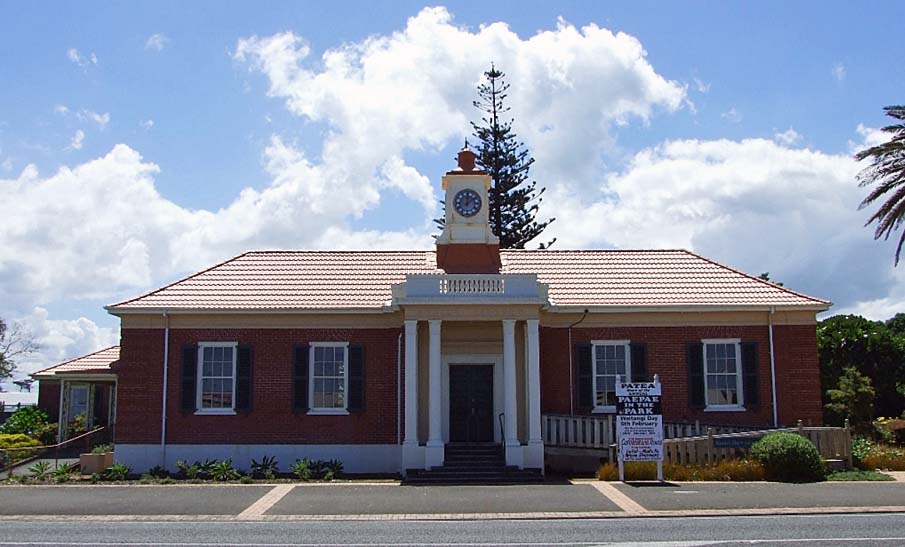
This historic area was registered under the Historic Places Act 1993. This report includes text from the original Historic Place Assessment Under Section 23 Criteria report considered by the NZHPT Board at the time of registration. Aesthetic Significance: The Public Library building has considerable visual impact and street presence resulting from its design. Architectural Significance: The Patea Public Library is noted as being an excellent example of the domestic scale of Georgian architecture. It was designed in the Inter War Georgian Revival style of the period 1915-1940, however, the interior design and original fittings have been modified but still retain the character of the building. Style indicators are: rectangular and prismatic shape; symmetry; classical order; pilasters; quoining; the portico; balustraded parapet; paned double-hung windows of vertical proportion; window shutters; boxed eaves; a cupola with clock; tiled hipped roof; round-headed windows to ground floor (rear elevation); cornice and plinth-type base.
Why is this place Category 1 / Category 2?
Detail Of Assessed Criteria
This historic area was registered under the Historic Places Act 1993. This report includes text from the original Historic Place Assessment Under Section 23 Criteria report considered by the NZHPT Board at the time of registration. (b) The association of the place with events, persons, or ideas of importance in New Zealand history: Mr J Hunter Shaw, is one of the best known names associated with the development of Patea in the late 1920's. He came to New Zealand from Northern Ireland in the 1860's and spent his life, farming at Whenuakura, in the Patea District. He was a very private person. He lived for over ninety years, and, at his death in 1928, was the last member of his family left in New Zealand. His Will "left a generous estate to be administered in the citizen's behalf". Grants from his estate for development projects in Patea totalled 8,500 pounds, of which over half this sum went to the Patea library building. The inscription on Mr Hunter Shaw's grave reads "Lived an honourable and simple life and generously bequeathed his wealth to charities". Articles on the work of architect, William Gummer in the New Zealand House and Garden magazine, (April, May and June 1997 issues), record him as being a "prolific and highly regarded architect throughout his career and his buildings remain amongst the best loved structures in the communities where he created them." He designed the Grey Lynn Library, 1924, Category II and the Remuera Library 1926 (Category I). Other well-known designs include the Wellington Carillon, Category I, the National Art Gallery, Category I, and a number of great houses in Auckland from Takapuna to Papatoetoe, the Auckland Railway Station, Category I, and properties in Hawkes' Bay - Arden, Category I and Te Mata Homestead, Category I. (e) The community association with, or public esteem, for the place: The Patea Library building is a cultural centre for the town and is held in high esteem by the people of the Patea district. The building has been occupied continuously as a Library and Plunket rooms since its completion in 1930. At the South Taranaki District Council meeting on September 27th 2000, it was agreed that the building will continue to house the library meantime, but that the Council will keep its options for the building open. (g) The technical accomplishment or value, or design of the place: By World War One, the Georgian style of design was well established in both Britain and in America and was to remain so through until the late 1930's. New Zealand followed suit in adopting the Georgian style just at the outbreak of World War One, with Elliott House, Wellington, (Category I), being the first major New Zealand example of the style designed by architect William Gray Young in 1913-14. Elliott House was an essay in domestic architecture and Georgian architecture became a popular choice for institutional buildings and commercial structures of modest size. The Patea Library building falls into the public/institutional building category. The plain exterior wall surfaces of fine face brickwork with classical elements (e.g. Doric Order, portico, tiled roof, double- hung twelve light windows with glazing bars and window shutters, cupola on the roof ridgeline), are typical of the style. Walls are traditionally load bearing, and, inside the building one may see an emphasis on traditional wood panelling with bolection mouldings along with simple plastered walls and ceiling beams with Classical moulded cornice. While the interior design and original fittings have been modified, the character of the building has still been maintained. (m) Such additional criteria not inconsistent with those in paragraphs (a) to (k): Inter War Georgian architecture and its related style, Inter War Georgian Colonial American Revival, is well represented on the Trust's national register. New Zealand architects who practices in both styles were William Gray Young, Cecil Wood, Helmore and Cotterill, and Herbert Hall. Some of their better known buildings are Elliott House, Wellington, 1914, Category I, Gray Young; the Wellesley Club Building, Wellington, 1925-6, Category I, Gray Young. Weston House, Christchurch, 1923, Category I, Cecil Wood; Bishopscourt, Christchurch, (now Bishopspark Main Building and Chapel), 1926, Category L Cecil Wood; Anderson Park, Invercargill, 1925, Category I, Cecil Wood; and The Grand Chateau, Ruapehu, 1929, Category I, Herbert Hall. Architects, Gummer and Ford were outstanding practitioners of the Georgian Revival style along with other styles, Twenty-six buildings by Gummer and Ford are registered. These range from Viennese Art Nouveau - e.g.. the Auckland Wintergardens, 1916-30, Category I; Tauroa, Havelock North, 1916, Category I, through to Georgian Revival - the Remuera and Grey Lynn Libraries, as previously mentioned, Stoneways, Auckland, 1926, Category II; and ending up with Stripped Classicism and Art/Deco Moderne styles - e.g.. the Dilworth Building, Auckland, 1926-7, Category I, the Auckland Railway Station, 1930, Category I and the State Insurance Building, Wellington, 1940, Category I. Of the thirty-eight registered libraries listed on the Trust's national register, only two can be considered to be genuine Georgian Revival buildings. These are the Remuera Public Library and the Grey Lynn Public Library. The Remuera Library, considered to be the sister building of the Patea Public Library, won the NZIA Gold Medal for Gummer and Ford in 1928, Despite its similarity with the Remuera Public Library, the Patea Library was not a NZIA medal winner. However, in terms of rating, the Patea Library comes somewhere between the best of Category I registered Georgian Revival buildings such as Bishopscourt in Christchurch, or, The Grand Chateau, at Ruapehu, and Category II examples of the style in public/institutional buildings such as the Grey Lynn Library, the Cathedral Grammar School Building, Christchurch, 1928, Category II by architect W,H, Trengrove, or the Christchurch Polytechnic College Assembly Hall, 1935, Category II, by Alan Manson.
Why is this place significant?
Physical Significance
This historic area was registered under the Historic Places Act 1993. This report includes text from the original Historic Place Assessment Under Section 23 Criteria report considered by the NZHPT Board at the time of registration. Aesthetic Significance: The Public Library building has considerable visual impact and street presence resulting from its design. Architectural Significance: The Patea Public Library is noted as being an excellent example of the domestic scale of Georgian architecture. It was designed in the Inter War Georgian Revival style of the period 1915-1940, however, the interior design and original fittings have been modified but still retain the character of the building. Style indicators are: rectangular and prismatic shape; symmetry; classical order; pilasters; quoining; the portico; balustraded parapet; paned double-hung windows of vertical proportion; window shutters; boxed eaves; a cupola with clock; tiled hipped roof; round-headed windows to ground floor (rear elevation); cornice and plinth-type base.
Why is this place Category 1 / Category 2?
Detail Of Assessed Criteria
This historic area was registered under the Historic Places Act 1993. This report includes text from the original Historic Place Assessment Under Section 23 Criteria report considered by the NZHPT Board at the time of registration. (b) The association of the place with events, persons, or ideas of importance in New Zealand history: Mr J Hunter Shaw, is one of the best known names associated with the development of Patea in the late 1920's. He came to New Zealand from Northern Ireland in the 1860's and spent his life, farming at Whenuakura, in the Patea District. He was a very private person. He lived for over ninety years, and, at his death in 1928, was the last member of his family left in New Zealand. His Will "left a generous estate to be administered in the citizen's behalf". Grants from his estate for development projects in Patea totalled 8,500 pounds, of which over half this sum went to the Patea library building. The inscription on Mr Hunter Shaw's grave reads "Lived an honourable and simple life and generously bequeathed his wealth to charities". Articles on the work of architect, William Gummer in the New Zealand House and Garden magazine, (April, May and June 1997 issues), record him as being a "prolific and highly regarded architect throughout his career and his buildings remain amongst the best loved structures in the communities where he created them." He designed the Grey Lynn Library, 1924, Category II and the Remuera Library 1926 (Category I). Other well-known designs include the Wellington Carillon, Category I, the National Art Gallery, Category I, and a number of great houses in Auckland from Takapuna to Papatoetoe, the Auckland Railway Station, Category I, and properties in Hawkes' Bay - Arden, Category I and Te Mata Homestead, Category I. (e) The community association with, or public esteem, for the place: The Patea Library building is a cultural centre for the town and is held in high esteem by the people of the Patea district. The building has been occupied continuously as a Library and Plunket rooms since its completion in 1930. At the South Taranaki District Council meeting on September 27th 2000, it was agreed that the building will continue to house the library meantime, but that the Council will keep its options for the building open. (g) The technical accomplishment or value, or design of the place: By World War One, the Georgian style of design was well established in both Britain and in America and was to remain so through until the late 1930's. New Zealand followed suit in adopting the Georgian style just at the outbreak of World War One, with Elliott House, Wellington, (Category I), being the first major New Zealand example of the style designed by architect William Gray Young in 1913-14. Elliott House was an essay in domestic architecture and Georgian architecture became a popular choice for institutional buildings and commercial structures of modest size. The Patea Library building falls into the public/institutional building category. The plain exterior wall surfaces of fine face brickwork with classical elements (e.g. Doric Order, portico, tiled roof, double- hung twelve light windows with glazing bars and window shutters, cupola on the roof ridgeline), are typical of the style. Walls are traditionally load bearing, and, inside the building one may see an emphasis on traditional wood panelling with bolection mouldings along with simple plastered walls and ceiling beams with Classical moulded cornice. While the interior design and original fittings have been modified, the character of the building has still been maintained. (m) Such additional criteria not inconsistent with those in paragraphs (a) to (k): Inter War Georgian architecture and its related style, Inter War Georgian Colonial American Revival, is well represented on the Trust's national register. New Zealand architects who practices in both styles were William Gray Young, Cecil Wood, Helmore and Cotterill, and Herbert Hall. Some of their better known buildings are Elliott House, Wellington, 1914, Category I, Gray Young; the Wellesley Club Building, Wellington, 1925-6, Category I, Gray Young. Weston House, Christchurch, 1923, Category I, Cecil Wood; Bishopscourt, Christchurch, (now Bishopspark Main Building and Chapel), 1926, Category L Cecil Wood; Anderson Park, Invercargill, 1925, Category I, Cecil Wood; and The Grand Chateau, Ruapehu, 1929, Category I, Herbert Hall. Architects, Gummer and Ford were outstanding practitioners of the Georgian Revival style along with other styles, Twenty-six buildings by Gummer and Ford are registered. These range from Viennese Art Nouveau - e.g.. the Auckland Wintergardens, 1916-30, Category I; Tauroa, Havelock North, 1916, Category I, through to Georgian Revival - the Remuera and Grey Lynn Libraries, as previously mentioned, Stoneways, Auckland, 1926, Category II; and ending up with Stripped Classicism and Art/Deco Moderne styles - e.g.. the Dilworth Building, Auckland, 1926-7, Category I, the Auckland Railway Station, 1930, Category I and the State Insurance Building, Wellington, 1940, Category I. Of the thirty-eight registered libraries listed on the Trust's national register, only two can be considered to be genuine Georgian Revival buildings. These are the Remuera Public Library and the Grey Lynn Public Library. The Remuera Library, considered to be the sister building of the Patea Public Library, won the NZIA Gold Medal for Gummer and Ford in 1928, Despite its similarity with the Remuera Public Library, the Patea Library was not a NZIA medal winner. However, in terms of rating, the Patea Library comes somewhere between the best of Category I registered Georgian Revival buildings such as Bishopscourt in Christchurch, or, The Grand Chateau, at Ruapehu, and Category II examples of the style in public/institutional buildings such as the Grey Lynn Library, the Cathedral Grammar School Building, Christchurch, 1928, Category II by architect W,H, Trengrove, or the Christchurch Polytechnic College Assembly Hall, 1935, Category II, by Alan Manson.
Construction Professional
Name
Gummer, William Henry
Type
Architect
Biography
Gummer (1884-1966) was articled to W.A. Holman, an Auckland architect, and qualified as an Associate of the Royal Institute of British Architects in 1910. From 1908 to 1913 he travelled in the United Kingdom, Europe and the United States. During this time he worked for Edwin Lutyens, a leading English architect of the time, and for Daniel Burnham in Chicago. Burnham was a major American architect and one of the founders of the influential Chicago School of Architecture. Gummer joined the firm of Hoggard and Prouse of Auckland and Wellington in 1913. Significant commissions undertaken during this period included the New Zealand Insurance (later known as the Guardian Trust) Building, Auckland (1914-18). In 1923 Gummer, one of the most outstanding architects working in New Zealand in the first half of the twentieth century, joined with Charles Reginald Ford (1880-1972) to create an architectural partnership of national significance. The practice was responsible for the design of the Dilworth Building (1926), Auckland, the Dominion Museum (1936) and the State Insurance Building (1940), both Wellington. Gummer and Ford were awarded Gold Medals by the New Zealand Institute of Architects for their designs of the Auckland Railway Station and Remuera Library. Gummer was also responsible for the Bridge of Remembrance, Christchurch and the Cenotaph in Dunedin (1927), and the stylistically and structurally advanced Tauroa (1916), Craggy Range (1919), Arden (1926) and Te Mata (1935) homesteads at Havelock North. Elected a Fellow of the New Zealand Institute of Architects in 1914, he was president of the Institute from 1933-4 and was later elected a life member.
Name
Duffill & Gibson
Type
Builder
Biography
No biography is currently available for this construction professional
Construction Details
Start Year
1930
Type
Original Construction
Construction Professional
Name
Gummer, William Henry
Type
Architect
Biography
Gummer (1884-1966) was articled to W.A. Holman, an Auckland architect, and qualified as an Associate of the Royal Institute of British Architects in 1910. From 1908 to 1913 he travelled in the United Kingdom, Europe and the United States. During this time he worked for Edwin Lutyens, a leading English architect of the time, and for Daniel Burnham in Chicago. Burnham was a major American architect and one of the founders of the influential Chicago School of Architecture. Gummer joined the firm of Hoggard and Prouse of Auckland and Wellington in 1913. Significant commissions undertaken during this period included the New Zealand Insurance (later known as the Guardian Trust) Building, Auckland (1914-18). In 1923 Gummer, one of the most outstanding architects working in New Zealand in the first half of the twentieth century, joined with Charles Reginald Ford (1880-1972) to create an architectural partnership of national significance. The practice was responsible for the design of the Dilworth Building (1926), Auckland, the Dominion Museum (1936) and the State Insurance Building (1940), both Wellington. Gummer and Ford were awarded Gold Medals by the New Zealand Institute of Architects for their designs of the Auckland Railway Station and Remuera Library. Gummer was also responsible for the Bridge of Remembrance, Christchurch and the Cenotaph in Dunedin (1927), and the stylistically and structurally advanced Tauroa (1916), Craggy Range (1919), Arden (1926) and Te Mata (1935) homesteads at Havelock North. Elected a Fellow of the New Zealand Institute of Architects in 1914, he was president of the Institute from 1933-4 and was later elected a life member.
Name
Duffill & Gibson
Type
Builder
Biography
No biography is currently available for this construction professional
Construction Details
Start Year
1930
Type
Original Construction
Historical and Associated Iwi / Hapū / Whānau
Completion Date
1st December 1998
Report Written By
W. Nelson
Other Information
A copy of the original report is available from the NZHPT Central region office Please note that entry on the New Zealand Heritage List/Rarangi Korero identifies only the heritage values of the property concerned, and should not be construed as advice on the state of the property, or as a comment of its soundness or safety, including in regard to earthquake risk, safety in the event of fire, or insanitary conditions.
Historical and Associated Iwi / Hapū / Whānau
Completion Date
1st December 1998
Report Written By
W. Nelson
Other Information
A copy of the original report is available from the NZHPT Central region office Please note that entry on the New Zealand Heritage List/Rarangi Korero identifies only the heritage values of the property concerned, and should not be construed as advice on the state of the property, or as a comment of its soundness or safety, including in regard to earthquake risk, safety in the event of fire, or insanitary conditions.
Current Usages
Uses: Civic Facilities
Specific Usage: Community centre
Former Usages
General Usage: Civic Facilities
Specific Usage: Library
General Usage: Health
Specific Usage: Plunket Rooms
Current Usages
Uses: Civic Facilities
Specific Usage: Community centre
Former Usages
General Usage: Civic Facilities
Specific Usage: Library
General Usage: Health
Specific Usage: Plunket Rooms
Location
Sign up to hear more
Get the latest heritage news, features and events delivered
straight to your inbox.
