DonateSupporterVisit Heritage
  • Tūrangawaewae
    Places
  • Tira Māori
    Māori Heritage
  • Poutairangahia
    Archaeology
  • Rauemi
    Resources
  • Mō Tātou
    About Us
  • New Zealand Heritage List
  • Nominate and submit
  • Explore the List
  • National Historic Landmarks
  • Plaques
  • Rainbow List Project
  • Lost heritage
  • Visit Heritage
  • Our properties
  • Turnbull House Project
  • Collections
  • Shop
  • Tohu Whenua
  • Tira Māori
  • Conserving Māori heritage
  • Marae built heritage
  • Māori heritage on the List
  • Hinemihi—Te Hokinga Mai
  • What is archaeology?
  • Is there a site on my property?
  • What are my legal requirements?
  • Affecting an archaeological site
  • Declaring an archaeological site
  • Archaeology FAQs
  • Archaeology Digital Library
  • Archaeology guidelines and templates
  • Resources
  • Funding
  • Publications
  • Sustainable management guides
  • Disaster recovery
  • Podcasts & digital resources
  • Education Hub
  • Conservation plans
  • About
  • Board
  • Māori Heritage Council
  • Senior Staff
  • Offices
  • Contact us
  • Careers
  • Covenants
  • Fast-track
  • Corporate documents
  • Currently consulting on
  • Our submissions
  • News
Quick links
Rārangi Kōrero | The List
Explore the List
National Historic Landmarks
Ngā Manawhenua o Aotearoa me ōna Kōrero Tūturu
Quick links
Tapuwae
A Vision for Places of Māori Heritage
Funding for Māori Heritage
Resources
Quick links
Archaeological Authority Portal
Applying for an archaeological authority
Archaeology FAQs
Browse the most frequently asked questions about archaeological authorities and the archaeological process.
Quick links
Quick links
Contact us
Offices
DonateSupporterVisit Heritage
  • Tūrangawaewae
    Places
  • Tira Māori
    Māori Heritage
  • Poutairangahia
    Archaeology
  • Rauemi
    Resources
  • Mō Tātou
    About Us
  • New Zealand Heritage List
  • Nominate and submit
  • Explore the List
  • National Historic Landmarks
  • Plaques
  • Rainbow List Project
  • Lost heritage
  • Visit Heritage
  • Our properties
  • Turnbull House Project
  • Collections
  • Shop
  • Tohu Whenua
  • Tira Māori
  • Conserving Māori heritage
  • Marae built heritage
  • Māori heritage on the List
  • Hinemihi—Te Hokinga Mai
  • What is archaeology?
  • Is there a site on my property?
  • What are my legal requirements?
  • Affecting an archaeological site
  • Declaring an archaeological site
  • Archaeology FAQs
  • Archaeology Digital Library
  • Archaeology guidelines and templates
  • Resources
  • Funding
  • Publications
  • Sustainable management guides
  • Disaster recovery
  • Podcasts & digital resources
  • Education Hub
  • Conservation plans
  • About
  • Board
  • Māori Heritage Council
  • Senior Staff
  • Offices
  • Contact us
  • Careers
  • Covenants
  • Fast-track
  • Corporate documents
  • Currently consulting on
  • Our submissions
  • News
Quick links
Rārangi Kōrero | The List
Explore the List
National Historic Landmarks
Ngā Manawhenua o Aotearoa me ōna Kōrero Tūturu
Quick links
Tapuwae
A Vision for Places of Māori Heritage
Funding for Māori Heritage
Resources
Quick links
Archaeological Authority Portal
Applying for an archaeological authority
Archaeology FAQs
Browse the most frequently asked questions about archaeological authorities and the archaeological process.
Quick links
Quick links
Contact us
Offices
  • Places
  • Nominate and submit
  • National Historic Landmarks
  • Places
  • Nominate and submit
  • National Historic Landmarks
  • Tira Māori
  • Conserving Māori heritage
  • Marae built heritage
  • Tira Māori
  • Conserving Māori heritage
  • Marae built heritage
  • Archaeological authorities
  • Archaeology Digital Library
  • Archaeological authorities
  • Archaeology Digital Library
  • All resources
  • Publications
  • Funding
  • All resources
  • Publications
  • Funding
  • FAQs
  • FAQs
Follow us on:
Places
  • Places
  • Nominate and submit
  • National Historic Landmarks
Tira Māori
  • Tira Māori
  • Conserving Māori heritage
  • Marae built heritage
Archaeology
  • Archaeological authorities
  • Archaeology Digital Library
Resources
  • All resources
  • Publications
  • Funding
FAQs
  • FAQs
Follow us on
HomePrivacyTerms and conditionsAbout this site
© Heritage New Zealand Pouhere Taonga 2026.
 
Annandale

3074 State Highway 26, MORRINSVILLE

Private

Historic Place Category 1

List No. 755

Quick links:
List GalleryLocationDetails
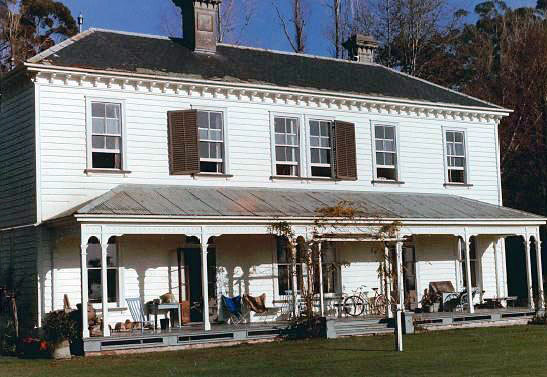
Annandale.Image included in Field Record Form Collection | C Cochran | 01/06/1985 | Heritage New Zealand Pouhere Taonga
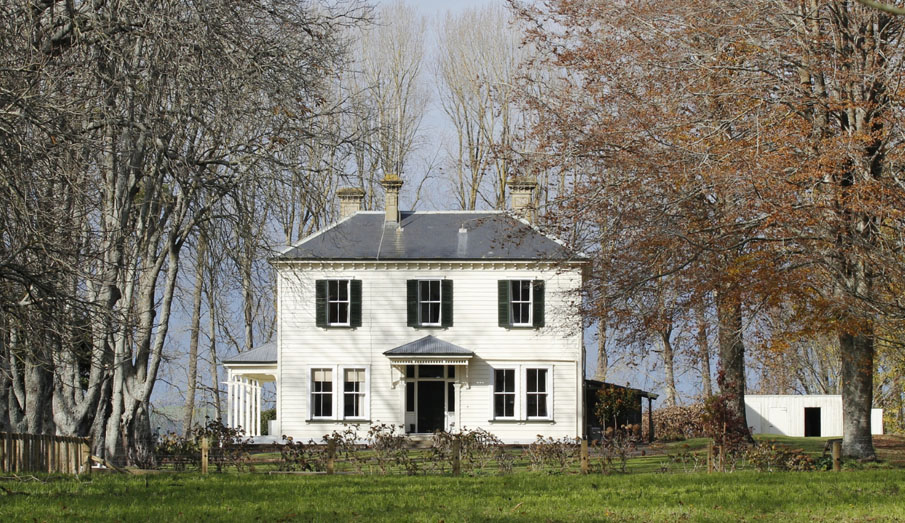
Annandale. Image courtesy of www.flickr.com | Allan Laurence - Grey Albatross | 08/06/2014 | Allan Laurence
Annandale.Image included in Field Record Form Collection | C Cochran | 01/06/1985 | Heritage New Zealand Pouhere Taonga
Annandale. Image courtesy of www.flickr.com | Allan Laurence - Grey Albatross | 08/06/2014 | Allan Laurence

List Entry Information

Overview

Status
Listed

List Entry Status
Historic Place Category 1

Access
Private/No Public Access

List Number
755

Date Entered
21st September 1989

Date of Effect
21st September 1989

City/District Council
Matamata-Piako District

Region
Waikato Region

Legal description

Lot 2 DPS 5141 (RT SA11C/354), South Auckland Land District

Detailed List Entry
Significance

Historic Significance

Historical Significance or Value W.S. Allen a native of Manchester, was actively involved in English politics and was a Member of Parliament from 1866 until he finally settled in New Zealand, in 1895. He had bought the first part of his Annandale estate in 1885 while visiting New Zealand, and the house, built in 1892, and the enlarged property provided for his sons in New Zealand. Despite his several trips to New Zealand, Allen maintained his interest in British politics, being re-elected to the Commons in 1891. He does not seem to have been resident at Annandale until 1895. His private resources enabled him to ensure that Annandale weathered the economic depression of the 1880s and 1890s. He became involved in New Zealand politics at both the local and national level. The property remains today in the Allen family.

Physical Significance

ARCHITECTURAL SIGNIFICANCE: As an adaption of an English country house design to a New Zealand setting, Annandale is an important building. The verandah on the main elevation of the house is an acknowledgement of local climatic conditions. However, the house lacks an integration of architectural features, suggesting that it was designed by a gentleman architect rather than by a trained professional. This is a late example of the use of the hipped roof, a feature common in the 1830s. This is a rare example of the simple early roof form being revived in the late Victorian period. Annandale is an important example of a large country house of the 1890s and this adds to its significance. TOWNSCAPE/LANDMARK SIGNIFICANCE: The house, with its surrounding trees and the avenue of chestnut trees to S.H.26, has considerable landscape value.

Construction Details

Start Year

1892

Type

Original Construction

Construction Materials

Kauri weatherboards and interior; brick foundations and slate roof.

Reference

Information Sources

Cyclopedia of New Zealand, 1902

Cyclopedia Company, Industrial, descriptive, historical, biographical facts, figures, illustrations, Wellington, N.Z, 1897-1908, Vol.2, Christchurch, 1902

Fowler, 1971

M Fowler, Country Houses of New Zealand. A H and A W Reed, 1971.

New Zealand Institute of Architects Journal

New Zealand Institute of Architects Journal (NZIA), No.8, Aug 1974

Allen, 1959

Sir Stephen Allen, Early Morrinsville, Hamilton 1959

Historical Journal

Historical Journal

Report Written By

This historic place was registered under the Historic Places Act 1993. The Brief Description below includes the text from the original registration report considered by the NZHPT Board at the time of registration. Please note that entry on the New Zealand Heritage List/Rarangi Korero identifies only the heritage values of the property concerned, and should not be construed as advice on the state of the property, or as a comment of its soundness or safety, including in regard to earthquake risk, safety in the event of fire, or insanitary conditions.

Further Information

Current Usages

Uses: Accommodation

Specific Usage: House

Former Usages

General Usage:: Accommodation

Specific Usage: House

Themes

Web Links

Overview

Status

Listed

List Entry Status

Historic Place Category 1

Access

Private/No Public Access

List Number

755

Date Entered

21st September 1989

Date of Effect

21st September 1989

City/District Council

Matamata-Piako District

Region

Waikato Region

Legal description

Lot 2 DPS 5141 (RT SA11C/354), South Auckland Land District

Status

Listed

List Entry Status

Historic Place Category 1

Access

Private/No Public Access

List Number

755

Date Entered

21st September 1989

Date of Effect

21st September 1989

City/District Council

Matamata-Piako District

Region

Waikato Region

Legal description

Lot 2 DPS 5141 (RT SA11C/354), South Auckland Land District

Significance

Why is this place significant?

Historic Significance

Historical Significance or Value W.S. Allen a native of Manchester, was actively involved in English politics and was a Member of Parliament from 1866 until he finally settled in New Zealand, in 1895. He had bought the first part of his Annandale estate in 1885 while visiting New Zealand, and the house, built in 1892, and the enlarged property provided for his sons in New Zealand. Despite his several trips to New Zealand, Allen maintained his interest in British politics, being re-elected to the Commons in 1891. He does not seem to have been resident at Annandale until 1895. His private resources enabled him to ensure that Annandale weathered the economic depression of the 1880s and 1890s. He became involved in New Zealand politics at both the local and national level. The property remains today in the Allen family.

Physical Significance

ARCHITECTURAL SIGNIFICANCE: As an adaption of an English country house design to a New Zealand setting, Annandale is an important building. The verandah on the main elevation of the house is an acknowledgement of local climatic conditions. However, the house lacks an integration of architectural features, suggesting that it was designed by a gentleman architect rather than by a trained professional. This is a late example of the use of the hipped roof, a feature common in the 1830s. This is a rare example of the simple early roof form being revived in the late Victorian period. Annandale is an important example of a large country house of the 1890s and this adds to its significance. TOWNSCAPE/LANDMARK SIGNIFICANCE: The house, with its surrounding trees and the avenue of chestnut trees to S.H.26, has considerable landscape value.

Why is this place significant?

Historic Significance

Historical Significance or Value W.S. Allen a native of Manchester, was actively involved in English politics and was a Member of Parliament from 1866 until he finally settled in New Zealand, in 1895. He had bought the first part of his Annandale estate in 1885 while visiting New Zealand, and the house, built in 1892, and the enlarged property provided for his sons in New Zealand. Despite his several trips to New Zealand, Allen maintained his interest in British politics, being re-elected to the Commons in 1891. He does not seem to have been resident at Annandale until 1895. His private resources enabled him to ensure that Annandale weathered the economic depression of the 1880s and 1890s. He became involved in New Zealand politics at both the local and national level. The property remains today in the Allen family.

Physical Significance

ARCHITECTURAL SIGNIFICANCE: As an adaption of an English country house design to a New Zealand setting, Annandale is an important building. The verandah on the main elevation of the house is an acknowledgement of local climatic conditions. However, the house lacks an integration of architectural features, suggesting that it was designed by a gentleman architect rather than by a trained professional. This is a late example of the use of the hipped roof, a feature common in the 1830s. This is a rare example of the simple early roof form being revived in the late Victorian period. Annandale is an important example of a large country house of the 1890s and this adds to its significance. TOWNSCAPE/LANDMARK SIGNIFICANCE: The house, with its surrounding trees and the avenue of chestnut trees to S.H.26, has considerable landscape value.

Construction Information

Construction Details

Start Year

1892

Type

Original Construction

Construction Materials

Kauri weatherboards and interior; brick foundations and slate roof.

Construction Details

Start Year

1892

Type

Original Construction

Construction Materials

Kauri weatherboards and interior; brick foundations and slate roof.

Reference

Historical and Associated Iwi / Hapū / Whānau

Information Sources

Cyclopedia of New Zealand, 1902

Cyclopedia Company, Industrial, descriptive, historical, biographical facts, figures, illustrations, Wellington, N.Z, 1897-1908, Vol.2, Christchurch, 1902

Fowler, 1971

M Fowler, Country Houses of New Zealand. A H and A W Reed, 1971.

New Zealand Institute of Architects Journal

New Zealand Institute of Architects Journal (NZIA), No.8, Aug 1974

Waikato Times

Allen, 1959

Sir Stephen Allen, Early Morrinsville, Hamilton 1959

Historical Journal

Historical Journal

Other Information

This historic place was registered under the Historic Places Act 1993. The Brief Description below includes the text from the original registration report considered by the NZHPT Board at the time of registration. Please note that entry on the New Zealand Heritage List/Rarangi Korero identifies only the heritage values of the property concerned, and should not be construed as advice on the state of the property, or as a comment of its soundness or safety, including in regard to earthquake risk, safety in the event of fire, or insanitary conditions.

Historical and Associated Iwi / Hapū / Whānau

Information Sources

Cyclopedia of New Zealand, 1902

Cyclopedia Company, Industrial, descriptive, historical, biographical facts, figures, illustrations, Wellington, N.Z, 1897-1908, Vol.2, Christchurch, 1902

Fowler, 1971

M Fowler, Country Houses of New Zealand. A H and A W Reed, 1971.

New Zealand Institute of Architects Journal

New Zealand Institute of Architects Journal (NZIA), No.8, Aug 1974

Waikato Times

Allen, 1959

Sir Stephen Allen, Early Morrinsville, Hamilton 1959

Historical Journal

Historical Journal

Other Information

This historic place was registered under the Historic Places Act 1993. The Brief Description below includes the text from the original registration report considered by the NZHPT Board at the time of registration. Please note that entry on the New Zealand Heritage List/Rarangi Korero identifies only the heritage values of the property concerned, and should not be construed as advice on the state of the property, or as a comment of its soundness or safety, including in regard to earthquake risk, safety in the event of fire, or insanitary conditions.

Further Information

Current Usages

Uses: Accommodation

Specific Usage: House

Former Usages

General Usage: Accommodation

Specific Usage: House

Current Usages

Uses: Accommodation

Specific Usage: House

Former Usages

General Usage: Accommodation

Specific Usage: House

Location

Loading
Sign up to hear more

Get the latest heritage news, features and events delivered
straight to your inbox.

Subscribe