Built at the beginning of the commercial enterprise, the homestead was erected by the brothers Ludolph and Heinrich Subritzky, with the help of a Maori workforce. The earliest part of the building (later removed) was built entirely of timber. The remainder of the structure combined the use of local materials with a rubble version of 'mud and stud' construction, which is found in mainland Europe as well as the mining regions of Northern England and Australia. This involved erecting a timber frame of kauri, nailing horizontal withies on either side of the studs, and packing the interior of the walls with rubble, mud and a shell-based mortar.
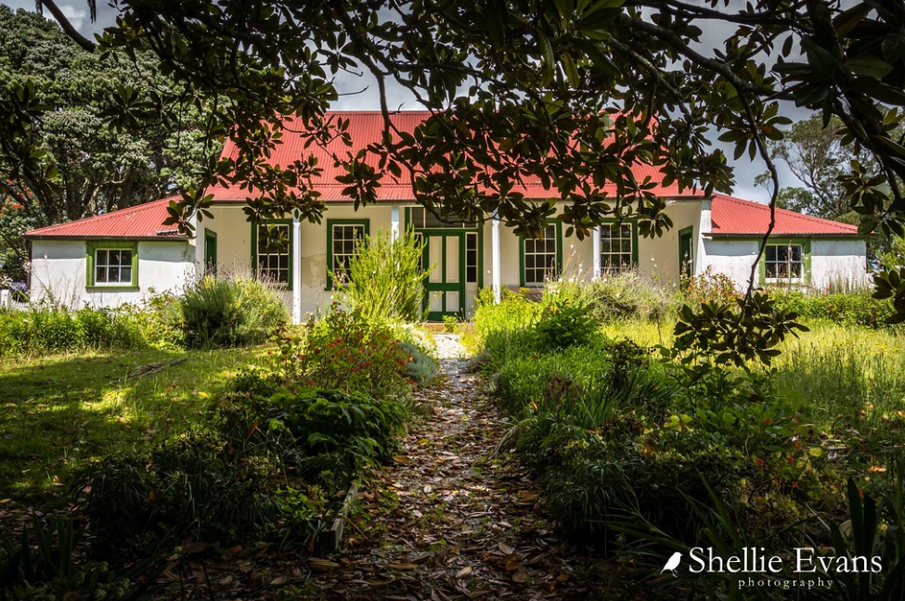
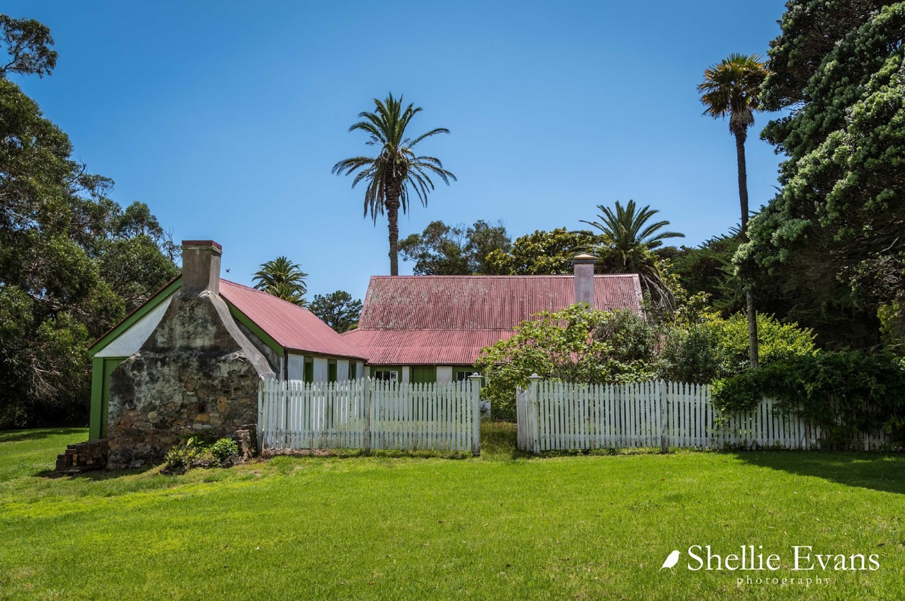
The completed building was U-shaped in plan, enclosing a courtyard at the rear. Designed to accommodate several generations at the same time, the main house contained a number of bedrooms within its one and a half storey frame. This originally included a small lookout tower, while one of the rooms was reserved for a schoolteacher. The western wing contained a smoke room for curing food, and a store for the sale of goods. Outbuildings included a blacksmith's forge, serving the large estate. Modifications were made after the Subritzky lands were broken up, following the introduction of the 1892 Land Act by the first Liberal Government (1891-1912). These included the removal of the tower and the original timber eastern wing. The property was purchased in 1897 by close relatives, the Wagener family, who have since preserved the house and its contents with access for the general public.
The Subritzky-Wagener house is nationally significant as a rare example of its construction type. It also has considerable importance for its links with German-speaking pioneer settlement. The structure is closely linked with the maritime history of the Far North and the economic development of the district. It reflects the arrival of large private landowners in the region, contrasting with the earlier pattern of land tenure. The building demonstrates the nature of pioneer settlement in the region, which included a strong emphasis on family ties and self-sufficiency. It contains one of the best-preserved domestic interiors of colonial date in the country, retaining many of its early fixtures and furnishings. The building's later history reflects the break-up of large estates by the first Liberal Government in New Zealand, in an attempt to encourage smaller-scale farming. The structure is part of a broader cultural landscape of historic significance, which includes associated outbuildings, colonial plantings and a nineteenth-century burial plot on the opposite side of Houhora Harbour.

List Entry Information
Status
Listed
List Entry Status
Historic Place Category 1
Access
Private/No Public Access
List Number
80
Date Entered
28th June 1990
Date of Effect
28th June 1990
City/District Council
Far North District
Region
Northland Region
Legal description
Pt Allot 1 Parish of Muriwhenua (RT NA778/57), North Auckland Land District
Status
Listed
List Entry Status
Historic Place Category 1
Access
Private/No Public Access
List Number
80
Date Entered
28th June 1990
Date of Effect
28th June 1990
City/District Council
Far North District
Region
Northland Region
Legal description
Pt Allot 1 Parish of Muriwhenua (RT NA778/57), North Auckland Land District
Why is this place significant?
Historic Significance
Historical Significance or Value The house has an unbroken association with the Subritzkys, one of the most notable settler families in the far north. Development of the area was initiated and encouraged by their activities in production, trade and the provision of services, such as coastal shipping. Mystery surrounding the family's exact origin and speculation as to the purpose of Houhora's tunnels adds a certain richness to local history.
Physical Significance
ARCHITECTURAL QUALITY: Half-timbering was a construction technique used in Elizabethan England and elsewhere in Europe. The principal has been adapted here for construction using kauri studs, ti tree laths and a rubble infill. Because the structure has been plastered, Subritzky House makes no reference to the Tudor precedent. It remains a largely original and well maintained example of half-timbered construction in colonial New Zealand. TOWNSCAPE/LANDMARK VALUE The house sits well in its landscape setting but does not have landmark value.
Why is this place significant?
Historic Significance
Historical Significance or Value The house has an unbroken association with the Subritzkys, one of the most notable settler families in the far north. Development of the area was initiated and encouraged by their activities in production, trade and the provision of services, such as coastal shipping. Mystery surrounding the family's exact origin and speculation as to the purpose of Houhora's tunnels adds a certain richness to local history.
Physical Significance
ARCHITECTURAL QUALITY: Half-timbering was a construction technique used in Elizabethan England and elsewhere in Europe. The principal has been adapted here for construction using kauri studs, ti tree laths and a rubble infill. Because the structure has been plastered, Subritzky House makes no reference to the Tudor precedent. It remains a largely original and well maintained example of half-timbered construction in colonial New Zealand. TOWNSCAPE/LANDMARK VALUE The house sits well in its landscape setting but does not have landmark value.
Construction Professional
Name
Subritzky, Ludolph & Heinrich
Type
Builder
Biography
Ludolf Johann Heinrick SUBRITZKY (1825-1884) Heinrich Wilhelm SUBRITZKY (1828-1909) Brothers Ludolph and Henry Subritzky along with their mother, sister and her husband, settled permanently in New Zealand in 1860, having come from Maldon where the family had owned a butchery business during the Victoria goldrush. Said to be the first European settlers of the "Far North", they built their family homestead, known today as Subritzky House, in 1860-62 with the help of local Maori. Neither appear to have had experience in architecture or building.
Construction Details
Start Year
1860
startYearCirca
Finish Year
1862
finishYearCirca
Type
Original Construction
Description
Construction of house
Start Year
1897
startYearCirca
Type
Modification
Description
Tower removed
Start Year
1900
startYearCirca
Type
Modification
Description
Oven installed in kitchen
Start Year
1902
Type
Modification
Description
Timber east wing removed
Type
Modification
Description
Collapse of smoke house
Period
pre-1964
Start Year
1966
startYearCirca
Type
Modification
Description
Limited alterations to interior, including rebuilding of northern wall of kitchen in concrete, Kauri floor in pantry replaced with particle board.
Construction Materials
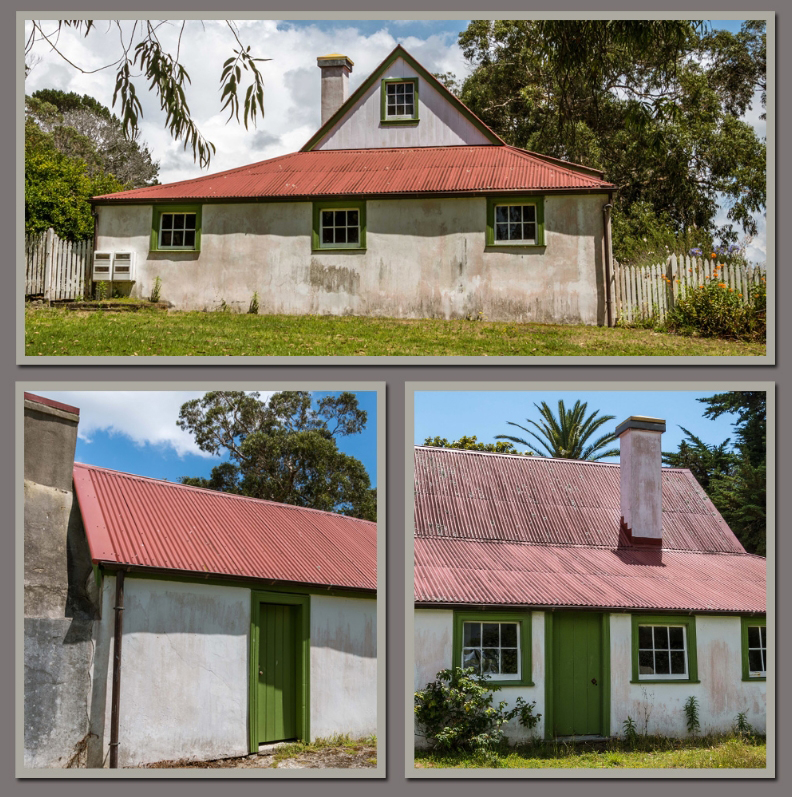
Concrete floors to kitchen, verandah and two outer bedrooms. Kauri floors elsewhere. Walls half-timbered with kauri studs and Manuka tree laths laid horizontally; hard packed rubble infill, using stone from Mount Camel, plastered with a lime-based cement. Gable ends and roof timber framed. Roof clad with corrugated iron.
Notable Features
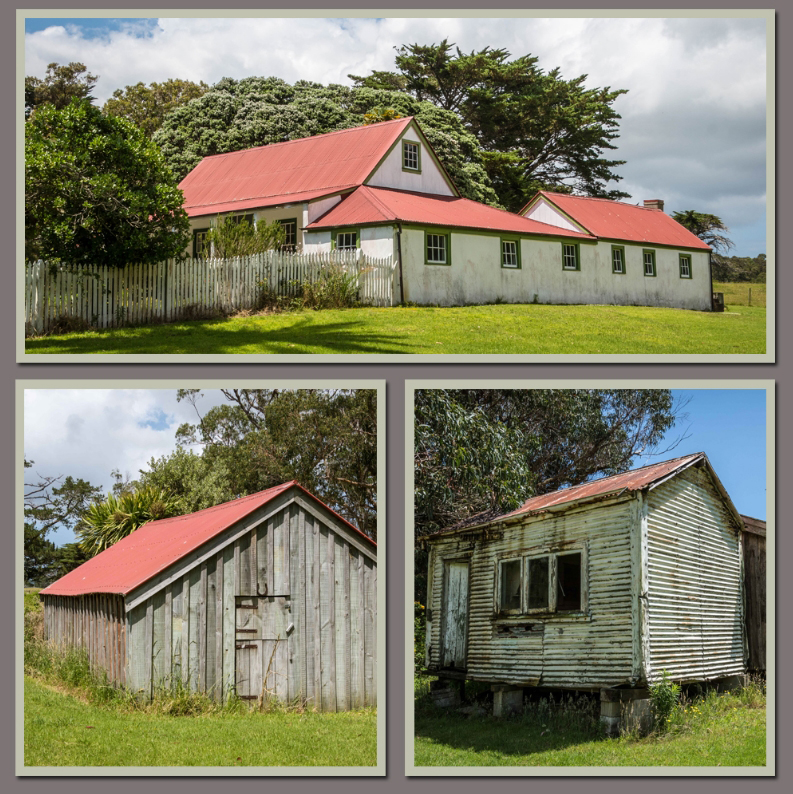
Registration covers the building, its fixtures and finishes. It includes recent modifications. The structure is associated with nineteenth-century garden features, trees and buried archaeological deposits. It is close to other significant structures, notably a blacksmith's forge and a dance hall/gum shed. Half-timbered construction.
Construction Professional
Name
Subritzky, Ludolph & Heinrich
Type
Builder
Biography
Ludolf Johann Heinrick SUBRITZKY (1825-1884) Heinrich Wilhelm SUBRITZKY (1828-1909) Brothers Ludolph and Henry Subritzky along with their mother, sister and her husband, settled permanently in New Zealand in 1860, having come from Maldon where the family had owned a butchery business during the Victoria goldrush. Said to be the first European settlers of the "Far North", they built their family homestead, known today as Subritzky House, in 1860-62 with the help of local Maori. Neither appear to have had experience in architecture or building.
Construction Details
Start Year
1860
startYearCirca
Finish Year
1862
finishYearCirca
Type
Original Construction
Description
Construction of house
Start Year
1897
startYearCirca
Type
Modification
Description
Tower removed
Start Year
1900
startYearCirca
Type
Modification
Description
Oven installed in kitchen
Start Year
1902
Type
Modification
Description
Timber east wing removed
Type
Modification
Description
Collapse of smoke house
Period
pre-1964
Start Year
1966
startYearCirca
Type
Modification
Description
Limited alterations to interior, including rebuilding of northern wall of kitchen in concrete, Kauri floor in pantry replaced with particle board.
Construction Materials
Concrete floors to kitchen, verandah and two outer bedrooms. Kauri floors elsewhere. Walls half-timbered with kauri studs and Manuka tree laths laid horizontally; hard packed rubble infill, using stone from Mount Camel, plastered with a lime-based cement. Gable ends and roof timber framed. Roof clad with corrugated iron.
Notable Features
Registration covers the building, its fixtures and finishes. It includes recent modifications. The structure is associated with nineteenth-century garden features, trees and buried archaeological deposits. It is close to other significant structures, notably a blacksmith's forge and a dance hall/gum shed. Half-timbered construction.
The Subritzky family, comprised of widowed matriarch Sophie, three sons, and her daughter and son-in-law, sailed from Hamburg in 1843 as immigrants under the New Zealand Company Scheme. Suggestions that the family, originally from Poland, were descendants of the Polish Royal Sobriski family and fled, probably as political refugees, have been neither proved nor disproved by author and descendant Alice Evans in spite of extensive research. In 1845, two years after their arrival in Nelson, hardship drove the family to Australia. They were not to return to New Zealand until 1860 when they settled at Houhora. There they purchased about 7,000 acres of land from the Maori and leased a further 25,000 acres from the government. This became the basis of an extensive commercial enterprise encompassing trade in cattle, kauri gum and flax fibre which prospered into the 1880s. Upon his arrival from Australia in 1867, John Anton Subritzky (younger brother of Ludolph and Henry) established a coastal shipping service carrying produce from the north, to Auckland. Reasons offered for acceptance of the family by Maori in the "Far North" are that it gave the Maori a centre for trading their produce and selling kauri gum, provided a place to buy pakeha goods and offered a chance to work for wages. Construction of the house commenced in 1860 with the erection of a wooden building to accommodate the family until the homestead was built. Subsequently this structure formed the east side of a "U-shaped" courtyard at the rear and south of the house, although it was removed in 1902. The more substantial west wing was built next, utilising stone, lath and plaster (as was later to be used in the main house). Part of this structure was originally given over to use as the kitchen. The Subritzkys were later to set up their first trading store in this west wing of the courtyard. The third side of the courtyard was achieved when the house itself was constructed on the north with an outlook over the harbour. An unusual feature of the house was a lookout tower in the roof. Access was gained via a steep, "hidden" stairway. The tower was later removed, probably about 1897. This substantial house with its extended wings, school room and two parlours, accommodated what was effectively a group of families, rather than a nuclear family unit. Travellers whose work took them north were sometimes accommodated also. Such visitors are said to have included William Bertram White, Magistrate; the Reverends Joseph Matthews and Richard Davis; and Bishops Selwyn (1863) and Cowie (1873). The house has a room known as "the Bishop's room". Underground tunnels between the house and the harbour were closed off in the 1940s. These have been the source of much speculation with suggestions of smuggling, although were more probably used for the secure storage of trade goods from marauders. The depression of the 1880s together with the death of the eldest son Ludolph, saw a decline in family fortune. In 1897 the Subritzky estate at Houhora was about to be sold out of the family. Edward Wagener, persuaded by his wife Louisa (themselves both grandchildren of Sophie), returned from Australia to buy the property. In 1966 again facing an uncertain fate, the house was bought by their grandson Wilf Wagener, its present owner, through his company W E Wagener Ltd.
ARCHITECTURAL DESCRIPTION: This colonial cottage has a central pitched roof section, enclosing an attic space, surrounded by a series of lean-tos. The resulting roof form is similar to a gambrel. There was once a look-out on the roof. At the rear of the house is a single storeyed and gabled kitchen wing. The house has sash windows, mostly six-paned, finials at either end of the pitched roof and chamferred posts supporting the verandah on the front elevation. The centrally located front door is flanked by windows on either side and has a fan-light above. The main section of the house comprises two parlour rooms, one on either side of a central passageway. These rooms have timber floors, whitewashed walls and a high stud. The east parlour has a built-in sideboard. Peripheral rooms are characterised by exposed rafters in the lean-to roofs and by six-paned windows. While connected to the main part of the house, the kitchen wing has no internal access. Original joinery and a turn of the century oven are still intact and a large fireplace on the south wall has vents which allowed smoke to enter into a smoke room. Smoke darkened beams in the kitchen testify to the curing of hung meat. A square hole set in the floor and edged with stones was used as a laundry sump. Outlying buildings include a smithy and a gum store. MODIFICATIONS: Dates unknown: Re-roofed with corrugated iron. Gum store constructed. Smoke house removed.
Historical and Associated Iwi / Hapū / Whānau
Completion Date
14th May 2002
Report Written By
Martin Jones
Information Sources
Auckland Star
Auckland Star
Auckland Weekly News
Bade, 1993
James N. Bade (ed.), New Zealand and German-Speaking Europe in the Nineteenth Century, Auckland, 1993
Church Gazette
Church Gazette
Evans, 1984
Alice Evans, Mount Camel Calling, Auckland, 1984
Lewis, 1977
Miles Lewis, Victorian Primitive, Carlton, 1977
New Zealand Herald
New Zealand Herald, 12 July 1932, p. 6; 28 September 1933, p. 6.
New Zealand Historic Places Trust (NZHPT)
New Zealand Historic Places Trust
Salmond, 1986
Jeremy Salmond, Old New Zealand Houses 1800-1940, Auckland, 1986, Reed Methuen
Freeman, 1982
P Freeman, The Homestead: A Riverina Anthology, Melbourne, 1982
Keene, 1977
Keene, F., To the Northward, Whangarei, 1977
Keene, 1989
Keene, F., Kaitaia and Its People, Whangarei, 1989
Historic Places in New Zealand
Kaitaia Museum
Kaitaia Museum
Other Information
This historic place was registered under the Historic Places Act 1980. This report includes the text from the original Building Classification Committee report considered by the NZHPT Board at the time of registration. Please note that entry on the New Zealand Heritage List/Rarangi Korero identifies only the heritage values of the property concerned, and should not be construed as advice on the state of the property, or as a comment of its soundness or safety, including in regard to earthquake risk, safety in the event of fire, or insanitary conditions.
Historical and Associated Iwi / Hapū / Whānau
Completion Date
14th May 2002
Report Written By
Martin Jones
Information Sources
Auckland Star
Auckland Star
Auckland Weekly News
Bade, 1993
James N. Bade (ed.), New Zealand and German-Speaking Europe in the Nineteenth Century, Auckland, 1993
Church Gazette
Church Gazette
Evans, 1984
Alice Evans, Mount Camel Calling, Auckland, 1984
Lewis, 1977
Miles Lewis, Victorian Primitive, Carlton, 1977
New Zealand Herald
New Zealand Herald, 12 July 1932, p. 6; 28 September 1933, p. 6.
New Zealand Historic Places Trust (NZHPT)
New Zealand Historic Places Trust
Salmond, 1986
Jeremy Salmond, Old New Zealand Houses 1800-1940, Auckland, 1986, Reed Methuen
Freeman, 1982
P Freeman, The Homestead: A Riverina Anthology, Melbourne, 1982
Keene, 1977
Keene, F., To the Northward, Whangarei, 1977
Keene, 1989
Keene, F., Kaitaia and Its People, Whangarei, 1989
Historic Places in New Zealand
Kaitaia Museum
Kaitaia Museum
Other Information
This historic place was registered under the Historic Places Act 1980. This report includes the text from the original Building Classification Committee report considered by the NZHPT Board at the time of registration. Please note that entry on the New Zealand Heritage List/Rarangi Korero identifies only the heritage values of the property concerned, and should not be construed as advice on the state of the property, or as a comment of its soundness or safety, including in regard to earthquake risk, safety in the event of fire, or insanitary conditions.
Current Usages
Uses: Civic Facilities
Specific Usage: Historic Property
Former Usages
General Usage: Accommodation
Specific Usage: House
Web Links
description:
Current Usages
Uses: Civic Facilities
Specific Usage: Historic Property
Former Usages
General Usage: Accommodation
Specific Usage: House
Web Links
description:
Location
Sign up to hear more
Get the latest heritage news, features and events delivered
straight to your inbox.

