Quick links


Quick links
Quick links
Quick links
Quick links
Quick links
Prime Minister's Residence
248-260A Tinakori Road, Thorndon, WELLINGTON
Private
Historic Place Category 1
List No. 1371
Quick links:
List GalleryLocationDetails
248-260A Tinakori Road, Thorndon, WELLINGTON
Private
Historic Place Category 1
List No. 1371
List Entry Information
Status
Listed
List Entry Status
Historic Place Category 1
Access
Private/No Public Access
List Number
1371
Date Entered
24th March 1988
Date of Effect
24th March 1988
City/District Council
Wellington City
Region
Wellington Region
Extent of List Entry
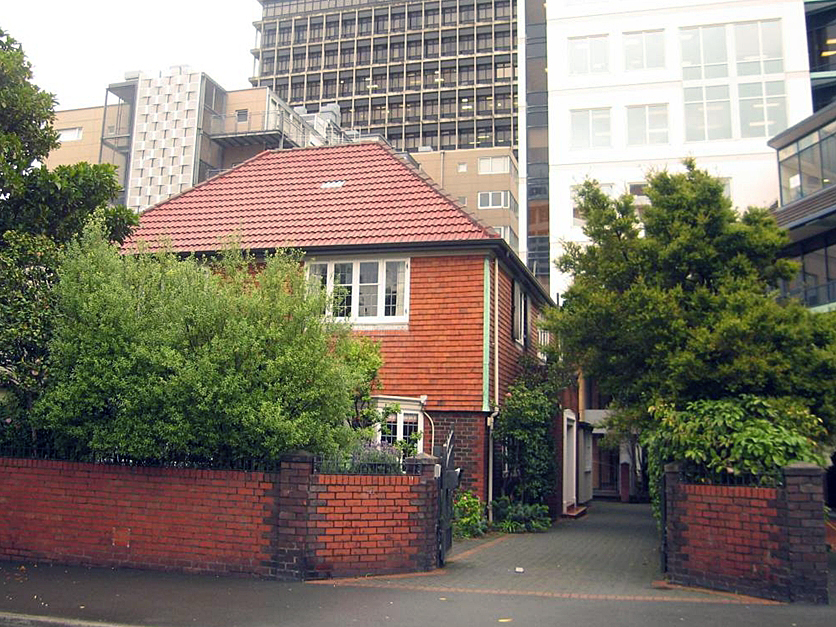
Extent includes the land described as Sec 1 SO 36604 (NZ Gazette 1987 p.3871), Wellington Land District, including the gardens, and the buildings known as Prime Minister’s Residence thereon, including Premier House, the 1935 Ministerial residence Premier Cottage and its shed, the Gardener’s Shed, and The Schoolhouse.
Legal description
Sec 1 SO 36604 (NZ Gazette 1987 p.3871), Wellington Land District
Status
Listed
List Entry Status
Historic Place Category 1
Access
Private/No Public Access
List Number
1371
Date Entered
24th March 1988
Date of Effect
24th March 1988
City/District Council
Wellington City
Region
Wellington Region
Extent of List Entry
Extent includes the land described as Sec 1 SO 36604 (NZ Gazette 1987 p.3871), Wellington Land District, including the gardens, and the buildings known as Prime Minister’s Residence thereon, including Premier House, the 1935 Ministerial residence Premier Cottage and its shed, the Gardener’s Shed, and The Schoolhouse.
Legal description
Sec 1 SO 36604 (NZ Gazette 1987 p.3871), Wellington Land District
Why is this place significant?
Historic Significance
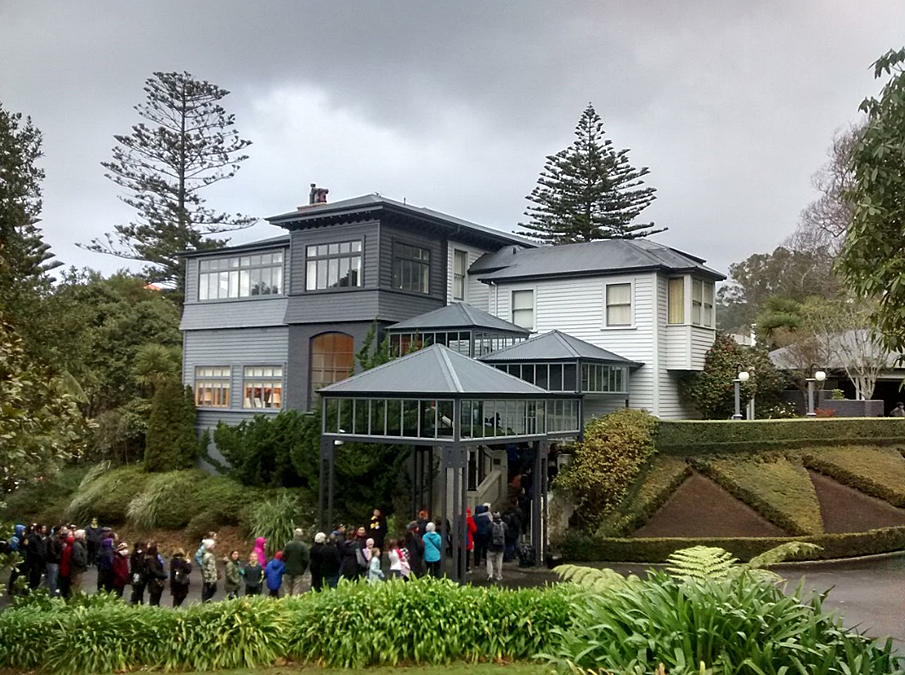
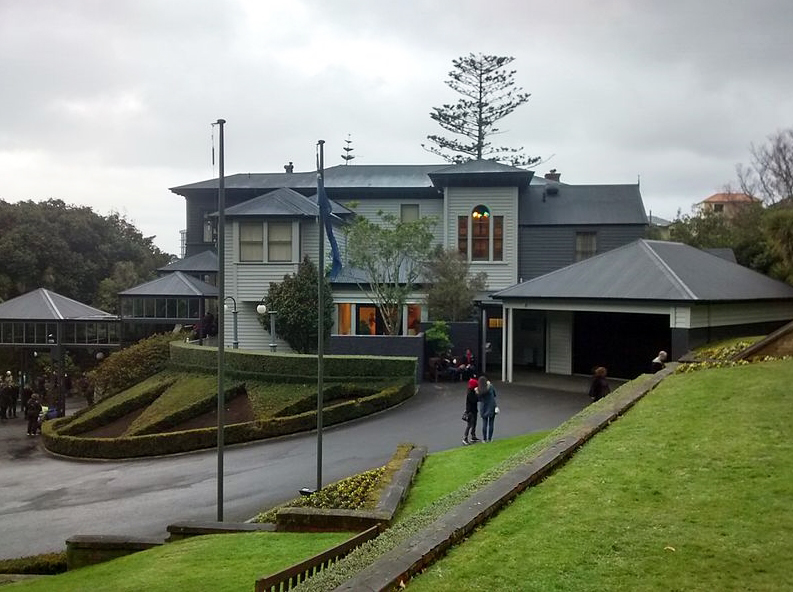
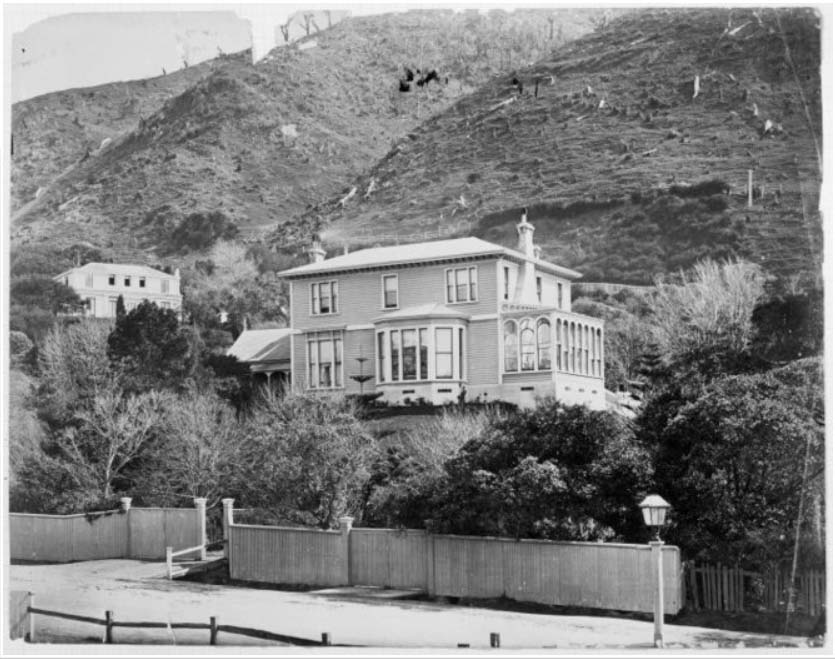
Historical Significance or Value The land (formerly town acres 630-632) and the Ministerial residence at 260 Tinakori Road, have strong associations with prominent Wellington commercial identities and New Zealand Prime Ministers. There was a house on town acre 603 by 1843, built for Wellington's first Mayor, George Hunter. The southern wing was added c.1862. Subsequent owners were Nathanial Levin (founder of Levin and Co) and Richard Collins (member of the Wellington Town Board). Town acre632 was originally owned by James Henry Saint Hill, Resident Magistrate for the Distract of Wellington. The present Ministerial residence was built in 1875 following the Crown purchase of the land in 1874. The former house of 1843 was demolished, and the southern wing was retained in the new building. The first politician to live in the new building was Sir Julius Vogel who is known to have been in residence in 1875. Wise's Directory gives information on others who lived in the house after that date. (The address was originally 122 Tinakori Road; in 1905 it was changed to 184 and in 1910 to 260 Tinakori Road. 1879 : Hon Dr Daniel Pollen, Colonial Secretary and member of the Legislative Council 1883 : Hon F Whitaker, Premier 1887 : Hon Sir Julius Vogel 1887-1891 : Sir H A Atkinson 1891-1893 : John Balance 1896-1988 : Sir Walter L Buller, Ornithologist 1899 : S Percy-Smith, Surveyor-General & Ethnologist 1901-1912 : Sir Joseph Ward, Prime Minister 1914-1925 : Hon William F Massey, Prime Minister 1927-1929 : Hon Joseph G Coates, Prime Minister 1928 : Hon George W Forbes, Prime Minister When the Labour Party came into power in 1935, the new Prime Minister Michael Savage considered the house too ostentatious for him to live in, and its parliamentary association ended. For 70 years the home of Prime Ministers, the building was converted for use as a Children's Dental Clinic, required under the new Government's expanded health care programme. The building had already undergone many alterations however, (Coates had altered it extensively in 1926) which are too complicated to be able to chronicle easily. Many state occasions of historical importance must have happened in the house and grounds of the Ministerial Residence. One of note was the farewell party given by Miss Eileen Ward, daughter of Sir Joseph Ward, to farewell Katherine Mansfield a few days before she left New Zealand for the last time in 1908. Mention must also be made of the garden. There is probably no better example of Victorian garden left in Wellington. It was laid out at the time the Ministerial Residence was built and many trees still standing would date from the early 1870s. A site plan of 1890 shows a kitchen garden, many shrubberies, flower beds and fruit trees. The large potting area to the north of the house was originally a tennis lawn.
Physical Significance
ARCHITECTURAL SIGNIFICANCE: In terms of the grand and impressive style of the building, the house stands as a very good example of formal public architecture for its period. In terms of the weatherboard construction of the building, it incorporates the best of New Zealand carpenter tradition techniques and materials. TOWNSCAPE/LANDMARK SIGNIFICANCE: The building occupies a prominent position in the historic Thorndon precinct defined by the local authority. As such it helps to define and maintain the historic character of the building in the precinct.
Why is this place significant?
Historic Significance
Historical Significance or Value The land (formerly town acres 630-632) and the Ministerial residence at 260 Tinakori Road, have strong associations with prominent Wellington commercial identities and New Zealand Prime Ministers. There was a house on town acre 603 by 1843, built for Wellington's first Mayor, George Hunter. The southern wing was added c.1862. Subsequent owners were Nathanial Levin (founder of Levin and Co) and Richard Collins (member of the Wellington Town Board). Town acre632 was originally owned by James Henry Saint Hill, Resident Magistrate for the Distract of Wellington. The present Ministerial residence was built in 1875 following the Crown purchase of the land in 1874. The former house of 1843 was demolished, and the southern wing was retained in the new building. The first politician to live in the new building was Sir Julius Vogel who is known to have been in residence in 1875. Wise's Directory gives information on others who lived in the house after that date. (The address was originally 122 Tinakori Road; in 1905 it was changed to 184 and in 1910 to 260 Tinakori Road. 1879 : Hon Dr Daniel Pollen, Colonial Secretary and member of the Legislative Council 1883 : Hon F Whitaker, Premier 1887 : Hon Sir Julius Vogel 1887-1891 : Sir H A Atkinson 1891-1893 : John Balance 1896-1988 : Sir Walter L Buller, Ornithologist 1899 : S Percy-Smith, Surveyor-General & Ethnologist 1901-1912 : Sir Joseph Ward, Prime Minister 1914-1925 : Hon William F Massey, Prime Minister 1927-1929 : Hon Joseph G Coates, Prime Minister 1928 : Hon George W Forbes, Prime Minister When the Labour Party came into power in 1935, the new Prime Minister Michael Savage considered the house too ostentatious for him to live in, and its parliamentary association ended. For 70 years the home of Prime Ministers, the building was converted for use as a Children's Dental Clinic, required under the new Government's expanded health care programme. The building had already undergone many alterations however, (Coates had altered it extensively in 1926) which are too complicated to be able to chronicle easily. Many state occasions of historical importance must have happened in the house and grounds of the Ministerial Residence. One of note was the farewell party given by Miss Eileen Ward, daughter of Sir Joseph Ward, to farewell Katherine Mansfield a few days before she left New Zealand for the last time in 1908. Mention must also be made of the garden. There is probably no better example of Victorian garden left in Wellington. It was laid out at the time the Ministerial Residence was built and many trees still standing would date from the early 1870s. A site plan of 1890 shows a kitchen garden, many shrubberies, flower beds and fruit trees. The large potting area to the north of the house was originally a tennis lawn.
Physical Significance
ARCHITECTURAL SIGNIFICANCE: In terms of the grand and impressive style of the building, the house stands as a very good example of formal public architecture for its period. In terms of the weatherboard construction of the building, it incorporates the best of New Zealand carpenter tradition techniques and materials. TOWNSCAPE/LANDMARK SIGNIFICANCE: The building occupies a prominent position in the historic Thorndon precinct defined by the local authority. As such it helps to define and maintain the historic character of the building in the precinct.
Construction Professional
Name
Clayton, William Henry
Type
Architect
Biography
Born in Tasmania, Clayton (1823-1877) travelled to Europe with his family in 1842. He studied architecture in Brussells and was then articled to Sir John Rennie, engineer to the Admiralty, in London. He returned to Tasmania in 1848 and worked in private practice until he was appointed Government Surveyor in 1852. He resumed private practice in 1855 and was involved with surveying in the Launceston area. In 1857 he was elected an alderman on the Launceston Municipal Council. By the time Clayton immigrated to Dunedin in 1863 he had been responsible for the design of many buildings including churches, banks, a mechanics' institute, a theatre, steam and water mills, breweries, bridges, mansions and villas, in addition to being a land surveyor and road engineer. In 1864 he entered partnership with William Mason. Mason and Clayton were responsible for some important buildings in Dunedin including All Saints Church (1865) and The Exchange (former Post Office) (1865) as well as the Colonial Museum, Wellington (1865). These were two of the most prominent architects of their day in New Zealand. In 1869 Clayton became the first and only Colonial Architect and was responsible for the design of Post and Telegraph offices, courthouses, customhouses, Government department offices and ministerial residences. His acknowledged masterpiece is Government Buildings, Wellington (1876) a stone-simulated wooden building and the largest timber framed building in the Southern Hemisphere. Clayton was a prolific and highly accomplished architect both within the Public Service and in private practice, in New Zealand and Australia. See https://teara.govt.nz/en/biographies/2c20/clayton-william-henry
Construction Details
Start Year
1843
Type
Original Construction
Description
House built by Nathaniel Levin
Start Year
1862
Finish Year
1865
Type
Addition
Description
House extended by Richard Collins
Start Year
1872
Finish Year
1873
Type
Modification
Description
House substantially altered according to plans designed by William Henry Clayton
Start Year
1925
Finish Year
1928
Type
Modification
Description
Various changes to house made by Gordon Coates
Start Year
1937
Type
Modification
Description
House converted into a dental clinic
Start Year
1990
Type
Reconstruction
Description
House restored as a Prime Minister's Residence
Start Year
1999
Type
Other
Description
Refurbished
Construction Materials
Timber frame clad with weatherboards. Roof covered with corrugated iron.
Notable Features
Ballroom, staircase and coloured glass windows. An unusual piece of engineering technology exists in the form of a cast iron beam built into the timber structure above the ballroom.
Construction Professional
Name
Clayton, William Henry
Type
Architect
Biography
Born in Tasmania, Clayton (1823-1877) travelled to Europe with his family in 1842. He studied architecture in Brussells and was then articled to Sir John Rennie, engineer to the Admiralty, in London. He returned to Tasmania in 1848 and worked in private practice until he was appointed Government Surveyor in 1852. He resumed private practice in 1855 and was involved with surveying in the Launceston area. In 1857 he was elected an alderman on the Launceston Municipal Council. By the time Clayton immigrated to Dunedin in 1863 he had been responsible for the design of many buildings including churches, banks, a mechanics' institute, a theatre, steam and water mills, breweries, bridges, mansions and villas, in addition to being a land surveyor and road engineer. In 1864 he entered partnership with William Mason. Mason and Clayton were responsible for some important buildings in Dunedin including All Saints Church (1865) and The Exchange (former Post Office) (1865) as well as the Colonial Museum, Wellington (1865). These were two of the most prominent architects of their day in New Zealand. In 1869 Clayton became the first and only Colonial Architect and was responsible for the design of Post and Telegraph offices, courthouses, customhouses, Government department offices and ministerial residences. His acknowledged masterpiece is Government Buildings, Wellington (1876) a stone-simulated wooden building and the largest timber framed building in the Southern Hemisphere. Clayton was a prolific and highly accomplished architect both within the Public Service and in private practice, in New Zealand and Australia. See https://teara.govt.nz/en/biographies/2c20/clayton-william-henry
Construction Details
Start Year
1843
Type
Original Construction
Description
House built by Nathaniel Levin
Start Year
1862
Finish Year
1865
Type
Addition
Description
House extended by Richard Collins
Start Year
1872
Finish Year
1873
Type
Modification
Description
House substantially altered according to plans designed by William Henry Clayton
Start Year
1925
Finish Year
1928
Type
Modification
Description
Various changes to house made by Gordon Coates
Start Year
1937
Type
Modification
Description
House converted into a dental clinic
Start Year
1990
Type
Reconstruction
Description
House restored as a Prime Minister's Residence
Start Year
1999
Type
Other
Description
Refurbished
Construction Materials
Timber frame clad with weatherboards. Roof covered with corrugated iron.
Notable Features
Ballroom, staircase and coloured glass windows. An unusual piece of engineering technology exists in the form of a cast iron beam built into the timber structure above the ballroom.
ARCHITECTURAL DESCRIPTION (Style): The building is styled as a grand colonial home for Prime Ministers of New Zealand. It is an excellent example of a colonial New Zealand style that is generally neo-classical with bracketed cornices, rectangular windows and bays on the ground floor. There is also a neo-gothic influence in the form of the steeply pitched gable end and finials of the earlier southern wing of the building. MODIFICATIONS: The southern wing of the building was built 1862-5 as an addition to an earlier 1843 building that was demolished to make way for the neo-classical addition of 1872-3. This addition is substantially the building that is seen today. However it underwent extensive internal alterations in 1925-8 during the residency of Joseph Coates, and again in 1937, when the building was converted for use as a children's dental clinic.
ARCHITECTURAL DESCRIPTION (Style): The building is styled as a grand colonial home for Prime Ministers of New Zealand. It is an excellent example of a colonial New Zealand style that is generally neo-classical with bracketed cornices, rectangular windows and bays on the ground floor. There is also a neo-gothic influence in the form of the steeply pitched gable end and finials of the earlier southern wing of the building. MODIFICATIONS: The southern wing of the building was built 1862-5 as an addition to an earlier 1843 building that was demolished to make way for the neo-classical addition of 1872-3. This addition is substantially the building that is seen today. However it underwent extensive internal alterations in 1925-8 during the residency of Joseph Coates, and again in 1937, when the building was converted for use as a children's dental clinic.
Historical and Associated Iwi / Hapū / Whānau
Completion Date
5th October 2002
Report Written By
Rebecca O'Brien
Information Sources
Archives New Zealand (Wgtn)
Archives New Zealand (Wellington)
New Zealand Historic Places Trust (NZHPT)
New Zealand Historic Places Trust
Priestley, 1990
D. Priestley, The Premier's Residence, Wellington 1990
Saunders, 1964
John Llewellyn Saunders, The New Zealand School Dental Service: Its Initiation and Development 1920-1960, Wellington, 1964
Ministry of Works and Development
Ministry of Works and Development
Conservation Plan
Conservation Plan
Other Information
NZHPT Heritage Order (19 April 1988) A fully referenced version of this report is available from the NZHPT Central Region Office Original address: 122 Tinakori Road Address between 1905-1910: 184 Tinakori Road This historic place was registered under the Historic Places Act 1980. This report includes the text from the original Building Classification Committee report considered by the NZHPT Board at the time of registration. Please note that entry on the New Zealand Heritage List/Rarangi Korero identifies only the heritage values of the property concerned, and should not be construed as advice on the state of the property, or as a comment of its soundness or safety, including in regard to earthquake risk, safety in the event of fire, or insanitary conditions.
Historical and Associated Iwi / Hapū / Whānau
Completion Date
5th October 2002
Report Written By
Rebecca O'Brien
Information Sources
Archives New Zealand (Wgtn)
Archives New Zealand (Wellington)
New Zealand Historic Places Trust (NZHPT)
New Zealand Historic Places Trust
Priestley, 1990
D. Priestley, The Premier's Residence, Wellington 1990
Saunders, 1964
John Llewellyn Saunders, The New Zealand School Dental Service: Its Initiation and Development 1920-1960, Wellington, 1964
Ministry of Works and Development
Ministry of Works and Development
Conservation Plan
Conservation Plan
Other Information
NZHPT Heritage Order (19 April 1988) A fully referenced version of this report is available from the NZHPT Central Region Office Original address: 122 Tinakori Road Address between 1905-1910: 184 Tinakori Road This historic place was registered under the Historic Places Act 1980. This report includes the text from the original Building Classification Committee report considered by the NZHPT Board at the time of registration. Please note that entry on the New Zealand Heritage List/Rarangi Korero identifies only the heritage values of the property concerned, and should not be construed as advice on the state of the property, or as a comment of its soundness or safety, including in regard to earthquake risk, safety in the event of fire, or insanitary conditions.
Current Usages
Uses: Accommodation
Specific Usage: House
Former Usages
General Usage: Accommodation
Specific Usage: House
General Usage: Health
Specific Usage: Dentist Surgery/ Dental Clinic
Current Usages
Uses: Accommodation
Specific Usage: House
Former Usages
General Usage: Accommodation
Specific Usage: House
General Usage: Health
Specific Usage: Dentist Surgery/ Dental Clinic
Get the latest heritage news, features and events delivered
straight to your inbox.