13 Buckle Street and Tasman Street, Mt Cook, WELLINGTON
Private
Historic Place Category 1
List No. 1408


List Entry Information
Status
Listed
List Entry Status
Historic Place Category 1
Access
Private/No Public Access
List Number
1408
Date Entered
21st September 1989
Date of Effect
21st September 1989
City/District Council
Wellington City
Region
Wellington Region
Extent of List Entry
Extent includes the land described as Lot 1 DP 87064, Wellington Land District and the buildings and structures known as Mount Cook Police Station (Former), and its fittings and fixtures. (Refer to map in Appendix 1 of the Information Upgrade Report for further information).
Legal description
Lot 1 DP 87064 (RT WN54D/135), Wellington Land District
Status
Listed
List Entry Status
Historic Place Category 1
Access
Private/No Public Access
List Number
1408
Date Entered
21st September 1989
Date of Effect
21st September 1989
City/District Council
Wellington City
Region
Wellington Region
Extent of List Entry
Extent includes the land described as Lot 1 DP 87064, Wellington Land District and the buildings and structures known as Mount Cook Police Station (Former), and its fittings and fixtures. (Refer to map in Appendix 1 of the Information Upgrade Report for further information).
Legal description
Lot 1 DP 87064 (RT WN54D/135), Wellington Land District
Why is this place significant?
Historic Significance
Historical Significance or Value The Mt Cook Police Barracks was one of eight police stations opened in 1894 (three of them being in Wellington) to serve the rapidly growing towns of New Zealand. The early 1890s were years of economic crisis with much poverty due to recessions in both Australia and New Zealand. The Te Aro Flat area became thickly populated and was a particularly difficult part of town in which to maintain law, so a substantial police station which overlooked much of the area under its control was considered necessary. The station was built on the corner of the Mt Cook Reserve which also housed the gaol designed by P.F.M. Burrows. It was built using prison labour to make the bricks and probably also to do the actual construction. Prisoners from the Terrace Gaol were marched to Mt Cook daily to man the brickmaking works at the gaol which produced the strongest and cheapest bricks in the area as well as drainage pipes. The Mt Cook Police Barracks is a reminder of the early Police Force but is of primary importance as a legacy of the gaol.
Physical Significance
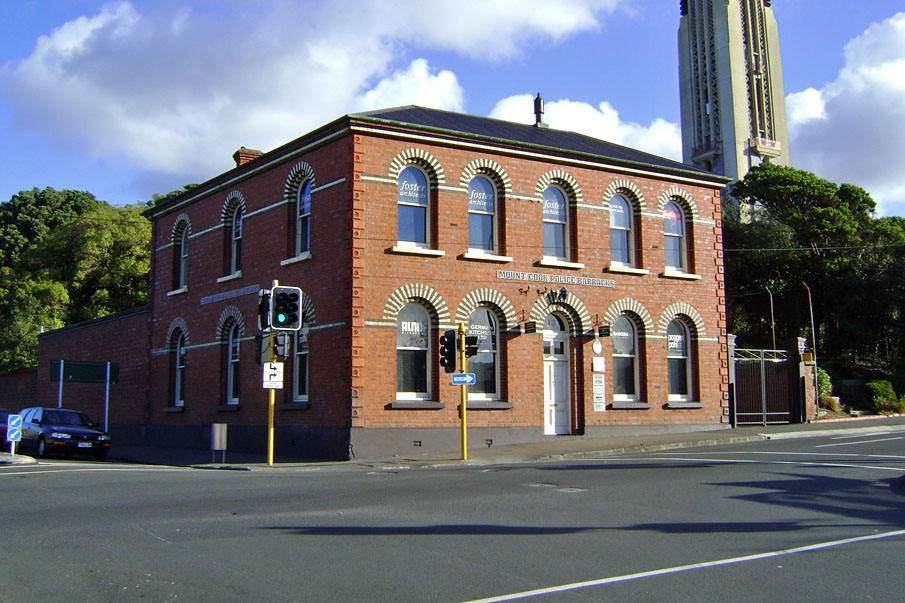
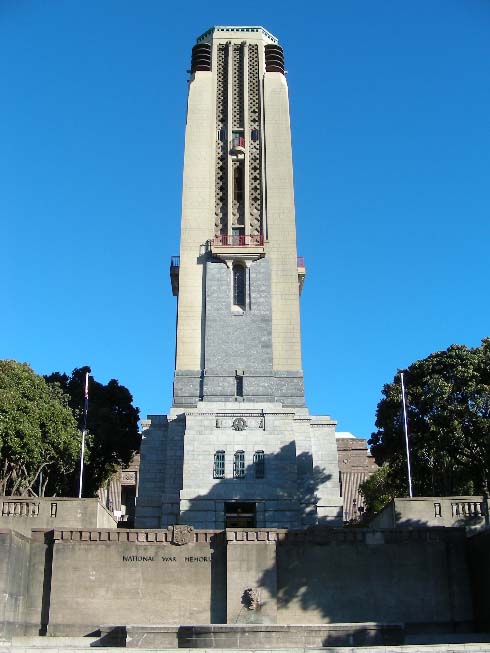
ARCHITECTURAL SIGNIFICANCE: The Mt Cook Police Barracks is rare in New Zealand in its use of polychrome brickwork for decoration of the facades. The designer may have been influenced by Norman Shaw's New Scotland Yard built for the London police (1887-90). The rosettes moulded in the richer red quoins are also rare in New Zealand and coupled with the polychrome bricks suggests considerable forethought on the part of the professional or tradespersons involved. These individual features give the building an individuality and character which is quite remarkable. TOWNSCAPE/LANDMARK SIGNIFICANCE: Situated on the corner of Tasman and Buckle Streets, the Mt Cook Police Barracks stands uncompromisingly on its prominent site. It is offset some 6 metres in relation to Tory Street giving a clear view down that street which would, no doubt, have been of great assistance in the policing of the rapidly increasing population of the Te Aro Flat. The site is also important as part of the original Mt Cook Reserve, which once housed the Mt Cook Gaol and its brickworks but is now the site of the National Museum and Art Gallery and the War Memorial and Carillion.
Why is this place significant?
Historic Significance
Historical Significance or Value The Mt Cook Police Barracks was one of eight police stations opened in 1894 (three of them being in Wellington) to serve the rapidly growing towns of New Zealand. The early 1890s were years of economic crisis with much poverty due to recessions in both Australia and New Zealand. The Te Aro Flat area became thickly populated and was a particularly difficult part of town in which to maintain law, so a substantial police station which overlooked much of the area under its control was considered necessary. The station was built on the corner of the Mt Cook Reserve which also housed the gaol designed by P.F.M. Burrows. It was built using prison labour to make the bricks and probably also to do the actual construction. Prisoners from the Terrace Gaol were marched to Mt Cook daily to man the brickmaking works at the gaol which produced the strongest and cheapest bricks in the area as well as drainage pipes. The Mt Cook Police Barracks is a reminder of the early Police Force but is of primary importance as a legacy of the gaol.
Physical Significance
ARCHITECTURAL SIGNIFICANCE: The Mt Cook Police Barracks is rare in New Zealand in its use of polychrome brickwork for decoration of the facades. The designer may have been influenced by Norman Shaw's New Scotland Yard built for the London police (1887-90). The rosettes moulded in the richer red quoins are also rare in New Zealand and coupled with the polychrome bricks suggests considerable forethought on the part of the professional or tradespersons involved. These individual features give the building an individuality and character which is quite remarkable. TOWNSCAPE/LANDMARK SIGNIFICANCE: Situated on the corner of Tasman and Buckle Streets, the Mt Cook Police Barracks stands uncompromisingly on its prominent site. It is offset some 6 metres in relation to Tory Street giving a clear view down that street which would, no doubt, have been of great assistance in the policing of the rapidly increasing population of the Te Aro Flat. The site is also important as part of the original Mt Cook Reserve, which once housed the Mt Cook Gaol and its brickworks but is now the site of the National Museum and Art Gallery and the War Memorial and Carillion.
Construction Details
Start Year
1893
Type
Original Construction
Description
Building completed and opened 10 April 1894
Start Year
1903
Type
Addition
Description
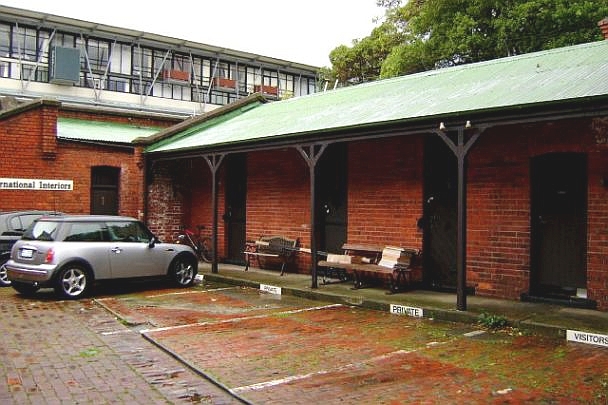
Single storey brick addition (containing three cells) to the southern elevation.
Start Year
1912
Type
Addition
Description
Two storey brick addition to south elevation of building. Small addition made to 1903 cells to accommodate motor vehicle and horses. Existing stables removed to make way for extension.
Start Year
1956
Type
Modification
Description
Alterations to accommodate police stores and repair damage as a result of vandalism
Start Year
1959
Type
Modification
Description
Removal of upstairs bathroom
Start Year
1960
Type
Modification
Description
Installation of electric hoist
Start Year
1975
Type
Modification
Description
Possibly re-roofed
Start Year
1979
Type
Demolished - Other
Description
1912 addition demolished
Start Year
1986
Type
Modification
Description
Major restoration of the building included the installation of a structural steel frame and the replacement of the internal brick partition walls with timber stud construction.
Construction Materials
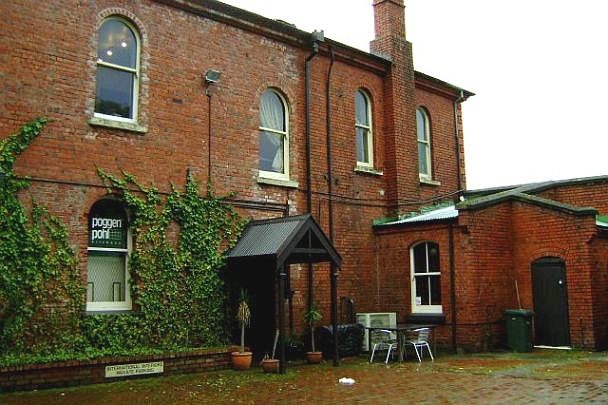
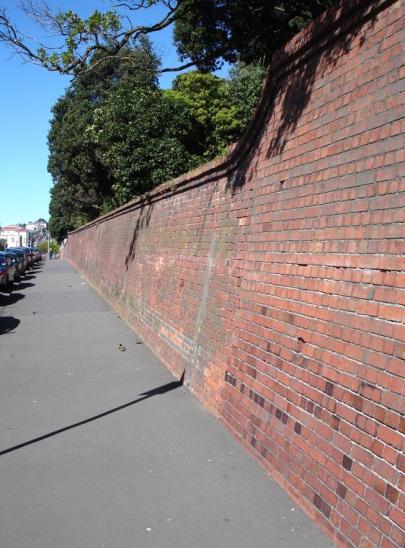
Constructed of red brick laid in English bond (alternating rows of stretchers and headers). Each header brick is stamped with the distinctive broad arrow which marked all bricks made at the Mount Cook Gaol. The bricks were of a far superior quality and strength to those made by commercial brickworks. For this reason and because of their low price the bricks were used extensively in public buildings although often the headers were hidden so that the origin of the bricks did not show. The Mt Cook Police barracks, and the adjacent brick retaining wall on Tasman Street, are now the only structures which openly display the arrow marked bricks. The building stands on a plastered plinth which takes up the changes in road levels. Window and door is timber and the building has a hipped corrugated iron roof. The partitions are plastered brick (see modifications) with native timber, especially Kauri, used for finish.
Notable Features
1. The quite rare polychrome brickwork. 2. The deep red quoins and proportional rosettes. 3. The interior, including Kauri staircase and turned newel post and the encaustic and geometric tiles in the entrance hall.
Construction Details
Start Year
1893
Type
Original Construction
Description
Building completed and opened 10 April 1894
Start Year
1903
Type
Addition
Description
Single storey brick addition (containing three cells) to the southern elevation.
Start Year
1912
Type
Addition
Description
Two storey brick addition to south elevation of building. Small addition made to 1903 cells to accommodate motor vehicle and horses. Existing stables removed to make way for extension.
Start Year
1956
Type
Modification
Description
Alterations to accommodate police stores and repair damage as a result of vandalism
Start Year
1959
Type
Modification
Description
Removal of upstairs bathroom
Start Year
1960
Type
Modification
Description
Installation of electric hoist
Start Year
1975
Type
Modification
Description
Possibly re-roofed
Start Year
1979
Type
Demolished - Other
Description
1912 addition demolished
Start Year
1986
Type
Modification
Description
Major restoration of the building included the installation of a structural steel frame and the replacement of the internal brick partition walls with timber stud construction.
Construction Materials
Constructed of red brick laid in English bond (alternating rows of stretchers and headers). Each header brick is stamped with the distinctive broad arrow which marked all bricks made at the Mount Cook Gaol. The bricks were of a far superior quality and strength to those made by commercial brickworks. For this reason and because of their low price the bricks were used extensively in public buildings although often the headers were hidden so that the origin of the bricks did not show. The Mt Cook Police barracks, and the adjacent brick retaining wall on Tasman Street, are now the only structures which openly display the arrow marked bricks. The building stands on a plastered plinth which takes up the changes in road levels. Window and door is timber and the building has a hipped corrugated iron roof. The partitions are plastered brick (see modifications) with native timber, especially Kauri, used for finish.
Notable Features
1. The quite rare polychrome brickwork. 2. The deep red quoins and proportional rosettes. 3. The interior, including Kauri staircase and turned newel post and the encaustic and geometric tiles in the entrance hall.
ARCHITECT/ENGINEER OR DESIGNER: Unknown but F.G.F. Sheppard's notes suggest that A.E. King was the architect responsible, however, Pierre Finch Martineau Burrows who acted as Colonial Architect until 1884 has also been suggested ARCHITECTURAL DESCRIPTION (STYLE): Designed in the classical revival of the period the only adornment of the Mt Cook Police Barracks is the polychrome glazed brickwork and moulded quoins. The two storeyed building has a corrugated iron hipped roof, is rectangular in plan, to follow the line of the corner. The north facade has nine windows each with alternating voussoirs of white and black. There are five windows on the top floor and four on the bottom with a central doorway adding to the symmetry. The ten arches are linked by horizontal ribbons of polychrome glazed bricks which also run around the east and west elevations of the building. These also have the polychrome arched window heads although the fenestrations are less regular. Alternate rich red brick quoins have moulded rosettes of elegant proportions. MODIFICATIONS: c.1903 Further cells added 1912 A two-storey extension (removed in 1979) was built on the southwest corner of the barracks. The stables were demolished to provide room for the new wing. 1979 The building was reduced to its 1894 dimensions. 1986 Major restoration of the building included the installation of a structural steel frame and the replacement of the internal brick partition walls with timber stud construction.
Historical and Associated Iwi / Hapū / Whānau
Completion Date
10th September 2008
Report Written By
Helen McCracken
Information Sources
Archives New Zealand (Wgtn)
Archives New Zealand (Wellington)
Evening Post
Evening Post, 27 Jun 1919, p.7.
New Zealand Mail
New Zealand Mail
Wellington City Council
Young, 1994
Sherwood Young, With Confidence and Pride; Policing the Wellington Region 1840-1992, Wellington Police Trust, Wellington, 1994
Other Information
A fully referenced Upgrade report is available from the NZHPT Central Region Please note that entry on the New Zealand Heritage List/Rarangi Korero identifies only the heritage values of the property concerned, and should not be construed as advice on the state of the property, or as a comment of its soundness or safety, including in regard to earthquake risk, safety in the event of fire, or insanitary conditions.
Historical and Associated Iwi / Hapū / Whānau
Completion Date
10th September 2008
Report Written By
Helen McCracken
Information Sources
Archives New Zealand (Wgtn)
Archives New Zealand (Wellington)
Evening Post
Evening Post, 27 Jun 1919, p.7.
New Zealand Mail
New Zealand Mail
Wellington City Council
Young, 1994
Sherwood Young, With Confidence and Pride; Policing the Wellington Region 1840-1992, Wellington Police Trust, Wellington, 1994
Other Information
A fully referenced Upgrade report is available from the NZHPT Central Region Please note that entry on the New Zealand Heritage List/Rarangi Korero identifies only the heritage values of the property concerned, and should not be construed as advice on the state of the property, or as a comment of its soundness or safety, including in regard to earthquake risk, safety in the event of fire, or insanitary conditions.
Current Usages
Uses: Trade
Specific Usage: Office building/Offices
Former Usages
General Usage: Civic Facilities
Specific Usage: Museum
General Usage: Education
Specific Usage: Education - other
General Usage: Law Enforcement
Specific Usage: Courthouse
General Usage: Law Enforcement
Specific Usage: Gaol/Lock-up
General Usage: Law Enforcement
Specific Usage: Police station
Current Usages
Uses: Trade
Specific Usage: Office building/Offices
Former Usages
General Usage: Civic Facilities
Specific Usage: Museum
General Usage: Education
Specific Usage: Education - other
General Usage: Law Enforcement
Specific Usage: Courthouse
General Usage: Law Enforcement
Specific Usage: Gaol/Lock-up
General Usage: Law Enforcement
Specific Usage: Police station
Location


Get the latest heritage news, features and events delivered
straight to your inbox.